
Russian Submarine Followed Spy Ship Into British Waters: A Chilling Signal Beneath the Seas
How Underwater Surveillance Is Becoming the New Frontline of Global Power Struggles


The quiet waters surrounding the United Kingdom have once again become the stage for rising geopolitical tension, after reports revealed that a Russian submarine closely followed a Russian spy ship into British waters. While no shots were fired and no official confrontation occurred, the incident has triggered serious concern among UK defense officials and NATO allies. It highlights how modern conflicts are increasingly unfolding beneath the waves, away from public view but with profound strategic consequences.
A Shadowy Encounter at Sea
According to defense sources, the Russian submarine was detected operating alongside a known Russian intelligence-gathering vessel as it entered waters near the UK. British naval forces reportedly monitored the movement closely, tracking both assets to ensure the security of undersea infrastructure and territorial integrity. While such encounters are not entirely unprecedented, the presence of a submarine elevates the seriousness of the situation.
Spy ships are often equipped with advanced surveillance technology capable of mapping seabeds, intercepting communications, and monitoring military activity. When paired with a submarine—one of the most covert weapons platforms in existence—the message appears deliberate rather than accidental.
Why British Waters Matter
British waters are not just geographically important; they are strategically vital. Beneath the seas lie critical undersea cables and pipelines that carry internet traffic, financial data, and energy supplies across continents. Any threat to these assets could have far-reaching consequences for national security, the economy, and daily life.
Defense analysts believe that Russian naval activity in the region may be focused on testing response times, gathering intelligence, and asserting presence rather than preparing for immediate confrontation. Still, the implications are serious. In a world where cyber warfare and hybrid threats are increasingly common, undersea operations are seen as the next frontier.
A Pattern of Escalation
This incident fits into a broader pattern of heightened Russian military activity near NATO borders since the war in Ukraine began. From airspace violations to naval maneuvers, Moscow has consistently pushed boundaries to signal strength and challenge Western defenses.
By deploying both a spy ship and a submarine into sensitive waters, Russia may be attempting to demonstrate its ability to operate undetected and project power far from its own shores. For the UK and its allies, the move serves as a reminder that deterrence must extend beyond land and air—to the depths of the ocean.
Britain’s Response and Naval Readiness
The Royal Navy has invested heavily in anti-submarine warfare capabilities, including advanced sonar systems, patrol aircraft, and fast-response vessels. British officials emphasized that the submarine was tracked continuously and that the UK retains full control over its territorial waters.
Publicly, the government has downplayed the incident to avoid unnecessary alarm. Privately, however, such encounters prompt urgent reviews of maritime security and coordination with NATO partners. Maintaining calm while remaining vigilant is a delicate balance, especially in an era of heightened global tension.
The Silent Battlefield Below
Unlike tanks or fighter jets, submarines operate silently, often unseen until long after they have completed their mission. This invisibility makes them powerful tools—not just for warfare, but for psychological pressure. The knowledge that a foreign submarine can approach national waters undetected is unsettling for both governments and citizens.
Experts warn that future conflicts may not begin with explosions, but with disrupted cables, intercepted data, or unexplained outages. Incidents like this underscore the importance of protecting undersea infrastructure and investing in maritime surveillance.
What This Means Going Forward
The episode is unlikely to be the last of its kind. As global rivalries intensify, naval encounters—especially in contested or sensitive waters—are expected to increase. For the UK, the challenge lies in defending its interests without escalating tensions into open conflict.
Diplomacy, deterrence, and preparedness must work together. While submarines may move silently, their presence speaks loudly. The message beneath the waves is clear: the battle for influence and security is no longer confined to land or sky—it now extends deep into the oceans.
Conclusion
The report that a Russian submarine followed a spy ship into British waters is more than a routine naval incident. It is a reminder of the fragile balance that defines modern geopolitics and the hidden arenas where power is contested. As nations adapt to new forms of warfare, the depths of the sea are emerging as one of the most critical—and least visible—frontiers of global security.
About the Creator
Fiaz Ahmed Brohi
I am a passionate writer with a love for exploring and creating content on trending topics. Always curious, always sharing stories that engage and inspire.
Keep reading
More stories from Fiaz Ahmed Brohi and writers in The Swamp and other communities.
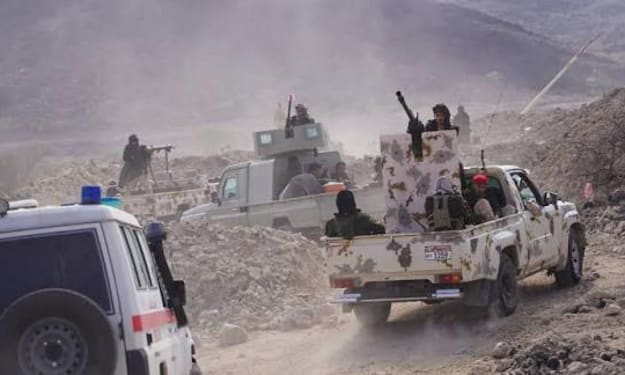
Saudi Coalition Will Counter Yemen Separatists Undermining De-escalation
The delicate path to peace in Yemen faces a fresh challenge as the Saudi-led coalition has declared its intention to counter southern separatist movements that are reportedly undermining de-escalation efforts in the war-torn country. The announcement comes amid growing concerns that renewed tensions in southern Yemen could destabilize fragile ceasefires and derail international diplomatic efforts aimed at ending one of the world’s most protracted conflicts. Southern separatists, particularly those aligned with the Southern Transitional Council (STC), have been accused of obstructing the ongoing peace process and consolidating power in regions where the Saudi coalition has sought to mediate calm. Riyadh’s statement underscores the coalition’s zero-tolerance stance toward any group that threatens the delicate balance of power and security in Yemen. Officials emphasized that coordinated action would be taken to prevent destabilizing maneuvers that could reignite hostilities. For years, Yemen has been embroiled in a complex civil war, with multiple factions vying for power. The conflict pits Houthi rebels, who control large portions of northern Yemen, against government forces supported by the Saudi-led coalition. Meanwhile, the STC and other southern separatist groups have sought autonomy in the south, often clashing with government forces and creating parallel centers of power. The fragmentation of authority has made peace negotiations extremely challenging, leaving civilians caught in the crossfire. Saudi Arabia’s latest warning reflects frustration with the STC’s actions in areas like Hadramout and Shabwa, where separatist forces have reportedly refused to adhere to previously agreed-upon de-escalation arrangements. Analysts note that the coalition’s response is likely aimed at signaling both a commitment to regional stability and a message to other parties involved in the conflict that any attempts to undermine peace will not be tolerated. The implications of renewed tensions are significant. Humanitarian agencies already report severe shortages of food, medicine, and essential services across Yemen. Any escalation triggered by separatist resistance could exacerbate an already dire situation, placing millions more civilians at risk. The UN and other international actors have repeatedly stressed the importance of enforcing ceasefires and resuming meaningful negotiations to address both political and humanitarian needs. Experts suggest that Riyadh’s approach will combine military readiness with diplomatic outreach. By demonstrating the capability to respond decisively, the Saudi-led coalition hopes to discourage separatist groups from unilateral actions while simultaneously encouraging dialogue. “The coalition is seeking to maintain leverage,” says Dr. Leila Mansour, a Middle East conflict analyst. “It’s a balancing act between showing strength and preserving avenues for negotiation. They cannot afford to allow fragmentation to spiral into renewed conflict.” The STC, for its part, has emphasized its historical grievances and long-standing demand for southern autonomy. Leaders argue that political and economic marginalization has fueled frustration among southern communities, which they claim justifies their assertive stance. However, the international community has urged moderation, warning that any forceful assertion of authority by separatist factions could destabilize the entire southern region, complicating efforts to secure sustainable peace. The Saudi coalition’s statement also comes at a time when regional powers are closely watching Yemen’s strategic position along the Bab el-Mandeb Strait, a vital shipping lane for global energy and trade. Stability in southern Yemen is not merely a local concern; it has far-reaching implications for international commerce and maritime security. Analysts note that any disruption caused by separatist defiance could prompt broader regional responses, heightening the stakes for all involved parties. As the coalition prepares to counter separatist maneuvers, the focus remains on achieving a workable de-escalation framework that can prevent further bloodshed. Negotiators have suggested confidence-building measures, including coordinated security patrols, temporary withdrawal of forces from contested areas, and joint oversight mechanisms to monitor compliance with ceasefire agreements. Such initiatives aim to create trust between the central government, the STC, and international stakeholders, laying the groundwork for a more comprehensive peace settlement. Ultimately, Yemen’s path to stability hinges on the ability of all parties to prioritize dialogue over confrontation. The Saudi coalition’s latest actions underscore the seriousness with which Riyadh views threats to de-escalation, but the situation remains fragile. Whether military measures will deter separatist defiance or exacerbate tensions is a question that analysts and diplomats alike are watching closely. In a conflict that has lasted nearly a decade, the stakes are extraordinarily high. Millions of Yemenis rely on the fragile promise of peace to escape hunger, disease, and displacement. For the Saudi-led coalition and southern separatists alike, the coming weeks could define the trajectory of Yemen’s fragile recovery and the future of regional security.
By Fiaz Ahmed Brohi3 months ago in The Swamp
The Forsyth House Fire
Since 1851, Forsyth House has stood on the corner of Union Street and Gordon Street in the heart of Glasgow. Its iconic, or was... because on Sunday 8th of March, 2026, a fire broke out in a small, seemingly un-named shop in the building and tore all that history down. As I write, the rubble is still unsettled and the street is still blocked off. Central Station is quiet on the upper level, and around 30 small businesses have quite literally gone up in smoke.
By S. A. Crawford3 days ago in The Swamp
China Inflation Takes Off After Holiday Boost as Oil Shock Looms
Inflation in China has accelerated following a surge in consumer spending during the recent holiday period, prompting renewed concern among economists about the trajectory of prices in the world’s second-largest economy. The rebound in demand, combined with rising global oil prices, is beginning to place upward pressure on household costs and industrial production across the country. Official data released by China’s statistics authorities showed that consumer prices rose more quickly than expected in the weeks following the holiday season. The annual increase in the Consumer Price Index (CPI) marked one of the strongest readings in months, reflecting higher spending on food, travel, entertainment, and retail goods as millions of people returned to restaurants, tourist sites, and shopping centers. Economists say seasonal spending often causes temporary price increases, particularly around major holidays. However, analysts warn that this year’s inflation uptick may not be purely seasonal. The combination of recovering domestic demand and rising energy costs is creating a broader inflationary trend that could affect both consumers and manufacturers. One key factor driving the surge is the spike in global oil prices. Energy markets have become increasingly volatile amid geopolitical tensions and supply concerns, raising the cost of crude oil shipments to major importers. As the world’s largest crude importer, China is particularly sensitive to fluctuations in energy prices. Higher oil costs quickly ripple through the economy. Transportation, manufacturing, and agricultural production all depend heavily on fuel, meaning that rising crude prices can push up the cost of goods and services throughout the supply chain. Analysts say this “cost-push” inflation is already becoming visible in factory output data. Chinese manufacturers have reported higher input costs, especially for chemicals, plastics, and transportation. Many companies are now deciding whether to absorb these expenses or pass them on to consumers through higher retail prices. If producers begin raising prices more aggressively, inflation could accelerate further in the coming months. Food prices also contributed to the increase in inflation. Fresh vegetables, pork, and cooking oils saw noticeable price rises after the holiday season, partly because of increased demand and temporary supply disruptions. Food prices remain a particularly sensitive issue in China because they account for a large portion of household spending. While the inflation surge may signal stronger economic activity, it also presents a challenge for policymakers. The People's Bank of China has spent much of the past two years attempting to stimulate economic growth through supportive monetary policies. However, if inflation continues to rise rapidly, authorities may face pressure to tighten financial conditions. Central banks typically raise interest rates or reduce liquidity in order to control inflation. Such measures can slow price increases but may also reduce investment and consumer spending. Balancing economic growth with price stability is therefore becoming a delicate task for policymakers in Beijing. Another concern for economists is the potential global impact of China’s inflation trends. As a major manufacturing hub and trading partner for countries around the world, price changes in China often influence global supply chains. Higher production costs in Chinese factories could lead to more expensive exports, affecting consumer prices in markets across Asia, Europe, and North America. Financial markets are closely watching how Chinese authorities respond. Investors worry that rising energy prices combined with inflation could slow economic growth if households cut spending or businesses reduce expansion plans. At the same time, stronger domestic demand could help support global trade at a time when many economies are experiencing uncertainty. The situation is further complicated by the possibility of an energy shock if geopolitical tensions continue to push oil prices upward. Analysts warn that a sudden surge in crude prices could intensify inflationary pressure in China, forcing policymakers to intervene more aggressively. Despite these challenges, some economists remain cautiously optimistic. They argue that moderate inflation may signal a healthy rebound in consumer confidence after a period of slower growth. If price increases remain manageable, stronger spending could support employment and business activity throughout the year. Still, much will depend on the trajectory of global energy markets and the resilience of domestic demand. Should oil prices spike sharply or supply disruptions persist, inflation could rise faster than policymakers anticipate. For now, China’s latest inflation data serves as an early signal that economic conditions are shifting. After a period of subdued price growth, the country is entering a new phase where stronger consumption and rising energy costs may reshape the outlook for both domestic markets and the global economy.
By Fiaz Ahmed 7 days ago in The Swamp


Comments
There are no comments for this story
Be the first to respond and start the conversation.