
Russian Strikes Cause Power Outages for More Than 600,000 in Ukraine
A massive wave of Russian missile and drone strikes leaves more than 600,000 Ukrainians without power, exposing the growing vulnerability of the country’s energy grid as winter nears.

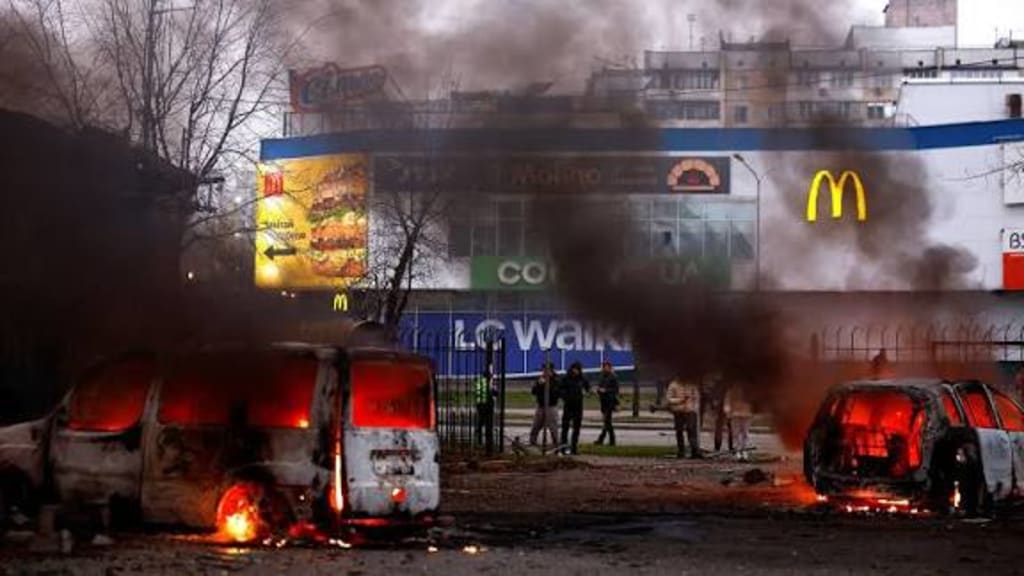
As the war in Ukraine enters yet another difficult phase, Russian missile and drone attacks have once again targeted the country’s power grid, leaving more than 600,000 people without electricity. The strikes have brought back memories of the harsh winters Ukrainians endured earlier in the war—months marked by blackouts, freezing homes, and desperate efforts to keep basic services running. While Ukraine has strengthened its defenses, the sheer scale of the latest attack shows how fragile critical infrastructure remains during wartime.
The widespread outage highlights not only the humanitarian consequences of the conflict but also Russia’s ongoing strategy of targeting energy facilities to weaken morale and disrupt daily life.
A Night of Heavy Strikes Across Multiple Regions
According to Ukrainian officials, the strikes took place in the early hours of the morning, when most residents were asleep. Dozens of missiles and explosive drones were launched toward major cities and energy hubs. Air defense units were able to intercept many of them, but some slipped through and hit key power stations and transmission lines.
The affected regions reported immediate outages. Entire neighborhoods went dark, streetlights flickered off, and communication networks weakened. In some cities, water pumps and heating systems temporarily failed because they rely on electric power to operate.
Ukrainian authorities described the attack as one of the largest in recent months, calling it a deliberate attempt to pressure the population as colder weather approaches.
Energy Infrastructure: A Strategic Target
From the beginning of the conflict, energy infrastructure has been one of Russia’s main targets. Power stations, substations, and transformer hubs are difficult to replace and even harder to protect. Damaging just a handful can destabilize the entire grid.
Experts believe Russia uses these strikes to achieve several goals:
Shake public morale by making daily life more difficult.
Slow industrial and military operations that rely on steady power.
Force Ukraine to spend time and resources repairing damaged facilities instead of focusing solely on military needs.
Ukraine’s power companies, however, have become more resilient. They have built more protective walls around facilities, spread equipment across multiple sites, and improved their ability to reroute energy. But no system can withstand repeated attacks indefinitely.
600,000 Left in the Dark
The immediate impact was felt most strongly by ordinary civilians. More than 600,000 residents were left without electricity, some for several hours and others for much longer. Families woke up to cold homes, dead phone batteries, and uncertainty about when power would return.
Hospitals activated backup generators to keep essential equipment running. Schools in several regions had to shift lessons online or cancel them entirely. Businesses dependent on refrigeration, heating, or electronics also suffered temporary losses.
For many Ukrainians, these outages bring back a familiar fear: the fear of winter without reliable electricity.
Emergency Crews Working Around the Clock
Ukraine’s energy workers, often called “the second front,” mobilized quickly. Repair teams were sent to damaged sites even while air raid alerts were ongoing. Many travelled to remote areas to fix transmission lines, replace damaged transformers, and restore power step by step.
Officials reported that a majority of the affected households had electricity restored within the first 12 to 24 hours, though some regions still struggled with instability. The speed of the repairs shows how much experience local crews have gained since the war began.
Still, each new attack increases the strain on Ukraine’s aging infrastructure. Some transformers and equipment destroyed in earlier assaults were already difficult to replace due to supply shortages.
Growing International Concern
The latest blackout has prompted renewed international concern. Several European leaders condemned the attack, calling it a violation of humanitarian norms. Energy experts warn that repeated strikes on such a large scale could create long-term instability in the region.
International partners have been helping Ukraine harden its grid by providing generators, transformers, and air-defense systems. But even with support, protecting thousands of miles of power lines and dozens of energy plants remains a major challenge.
A Population That Continues to Resist
Despite the hardship, Ukrainians have shown remarkable resilience. Many households keep emergency kits, power banks, candles, and portable stoves ready. Neighbors often help one another when outages hit. Community centers and shelters also provide warmth and charging stations during long blackouts.
For Ukraine, the latest attack is another reminder that the war is not just fought on the battlefield. It is fought in homes, in hospitals, in schools, and across the power grid that keeps society running.
As winter approaches again, the nation prepares for more challenges. But the determination to endure remains stronger than the darkness brought by any missile strike.
About the Creator
Fiaz Ahmed Brohi
I am a passionate writer with a love for exploring and creating content on trending topics. Always curious, always sharing stories that engage and inspire.
Keep reading
More stories from Fiaz Ahmed Brohi and writers in The Swamp and other communities.
Former Bangladesh PM Khaleda Zia’s Health “Very Critical”: A Nation Holds Its Breath
For decades, Khaleda Zia has been one of the most influential and polarizing figures in Bangladesh’s political history. A former prime minister, a longtime leader of the Bangladesh Nationalist Party (BNP), and a symbol of resistance for millions of her supporters, she has lived much of her life in the public eye. But today, the nation is watching her for a different reason — her health. According to her party leaders and medical team, Khaleda Zia’s condition is now “very critical,” sparking concern across the country and beyond.
By Fiaz Ahmed Brohi2 months ago in The Swamp
A Dart at Dusk
Seconds ago, the sullen sun set on the two of us… my exuberant furry companion and me. A fresh breeze embraces us, delivering welcome relief from the day’s oppressive heat. His typical stumbling and staggering along — apace with a sloth — has turned into trip-trapping, high-stepping, almost skipping along.
By Angie the Archivist 📚🪶5 days ago in Petlife




Comments
There are no comments for this story
Be the first to respond and start the conversation.