
Russian arms makers vanish from Asia’s largest airshow
Sanctions and the Ukraine war sideline Moscow’s defense industry from a key global stage Geopolitical isolation reshapes the balance of power at Asia’s premier defense exhibition Once-dominant Russian firms disappear as Western and Chinese rivals fill the gap Russia’s absence highlights shifting alliances in the global arms market Defense showcase reflects Moscow’s shrinking influence in Asia

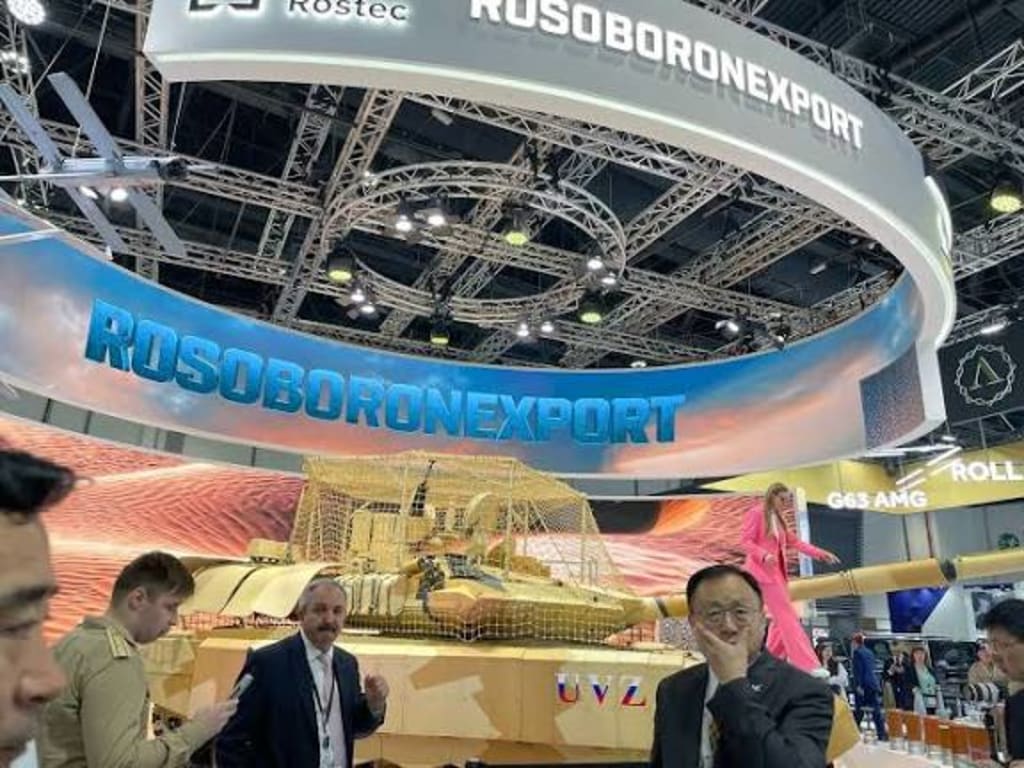
Russian defense manufacturers were notably absent from Asia’s largest airshow this year, marking a striking shift in the global arms industry and underscoring Moscow’s growing isolation from key international markets. The disappearance of Russian exhibitors from the high-profile event has drawn attention from military analysts and diplomats alike, raising questions about the future of Russia’s defense exports and its standing among Asian buyers.
The airshow, held in Singapore and regarded as the premier aerospace and defense exhibition in the Asia-Pacific region, traditionally attracts major arms producers from the United States, Europe, China, and Russia. In previous years, Russian firms showcased fighter jets, helicopters, missile systems, and radar technologies. This year, however, no Russian government-backed defense companies appeared on the exhibitor list.
A Symbol of Shifting Geopolitics
Observers say Russia’s absence reflects the deepening impact of international sanctions and the strain placed on its defense industry by the prolonged war in Ukraine. Western sanctions have severely restricted Russia’s access to key components, financing, and global transport networks, making participation in international defense exhibitions increasingly difficult.
“This is not just a logistical issue,” said a senior defense analyst in Singapore. “It is a political signal. Russia’s absence highlights how far its international defense ties have eroded since the invasion of Ukraine.”
Several Asian governments have been cautious about maintaining visible defense cooperation with Moscow, fearing diplomatic backlash from Western allies and potential exposure to secondary sanctions. While some countries continue to operate Russian-made equipment, they are now exploring alternative suppliers for upgrades and new purchases.
Once a Major Player in Asia
For decades, Russia was one of the largest arms suppliers to Asia, providing fighter aircraft and missile systems to India, Vietnam, Malaysia, and Indonesia. Russian-made Sukhoi jets were once a dominant presence at airshows, drawing crowds and serving as symbols of Moscow’s technological prowess.
In recent years, however, Russia’s export capacity has declined. Defense factories have been redirected toward domestic military needs, limiting production for overseas customers. Delivery schedules have slipped, and maintenance support has become more complicated as sanctions restrict spare parts and financial transactions.
India, historically Russia’s biggest defense partner in Asia, has increasingly diversified its arms purchases, turning to the United States, France, and Israel. Southeast Asian nations have followed a similar pattern, seeking equipment that is easier to maintain and politically safer to procure.
Competition Fills the Gap
The absence of Russian companies left more space for Western and Asian manufacturers to dominate the exhibition floor. U.S. defense firms showcased next-generation fighter aircraft, drones, and missile defense systems, while European companies highlighted advanced radar and electronic warfare technologies. Chinese manufacturers also maintained a strong presence, displaying fighter jets and unmanned systems aimed at export markets.
“This airshow made it clear who the rising and declining players are,” said a regional military procurement expert. “Russia’s disappearance contrasts sharply with the aggressive marketing by China and the steady presence of U.S. and European firms.”
Several countries attending the airshow reportedly held closed-door meetings with Western suppliers to discuss long-term procurement strategies. Analysts say this reflects a growing shift toward interoperability with U.S. and NATO-standard equipment.
Diplomatic Sensitivities
Event organizers declined to comment directly on Russia’s absence, saying exhibitor participation is voluntary and subject to national regulations. However, diplomatic sources indicated that pressure from host governments and concerns about reputational risk played a role.
“Hosting Russian defense firms now carries political implications,” said one diplomat familiar with the discussions. “Many countries want to avoid being seen as endorsing or legitimizing Moscow’s military actions.”
The airshow also served as a forum for regional security talks, including discussions about tensions in the South China Sea, Taiwan, and the Korean Peninsula. Russia’s absence from these informal diplomatic interactions further reduced its visibility in Asia’s evolving security landscape.
Impact on Russia’s Defense Industry
The lack of international exposure could have long-term consequences for Russia’s arms industry, which relies heavily on export revenue to fund research and development. With fewer opportunities to attract new buyers, Russian manufacturers may become increasingly dependent on domestic contracts and a small group of friendly states.
Some analysts believe Russia will pivot further toward markets in Africa and the Middle East, where political alignments may be more favorable. However, competition from China and Turkey is growing in those regions as well, offering cheaper and more flexible alternatives.
“Russia’s defense industry is facing a double challenge,” said a Moscow-based military economist. “It must sustain wartime production at home while trying to remain relevant abroad. The absence from Asia’s biggest airshow suggests that balance is becoming harder to maintain.”
A Broader Message
Beyond commercial implications, the empty Russian booths carried symbolic weight. Defense exhibitions are not just trade events; they are platforms for power projection and diplomatic influence. Russia’s nonappearance was widely interpreted as evidence of its reduced soft power in Asia.
“It sends a message that Russia is no longer a central player in shaping regional security discussions,” said a Southeast Asian security scholar. “That role is increasingly being filled by the United States and China.”
Looking Ahead
Whether Russian defense firms will return to future airshows remains uncertain. Much will depend on the trajectory of the war in Ukraine and the durability of international sanctions. Even if restrictions ease, rebuilding trust with Asian buyers could take years.
For now, the disappearance of Russian arms makers from Asia’s largest airshow highlights a broader transformation in the global arms market. It reflects not only the economic consequences of conflict but also the shifting alliances and strategic calculations that are redefining security in the Asia-Pacific region.
As one industry observer put it, “An airshow floor can tell you a lot about world politics. And this year, the absence of Russia spoke louder than any display.”
About the Creator
Fiaz Ahmed Brohi
I am a passionate writer with a love for exploring and creating content on trending topics. Always curious, always sharing stories that engage and inspire.
Keep reading
More stories from Fiaz Ahmed Brohi and writers in The Swamp and other communities.
US Must Be Prudent When Supplying Arms to Taiwan, Xi Tells Trump
Chinese President Xi Jinping has warned that the United States must exercise “prudence and restraint” in supplying weapons to Taiwan, emphasizing that the issue remains the most sensitive and potentially explosive point in relations between Beijing and Washington. The message was delivered during a direct exchange with former U.S. President Donald Trump, according to Chinese state media, as tensions continue to simmer over Taiwan’s security and the broader strategic rivalry between the world’s two largest economies. Xi’s comments came amid renewed debate in Washington over arms sales and military cooperation with Taipei. The United States has long maintained a policy of providing Taiwan with defensive weapons under the Taiwan Relations Act, while formally recognizing Beijing as the sole legal government of China. China, however, views any U.S. military support for Taiwan as a violation of its sovereignty and a threat to regional stability. A Sensitive Diplomatic Exchange According to official readouts from Beijing, Xi urged Trump to “handle the Taiwan question carefully” and avoid actions that could embolden what China describes as separatist forces on the island. He stressed that peace and stability in the Taiwan Strait depend on mutual respect for China’s “core interests.” “The Taiwan question concerns China’s sovereignty and territorial integrity,” Xi reportedly said. “Any external interference will only increase confrontation and risk serious consequences.” While the U.S. side has not released detailed remarks from Trump, sources familiar with the exchange said the former president reaffirmed America’s interest in maintaining peace in the Indo-Pacific while also underscoring the importance of supporting democratic partners. The exchange reflects ongoing strains between Washington and Beijing over military posture in Asia, even as both sides attempt to keep communication channels open to avoid miscalculation. Arms Sales and Strategic Signaling Over the past several years, the United States has approved multiple arms packages for Taiwan, including fighter jets, missile defense systems, and advanced radar equipment. These sales are framed by U.S. officials as necessary for Taiwan’s self-defense in the face of growing Chinese military pressure. China has consistently condemned such transfers, often responding with military drills near Taiwan and diplomatic protests. Beijing argues that these moves encourage Taiwanese leaders to resist reunification and undermine efforts to manage cross-strait relations peacefully. In recent months, Chinese military activity around Taiwan has intensified, with regular air and naval patrols crossing the median line of the Taiwan Strait. Analysts see these actions as a warning to both Taipei and Washington that Beijing is prepared to use force if it perceives red lines being crossed. “The arms issue is not symbolic; it is central to China’s perception of U.S. intentions,” said one Asia-Pacific security expert. “From Beijing’s perspective, more weapons mean more resistance to reunification and a higher chance of conflict.” Trump’s Taiwan Record During his presidency, Trump took several steps that reshaped U.S.-China relations, including a trade war and a more confrontational stance on technology and security issues. His administration approved significant arms sales to Taiwan and increased diplomatic engagement with Taiwanese officials, breaking with decades of cautious protocol. Those policies were welcomed in Taipei but sharply criticized in Beijing. Chinese officials accused Washington of hollowing out the “One China” principle, which underpins diplomatic relations between the two countries. Trump has recently returned to political prominence, and his views on Taiwan are being closely watched as U.S. elections approach. While he has expressed support for Taiwan’s defense, he has also questioned the costs of U.S. commitments abroad, creating uncertainty about how he would handle future arms decisions. Regional Implications Xi’s warning highlights how Taiwan has become a focal point of global security concerns. Allies such as Japan and Australia have increased coordination with the United States, citing the need to deter any unilateral change to the status quo in the Taiwan Strait. At the same time, Southeast Asian nations remain wary of being drawn into a conflict between two superpowers. Economic consequences are also part of the calculation. Taiwan is a critical hub for semiconductor manufacturing, and any disruption to its stability could send shockwaves through global supply chains. “Taiwan is not just a political issue; it’s an economic one,” said a trade analyst. “A conflict there would affect everything from consumer electronics to automobiles.” Calls for Stability and Dialogue Despite the sharp rhetoric, both Washington and Beijing have repeatedly said they do not seek war. U.S. officials argue that arms sales are defensive and designed to preserve deterrence, not provoke confrontation. Chinese leaders, meanwhile, insist that reunification remains their long-term goal but stress that peaceful means are preferred. Xi’s appeal for prudence suggests an attempt to rein in escalation while still drawing a firm line. Analysts note that China’s leadership is under domestic pressure to appear strong on sovereignty issues, especially as nationalism remains a powerful force in Chinese politics. “Xi cannot be seen as backing down on Taiwan,” said a political analyst in Beijing. “But he also wants to avoid a crisis that could harm China’s economy or derail diplomatic efforts with the U.S.” A Fragile Balance The exchange between Xi and Trump underscores the fragile balance that defines U.S.-China relations. Taiwan remains the most dangerous flashpoint, where missteps could rapidly spiral into confrontation. For now, both sides appear intent on maintaining dialogue while signaling resolve. Whether that balance can be sustained will depend largely on future decisions about arms sales, military deployments, and political engagement with Taipei. As Xi cautioned, prudence may be the key word — but in an era of strategic rivalry and mutual suspicion, restraint will be increasingly difficult to maintain.
By Fiaz Ahmed Brohi3 days ago in The Swamp
Why Black History Matters in America?
The United States of America is celebrating their 250th anniversary in 2026. I'm proud to be an American and as someone who was born here, I wouldn't imagine myself living anywhere else. This is a country where opportunities are possible. Where anyone can be successful in anything they desire to do. Equality, community, and togetherness are the backbones of what America is and should be about. However, we have an administration who wants to erase and disregard those who have made positive, meaningful impacts in our country, specifically Black figures, such as Martin Luther King, Jr., Rosa Parks, and Maya Angelou. President Trump and his administration have been constantly complaining and fighting against what they call the "Woke agenda". They use this excuse as a distraction from other issues they refuse to address, such as the high cost of living, climate change, and inflation. That equality is dividing America, when in reality, it's bringing us together. Being woke is not tied to a specific political party. No matter where you stand on the political spectrum, you can still care about other people and their plights. Compassion and empathy for others isn't tied to a political party, either. We were taught as children to treat others the way we want to be treated and not judge others because they're different from us. Caring about others isn't a personal attack on your beliefs. It doesn't make you any less of a person. People who are easily offended over African American figures, past or present, or anything related to it, are grasping at straws. Current and future generations need to know who people like Harriet Tubman and Shirley Chisholm were, especially in the classroom. Black History is part of American History. It should be recognized, not hidden or forgotten. Besides, you can't shield children from everything, just because your feelings are easily hurt.
By Mark Wesley Pritchard 7 days ago in The Swamp
Russia Names Three Suspects Over Shooting of Senior General
Russia has named three suspects in connection with the shooting of a senior military general, an incident that has sent shockwaves through the country’s security establishment and reignited debate over internal stability during wartime. The attack, which reportedly took place in a residential area, marks one of the most serious assaults on a high-ranking Russian military figure in recent years.
By Ayesha Lashariabout 2 hours ago in The Swamp
The Angry Man in Your House
"If you grow up with an angry man in your house, there will always be an angry man in your house" This statement has caused plenty of controversy online, people say its a statement that blames victims while also undermining those who break traumatic cycles to form health relationships... but if I'm honest now that I'm in my 30s it makes more sense to me than ever, and I'd argue that its not just about fathers and uncles.
By S. A. Crawforda day ago in Humans



Comments
There are no comments for this story
Be the first to respond and start the conversation.