
US Must Be Prudent When Supplying Arms to Taiwan, Xi Tells Trump
Chinese leader warns against escalating tensions over Taiwan in high-level exchange with Trump Beijing urges restraint as Washington weighs further arms sales to Taipei Taiwan remains flashpoint in renewed U.S.–China diplomatic messaging Xi stresses sovereignty concerns while calling for stability in the Taiwan Strait Warning reflects growing unease over military support for Taiwan

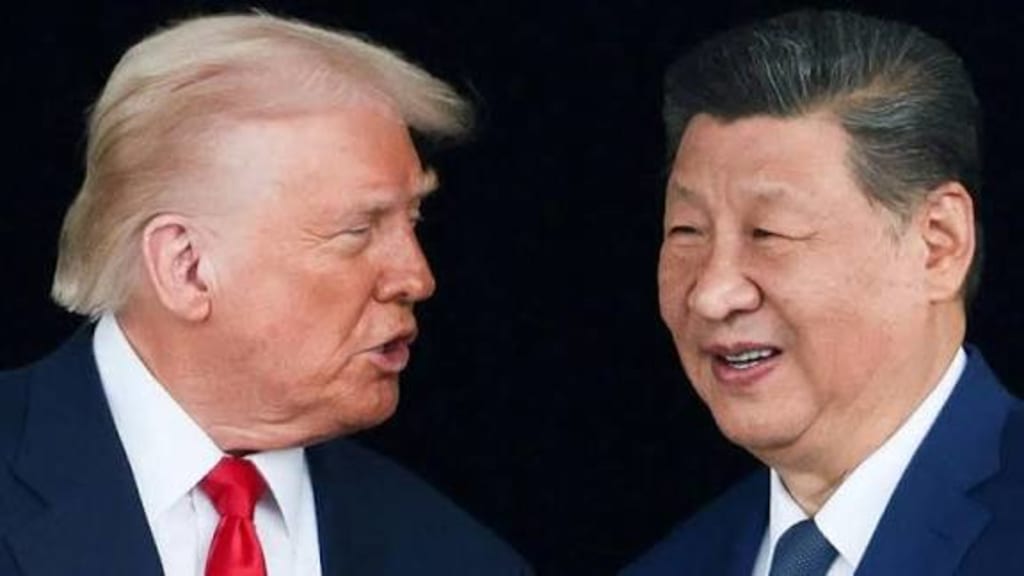
Chinese President Xi Jinping has warned that the United States must exercise “prudence and restraint” in supplying weapons to Taiwan, emphasizing that the issue remains the most sensitive and potentially explosive point in relations between Beijing and Washington. The message was delivered during a direct exchange with former U.S. President Donald Trump, according to Chinese state media, as tensions continue to simmer over Taiwan’s security and the broader strategic rivalry between the world’s two largest economies.
Xi’s comments came amid renewed debate in Washington over arms sales and military cooperation with Taipei. The United States has long maintained a policy of providing Taiwan with defensive weapons under the Taiwan Relations Act, while formally recognizing Beijing as the sole legal government of China. China, however, views any U.S. military support for Taiwan as a violation of its sovereignty and a threat to regional stability.
A Sensitive Diplomatic Exchange
According to official readouts from Beijing, Xi urged Trump to “handle the Taiwan question carefully” and avoid actions that could embolden what China describes as separatist forces on the island. He stressed that peace and stability in the Taiwan Strait depend on mutual respect for China’s “core interests.”
“The Taiwan question concerns China’s sovereignty and territorial integrity,” Xi reportedly said. “Any external interference will only increase confrontation and risk serious consequences.”
While the U.S. side has not released detailed remarks from Trump, sources familiar with the exchange said the former president reaffirmed America’s interest in maintaining peace in the Indo-Pacific while also underscoring the importance of supporting democratic partners.
The exchange reflects ongoing strains between Washington and Beijing over military posture in Asia, even as both sides attempt to keep communication channels open to avoid miscalculation.
Arms Sales and Strategic Signaling
Over the past several years, the United States has approved multiple arms packages for Taiwan, including fighter jets, missile defense systems, and advanced radar equipment. These sales are framed by U.S. officials as necessary for Taiwan’s self-defense in the face of growing Chinese military pressure.
China has consistently condemned such transfers, often responding with military drills near Taiwan and diplomatic protests. Beijing argues that these moves encourage Taiwanese leaders to resist reunification and undermine efforts to manage cross-strait relations peacefully.
In recent months, Chinese military activity around Taiwan has intensified, with regular air and naval patrols crossing the median line of the Taiwan Strait. Analysts see these actions as a warning to both Taipei and Washington that Beijing is prepared to use force if it perceives red lines being crossed.
“The arms issue is not symbolic; it is central to China’s perception of U.S. intentions,” said one Asia-Pacific security expert. “From Beijing’s perspective, more weapons mean more resistance to reunification and a higher chance of conflict.”
Trump’s Taiwan Record
During his presidency, Trump took several steps that reshaped U.S.-China relations, including a trade war and a more confrontational stance on technology and security issues. His administration approved significant arms sales to Taiwan and increased diplomatic engagement with Taiwanese officials, breaking with decades of cautious protocol.
Those policies were welcomed in Taipei but sharply criticized in Beijing. Chinese officials accused Washington of hollowing out the “One China” principle, which underpins diplomatic relations between the two countries.
Trump has recently returned to political prominence, and his views on Taiwan are being closely watched as U.S. elections approach. While he has expressed support for Taiwan’s defense, he has also questioned the costs of U.S. commitments abroad, creating uncertainty about how he would handle future arms decisions.
Regional Implications
Xi’s warning highlights how Taiwan has become a focal point of global security concerns. Allies such as Japan and Australia have increased coordination with the United States, citing the need to deter any unilateral change to the status quo in the Taiwan Strait. At the same time, Southeast Asian nations remain wary of being drawn into a conflict between two superpowers.
Economic consequences are also part of the calculation. Taiwan is a critical hub for semiconductor manufacturing, and any disruption to its stability could send shockwaves through global supply chains.
“Taiwan is not just a political issue; it’s an economic one,” said a trade analyst. “A conflict there would affect everything from consumer electronics to automobiles.”
Calls for Stability and Dialogue
Despite the sharp rhetoric, both Washington and Beijing have repeatedly said they do not seek war. U.S. officials argue that arms sales are defensive and designed to preserve deterrence, not provoke confrontation. Chinese leaders, meanwhile, insist that reunification remains their long-term goal but stress that peaceful means are preferred.
Xi’s appeal for prudence suggests an attempt to rein in escalation while still drawing a firm line. Analysts note that China’s leadership is under domestic pressure to appear strong on sovereignty issues, especially as nationalism remains a powerful force in Chinese politics.
“Xi cannot be seen as backing down on Taiwan,” said a political analyst in Beijing. “But he also wants to avoid a crisis that could harm China’s economy or derail diplomatic efforts with the U.S.”
A Fragile Balance
The exchange between Xi and Trump underscores the fragile balance that defines U.S.-China relations. Taiwan remains the most dangerous flashpoint, where missteps could rapidly spiral into confrontation.
For now, both sides appear intent on maintaining dialogue while signaling resolve. Whether that balance can be sustained will depend largely on future decisions about arms sales, military deployments, and political engagement with Taipei.
As Xi cautioned, prudence may be the key word — but in an era of strategic rivalry and mutual suspicion, restraint will be increasingly difficult to maintain.
About the Creator
Fiaz Ahmed Brohi
I am a passionate writer with a love for exploring and creating content on trending topics. Always curious, always sharing stories that engage and inspire.
Keep reading
More stories from Fiaz Ahmed Brohi and writers in The Swamp and other communities.
Ban on Asylum Seekers Using Taxis for Medical Appointments Comes Into Force
A controversial new policy banning asylum seekers from using taxis to attend routine medical appointments has officially come into force, prompting concern from healthcare professionals, charities, and migrant advocacy groups who warn the move could put vulnerable people at risk and create barriers to essential healthcare access. The ban, introduced by the Home Office as part of wider cost-cutting measures within the asylum support system, restricts the use of government-funded taxis except in cases deemed “medically exceptional.” Officials argue the policy is necessary to reduce spiraling transport costs and encourage the use of public transport where possible. Critics, however, say it ignores the physical, psychological, and practical realities faced by many asylum seekers. A Shift in Policy Previously, asylum seekers housed in temporary accommodation were allowed to use pre-approved taxi services to attend hospital appointments, particularly when living in remote locations or when language barriers made navigating public transport difficult. Under the new rules, individuals must now apply for special permission to use taxis, and approvals will be granted only for emergencies or cases involving severe disability or acute illness. Home Office sources say transport costs had risen sharply over the past year, driven by increased demand for medical services and the growing number of people in asylum accommodation. The department estimates that millions of pounds could be saved annually by requiring asylum seekers to rely primarily on buses and trains. A spokesperson said the change was designed to “ensure fairness and value for taxpayers” while still allowing exemptions for those with complex medical needs. “We remain committed to ensuring asylum seekers can access healthcare services,” the spokesperson said. “This policy ensures that public transport is used where reasonable, while taxis remain available for exceptional circumstances.” Concerns From Doctors and Charities Medical professionals have raised alarm over the potential impact of the ban. Doctors working with refugee communities warn that many asylum seekers suffer from trauma, chronic illness, and mental health conditions that make long journeys by public transport extremely challenging. Dr. Helen Morris, a GP who works with asylum seekers in northern England, said the policy could discourage people from attending vital appointments. “Some of my patients already struggle to leave their accommodation due to anxiety, depression, or post-traumatic stress disorder,” she said. “Now they are being asked to navigate unfamiliar transport systems, often in a language they don’t understand, to reach hospitals that may be miles away. The risk is that people simply won’t go.” Charities supporting migrants echoed those concerns. The Refugee Health Network said the ban could result in missed appointments, delayed diagnoses, and worsening health outcomes, ultimately costing the NHS more in the long run. “This is a short-sighted policy,” said the group’s director, Samira Patel. “Denying people safe and reliable transport does not save money if it leads to emergency hospital admissions later.” Practical Barriers Advocates point out that asylum seekers are often placed in hotels or accommodation on the outskirts of cities, far from GP surgeries or hospitals. Many are unfamiliar with local transport systems and lack access to smartphones or bank cards needed to plan journeys or buy tickets. Language barriers further complicate matters. Appointment letters are typically written in English, and transport instructions can be confusing even for fluent speakers. Fatima, an asylum seeker from Sudan living in temporary accommodation, said she fears missing future hospital visits. “I don’t know how to take two buses and a train,” she said through an interpreter. “Before, the taxi came and took me to the hospital. Now they say I must use public transport. I am scared I will get lost.” Campaigners have also raised safety concerns, particularly for women and families traveling long distances with children. Political Reaction Opposition politicians have criticized the policy, accusing the government of targeting one of the most vulnerable groups in society. “This decision prioritizes savings over human dignity,” said one shadow health minister. “Access to healthcare should never depend on whether someone can navigate an unfamiliar bus route.” Several local councils have warned that the change could shift responsibility onto already overstretched community services. Some are considering using their own limited funds to provide transport for high-risk individuals. However, government supporters argue that the measure aligns asylum support with what is expected of other low-income residents who must also rely on public transport to attend appointments. “Taxpayers should not be footing the bill for taxis when buses and trains are available,” said one senior Conservative MP. “Exemptions exist for those who genuinely need them.” Legal and Ethical Questions Human rights lawyers are examining whether the policy could breach obligations under international law to ensure access to healthcare without discrimination. They argue that the practical effect of the ban may disproportionately harm those with disabilities, mental health conditions, or trauma-related symptoms. A legal challenge is already being considered by several advocacy groups, who claim the policy fails to account for individual circumstances. “This is not about convenience,” said lawyer James Holloway. “It is about whether people can realistically attend medical appointments at all.” Looking Ahead As the ban takes effect, charities are calling for urgent monitoring of its impact. They want the government to publish data on missed appointments and health outcomes over the next six months. Healthcare providers fear that the policy could increase pressure on emergency services if asylum seekers delay treatment until conditions become critical. For now, asylum seekers and the organizations that support them are scrambling to adapt, offering travel guidance and accompaniment services where possible. But many say this is no substitute for a system that ensured reliable access to care. “This policy sends a troubling message,” said Patel. “It suggests that cost savings matter more than people’s health. That is not a principle any healthcare system should accept.”
By Fiaz Ahmed Brohi3 days ago in The Swamp
Why Black History Matters in America?
The United States of America is celebrating their 250th anniversary in 2026. I'm proud to be an American and as someone who was born here, I wouldn't imagine myself living anywhere else. This is a country where opportunities are possible. Where anyone can be successful in anything they desire to do. Equality, community, and togetherness are the backbones of what America is and should be about. However, we have an administration who wants to erase and disregard those who have made positive, meaningful impacts in our country, specifically Black figures, such as Martin Luther King, Jr., Rosa Parks, and Maya Angelou. President Trump and his administration have been constantly complaining and fighting against what they call the "Woke agenda". They use this excuse as a distraction from other issues they refuse to address, such as the high cost of living, climate change, and inflation. That equality is dividing America, when in reality, it's bringing us together. Being woke is not tied to a specific political party. No matter where you stand on the political spectrum, you can still care about other people and their plights. Compassion and empathy for others isn't tied to a political party, either. We were taught as children to treat others the way we want to be treated and not judge others because they're different from us. Caring about others isn't a personal attack on your beliefs. It doesn't make you any less of a person. People who are easily offended over African American figures, past or present, or anything related to it, are grasping at straws. Current and future generations need to know who people like Harriet Tubman and Shirley Chisholm were, especially in the classroom. Black History is part of American History. It should be recognized, not hidden or forgotten. Besides, you can't shield children from everything, just because your feelings are easily hurt.
By Mark Wesley Pritchard 7 days ago in The Swamp
Trump Is Hosting Governors at the White House, but Only Republicans
Former President Donald Trump is hosting a gathering of Republican governors at the White House this week, a move that has drawn attention for both its symbolism and its sharp partisan message. The event, framed by organizers as a discussion on national priorities and state leadership, notably excludes Democratic governors, underscoring the increasingly polarized nature of U.S. politics. The meeting comes as Trump continues to position himself as the central figure of the Republican Party and a dominant force ahead of the next election cycle. By inviting only GOP governors, Trump is reinforcing loyalty within his political base while signaling that his vision for governance remains firmly aligned with conservative leadership. A Partisan Stage According to officials familiar with the plans, the agenda focuses on issues such as border security, crime, education policy, and economic growth — topics that Republican leaders have emphasized in contrast to Democratic approaches. The gathering is being promoted as an opportunity for governors to share their experiences and coordinate strategies that reflect conservative priorities at both the state and national levels. Democratic governors were not invited, a decision that critics say undermines the spirit of bipartisan cooperation traditionally associated with White House meetings. In past administrations, similar conferences often included leaders from both parties to address national challenges ranging from disaster response to infrastructure development. “This is less about governing and more about political theater,” said one Democratic strategist. “It sends a message that the White House is being used as a partisan headquarters rather than a forum for national unity.” Supporters of the event argue that it reflects political reality. They note that Trump’s relationship with Democratic leaders has long been strained and that Republican governors represent a natural audience for his policy agenda. Loyalty and Influence Several prominent Republican governors are expected to attend, including those seen as potential future presidential contenders. Their presence highlights the delicate balance within the party between maintaining loyalty to Trump and preparing for a post-Trump political landscape. For Trump, the meeting serves multiple purposes. It demonstrates that he still commands respect and attention from state leaders while allowing him to shape policy discussions that could influence Republican platforms nationwide. It also provides a public display of unity at a time when internal party divisions over strategy and messaging continue to surface. Political analysts say the optics are intentional. “This is about showing strength,” said one veteran observer of U.S. politics. “By surrounding himself with Republican governors, Trump is projecting an image of leadership and control.” Reaction from the States Some Republican governors welcomed the invitation, describing it as a chance to exchange ideas and coordinate responses to shared challenges. They emphasized the importance of federal-state cooperation on issues such as immigration enforcement and disaster preparedness. “We need strong partnerships to protect our communities and our economy,” said one governor who plans to attend. “This meeting allows us to speak directly with the president about what’s working in our states.” Others, however, privately expressed concern that the exclusive nature of the event could deepen political divides and complicate relationships with Democratic-led states. Meanwhile, Democratic governors criticized the decision to exclude them, arguing that issues like healthcare, climate resilience, and infrastructure require collaboration across party lines. Several pointed out that crises such as hurricanes and wildfires do not respect political boundaries. A Broader Political Signal The gathering also reflects Trump’s broader strategy of rallying Republican officials around key campaign themes. Immigration, in particular, is expected to dominate discussions, with several GOP governors pushing for tougher enforcement and greater state authority in border control. Education policy and culture war issues are also likely to feature prominently, as Trump continues to frame national debates around school curricula, gender policies, and public safety. The White House has defended the meeting as an internal policy discussion rather than a national summit. Officials said future engagements with Democratic leaders were not ruled out, though no such meetings have been announced. What It Means Going Forward The event highlights the evolving role of the White House as both a governing institution and a political symbol. By hosting only Republican governors, Trump is blurring the line between official business and partisan mobilization. Whether this approach strengthens his standing with conservative voters or fuels further criticism from opponents remains to be seen. What is clear is that the meeting reflects the deep partisan divisions shaping American politics and the challenges of finding common ground in an increasingly fractured environment. As the governors arrive in Washington, the gathering will serve as both a policy discussion and a powerful image: a White House filled with allies, but missing half the country’s state leaders.
By Fiaz Ahmed a day ago in The Swamp
The Devil's Triangle
The sails ruffled in the breeze as we cruised along. The Sea Breeze was a mid-size catamaran that sailed out of Royal Naval Dockyard in Bermuda. We had booked this trip weeks in advance and were now looking at our Captain, Spike and two boat hands. Paddy and Wilson seemed like nice guys, joking around with the passengers and telling us some stories about Bermuda that only locals would know. Their island accents sounded almost British but they were pleasant to listen to.
By Barbara Gode Wiles5 days ago in Fiction



Comments
There are no comments for this story
Be the first to respond and start the conversation.