
Russia attacks Ukraine with 50 missiles and nearly 300 drones
Russia launches a massive overnight assault on Ukraine with missiles and drones, targeting energy and military infrastructure while civilians scramble for safety.

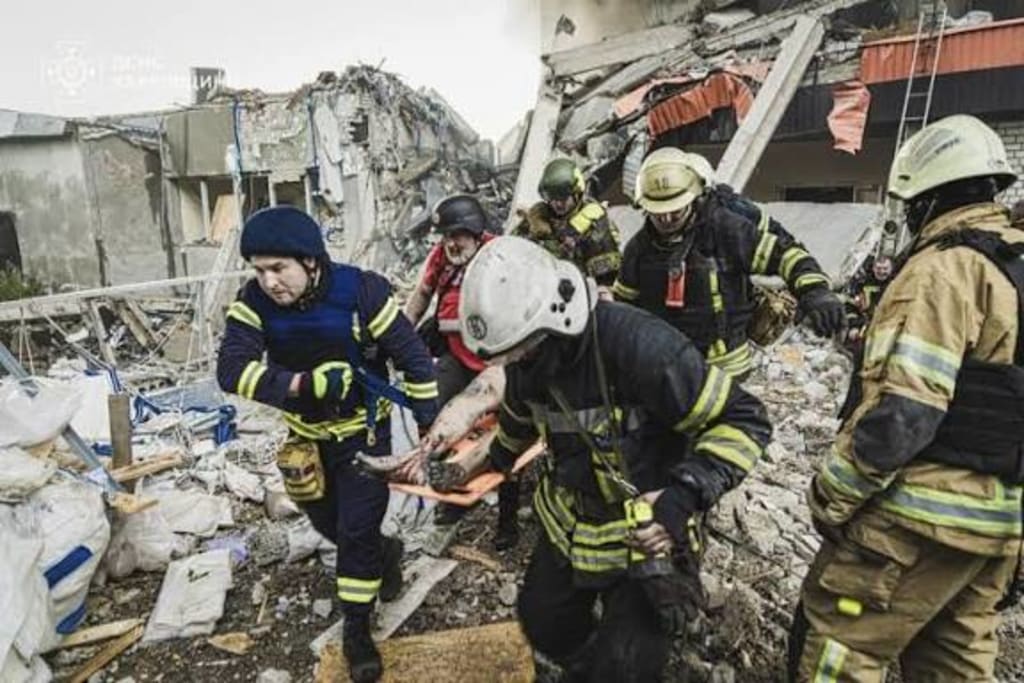
In one of the largest aerial assaults in recent months, Russia launched approximately 50 missiles and nearly 300 drones against targets across Ukraine, Ukrainian authorities said, underscoring the intensifying pressure on the nation’s air defenses as winter conditions strain energy and infrastructure systems.
According to Ukraine’s Air Force, the barrage included cruise missiles, ballistic missiles, and Iranian-designed Shahed drones, which were launched in multiple waves overnight. Air raid sirens sounded in several regions, including the capital Kyiv, as air defense units worked through the night to intercept incoming threats. Officials reported that a significant portion of the missiles and drones were shot down, though debris from intercepted targets still caused damage in residential areas.
Emergency services confirmed injuries in several cities and reported fires at industrial facilities and power infrastructure sites. In the southern and eastern regions, where fighting has been most intense, local authorities said electricity outages affected thousands of households. Repair crews were dispatched at dawn to restore damaged lines and assess structural harm to public buildings.
Ukraine’s military described the attack as a coordinated attempt to overwhelm air defenses by combining large numbers of drones with high-speed missiles. “The enemy seeks to exhaust our systems and terrorize civilians,” an Air Force spokesperson said in a televised briefing. “Despite the scale of the strike, our forces managed to neutralize the majority of threats.”
The attack came amid ongoing battles along the front lines in eastern Ukraine, where Russian and Ukrainian troops have clashed over key towns and supply routes. Analysts say the timing of the missile and drone assault suggests a strategic effort to weaken logistics and morale ahead of renewed ground operations.
President Volodymyr Zelenskyy condemned the strikes and renewed his call for Western allies to provide more advanced air defense systems. In a statement on social media, he said the scale of the attack showed that Moscow had no intention of de-escalating. “Only strength and unity can stop this terror,” he wrote, urging partners to accelerate deliveries of interceptor missiles and radar equipment.
Western governments reacted swiftly. Several European leaders expressed solidarity with Ukraine and reiterated support for its sovereignty. NATO officials said the alliance was monitoring the situation closely and emphasized that continued assistance to Kyiv remained critical to countering long-range threats.
In Moscow, the Defense Ministry claimed the operation targeted military and energy-related facilities linked to Ukraine’s war effort. Russian officials have repeatedly said such strikes are aimed at degrading Ukraine’s ability to sustain operations, though Ukrainian authorities argue that civilian areas are disproportionately affected.
Residents in Kyiv described a night of fear and exhaustion. “The explosions were constant,” said Olena, a schoolteacher who sheltered in a subway station with her family. “We waited for hours until the sirens stopped. Every time, you wonder if this one will hit your building.”
Energy experts warned that repeated strikes on power infrastructure could worsen conditions as colder temperatures set in. Last winter, similar campaigns led to rolling blackouts and water shortages across major cities. This year, Ukraine has strengthened its grid defenses, but officials acknowledge that no system can fully prevent damage when attacks come in such volume.
Humanitarian organizations also raised concerns about the psychological toll on civilians. The United Nations mission in Ukraine said ongoing aerial bombardments increase displacement risks and strain hospitals and emergency responders already stretched by nearly three years of conflict.
The latest assault highlights the evolving nature of the war, with drones and missiles playing an increasingly central role. While front-line battles continue, long-range strikes have become a key tool for both sides, shaping not only military outcomes but also daily life for millions of civilians.
As Ukraine counts the cost of the latest attack, officials say preparations are underway for potential follow-up strikes. Air defense units remain on high alert, and authorities have urged residents to heed warnings and seek shelter when sirens sound.
The barrage serves as a stark reminder that despite diplomatic efforts and shifting global attention, the conflict remains volatile. For Ukraine’s population, the night of missiles and drones was another chapter in a war that continues to test resilience, infrastructure, and international resolve.
About the Creator
Fiaz Ahmed
I am Fiaz Ahmed. I am a passionate writer. I love covering trending topics and breaking news. With a sharp eye for what’s happening around the world, and crafts timely and engaging stories that keep readers informed and updated.
Keep reading
More stories from Fiaz Ahmed and writers in The Swamp and other communities.
Saint Francis of Assisi’s skeleton goes on public display for the first time
For the first time in nearly eight centuries, the skeletal remains of Saint Francis of Assisi have been placed on public view, marking a rare and deeply symbolic moment for the Catholic Church and millions of pilgrims around the world. The unprecedented display is taking place in the historic Basilica of San Francesco in Assisi, the Italian hill town where the saint was born and where his legacy of humility and devotion continues to shape Christian spirituality.
By Fiaz Ahmed about 22 hours ago in The Swamp
A Gathering of Evil Bosses
“I’m the queen of chin jutting while I smooth my hair, attacking, insulting, and deflecting to protect my appointer.” “Oh, please, Blondi, my hair is curled, highlighted, and longer than yours. I feature television commercials telling immigrants that we will give them a free plane ride home, and if they voluntarily turn themselves in, they will be allowed to legally apply for re-entry. It runs everywhere, and I look good in it! You can’t compete because of your blond hair. Mine is nicer, and my lips are prettier than yours.”
By Andrea Corwin 5 days ago in The Swamp
It's 2026. Songs Turning 10 This Year
In 2016, we saw the rise of short form videos and what would lead to the birth of TikTok. We cannot forget the Snapchat filters no matter how cringe worthy some of them might have been. It was also the year in which the hit series Stranger Things debuted.
By Jasmine Aguilarabout 22 hours ago in Beat




Comments
There are no comments for this story
Be the first to respond and start the conversation.