
Rubio Remains Vague on Transition Plan for Venezuela
Uncertainty Grows as U.S. Policy Signals Lack Clarity on Venezuela’s Political Future

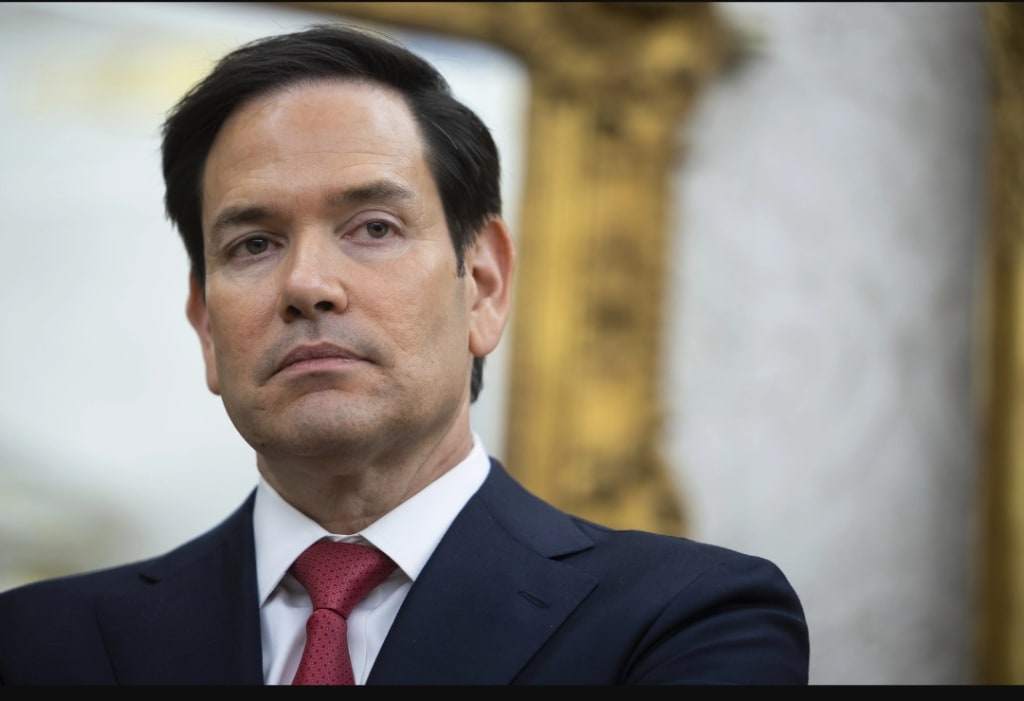
As Venezuela’s prolonged political crisis continues to grip the nation, fresh attention has turned to comments by U.S. Senator Marco Rubio, a long-time advocate of a hardline approach toward Caracas. Despite renewed discussions about political change and international pressure, Rubio has remained vague about any concrete transition plan for Venezuela, raising questions about Washington’s endgame and the future stability of the country.
The lack of clarity has drawn criticism from analysts, humanitarian groups, and regional observers who argue that without a realistic roadmap, external pressure risks prolonging Venezuela’s crisis rather than resolving it.
Venezuela’s Ongoing Political Deadlock
Venezuela has endured years of political paralysis marked by disputed elections, economic collapse, and mass migration. Millions of citizens have fled the country amid shortages of food, medicine, and basic services.
The United States has played a central role in pressuring Venezuela’s leadership through sanctions, diplomatic isolation, and support for opposition figures. Senator Rubio has been one of the most vocal proponents of these measures, frequently calling for strong action against the government.
However, as the crisis drags on, attention has shifted from pressure tactics to the question of what comes next.
Rubio’s Statements Raise More Questions Than Answers
In recent remarks, Rubio reiterated support for democratic change in Venezuela but avoided offering details on how a political transition would be managed. When asked about timelines, governance structures, or economic recovery frameworks, his responses focused on broad principles rather than actionable steps.
This vagueness has fueled concern among policymakers and experts who argue that removing a government without a clear transition strategy can lead to instability, power vacuums, or prolonged conflict.
Critics note that while Rubio emphasizes accountability and democracy, he has stopped short of outlining how institutions would be rebuilt or how humanitarian relief would be delivered during a transition.
The Cost of Strategic Ambiguity
Analysts warn that strategic ambiguity may undermine U.S. credibility. Without a clear plan, allies may hesitate to fully support Washington’s approach, while opponents exploit the uncertainty to consolidate power.
For Venezuelans, the absence of a defined transition roadmap creates anxiety. Many fear that political upheaval without preparation could worsen economic hardship, disrupt public services, and increase insecurity.
Human rights groups have also stressed that transitional justice, electoral reform, and economic stabilization require careful planning — not just political pressure.
Regional and International Implications
Latin American governments are watching U.S. signals closely. Some countries support continued pressure on Venezuela’s leadership, while others favor dialogue and negotiated solutions.
Rubio’s lack of specificity has complicated efforts to build a unified regional strategy. Meanwhile, global powers such as China and Russia have maintained ties with Caracas, filling diplomatic and economic gaps left by Western disengagement.
The result is a fragmented international response that reduces the likelihood of a coordinated transition.
Calls for a Negotiated Path Forward
An increasing number of experts argue that Venezuela’s crisis cannot be solved through external pressure alone. They advocate for inclusive negotiations, gradual sanctions relief tied to measurable reforms, and international mediation.
Without a clear transition plan, critics argue that calls for regime change risk repeating past foreign policy failures where removal of leadership did not lead to stability or democracy.
Rubio’s continued emphasis on pressure without detailing outcomes has therefore become a focal point of debate within U.S. foreign policy circles.
Humanitarian Concerns Remain Central
While political leaders debate strategy, ordinary Venezuelans continue to bear the cost. Economic hardship, migration, and deteriorating public services remain urgent challenges.
Humanitarian organizations stress that any transition plan must prioritize food security, healthcare access, and economic recovery — areas often overlooked in political rhetoric.
The lack of clarity from influential U.S. figures adds to fears that humanitarian considerations may once again take a back seat to geopolitical objectives.
Conclusion
Senator Marco Rubio’s vague stance on a transition plan for Venezuela highlights a broader uncertainty within U.S. policy toward the country. While calls for democratic change remain strong, the absence of a clear, realistic roadmap raises concerns about long-term stability and humanitarian outcomes. As Venezuela’s crisis continues, pressure alone may not be enough. Without a transparent transition strategy that includes economic recovery, institutional reform, and international cooperation, the risk remains that political change — if it comes — could deepen instability rather than resolve it. For Venezuelans and the wider region, clarity may be just as important as conviction.
About the Creator
Asad Ali
I'm Asad Ali, a passionate blogger with 3 years of experience creating engaging and informative content across various niches. I specialize in crafting SEO-friendly articles that drive traffic and deliver value to readers.
The Forsyth House Fire
Since 1851, Forsyth House has stood on the corner of Union Street and Gordon Street in the heart of Glasgow. Its iconic, or was... because on Sunday 8th of March, 2026, a fire broke out in a small, seemingly un-named shop in the building and tore all that history down. As I write, the rubble is still unsettled and the street is still blocked off. Central Station is quiet on the upper level, and around 30 small businesses have quite literally gone up in smoke.
By S. A. Crawford2 days ago in The Swamp
Sons Were Suspects in Nearly One in Five Cases of Women Killed by Men in UK in Past Year
New data from the UK’s Femicide Census shows that in the past year nearly one in five women killed by men in the United Kingdom were allegedly murdered by their sons, highlighting a disturbing trend in what researchers call a largely under‑recognised form of matricide. The findings were released on International Women’s Day and have prompted renewed calls from campaigners and lawmakers for a stronger focus on family‑based violence prevention and mental health support. The Femicide Census is the most comprehensive ongoing database in the UK tracking women killed by men; it records every case where a man has been charged with the homicide of a woman. In the most recent year covered, the group identified 108 women killed by male suspects, and among those cases, 19 involved sons as the principal suspects. This figure—nearly 18 per cent—represents the highest recorded level of matricide in the 16‑year history of the project. Campaigners and researchers say the figures underline how domestic violence can take many forms. While much public attention rightly focuses on intimate partner violence, the Femicide Census data suggests that mother–child homicide—though rarer—must also be part of the conversation about violence against women and girls in the UK. “These are women who have given life to their children, and to see them killed by their own sons is deeply tragic and often preventable,” said Clarrie O’Callaghan, co‑founder of the Census. Understanding the Scale and Context Across the UK, official homicide statistics show that women are disproportionately likely to be killed by male relatives or partners. According to government data, in recent years over two‑thirds of female homicide victims were killed in domestic settings, and most of these killings were committed by men known to the victim. Common relationships for suspects include partners, ex‑partners, and other family members such as sons, fathers, or brothers. Domestic homicide statistics from the Office for National Statistics (ONS) show that among female victims, significant proportions were killed by family members, which include parents and children, reflecting the broader domestic violence issue in households. � ons.gov.uk Although matricide represents a small fraction of all homicides of women, its rise within the Femicide Census data has prompted questions about underlying causes. Researchers point to a range of complex factors that can contribute to these tragic outcomes, including poor mental health support, substance misuse, economic instability, and the absence of adequate crisis intervention resources for families in distress. Drivers Behind the Trend Experts on family violence and crime say that cases of matricide—particularly where sons kill their mothers—often involve a mix of social and personal stressors. A 2021 analysis of similar cases found that mental illness was implicated in more than half of documented matricides, including conditions such as depression, psychosis, and untreated psychiatric disorders. Campaigners argue that many individuals who go on to commit violence against their mothers or other relatives are living with untreated or poorly supported mental health issues. “The intersection of domestic stress, untreated mental health needs, and isolation can create explosive circumstances,” says a psychologist working with survivors of family violence. Without early intervention and sufficient community resources, warning signs can be missed. Other contributing factors cited by researchers include housing instability, economic pressure, and substance dependency—all of which can exacerbate tensions in family relationships and increase the risk of violent confrontations. These socio‑economic stressors are often overlapping and cyclical, making it difficult for families to break free without support. Government Response and Campaigner Demands In response to growing concern about violence against women and girls, the UK government unveiled a new strategy last year that includes £1bn in funding for prevention and victim support programs. However, women’s organisations and advocacy groups say the strategy, while a step forward, does not go far enough to address the full scale of femicide and domestic murder, including cases perpetrated by sons. MP Jess Phillips, a long‑standing campaigner on domestic violence issues, used International Women’s Day to read aloud the names of all 108 women killed by men in the past year—a symbolic gesture designed to highlight the human cost of these crimes. Phillips has called for more targeted funding for mental health services, community support schemes, and early intervention programs aimed at families at risk of extreme conflict. Women’s rights groups also argue that the existing data on domestic violence, homicide, and family violence is too limited and must be expanded to better capture nuanced patterns such as matricide. “We cannot meaningfully address violence against women if our understanding of it only focuses on partners and ex‑partners,” says a spokesperson for a leading advocacy organisation. A Broader Debate on Prevention The debate over how best to prevent femicide and family violence extends beyond criminal justice responses. Researchers and social workers emphasise the importance of early social support, accessible mental health care, and community programmes that strengthen family resilience and provide safe spaces for those in conflict. Without such systems in place, the risk of tragic outcomes remain unacceptably high. As discussions unfold in parliament and among advocacy groups, the focus on cases where sons are suspects in murders of women has highlighted not only the tragic loss of life but also the complex web of social factors that can lead to family violence. For policymakers, community leaders, and families alike, the challenge remains how to translate data into effective action that prevents future deaths and supports those at risk.
By Fiaz Ahmed 3 days ago in The Swamp
Top tipple tricks
Been thinking a lot about drinking, lately. Not least because of a recent episode of over-indulgence and the inevitable after effects. Some readers may recall the earlier articles I wrote about beating the booze. Here I set out an experiment in techniques for cutting down on my alcohol intake. The experiment was successful, the techniques worked, and I have armed myself with an arsenal of weapons in the war against the demon drink. I have yet to fire the first round however. It's all a question of timing (perhaps procrastination).
By Raymond G. Taylor6 days ago in Psyche



Comments
There are no comments for this story
Be the first to respond and start the conversation.