
Rescue Efforts End at Hong Kong Tower Block Fire as Death Toll Reaches 128
A devastating blaze, unsafe renovations, and unanswered questions—inside Hong Kong’s deadliest residential fire in decades.


The horror that unfolded at Hong Kong’s Wang Fuk Court in late November has left the city in shock and mourning. What began as a typical renovation day quickly turned into a scene of chaos and tragedy when a massive fire ripped through the high-rise complex, ultimately claiming 128 lives and injuring dozens more. Authorities have now officially ended rescue operations, but the emotional, political, and legal fallout of this disaster is only beginning.
How the Fire Started
According to early investigations, the fire originated in one of the towers undergoing external renovation. Workers had covered much of the building with bamboo scaffolding wrapped in green protective mesh. This temporary structure, combined with flammable materials used in some renovation layers, became a deadly fuel source.
Once the flames reached the scaffolding, the fire spread with terrifying speed. In minutes, multiple towers were engulfed. Residents described hearing no fire alarms, seeing thick black smoke filling hallways, and witnessing flames climbing the exterior of their buildings like a torch.
Firefighters later confirmed that the blaze reached the highest level of emergency classification—a “five-alarm fire”—because of how quickly it escalated and how difficult it was to access different sections of the complex.
A Race Against Time
More than a thousand firefighters, medics, and emergency teams were dispatched to Wang Fuk Court. They worked through suffocating heat, collapsing scaffolding, and blinding smoke. Rescue crews managed to save many trapped residents, but the scale of the fire made it impossible to reach every apartment in time.
By the end of the operation, 128 people were confirmed dead—including residents, children, elderly individuals, and at least one firefighter who lost his life while attempting to reach upper floors. More than 79 others suffered burns, smoke inhalation, or injuries from falling debris.
Hundreds of residents who lived in the towers remain displaced, and many more are mourning family members who never made it out.
Why the Fire Spread So Quickly
As anger builds across Hong Kong, experts point to several alarming factors that contributed to the rapid spread:
Flammable insulation materials and foam boards used in the renovation acted like gasoline.
Bamboo scaffolding and plastic mesh sheets created a pathway for the fire to climb upward and move horizontally to neighboring towers.
Fire alarms reportedly failed, leaving many residents unaware until smoke appeared at their doors.
Emergency exits in some areas were blocked or inaccessible due to construction.
These failures have sparked a public outcry, with many Hongkongers calling the incident a “man-made disaster.”
Investigations and Arrests
Authorities wasted no time launching a large-scale investigation. Several individuals connected to the renovation project—including company directors and a site supervisor—have already been arrested on suspicion of negligence leading to death.
The Independent Commission Against Corruption (ICAC) is also probing whether substandard building materials were used intentionally or whether safety protocols were ignored to cut costs.
Hong Kong’s government has promised a transparent review, but families who lost loved ones are demanding faster answers and firmer accountability.
Public Reaction and Widespread Grief
Across social media and public forums, the fire has dominated conversation. Citizens of Hong Kong held candlelight vigils near the ruins of Wang Fuk Court. Images of broken windows, burnt-out rooms, and collapsed bamboo structures have become symbols of a tragedy that many believe could have been prevented with proper regulations and oversight.
Local residents have pressed the government to:
Ban flammable renovation materials
Enforce mandatory checks on scaffolding safety
Ensure fire alarms and sprinkler systems remain operational during construction
Improve emergency communication within large residential complexes
For people in the neighborhood, the fire is not just a news story—it’s a painful reminder of how fragile safety can be.
A Wake-Up Call for Urban Cities
This catastrophe raises urgent questions not just for Hong Kong, but for dense urban cities worldwide where high-rise housing and continuous renovation work are the norm. The conditions that turned the tower block into a deadly furnace—flammable materials, outdated safety systems, and rapid exterior renovation methods—are not unique to Hong Kong.
Observers have compared this tragedy to other high-rise disasters like London's Grenfell Tower fire, noting the disturbing similarities and echoing global calls for stronger fire safety laws.
Conclusion
As rescue efforts officially conclude, the story of the Wang Fuk Court fire is far from over. For families who lost loved ones, for survivors living with trauma, and for Hong Kong as a whole, this tragedy marks one of the darkest days in the city’s modern history.
Now, the focus shifts to accountability, healing, and preventing such a disaster from ever happening again. Whether through legal action, policy changes, or public demand, the lessons from this fire must lead to real change.
About the Creator
Asad Ali
I'm Asad Ali, a passionate blogger with 3 years of experience creating engaging and informative content across various niches. I specialize in crafting SEO-friendly articles that drive traffic and deliver value to readers.
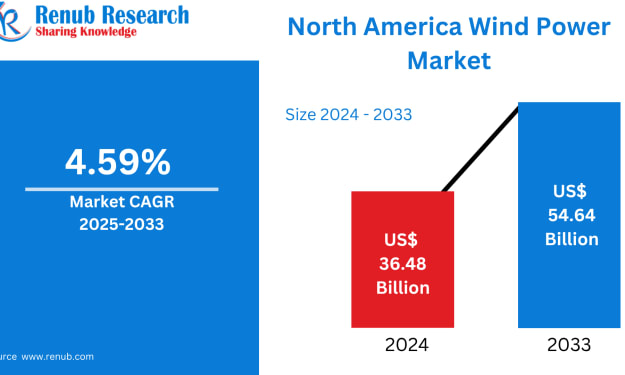
North America Wind Power Market Size and Forecast 2025–2033
Introduction The transition toward sustainable energy sources is accelerating worldwide, and North America stands at the forefront of this global shift. Among renewable energy technologies, wind power has emerged as one of the most reliable, scalable, and economically viable solutions for decarbonizing electricity generation. With increasing environmental awareness, policy backing, and technological advancements, the region’s wind energy sector is positioned for steady expansion over the coming decade.
By Marthan Sira day ago in The Swamp
📢 Raise Your Voice Thread: 01/08/2026
Our “Raise Your Voice Threads” are hosted most alternating Thursdays at 12PM ET to offer creators more avenues to uncover exceptional stories on Vocal. As we are continuously searching for fresh creators and inspiring stories, this thread provides an opportunity to exchange and discuss the stories that have moved and motivated us on Vocal.
By Raise Your Voice by Vocal3 days ago in Resources



Comments
There are no comments for this story
Be the first to respond and start the conversation.