
Reckoning With the Real Cost of the India-Pakistan Conflict
Why Ceasefires, Nationalism, and Airstrikes Can't Substitute for Justice in Kashmir

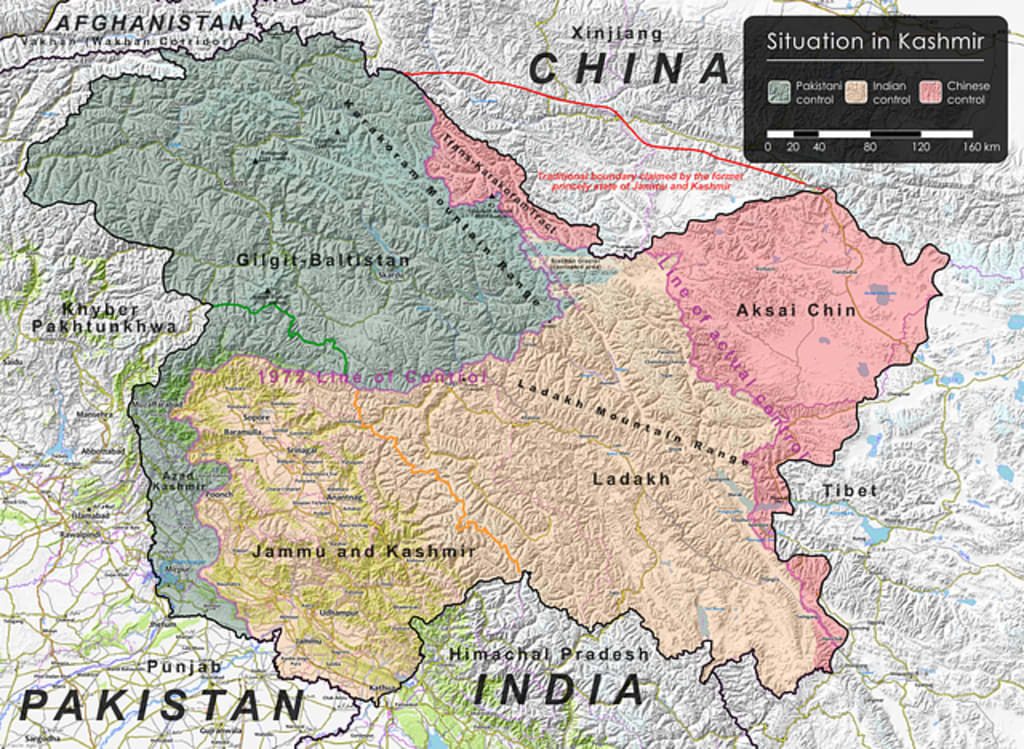
In a week dominated by headlines of airstrikes, ceasefire violations, and swelling nationalism, one truth remains buried beneath the noise: Kashmir continues to bleed — and most of us continue to either look away or cheer from the sidelines.
The proposed ceasefire between India and Pakistan is being hailed in some circles as a diplomatic breakthrough, a welcome pause in an exhausting and decades-long geopolitical rivalry. But a ceasefire isn’t peace. It’s a silence between two unresolved wounds — and often, it’s a silence that drowns out the screams of ordinary Kashmiris, caught in the crosshairs of nationalism and military posturing. Kashmir has long been reduced to a symbol — a prize in the region’s most bitter rivalry. But it is not a chessboard. It is a lived, breathing region with people who have suffered under decades of occupation, insurgency, state violence, and broken promises.
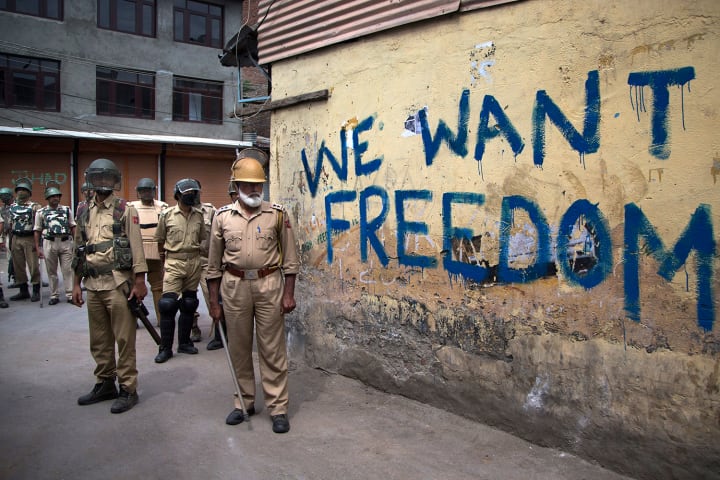
Much of the rhetoric used to justify strikes — “we don’t negotiate with terrorists,” “these were surgical hits on militant camps,” “Pakistan is always the aggressor” — fails to stand up to deeper scrutiny. These statements often ignore the nuance, and more dangerously, they absolve any need for accountability. Yes, terrorism is a real threat. Yes, Pakistan has been home to extremist networks that must be dismantled. But war as the default response — without transparency, investigation, or regional diplomacy — has rarely produced anything but more violence.
To support a military strike without investigating civilian casualties is not strength. It is moral laziness. To share pictures of dead children and call them terrorists without evidence is not patriotism. It is propaganda. And to dismiss the trauma of Kashmiris as collateral damage is not national defense. It is dehumanization. What we are witnessing now is not just a military confrontation. It is a failure of imagination, diplomacy, and empathy. Pakistan must own up to the presence of militant elements on its soil and engage in transparent, meaningful efforts to root them out. India must acknowledge its disproportionate use of force, its surveillance, its restrictions on speech, and the violent suppression of dissent in Kashmir. Both must be held accountable not to each other, but to the people who live and die under their shadow.
Meanwhile, the invocation of patriotism — support for the military, calls for retaliation, and blind loyalty to national narratives — has increasingly stifled dissent on both sides. Critiquing war is not betrayal. Asking for accountability from one’s own government is not siding with the enemy. The erosion of space for critical engagement has made the conversation toxic, tribal, and dangerous. And here lies the most alarming trend: the rise of majoritarian nationalism, especially in India under Modi’s leadership. A government that dehumanizes dissenters, pushes religious minorities into a corner, and uses national security as a cover for cruelty is not a government of strength. It is a regime of fear. Modi’s silence on mob lynchings, his party’s complicity in inciting religious violence, and the crackdown on Kashmiri autonomy are not isolated blunders. They are calculated moves in a project of ethnonationalist dominance. And to defend such a project in the name of security is to betray the very idea of democracy.
This is also where the global comparison with Israel and Palestine enters. Many use it to frame the Indian position as one of strength and moral clarity, equating resistance with terrorism and occupation with sovereignty. But the reality is murkier. The parallel between India and Israel, and by implication between Pakistan and Palestine, isn’t a framework that anyone has sought — it is one often imposed to legitimize unilateral force and suppress Kashmiri self-determination. It also ignores the fact that both India and Pakistan are occupying different parts of Kashmir — a truth few have the courage to say out loud.
The truth is, both India and Pakistan have weaponized Kashmir for their own political ends. Instead of building a shared regional future, they’ve inherited the colonial logic of division and domination. Kashmir remains the symbolic wound both nations poke to assert their strength — forgetting that, unlike their missiles and slogans, Kashmiris are not dispensable. We have come far in defense technology, in surveillance, in firepower. But when the most “advanced” solution we offer to a deeply human crisis is more violence, that is not strength — it’s failure.
Peace will not come from pretending the issue is solved. It won’t come from chest-thumping or threats of escalation. It will come from reckoning — with history, with power, and most importantly, with the people of Kashmir, whose future cannot be defined by the ambitions of two states they did not choose to divide them. Therefore, we must reimagine what peace really looks like — not just the absence of gunfire, but the presence of justice, dignity, and representation. It will require India and Pakistan to relinquish their national egos, to stop instrumentalizing Kashmiri suffering for political gain, and to center the lived experiences of Kashmiris in every step forward. That kind of peace is harder. It demands humility, repair, and empathy. But it is the only one worth striving for.
About the Creator
Keep reading
More stories from Muhammad Hamza Shah and writers in The Swamp and other communities.
An Open Letter To All World Leaders
Dear World Leaders, Our planet finds itself at yet another pivotal moment as heart-wrenching calamities seem to be unfurling across different continents. We have Afghanistan, whose takeover by the Taliban has caused millions to be displaced in their own country. We have Haiti, whose bad streak of natural disasters and political instability has devastated its population. We have Lebanon, whose economic crisis is prompting rampant poverty as people are unable to sustain themselves. Unfortunately, this is just the tip of the iceberg and there are a plethora of different issues plaguing contemporary society by making our existence unnervingly complicated. Consequently, we are becoming startlingly desensitized to blatant pessimism, usually left with little to no hope of turning things around. In fact, just a simple act of turning on the news can trigger depressing thoughts regarding the current nature of global affairs.
By Muhammad Hamza Shah4 years ago in The Swamp
Iran Protests Live Updates: Death Toll Passes 2,500 as Trump Warns Tehran Against Executions
Iran is facing one of the deadliest periods of unrest in its modern history as ongoing protests continue to grip cities across the country. According to reports from human rights organizations and activist networks, the death toll linked to the protests has now passed 2,500, underscoring the scale and severity of the crackdown by Iranian security forces. As the situation escalates, former U.S. President Donald Trump has issued a warning to Tehran, urging authorities to halt executions and calling for international attention to the crisis.
By Aarif Lashari5 days ago in The Swamp



Comments
There are no comments for this story
Be the first to respond and start the conversation.