
Rare 2,000-Year-Old Treasure Unearthed by Metal Detectorists in Wales: “We Were Astonished”
Discovery sheds new light on Iron Age Britain and the hidden wealth beneath Welsh soil
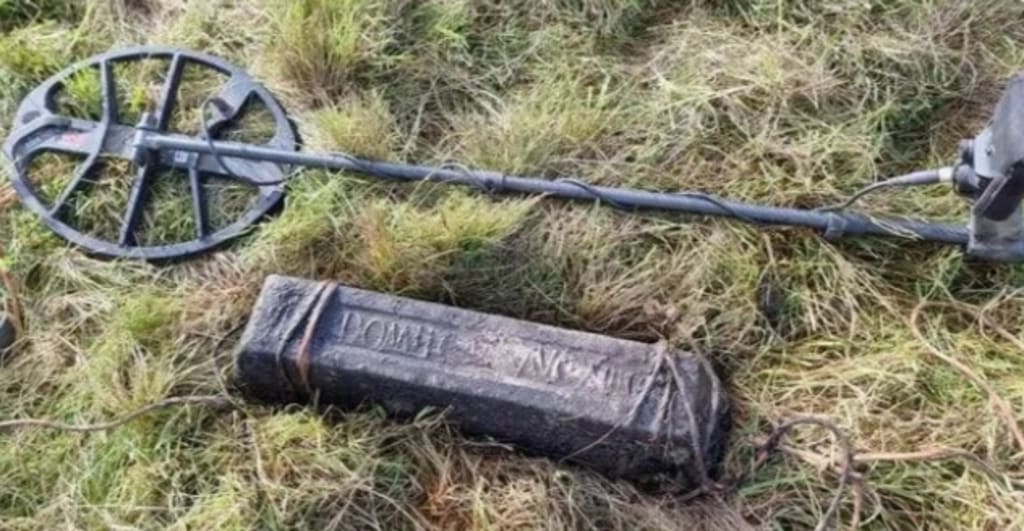
A routine weekend metal detecting trip in the rolling countryside of Wales has led to an extraordinary archaeological breakthrough: the discovery of a rare, 2,000-year-old treasure dating back to Britain’s Iron Age. The find, described by experts as both “exceptional” and “nationally significant,” has stunned historians and thrilled the local detecting community.
The discovery was made earlier this year by a small group of hobbyist metal detectorists who had secured permission to search farmland in rural Wales. What began as a faint signal in the soil soon revealed a collection of ancient artifacts that had lain undisturbed for nearly two millennia.
“We were astonished,” one of the detectorists said after the find was formally examined. “At first, we thought it might be a single object. But as we carefully uncovered more pieces, we realized this was something far more important.”
A Glimpse Into Iron Age Britain
Preliminary analysis suggests the treasure dates back roughly 2,000 years, placing it in the late Iron Age — a period of dynamic cultural change in Britain just before and during the early stages of Roman influence.
Among the unearthed items were intricately crafted metal objects believed to be ceremonial or high-status possessions. Early reports indicate the presence of precious metals, possibly including gold or gilded alloys, as well as finely worked components that hint at elite craftsmanship.
Experts believe such items would likely have belonged to a person of considerable wealth or authority — perhaps a tribal leader, warrior aristocrat, or prominent community figure.
The Iron Age in Wales was characterized by fortified hillfort settlements, complex trade networks, and distinctive Celtic art styles. Discoveries of intact hoards from this era remain relatively rare, making this find especially significant.
The Moment of Discovery
The detectorists involved have asked to remain relatively private, but they described the experience as both thrilling and humbling.
According to their account, the first signal registered unusually strong on their equipment. As they carefully removed layers of soil, they uncovered what appeared to be a shaped metal fragment. Recognizing the potential importance, they immediately halted digging and followed responsible reporting procedures.
In Wales, as elsewhere in the United Kingdom, significant archaeological finds must be reported under the Treasure Act. The group contacted local authorities and archaeologists, who soon arrived to assess and professionally excavate the site.
“When the archaeologists confirmed what we might be looking at, it was surreal,” one detectorist said. “You dream of finding something old. But something like this? It’s beyond imagination.”
Archaeological Significance
Specialists examining the treasure have noted stylistic features consistent with late Iron Age Celtic metalwork. Decorative patterns, curved forms, and high-quality metal composition suggest the artifacts were not everyday objects but items of prestige.
Such hoards are often interpreted in several ways. They may represent ritual offerings buried intentionally as part of spiritual practice. Alternatively, they could have been hidden for safekeeping during times of conflict and never recovered by their original owner.
The late Iron Age was a turbulent time in Britain. Tribal rivalries, shifting alliances, and the looming expansion of Roman influence created uncertainty across regions, including Wales. Valuable objects might have been concealed during periods of instability.
Archaeologists are now conducting metallurgical analysis and contextual research to determine the precise origins and function of the pieces. Soil sampling and landscape studies may also reveal whether the hoard was associated with a nearby settlement, trade route, or ceremonial site.
Wales’ Rich Archaeological Landscape
Wales has long been known for its rich archaeological heritage. From dramatic hillforts perched on windswept ridges to Roman-era remains scattered across valleys, the land preserves evidence of millennia of human activity.
Iron Age communities in Wales were deeply connected to both local traditions and broader Celtic cultural networks stretching across Britain and continental Europe. Trade, artistry, and metallurgy flourished during this era.
Finds of high-status metal objects help historians better understand the social hierarchy and craftsmanship of these communities. Each new discovery adds pieces to a complex historical puzzle, revealing how ancient societies organized power, wealth, and belief.
Experts say the newly discovered hoard could refine understanding of regional artistic styles or even suggest previously unknown connections between Welsh tribes and neighboring territories.
Responsible Metal Detecting
The discovery also highlights the positive role responsible metal detecting can play in archaeology when conducted legally and ethically.
Detectorists in the UK often work closely with archaeologists and adhere to strict guidelines. Reporting significant finds ensures that artifacts are properly studied, preserved, and, when appropriate, displayed for public benefit.
Authorities praised the group’s decision to immediately stop digging and notify professionals. Improper excavation could have damaged fragile materials or destroyed crucial contextual information.
Under UK law, the treasure will be formally assessed to determine its status. If declared treasure, museums may have the opportunity to acquire the find, with compensation awarded to the landowner and the finders.
Community Reaction
News of the discovery has generated excitement throughout the region. Local historians have expressed pride in Wales’ continuing contributions to understanding Britain’s ancient past.
Residents near the discovery site have described a renewed sense of connection to the landscape. “It makes you realize how much history is under our feet,” one local remarked. “People were living, leading, creating here 2,000 years ago.”
Schools and heritage organizations have already expressed interest in educational programs tied to the find. Archaeological discoveries often inspire broader engagement with local history, particularly among younger generations.
What Happens Next?
The artifacts are currently undergoing detailed examination by specialists. Conservation experts will stabilize and preserve the objects to prevent deterioration. High-resolution imaging and laboratory testing may reveal microscopic details about craftsmanship techniques and material sourcing.
Once the evaluation process is complete, officials will decide whether the treasure will be displayed in a national or regional museum. Public exhibition could provide an opportunity for visitors to see firsthand the artistry of Iron Age Wales.
For the detectorists, the experience has been life-changing.
“You always hope to find something interesting,” one said. “But to hold a piece of history that hasn’t seen daylight in 2,000 years — it’s impossible to describe.”
A Window Into the Distant Past
Archaeological discoveries remind us that history is not confined to textbooks or museum halls. It lies buried in fields, beneath quiet hills, waiting to be uncovered by chance and curiosity.
This rare Welsh treasure offers more than glittering metal or ancient craftsmanship. It provides a tangible link to a time when tribal leaders commanded hillforts, artisans shaped gold and bronze into symbols of power, and communities navigated an uncertain world on the edge of Roman expansion.
As experts continue to analyze the find, one thing is certain: beneath the tranquil landscape of Wales, echoes of the Iron Age still endure — waiting for the next astonishing discovery to bring them back into the light.
About the Creator
A Gathering of Evil Bosses
“I’m the queen of chin jutting while I smooth my hair, attacking, insulting, and deflecting to protect my appointer.” “Oh, please, Blondi, my hair is curled, highlighted, and longer than yours. I feature television commercials telling immigrants that we will give them a free plane ride home, and if they voluntarily turn themselves in, they will be allowed to legally apply for re-entry. It runs everywhere, and I look good in it! You can’t compete because of your blond hair. Mine is nicer, and my lips are prettier than yours.”
By Andrea Corwin 10 days ago in The Swamp
Mexican Drug Lord Killing Sparks Revenge Attacks; Cars and Businesses Set Ablaze, Highways Blocked
A violent wave of retaliatory attacks has swept across multiple towns in Mexico following the killing of a high-profile drug lord, leaving residents fearful and authorities scrambling to restore order. The murder, carried out in the early hours last week, appears to have triggered coordinated revenge assaults by rival cartel factions, with cars torched, businesses set on fire, and major highways blocked. The victim, whose name has been withheld for security reasons, was a leading figure in one of Mexico’s largest criminal organizations operating in northern and central regions. His death has reignited tensions between rival groups already vying for territorial control over lucrative smuggling routes and drug markets. Chaos on the Streets Eyewitnesses report seeing masked individuals setting vehicles ablaze along major thoroughfares, forcing motorists to abandon their cars and flee. In some cases, commercial establishments, including grocery stores and gas stations, were targeted, leaving property damaged and residents temporarily stranded. Highways connecting key urban centers were blocked with burning barricades, delaying emergency services and disrupting the movement of goods. Local authorities confirmed that multiple attempts to clear the roads were met with resistance, and in some areas, police officers had to retreat under threat of armed confrontation. Residents described a terrifying scene. “We could hear explosions and gunfire all night,” said one witness in Mexico’s northern state. “People were shouting, running, and hiding. It felt like the city had completely disappeared.” Law Enforcement Response Mexican security forces deployed reinforcements in affected areas, including federal police and military units, to contain the violence. Helicopters patrolled the skies, while checkpoints were set up along strategic highways to prevent further attacks. Officials emphasized that restoring public safety is a top priority, but acknowledged the difficulty of confronting highly organized and heavily armed groups. “The situation is extremely volatile,” said a government spokesperson. “We urge residents to remain indoors and report any suspicious activity. Coordination between federal, state, and local authorities is ongoing.” Impact on Civilians The retaliatory attacks have caused widespread disruption for civilians. Schools were closed in some towns, businesses suspended operations, and local transport services were halted. In addition to property damage, residents report heightened anxiety and fear for personal safety, particularly in neighborhoods located near known cartel territories. Hospitals in affected regions have remained open but report an influx of individuals with minor injuries from stampedes, burns, and smoke inhalation. While no official death toll has been released beyond the initial cartel killing, emergency services are preparing for the possibility of further casualties if the violence escalates. Criminal Dynamics Experts note that such episodes of retribution are common in the Mexican cartel landscape, where power vacuums created by the killing of a leader often provoke swift retaliation. “These are not random acts,” said a Latin American security analyst. “They are strategic moves intended to send a message, intimidate rivals, and assert dominance over contested territories.” Analysts also point to the broader implications for public safety and governance. The cyclical nature of cartel violence undermines trust in law enforcement and highlights the persistent challenge of controlling organized crime in regions where state presence is limited. Government Measures The federal government has announced plans to increase intelligence operations, enhance surveillance of key transport routes, and implement emergency response protocols for civilians. Officials have also called on community leaders to cooperate with authorities in reporting suspicious activity and to discourage participation in violent reprisals. At the same time, local mayors have emphasized the need for long-term solutions, including social programs and economic initiatives aimed at reducing the influence of criminal networks in vulnerable communities. Conclusion The killing of a high-profile drug lord has sparked a wave of violent retaliation across Mexico, illustrating the fragility of security in regions dominated by organized crime. As authorities work to contain the attacks, residents remain caught in the crossfire, highlighting the ongoing struggle to maintain law and order in the face of entrenched cartel violence.
By Fiaz Ahmed 5 days ago in The Swamp




Comments
There are no comments for this story
Be the first to respond and start the conversation.