
Read Bill Clinton's Opening Statement in His Deposition on Jeffrey Epstein
Former president addresses past associations, denials, and questions surrounding the late financier
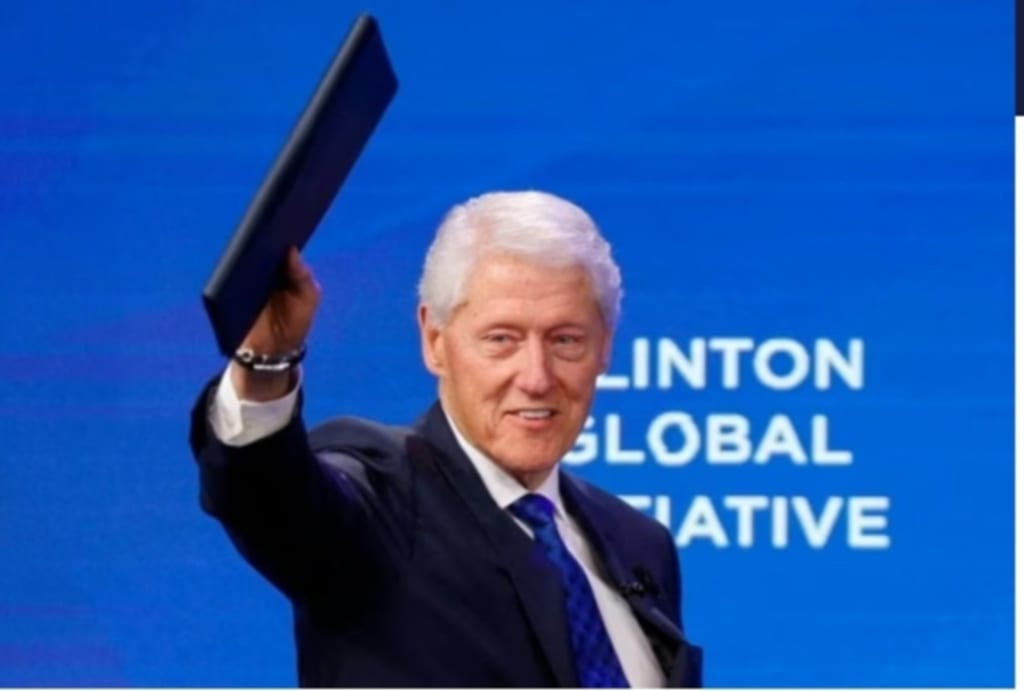
In a long-anticipated legal proceeding that reignited public scrutiny, former President Bill Clinton delivered an opening statement in a deposition connected to the sprawling investigations surrounding Jeffrey Epstein. The testimony, conducted under oath, marked one of the most direct formal responses from Clinton regarding his past association with the disgraced financier whose 2019 death in federal custody intensified global attention on his network of powerful contacts.
While the deposition itself took place behind closed doors, portions of Clinton’s opening remarks were later summarized in court filings and legal briefings. In them, the former president sought to establish a clear narrative: that his interactions with Epstein were limited in scope, unrelated to any criminal conduct, and had long since ceased before allegations against Epstein became widely known.
Establishing Context
Clinton began by acknowledging that he had known Epstein in the early 2000s, primarily through philanthropic and global development circles after leaving the White House in 2001. He emphasized that his post-presidency work brought him into contact with a wide range of donors, advocates, and individuals seeking involvement in humanitarian initiatives.
According to summaries of the statement, Clinton described his interactions with Epstein as “brief and intermittent,” centered largely around discussions of charitable projects. He reportedly stated that he had no knowledge of Epstein’s criminal activities at the time of their acquaintance.
The former president also clarified that he had severed contact with Epstein well before federal charges were filed in 2006 in Florida. That case, which resulted in a controversial plea agreement, would later become a focal point of renewed legal scrutiny.
Travel and Associations
A central topic of questioning during the deposition involved Clinton’s travel history aboard Epstein’s private aircraft. Flight logs, which became public during earlier court proceedings, indicated that Clinton had flown on Epstein’s plane multiple times during humanitarian trips to Africa and Asia.
In his opening remarks, Clinton addressed the issue directly. He stated that the flights were connected to foundation-related work and often included staff members, security personnel, and other dignitaries. He denied ever visiting Epstein’s private island in the U.S. Virgin Islands, which has been linked in civil lawsuits to alleged abuse.
Clinton reportedly underscored that at no point during those trips did he witness or suspect inappropriate conduct. He framed the travel arrangements as logistical conveniences rather than personal endorsements.
Addressing Public Allegations
The deposition comes years after Epstein’s arrest in July 2019 on federal sex trafficking charges. Epstein’s death in a Manhattan detention facility, officially ruled a suicide, fueled widespread speculation and conspiracy theories regarding his associations with high-profile figures across politics, finance, academia, and entertainment.
Clinton’s name surfaced repeatedly in public discourse due to his documented contact with Epstein in the early 2000s. However, he has consistently denied any wrongdoing or awareness of Epstein’s criminal behavior.
In the opening statement, Clinton reportedly reaffirmed that position unequivocally. He stated that he was “shocked and disturbed” by the details that later emerged about Epstein’s conduct. He emphasized that he would never knowingly associate with anyone engaged in exploitation or abuse.
The former president also referenced statements previously issued by his representatives, noting that he had cut ties with Epstein years before the financier’s 2019 arrest.
The Broader Legal Landscape
The deposition is part of ongoing civil litigation tied to victims who allege they were trafficked or abused within Epstein’s network. Since Epstein’s death, legal actions have continued against his estate and against individuals accused of facilitating or benefiting from his activities.
One of the most prominent figures charged in connection to Epstein’s operations was Ghislaine Maxwell, who was convicted in 2021 on federal sex trafficking charges. Her trial introduced extensive testimony about the mechanisms of recruitment and abuse within Epstein’s circle.
Although Clinton has not been accused of criminal conduct in connection with the case, the breadth of Epstein’s social network has prompted depositions of numerous individuals who had contact with him.
Legal experts note that depositions in civil cases often seek to clarify timelines, communications, and knowledge — not necessarily to allege criminal wrongdoing. Clinton’s statement, therefore, functioned as a formal rebuttal to speculation while fulfilling procedural requirements.
Political and Public Reaction
The release of details from the deposition sparked renewed political debate. Critics of Clinton argue that public figures bear responsibility for scrutinizing the company they keep, particularly when warning signs emerge. Supporters contend that mere association does not equate to complicity and that Clinton’s testimony reflects transparency under oath.
The episode also underscores the enduring political sensitivities surrounding the Epstein case. Allegations, flight logs, and social connections have entangled individuals across party lines, making the issue uniquely volatile in American discourse.
For Clinton, whose post-presidency years have included extensive philanthropic and global advocacy work, the deposition represents another chapter in a long career frequently intersecting with legal and political controversy.
A Focus on Denial and Distance
Observers who reviewed summaries of the opening statement note that its tone was measured and direct. Clinton reportedly avoided inflammatory language and focused on factual clarifications: dates, purposes of travel, and the cessation of contact.
He reiterated that he had not communicated with Epstein for many years prior to the financier’s second arrest. He also maintained that no evidence has surfaced indicating his involvement in or knowledge of illegal activity.
In civil depositions, opening statements often serve to frame the scope of testimony. Clinton’s remarks appear designed to establish distance — both temporal and substantive — from the criminal actions that later defined Epstein’s legacy.
The Continuing Impact of the Epstein Case
More than six years after Epstein’s death, the legal and cultural reverberations continue. Victims’ lawsuits remain active, and investigative reporting has further examined institutional responses to early allegations.
The case has prompted broader discussions about accountability among powerful elites and the structures that allowed Epstein’s activities to persist for years. It has also fueled ongoing public demands for transparency in cases involving high-profile associations.
Clinton’s deposition does not resolve those broader questions, but it adds another documented perspective to the complex web of testimony surrounding Epstein’s network.
Looking Ahead
As civil litigation progresses, additional documents and depositions may become public. For now, Clinton’s opening statement stands as his most formal legal articulation of his relationship with Epstein: limited contact, no knowledge of wrongdoing, and a severed association long before the financier’s final arrest.
Whether that explanation satisfies public curiosity is another matter. The Epstein case continues to occupy a unique space in American political and legal history — a story of wealth, influence, secrecy, and the persistent quest for accountability.
For Clinton, the deposition underscores a reality shared by many public figures touched by the scandal: even indirect associations can resurface years later, demanding answers under oath in a courtroom setting far removed from the social circles where those connections first formed.
About the Creator
A Gathering of Evil Bosses
“I’m the queen of chin jutting while I smooth my hair, attacking, insulting, and deflecting to protect my appointer.” “Oh, please, Blondi, my hair is curled, highlighted, and longer than yours. I feature television commercials telling immigrants that we will give them a free plane ride home, and if they voluntarily turn themselves in, they will be allowed to legally apply for re-entry. It runs everywhere, and I look good in it! You can’t compete because of your blond hair. Mine is nicer, and my lips are prettier than yours.”
By Andrea Corwin 10 days ago in The Swamp
A Knight of the Seven Kingdoms Series Review (Season 1)
As one of the biggest properties in fantasy, A Song of Ice and Fire remains immensely popular with audiences. After reaching far into the past with House of the Dragon, a second spin-off was on the cards. A Knight of the Seven Kingdoms serves up a bite-sized slice of action and drama, but it still claims a spot among the best small-screen titles.
By Robert Cainabout 22 hours ago in Geeks




Comments
There are no comments for this story
Be the first to respond and start the conversation.