
Ranked: The World’s 50 Largest Cities, From 1975 to 2050
How Urban Giants Are Shaping Our Future
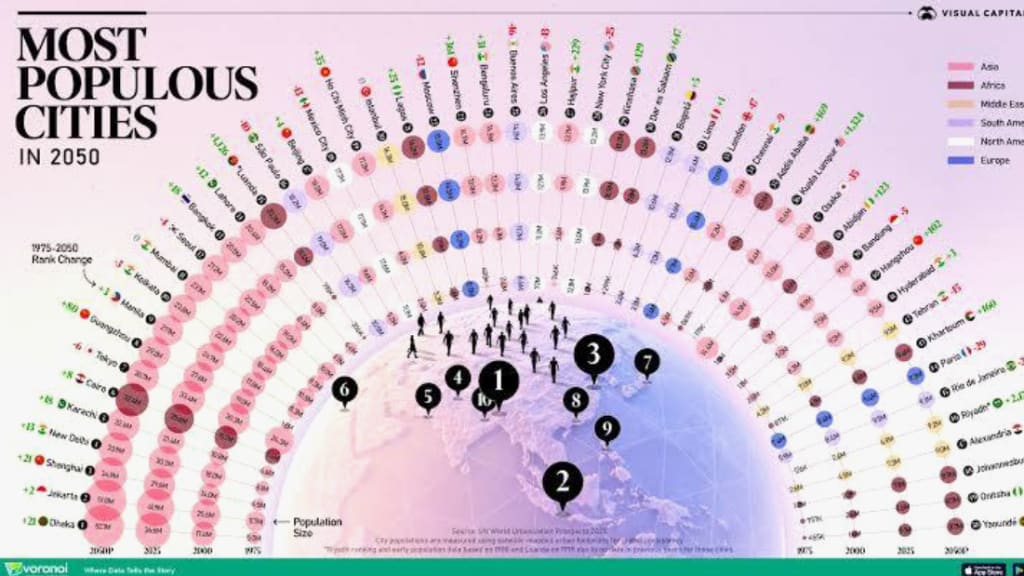
Urbanization is transforming the world at an unprecedented pace. Over the past five decades, the ranking of the world’s largest cities has shifted dramatically — and projections show even more change by 2050. From Tokyo’s mid‑20th-century dominance to Dhaka’s projected rise to the top, these shifts reveal the demographic, economic, and social transformations shaping the 21st century.
In this post, we’ll explore how global urban hierarchies have evolved from 1975 to 2025 and what the world’s cities might look like by 2050.
A Look Back: 1975
In 1975, global megacities were largely concentrated in Japan, North America, and Latin America. Tokyo and Osaka led the pack, followed by New York, Jakarta, and Mexico City. These cities were hubs of industrial growth and early signs of global urbanization.
Back then, only 8 cities qualified as megacities (10 million+ population). Today, there are more than 30, highlighting how fast urban growth has accelerated worldwide.
The Rise of Asia: 2000 and Beyond
By 2000, Asia had entered the global urban stage. Shanghai, Beijing, and New Delhi surged upward, fueled by economic reforms, industrial expansion, and internal migration. Cities in China and India began overtaking older Western cities in both population and influence.
Fast forward to 2025, and Jakarta and Dhaka are challenging Tokyo’s historic lead. Jakarta now has around 42 million people, Dhaka nearly 40 million, and Tokyo about 33 million. The global urban map is being redrawn, with Asia taking center stage.
Looking Ahead: 2050 Projections
By 2050, the global urban hierarchy will look very different. Dhaka is projected to become the world’s largest city, with over 52 million residents, closely followed by Jakarta. Asian cities will dominate the top 50, while African cities are set to rise rapidly.
Here’s a snapshot of the top 10 cities in 2050:
Dhaka, Bangladesh — 52.1M
Jakarta, Indonesia — 51.8M
Shanghai, China — 34.9M
New Delhi, India — 33.9M
Karachi, Pakistan — 32.6M
Cairo, Egypt — 32.4M
Tokyo, Japan — 30.7M
Guangzhou, China — 29.2M
Manila, Philippines — 27.1M
Kolkata, India — 23.8M
This list shows the shift of urban power to Asia, with Africa also emerging as a significant player.
Why Are Cities Growing So Fast?
Several key factors drive this explosive urban growth:
1. Demographics
High birth rates in South Asia and Africa fuel population growth in urban centers. Dhaka’s rise, for example, is largely due to natural population increase.
2. Rural-to-Urban Migration
Millions move to cities seeking jobs, education, and opportunity. This migration is a major growth driver for megacities like Lagos, Kinshasa, and Dar es Salaam.
3. Economic Hubs
Cities are engines of prosperity. Shanghai, Bangalore, and Jakarta attract businesses and investment, boosting their population growth.
4. Urban Definitions
Changes in how metropolitan populations are measured also affect rankings. Modern standards now consider continuous urban areas rather than just city boundaries, giving a clearer picture of true urban size.
Africa on the Rise
Africa’s urban growth is impressive. By 2050, cities like Lagos (~16.2M), Kinshasa (~13.2M), and Dar es Salaam (~13.1M) will emerge among the world’s largest. Africa’s youthful population and rapid rural-to-urban migration are key drivers.
While Asia dominates today, Africa is poised to become the next frontier of urban growth, shaping global cities of the future.
Challenges and Opportunities
Rapid urbanization brings both promise and challenges:
Infrastructure Strain: Housing, transportation, and sanitation systems often lag behind population growth.
Environmental Pressures: Pollution, climate risk, and water scarcity threaten many megacities, especially coastal ones.
Inequality: Cities can generate wealth, but not everyone benefits equally.
Governance: Strong policies are needed to manage growth sustainably.
At the same time, cities are engines of innovation, economic development, and cultural exchange. Properly managed, megacities can become global powerhouses.
Conclusion: The Future Is Urban
From 1975 to 2050, the world’s urban landscape will have shifted dramatically. The center of urban gravity is moving from industrialized nations to dynamic cities in Asia and Africa.
Cities like Dhaka and Jakarta are rising to the top, while African giants like Lagos and Kinshasa are catching up fast. Understanding these trends is crucial for policymakers, businesses, and anyone curious about where humanity is headed.
Urbanization is not just a demographic trend — it’s the story of our future. The world’s largest cities will define the economies, cultures, and innovations of tomorrow.
About the Creator
Keep reading
More stories from Aqib Hussain and writers in The Swamp and other communities.
Can Mountain Lions Survive as Humans Close In?
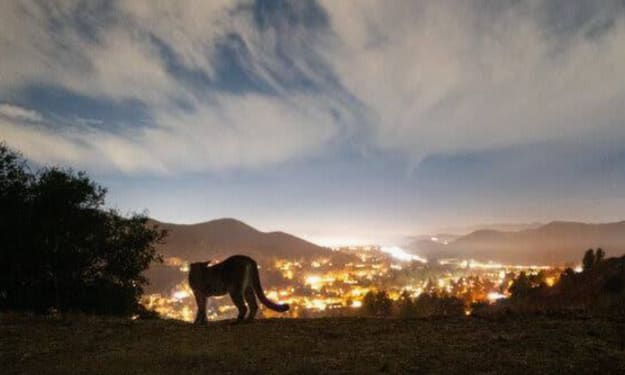
California’s mountain lions, also called cougars or pumas, once roamed vast stretches of wilderness with little interference. Today, their world is shrinking. Highways, neighborhoods, and urban sprawl are fragmenting their habitats, forcing these iconic predators into an uneasy coexistence with humans. The pressing question is: Can mountain lions survive as our cities expand—and if so, how?
By Aqib Hussain4 days ago in The Swamp
Why Black History Matters in America?
The United States of America is celebrating their 250th anniversary in 2026. I'm proud to be an American and as someone who was born here, I wouldn't imagine myself living anywhere else. This is a country where opportunities are possible. Where anyone can be successful in anything they desire to do. Equality, community, and togetherness are the backbones of what America is and should be about. However, we have an administration who wants to erase and disregard those who have made positive, meaningful impacts in our country, specifically Black figures, such as Martin Luther King, Jr., Rosa Parks, and Maya Angelou. President Trump and his administration have been constantly complaining and fighting against what they call the "Woke agenda". They use this excuse as a distraction from other issues they refuse to address, such as the high cost of living, climate change, and inflation. That equality is dividing America, when in reality, it's bringing us together. Being woke is not tied to a specific political party. No matter where you stand on the political spectrum, you can still care about other people and their plights. Compassion and empathy for others isn't tied to a political party, either. We were taught as children to treat others the way we want to be treated and not judge others because they're different from us. Caring about others isn't a personal attack on your beliefs. It doesn't make you any less of a person. People who are easily offended over African American figures, past or present, or anything related to it, are grasping at straws. Current and future generations need to know who people like Harriet Tubman and Shirley Chisholm were, especially in the classroom. Black History is part of American History. It should be recognized, not hidden or forgotten. Besides, you can't shield children from everything, just because your feelings are easily hurt.
By Mark Wesley Pritchard 13 days ago in The Swamp
I've Just Realized
The President doesn't understand music. There. It felt very good to write that; it's some thing I just realized today. Oh , yes; he plays it. He TRUMPets it in rallies and meetings, pumps it across the airwaves when he gathers up our minutes waiting for his late arrival.
By Judey Kalchik 5 days ago in Beat


Comments
There are no comments for this story
Be the first to respond and start the conversation.