
Rafah Crossing Reopens, But Only a Dozen Palestinians Cross into Egypt on First Day
Limited Movement Underscores Challenges in Humanitarian Access as Gaza’s Border Reopens After Nearly Two Years
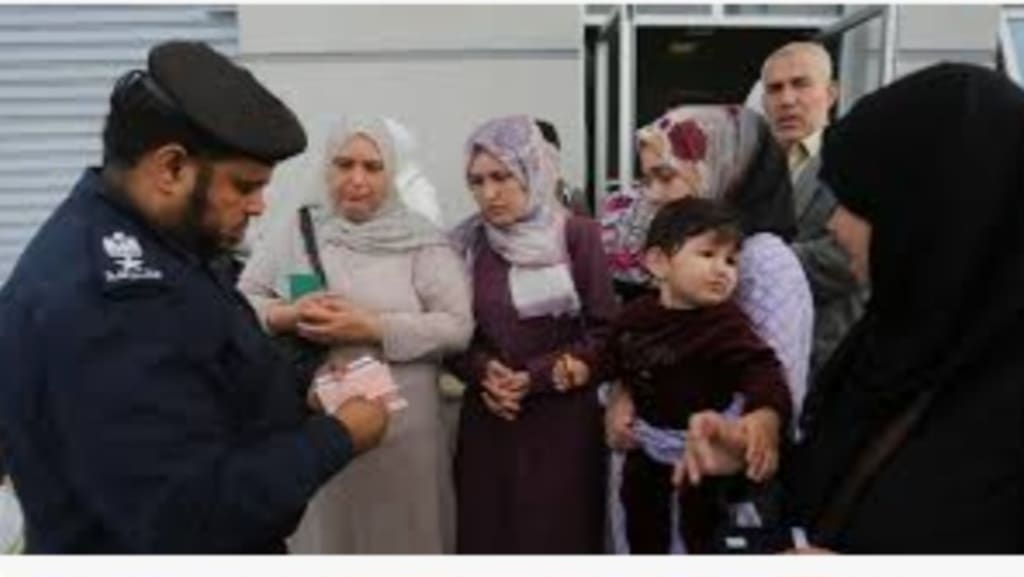
After months of anticipation and nearly two years of closure, the Rafah border crossing between Gaza and Egypt finally reopened. For many Palestinians, the reopening was seen as a lifeline — a rare opportunity to escape the besieged enclave for medical treatment, safety, or family reunification. However, the reality of the first day painted a far more sobering picture.
Only 12 Palestinians were allowed to enter Egypt on the first day of operations, a number that sharply contrasts with the massive humanitarian needs inside Gaza. The limited movement has raised serious questions about whether the reopening of Rafah will bring real relief or remain largely symbolic.
Why the Rafah Crossing Matters
The Rafah crossing holds immense significance for Gaza’s population. It is the only border crossing not directly controlled by Israel, making it Gaza’s primary gateway to the outside world. For years, Palestinians have relied on Rafah to access medical care, education, employment opportunities, and reunite with relatives abroad.
When the crossing was shut down in May 2024 following Israeli military operations in southern Gaza, thousands were stranded. Patients requiring urgent treatment were trapped, students missed scholarships, and families were separated indefinitely. The closure effectively tightened Gaza’s isolation at a time when living conditions were already deteriorating rapidly.
The reopening, therefore, carried enormous emotional and political weight.
First Day Reality: Just 12 Crossings
Despite high expectations, Egyptian border officials confirmed that only 12 individuals crossed from Gaza into Egypt on the first day. These included five injured Palestinians and seven companions, all of whom were granted passage under strict humanitarian criteria.
For context, tens of thousands of Palestinians are currently registered for travel through Rafah, many of them waiting for months or even years. Humanitarian organizations had hoped that the reopening would allow dozens — if not hundreds — of people to cross daily. Instead, the extremely limited number underscored how cautious and controlled the process remains.
Medical Crisis Driving Desperation
Gaza’s healthcare system is on the brink of collapse. Years of blockade, repeated conflicts, and shortages of fuel and medical supplies have left hospitals unable to meet even basic needs. Specialized treatments such as cancer therapy, heart surgeries, and advanced trauma care are largely unavailable.
According to health officials, thousands of patients require immediate medical evacuation, many of them children. For these families, Rafah is not just a border crossing — it is a matter of life and death.
The fact that only a handful of patients were allowed to leave on the first day has fueled frustration and fear among those still waiting.
Security and Bureaucratic Barriers
The limited crossings are largely the result of stringent security procedures and political coordination. The reopening of Rafah involves multiple actors, including Egypt, Israel, and European monitors. Every individual seeking to cross must undergo extensive vetting, background checks, and pre-approval.
Israel has insisted on tight controls, citing security concerns and the risk of militant movement or weapons smuggling. Egypt, meanwhile, has emphasized the need for orderly and regulated crossings to maintain stability in the Sinai region.
While these concerns are not new, critics argue that excessive bureaucracy is slowing down humanitarian relief and placing civilians at further risk.
A Symbolic Step or Meaningful Change?
The reopening of Rafah has been welcomed internationally as a positive diplomatic development, particularly amid efforts to reduce tensions and expand humanitarian access to Gaza. However, the numbers from the first day suggest that the impact on the ground remains minimal.
Human rights groups have warned that unless daily crossings increase significantly, the reopening will do little to address Gaza’s worsening humanitarian catastrophe. A symbolic opening without scale, they argue, risks becoming a political gesture rather than a practical solution.
Voices from Gaza
Inside Gaza, reactions have been mixed. While some residents expressed cautious optimism, many others remain skeptical.
For families who have lost loved ones while waiting for travel permits, the reopening feels too little, too late. Others fear that only a small, select group will benefit, leaving the majority trapped in uncertainty.
Social media across the region has reflected this sentiment, with many questioning how a crossing can be considered “open” when only a dozen people are allowed through.
What Needs to Happen Next
Humanitarian organizations are urging authorities to:
Increase the daily number of crossings
Prioritize medical and humanitarian cases
Simplify bureaucratic procedures
Ensure transparency in approval processes
Without these steps, they warn, the situation in Gaza will continue to deteriorate, regardless of diplomatic announcements.
Conclusion: A Door Barely Open
The reopening of the Rafah crossing was meant to signal hope. Yet, the reality of only 12 Palestinians crossing into Egypt on the first day serves as a stark reminder of how fragile and limited that hope remains.
For Gaza’s population, relief cannot come in single digits. Real change will require sustained political will, expanded access, and a genuine commitment to humanitarian principles. Until then, Rafah stands as a door that is technically open — but still largely out of reach for those who need it most.
About the Creator
Keep reading
More stories from Ayesha Lashari and writers in The Swamp and other communities.
Populist Conservative Laura Fernández Wins Costa Rica’s Presidential Election
Costa Rica has entered a new political era. In a landmark election that signals a dramatic shift in national mood, populist conservative Laura Fernández has won Costa Rica’s presidential election, delivering a decisive victory that reshapes the country’s political future. Her triumph reflects deep public frustration with crime, corruption, and traditional political elites — and a growing appetite for tough leadership and rapid change.
By Ayesha Lashariabout 17 hours ago in The Swamp
Is Time a Fundamental Part of Reality? A Quiet Revolution in Physics Suggests Not
Time feels unavoidable. We measure our lives in seconds and years, plan our futures, and remember our pasts through its steady flow. Yet a growing number of physicists are beginning to question something radical: what if time is not fundamental at all? What if it is not a basic ingredient of the universe, but an emergent concept—something that arises from deeper laws of nature? This idea, once confined to abstract philosophy, is now gaining traction in cutting-edge physics. Quietly, and without dramatic headlines, researchers are rethinking one of the most basic assumptions about reality itself. Why Time Has Always Seemed Fundamental In everyday life and classical physics, time appears inseparable from reality. Isaac Newton treated time as absolute—a universal clock ticking away the same for everyone, everywhere. Even Einstein’s theory of relativity, which showed that time can stretch and slow depending on speed and gravity, still treated time as a real dimension woven together with space. Modern physics describes the universe using spacetime: a four-dimensional structure where events occur at specific locations and moments. From this perspective, time is as real as length or mass. So why question it now? The Problem Time Creates in Fundamental Physics The trouble begins when physicists try to reconcile general relativity (which governs gravity and the large-scale structure of the universe) with quantum mechanics (which governs the smallest particles). In quantum mechanics, time is treated as an external parameter—a background clock against which change happens. In general relativity, however, time is dynamic. It bends, slows, and depends on gravity. When researchers attempt to merge these two theories into a single framework of quantum gravity, time becomes deeply problematic. In some of the most important equations, time disappears entirely. This absence has forced physicists to ask a disturbing question: If the most fundamental laws of nature do not include time, where does it come from? The Idea of Timeless Physics Several modern theories suggest that at the deepest level of reality, the universe may be timeless. One influential idea comes from approaches to quantum gravity where the equations describe relationships between physical states, not how those states evolve over time. In these models, the universe is not something that “happens” moment by moment. Instead, it simply is. Change, motion, and time emerge only when observers inside the system describe it in a certain way. This is not to say that nothing changes—but that change does not require time as a fundamental ingredient. Time as an Emergent Phenomenon An increasingly popular view is that time is emergent, similar to temperature. Temperature feels fundamental, but at a deeper level it arises from the motion of particles. No single atom has a temperature; it emerges only when many particles interact. Likewise, time may emerge from relationships between physical systems. When one part of the universe changes relative to another, we interpret that change as time passing. In this view, clocks do not measure a universal time flowing through the cosmos. They simply track correlations between physical processes. The Arrow of Time and Entropy One of the strongest arguments for time’s reality is the arrow of time—the fact that we remember the past but not the future, and that disorder (entropy) tends to increase. However, some physicists argue that the arrow of time does not require time itself to be fundamental. Instead, it may arise from special initial conditions of the universe and the statistical behavior of matter. The laws of physics, at their core, often work the same forward and backward. The sense of direction we associate with time may come from how information is processed and remembered by complex systems like brains. What This Means for Reality and Consciousness If time is not fundamental, the implications are profound. It would mean that the universe does not “unfold” in the way we intuitively imagine. Past, present, and future may not be objectively distinct at the deepest level. Some interpretations suggest that all moments exist equally, and that our experience of “now” is tied to consciousness rather than cosmic structure. This does not mean time is fake in any practical sense. Much like money or language, time could be real because it is useful—even if it is not written into the deepest laws of nature. Why This Revolution Is Happening Quietly Unlike discoveries of new particles or cosmic explosions, this shift in thinking is largely mathematical and conceptual. It unfolds in academic papers, conferences, and theoretical debates rather than laboratories. There is also no single theory that has “proven” time is an illusion. Instead, multiple independent lines of research point in the same unsettling direction. Physicists are cautious. Questioning time itself is not something done lightly. Does This Change Anything for Everyday Life? For now, the answer is no—at least not practically. Time will continue to govern schedules, aging, and physics experiments. But conceptually, this revolution matters deeply. It forces us to rethink what reality is made of and whether our most basic intuitions are shaped more by human perception than by the universe itself. Just as relativity changed how we think about space and simultaneity, a timeless foundation of physics could reshape our understanding of existence. Conclusion: A Universe Without Time? The idea that time may not be fundamental challenges centuries of thought. Yet physics has a long history of overturning what once seemed obvious. Whether time is an illusion, an emergent phenomenon, or something we have not yet fully understood, the quiet revolution underway suggests one thing clearly: our understanding of reality is far from complete. In questioning time itself, physics is once again reminding us that the universe is stranger—and more fascinating—than common sense would ever suggest.
By Aarif Lashari4 days ago in The Swamp
‘Trauma Does Not Define Us’: Living With Loss in Wartime Ukraine
In a small apartment block on the outskirts of Kyiv, the walls still bear the marks of shelling from months earlier. Windows have been replaced with plastic sheets, and families gather around portable heaters to survive another cold evening. For many Ukrainians, daily life continues in the shadow of war, shaped by grief, resilience, and an unbreakable sense of identity. “Trauma does not define us,” says Olena, a schoolteacher who lost her husband in fighting near the eastern front. “It is part of our story, but it is not who we are.” Across Ukraine, millions have experienced loss—of loved ones, homes, and certainty about the future. Yet communities continue to rebuild, refusing to let devastation erase their humanity. A Nation Marked by Grief Since the conflict escalated, entire towns have been emptied, and countless families displaced. Cemeteries have expanded rapidly, while makeshift memorials line city streets. Photographs of fallen soldiers and civilians hang from lampposts, reminding passersby of the cost of survival. For many Ukrainians, grief is not a single moment but an ongoing reality. Psychologists report rising levels of anxiety, depression, and post-traumatic stress among adults and children alike. “Children draw pictures of tanks instead of flowers,” says Kateryna, a counselor working with displaced families in western Ukraine. “But they still laugh, still play. That contrast is heartbreaking and powerful.” Finding Strength in Community In villages and cities alike, local networks have become lifelines. Churches, schools, and volunteer groups distribute food, clothing, and emotional support. These spaces have evolved into centers of healing as much as survival. Every week, Olena attends a support group organized by neighborhood volunteers. There, she sits with others who have lost family members. They share stories, tears, and small victories—such as returning to work or helping children feel safe again. “We talk about memories, not just pain,” she explains. “We remind each other that life continues.” Such gatherings are common across Ukraine, reflecting a culture of collective endurance. Sociologists note that this sense of shared suffering has strengthened social bonds rather than weakened them. Children Growing Up Too Fast For Ukraine’s youngest generation, war has reshaped childhood. Schools alternate between in-person classes and underground shelters during air raid alerts. Many students attend lessons from refugee centers or foreign countries. Ten-year-old Danylo now dreams of becoming a doctor. He says he wants to “help people who are hurt like my father was.” His mother admits she worries about the emotional burden her son carries. “He understands death in a way no child should,” she says. “But he also understands courage.” Teachers have adjusted lessons to include emotional expression and storytelling. Art and music therapy programs have expanded, giving children tools to process fear and loss. The Silent Struggle of the Elderly While much attention focuses on soldiers and families with children, elderly Ukrainians face unique challenges. Many refused to leave their homes, even when front lines moved closer. “My husband is buried here,” says Mykola, a retired engineer in a partially destroyed village. “This is where I belong.” For older residents, displacement can feel like losing the last link to a lifetime of memories. Volunteers deliver food and medicine to those who remain, checking on them daily. “These people survived previous wars and crises,” says a humanitarian worker. “Their resilience is extraordinary, but they still need care and recognition.” Mental Health in Wartime Ukraine’s healthcare system has struggled to meet the growing need for mental health services. International organizations and local NGOs have stepped in, training counselors and providing trauma support programs. Online therapy platforms have emerged for those unable to travel. Mobile teams visit rural areas, offering psychological first aid and referrals. “Trauma doesn’t disappear when the bombs stop,” explains a psychiatrist in Lviv. “Healing is a long process. But acknowledging pain is the first step.” The government has also begun integrating mental health education into schools and public campaigns, encouraging citizens to seek help without shame. Identity Beyond Suffering Despite hardship, Ukrainians emphasize that their lives are more than war stories. Cultural events, poetry readings, and concerts continue—even in shelters. These acts of normalcy have become symbols of resistance. In Kharkiv, musicians recently performed in a metro station turned bomb shelter. The audience included soldiers, children, and elderly residents. For one hour, the sound of music replaced the echo of sirens. “Art reminds us we are alive,” said one violinist. “Not just surviving, but living.” National holidays are marked with quiet ceremonies rather than large parades, honoring those lost while celebrating what remains. Looking Toward the Future Many Ukrainians speak cautiously about peace, uncertain when it will come but determined to be ready for it. Rebuilding plans are already underway, focusing not only on infrastructure but also on emotional recovery. Universities are training more psychologists. Community centers are preparing long-term counseling programs. Teachers are learning how to address trauma in classrooms. “We will rebuild our cities,” Olena says. “But we must also rebuild hearts.” Conclusion Living with loss has become a shared experience in wartime Ukraine. Yet amid destruction and sorrow, a powerful message emerges: trauma does not define the nation. Through community support, cultural expression, and an unwavering belief in tomorrow, Ukrainians continue to shape their identity beyond suffering. Their resilience is not rooted in denial of pain but in the determination to honor life in the face of it. As one survivor put it, standing beside a memorial filled with flowers and photographs, “We remember the dead. But we live for the living.”
By Fiaz Ahmed 2 days ago in The Swamp



Comments
There are no comments for this story
Be the first to respond and start the conversation.