
Qatar, Saudi Arabia Among Nine Countries Joining Trump’s ‘Board of Peace’
“Qatar, Saudi Arabia, and seven other nations join Trump’s controversial ‘Board of Peace,’ signaling a new approach to global conflict resolution beyond the UN.”

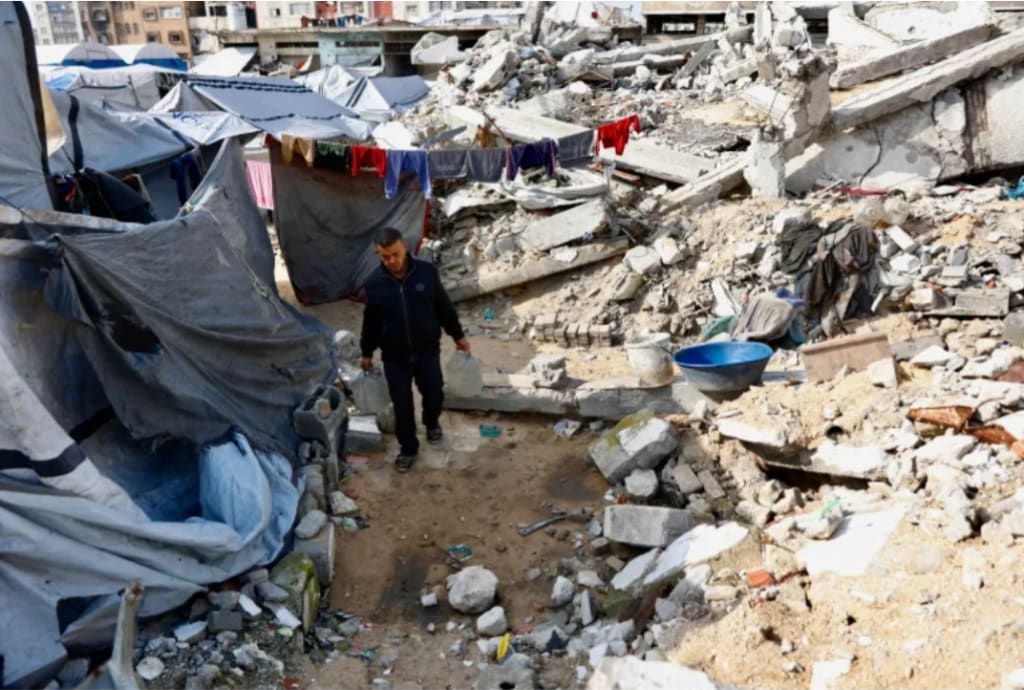
Middle Eastern and Muslim‑majority nations step into a new international peace initiative amid global debate on its purpose and implications
U.S. President Donald Trump’s newly launched “Board of Peace” initiative has attracted the attention of the world’s diplomatic community, with top nations such as Qatar and Saudi Arabia among those accepting invitations to join the initiative. Designed ostensibly to support conflict resolution and reconstruction efforts — initially focused on Gaza — the Board of Peace is shaping into a controversial, high‑stakes diplomatic project with far‑reaching implications for global conflict management and the future role of the United Nations.
At least nine Muslim‑majority countries, including Saudi Arabia, Qatar, Türkiye (Turkey), Egypt, Jordan, Indonesia, the United Arab Emirates (UAE), Pakistan, and Kuwait, have publicly declared their intention to participate, with similar support coming from other international actors attending the World Economic Forum (WEF) in Davos, Switzerland.
---
Origins of the Board of Peace Initiative
The Board of Peace was formally unveiled by President Trump at the 2026 World Economic Forum as part of a broader 20‑point peace plan aimed at ending the prolonged Israel‑Hamas conflict in Gaza and facilitating reconstruction and stabilization in the war‑torn territory. Initially conceived as a body with a narrow focus on Gaza, its charter — surprisingly — makes no direct mention of Gaza at all. Instead, its objectives are framed in terms of conflict resolution, governance stability, and broader peace promotion in regions 'affected or threatened' by war.
The initiative represents a departure from traditional diplomacy led by multilateral institutions such as the United Nations, which has historically held primary authority in matters of international peacekeeping and conflict mediation. In fact, Trump has described the Board of Peace as potentially capable of addressing global crises beyond Gaza and even hinted that it could act alongside, or in place of, the UN in some cases.
Trump’s unconventional strategy has drawn both support and skepticism. Several participating countries see membership as an opportunity to strengthen diplomatic influence and engagement with Washington, while critics argue the initiative risks undermining established international frameworks.
---
Why Qatar, Saudi Arabia and Others Joined
For many of the countries accepting the invitation — including Qatar and Saudi Arabia — participation reflects the complex geopolitical realities of the Middle East, where peace efforts must balance strategic interests, humanitarian concerns, and global influence.
In a joint statement, the foreign ministers of several Islamic and Arab nations reiterated their support for what they described as a collective commitment to achieving a lasting ceasefire in Gaza, advancing reconstruction, and supporting Palestinian self‑determination under international law.
For Qatar, which has historically played a role as a mediator in Middle East conflicts, joining the board aligns with its broader diplomatic positioning as a facilitator of dialogue. Meanwhile, Saudi Arabia’s participation demonstrates Riyadh’s willingness to engage directly in U.S.‑led peace efforts at a time when it seeks to expand its role as a regional stabilizer.
Similarly, Pakistan, Egypt, Jordan, and the UAE have affirmed their readiness to participate, focusing on the immediate need to implement a sustainable ceasefire and to assist in post‑conflict reconstruction efforts directed at restoring stability for civilian populations.
---
Diplomatic Reactions: Support and Skepticism
International reactions to the Board of Peace have been mixed. Supporters emphasize the urgent humanitarian need in Gaza and the potential for coordinated international action to bring peace where other approaches have stalled. For these countries, acceptance of Trump’s invitation is seen as a pragmatic step toward consolidating a permanent ceasefire and stabilizing a fragile region.
However, observers and analysts have raised significant concerns about the initiative’s structure and wider implications. One major point of debate is the possibility that the Board of Peace could undermine the legitimacy and authority of the United Nations — a central pillar of post‑World War II diplomacy — by positioning itself as an alternative mechanism for global conflict resolution.
Critics also note that several traditional U.S. and European allies have either declined to participate or hesitated to commit, reflecting discomfort with the initiative’s leadership and long‑term objectives. Countries such as France, the UK, Norway, Sweden, and Denmark have publicly opted out, citing concerns that the Board might interfere with the established international order and principal membership of the UN.
---
Ambitions Beyond Gaza
Although the Board of Peace was initially framed around Gaza’s reconstruction, its mandate appears to be broader. Reports indicate that it may eventually extend its work to other regions affected by conflict and instability, potentially making it a global platform outside of traditional multilateral institutions.
Trump has suggested that the board could tackle various international disputes and conflicts, framing it as a flexible and decisive body capable of acting where other institutions might be limited by bureaucratic constraints. Participation from countries across Africa, Asia, the Middle East, and even parts of Europe reflects a varied level of international interest — even as some major global players remain on the fence.
---
Political and Regional Implications
The inclusion of Qatar and Saudi Arabia — two influential Gulf states — underscores a key strategic shift: Middle Eastern nations are increasingly willing to engage in multilateral initiatives led by major powers beyond traditional Western institutions. Their involvement may be motivated by a desire to influence outcomes directly, secure political leverage, and ensure that peace processes reflect regional interests and concerns.
At the same time, the Board of Peace’s expansion highlights the fluid nature of international alliances in the 21st century, where bilateral and regional interests increasingly drive participation in global initiatives.
---
Looking Ahead: Challenges and Opportunities
As the Board of Peace begins its work, it faces several complex challenges. Establishing authority and legitimacy in conflict zones like Gaza will require careful coordination with local stakeholders, humanitarian organizations, and international institutions. The board must also navigate deep‑rooted political tensions and geopolitical rivalries, both within the Middle East and between global powers.
At the same time, participation from nations like Qatar and Saudi Arabia provides a platform for diverse diplomatic voices to contribute to peacebuilding efforts. Whether the board ultimately succeeds in its mission — or becomes a politically contentious experiment in new governance — remains to be seen.
What is clear is that Trump’s Board of Peace has opened a new chapter in international diplomacy, one that continues to spark debate about the future of conflict resolution, global cooperation, and the role of emerging power blocs in shaping 21st‑century peace initiatives.
About the Creator
Keep reading
More stories from Salaar Jamali and writers in The Swamp and other communities.
Silver price today on January 23: White metal hits all‑time high of $98.98/oz on Comex
A historic surge for silver as global markets react to macroeconomic and geopolitical forces On January 23, 2026, silver prices surged dramatically to reach a record high of $98.98 per ounce on the Comex futures exchange, marking a watershed moment for the precious white metal. This milestone reflects a potent mix of elevated investor demand, industrial usage, geopolitical tensions, currency weakness and market expectations for monetary easing — all converging to propel silver into uncharted territory.
By Salaar Jamalia day ago in The Swamp
Royal and French Navies Train Shipborne Drones in the Mediterranean: A Glimpse into the Future of Naval Warfare
The Mediterranean Sea has once again become a proving ground for modern naval innovation as the Royal Navy and the French Navy conduct joint exercises involving shipborne drones. These drills signal a decisive shift in how maritime powers are preparing for future conflicts—where uncrewed systems, artificial intelligence, and networked warfare will play a central role. As geopolitical tensions rise and naval operations become more complex, both nations are investing heavily in remotely piloted and autonomous systems to enhance surveillance, strike capability, and fleet protection. The recent Mediterranean exercise highlights how traditional naval forces are evolving to meet 21st-century threats. Why Shipborne Drones Matter Shipborne drones—whether launched from destroyers, frigates, or aircraft carriers—offer navies a powerful advantage. Unlike crewed aircraft, drones can operate for longer periods, take greater risks, and be deployed rapidly without endangering human life. In the joint drills, British and French warships tested uncrewed aerial vehicles (UAVs) and uncrewed surface systems designed for tasks such as: Maritime surveillance Intelligence, surveillance, and reconnaissance (ISR) Target acquisition Force protection Electronic warfare support By training together, both navies aim to ensure that their drone systems are interoperable, capable of sharing data seamlessly during real-world operations. A Strategic Partnership at Sea The Royal Navy and the French Navy already share one of Europe’s closest defense partnerships. From carrier strike cooperation to nuclear deterrence coordination, the two forces have a long history of working side by side. This latest drone-focused exercise strengthens that partnership by addressing a critical question: how can allied navies integrate uncrewed systems into joint operations without disrupting command structures or safety protocols? During the drills, operators practiced launching and recovering drones from moving ships—one of the most technically challenging aspects of naval drone operations. The exercises also tested how drone data feeds into ship combat management systems, allowing commanders to make faster, better-informed decisions. The Mediterranean: A Testing Ground The Mediterranean is an ideal environment for such trials. It is one of the world’s busiest maritime regions, featuring: Heavy commercial shipping traffic NATO and non-NATO naval presence Proximity to conflict zones in the Middle East and North Africa Operating drones in this complex environment allows navies to test not just technology, but rules of engagement, deconfliction procedures, and cyber resilience. Officials involved in the drills emphasized that the exercises were not aimed at any single adversary. Instead, they are part of a broader effort to ensure maritime security, freedom of navigation, and deterrence in an increasingly contested domain. From Manned Fleets to Hybrid Forces Both the UK and France are transitioning toward hybrid naval fleets, where crewed ships operate alongside autonomous and semi-autonomous systems. This approach allows navies to extend their reach without dramatically increasing fleet size or personnel. For the Royal Navy, shipborne drones are already being tested aboard Type 23 and Type 45 vessels. France, meanwhile, has invested heavily in naval drone programs as part of its future fleet modernization. Training together accelerates learning on both sides, helping commanders understand: What drones can realistically achieve Where human oversight remains essential How to balance autonomy with accountability Implications for NATO and Beyond The success of these exercises has implications far beyond the Mediterranean. As NATO places greater emphasis on multi-domain operations, lessons learned from UK-French cooperation could shape alliance-wide standards for naval drones. Future conflicts are likely to feature swarm tactics, electronic warfare, and contested communications. Practicing now ensures allied navies are not caught unprepared. Moreover, visible cooperation sends a clear message: European naval powers are serious about maintaining technological relevance and collective security in an era of rapid military change. Looking Ahead As shipborne drone technology continues to mature, exercises like this will become more frequent—and more complex. Future drills may involve larger drone swarms, underwater autonomous vehicles, and AI-assisted decision-making tools. For now, the Royal Navy and French Navy have taken an important step forward. By training together in the Mediterranean, they are not just testing machines—they are reshaping the future of naval warfare, one unmanned system at a time
By Fiaz Ahmed Brohi7 days ago in The Swamp
British Business Bank Makes Its Biggest Direct Bet Yet on Energy Tech
When you think about government-backed banks, “taking big risks” isn’t usually the first thing that comes to mind. But the British Business Bank (BBB) is changing that perception. Recently, it announced its largest direct equity investment ever — a whopping £25 million in Kraken Technologies, the AI-driven energy software company spun out of Octopus Energy.
By Muhammad Hassan4 days ago in The Swamp




Comments
There are no comments for this story
Be the first to respond and start the conversation.