
Putin's War Is Not Now With Ukraine, But With Each Of Us
Freedom For Ukraine !

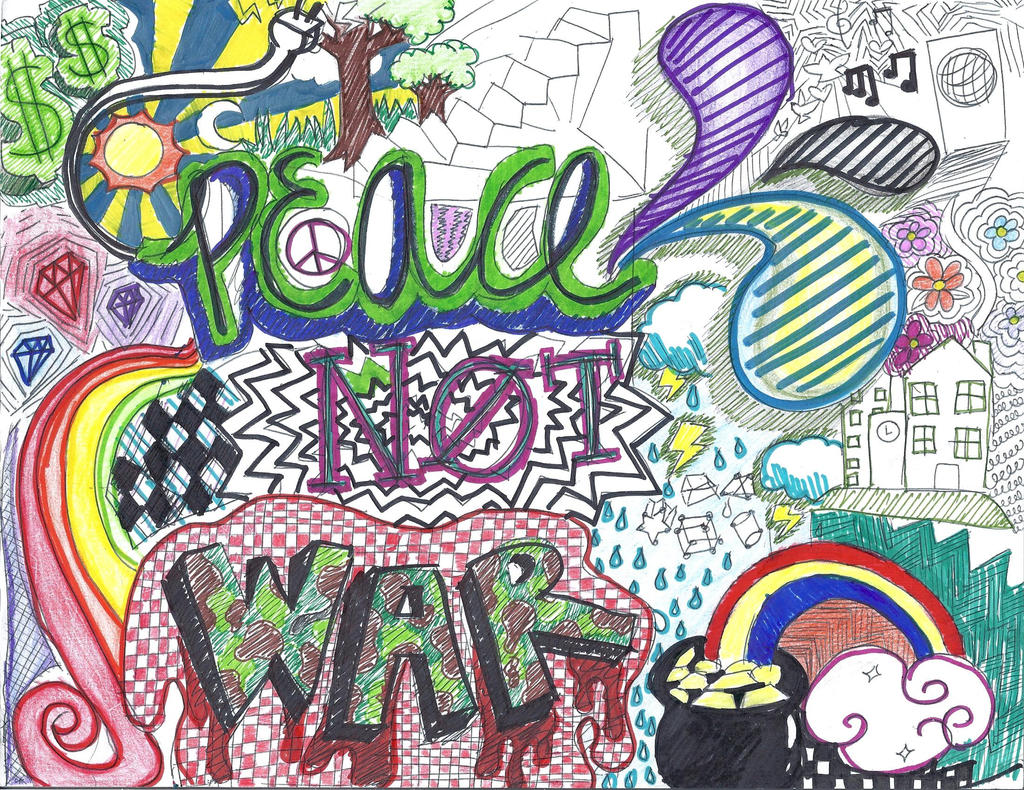
Faced with the stupid and bloody aggression carried out by Putin on Ukraine, Europe is today similar to the multitude of Greek cities of the ancient world, which only the invasion of the colossal Persian army could endow with the consciousness of their unity of values and ideals, of the thought that they formed a single world. A disproportionate and menacing force, apparently invincible, was only able to unite Athens and Sparta, terrible rivals, to bring them under a single command, with the same will to fight for freedom. Since then, and countless times over the centuries, the war between servitude and freedom has been repeated in different worlds, as the eternal archetype of the human condition. Because it is not primarily a war with armies on the battlefield, but an eternal inner conflict, in each of us.
When the disproportion of forces is so great as now, the first fruits of heroism are created, one of the rarest and most precious features of humanity. The modern world, in its pragmatism, tends to deny or mock the spirit of sacrifice, of idealism as a way of being, and yet there is no day and no human situation in which we do not see our fellow men. Beings who give extraordinary evidence of altruism and selflessness.
It is the bright side, the smooth side of the "twisted wood of humanity" that Immanuel Kant was talking about. The same smooth part actually exists in everyday life, in the small and the big things, but especially in crucial moments for humanity, such as the one we live in today. Thermopylae seems like a nice story today, but it has been a reality, and that reality has been repeated many times throughout history, when it has been shown that gigantic armies with brute force can indeed be humiliated by the human desire for freedom.
Today Putin unites Europe and the whole world, against his intentions, more than any economic, sociological or cultural factors. Thermopylae is now in Ukraine, and the heroism of Ukraine inspires and unifies. By unifying the world against him and provoking Ukraine's enthusiastic resistance, Putin has already lost the war.
History is not a book or a textbook, but the successive and simultaneous weaving of billions of human lives. It is present not only in the past, but also in the present. Putin's war is not now with Ukraine, but with each of us.
The Ukrainian flag became a symbol of the struggle for freedom after the Russian invasion.
Freedom For Ukraine !
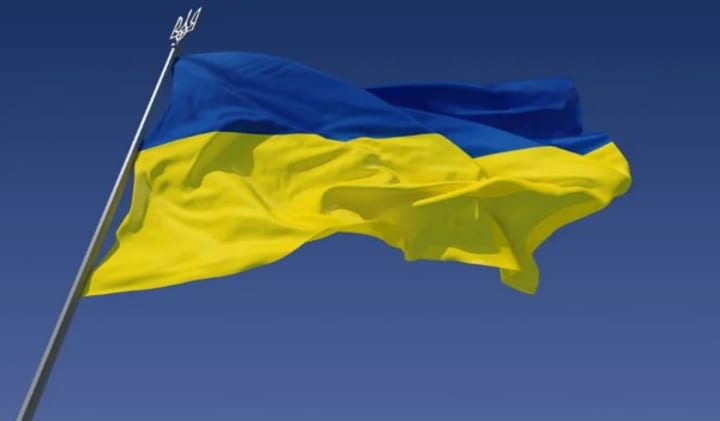
What is the significance of the two colors, blue and yellow, on the flag of Ukraine
Where did the two colors come from? It originates from the insignia of the medieval principalities, used in the 13th century during the fight against the Mongol invasion, and from the coat of arms of the national hero Bogdan Khmelnytsky, who put an end to Polish and Lithuanian rule in the 17th century. The best known use of these colors dates back to the Battle of Grunwald, which took place on July 15, 1410 between the Kingdom of Poland, the Grand Duchy of Lithuania and their allies on the one hand, and the Teutonic Knights on the other.
In the middle of the 17th century, after the accession of the Hatmanate to the Russian state, blue (blue) canvases were more and more frequently used, with images representing crosses and other symbols in gold or yellow colors. After the long-standing tradition of the symbols of Cossacks was disrupted in Ukraine, which was part of the Russian Empire, the issue of national symbols could not be raised. The first attempt to create a yellow-blue flag, with two horizontal stripes roughly as it is today, was made by the Russian Supreme Council (a body representing the national movement of the Ukrainian population in Galicia), which began the struggle for the rebirth of the nation. Ukrainian. In June 1848, the first yellow-blue flag was hoisted on Lviv City Hall.
However, after 1848, another explanation emerged after the order of the colors was changed from yellow-blue to blue-yellow. The color blue is said to represent the blue sky (symbolizing peace) above the wheat fields (symbolizing prosperity).
An impetus for the spread of yellow-blue symbolism was the February 1917 revolution in Russia. On March 22, 1918, the Central Ukrainian Rada adopted the Law on the National Flag of the Republic, approving the yellow-blue flag as a symbol of the People's Republic of Ukraine. On November 13, 1918, the yellow-blue flag also became the state symbol of the Western People's Republic of Ukraine. It was approved in Subcarpathian Russia, and in 1939 in Carpathian Ukraine. From 1917 to early 1919, the yellow-blue flag was used in Ukraine by the Bolsheviks.
The combination of blue and yellow as the only national colors finally took its current form at the end of the 20th century. The Act of Independence of Ukraine was proclaimed on August 24, 1991, and the yellow-blue flag was hoisted on the Verkhovna Rada building.
Ukraine's National Flag Day is celebrated every year on August 23, starting in 2004. Initially, this day was celebrated on July 24, but after Independence Day in 1992 the holiday was changed. The law clearly stipulates that on August 23, but also on other national holidays, all public buildings to fly the Ukrainian flag.
About the Creator
MGS
Web Content Writer
India Builds Rockets and Warplanes — So Why Not Passenger Jets?
India has earned global recognition for its accomplishments in defense and space technology. From sending satellites into orbit with the Indian Space Research Organisation (ISRO) to producing advanced fighter jets like the Tejas, the nation has proven that it can engineer highly sophisticated and high-stakes technology. Yet, when it comes to commercial aviation — particularly the production of large passenger jets — India remains conspicuously absent. This gap raises a pressing question: if India can build rockets and warplanes, why not passenger aircraft?
By Fiaz Ahmed Brohi2 days ago in The Swamp



Comments
There are no comments for this story
Be the first to respond and start the conversation.