
Protests in Greenland and Denmark Against Trump Plans
Thousands in Greenland and Denmark Protest Former US President Trump’s Arctic Plans, Reasserting Local Sovereignty"

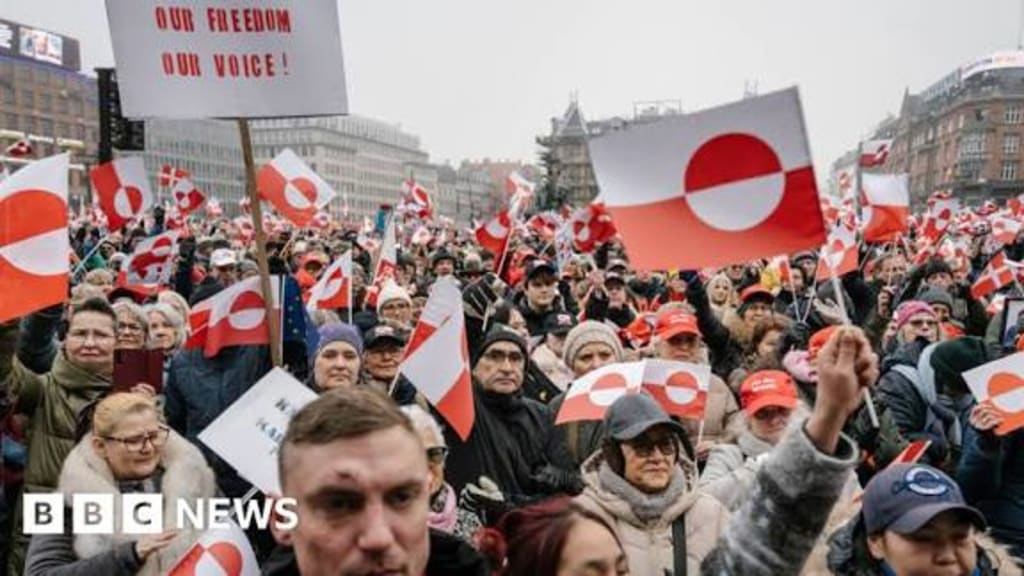
Greenland and Denmark are witnessing a wave of protests in response to former U.S. President Donald Trump’s controversial plans regarding the Arctic territory. The unrest highlights a growing concern among citizens about sovereignty, national security, and the broader implications of foreign involvement in the region. With Trump’s past interest in acquiring Greenland making headlines, the protests reflect both local frustrations and the international significance of Arctic geopolitics.
The protests have been widespread, with thousands of Greenlanders taking to the streets in the capital Nuuk and other towns. Demonstrators carried placards reading slogans such as “Greenland is not for sale” and “Our land, our future”. Many citizens expressed deep unease over what they perceive as attempts by external powers to exert control over the island’s resources and strategic position. Greenland, while an autonomous territory under the Kingdom of Denmark, is rich in natural resources including rare earth elements, minerals, and potential oil and gas reserves. The Arctic region’s strategic importance for shipping routes and military positioning has also intensified interest from global powers.
In Denmark, protests have echoed similar concerns. Copenhagen has seen demonstrations both in support of Greenland’s autonomy and in opposition to any U.S. intervention. Citizens worry that political negotiations involving Trump could compromise Denmark’s influence over its territories and destabilize the delicate balance of governance in the Arctic. Danish Prime Minister Mette Frederiksen has reiterated that Greenland’s people must decide their future, emphasizing self-determination and the right to manage their land without outside pressure.
Trump’s reported interest in Greenland, first revealed during his presidency, reignited fears that the U.S. might attempt to exert control over the island in ways that bypass local governance. Though Trump later downplayed his intentions, the issue has persisted in public discourse, fueled by social media campaigns and news coverage. Greenlanders’ reaction is rooted in a long history of asserting their independence from external powers. While Denmark retains responsibility for foreign affairs and defense, Greenland exercises control over its domestic policies, cultural affairs, and natural resources.
Experts note that the protests are also a statement on broader Arctic geopolitics. The Arctic has become a focal point for competition among global powers, including the U.S., Russia, and China. Strategic military bases, shipping lanes that could reduce trade times significantly, and untapped natural resources make the region increasingly valuable. Greenland’s location between North America and Europe adds to its importance. Protesters argue that any move by foreign governments to influence Greenland could set a precedent, risking the island’s autonomy and sovereignty.
Environmental concerns have also fueled public anger. Greenland’s fragile ecosystem is under threat from climate change, rising sea levels, and potential industrial exploitation. Many activists fear that foreign intervention could accelerate environmental degradation, putting communities and wildlife at risk. Local leaders stress that decisions regarding mining, oil drilling, and infrastructure must be made with Greenlandic priorities in mind, not as part of geopolitical maneuvering by powerful nations.
The protests have drawn international attention. Media outlets worldwide have reported on the demonstrations, highlighting how Greenlanders and Danes alike are mobilizing to defend their land and decision-making rights. Social media platforms have amplified the message, with hashtags calling for respect for Greenlandic autonomy trending in multiple countries. Some commentators suggest that these protests serve as a reminder that small populations can exert significant influence on global conversations, particularly when it comes to territorial sovereignty and environmental stewardship.
Political analysts note that while Trump is no longer in office, his plans continue to have a symbolic impact. The protests represent a broader resistance to foreign interference and a call for local governance. Greenland’s government has responded diplomatically, urging calm while reaffirming that any discussions regarding the island’s future must involve Greenlandic representatives directly. The Danish government has also supported this stance, ensuring that any international engagement respects Greenland’s autonomy.
In conclusion, the protests in Greenland and Denmark against Trump’s plans underscore the importance of sovereignty, self-determination, and environmental stewardship in the Arctic. They highlight the intersection of local concerns with global geopolitics and demonstrate how communities can mobilize to protect their interests. As international attention remains focused on the Arctic, Greenlanders continue to assert their voice, reminding the world that the island’s future rests in the hands of its own people, not external powers.
The protests are more than just a reaction to past political statements; they reflect a deep, ongoing commitment to local decision-making, cultural preservation, and sustainable development. For Greenland and Denmark, the message is clear: the Arctic is not a bargaining chip—it is home to people who are determined to shape their destiny.
About the Creator
Fiaz Ahmed Brohi
I am a passionate writer with a love for exploring and creating content on trending topics. Always curious, always sharing stories that engage and inspire.
Keep reading
More stories from Fiaz Ahmed Brohi and writers in The Swamp and other communities.
India Has a River That Flows Backwards: Know Which River It Is
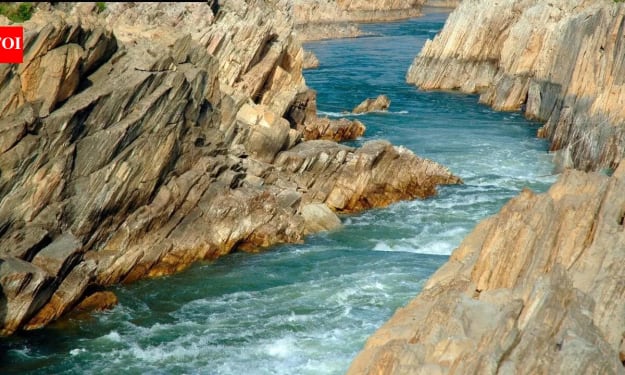
India, a land of rivers and spirituality, is home to more than 1,500 rivers that nourish its agriculture, sustain ecosystems, and form the backbone of its culture and economy. Most rivers follow the natural topography, flowing from higher altitudes to lower plains, eventually joining larger rivers or emptying into the sea. But among India’s vast river network, there exists a fascinating anomaly—a river that flows backward. Yes, you read that right. Contrary to the usual flow, this river reverses its course under certain conditions, capturing the imagination of locals, scientists, and travelers alike. The river in question is the Narmada River, which primarily flows westward through the states of Madhya Pradesh, Maharashtra, and Gujarat before emptying into the Arabian Sea. The Narmada is one of India’s most significant rivers, both historically and culturally. It is considered sacred, with numerous temples and ghats along its banks. Its backward flow phenomenon, however, is an extraordinary natural event tied to tidal influences, geography, and seasonal changes. Understanding the Phenomenon The Narmada River’s backward flow occurs near its estuary in Bharuch, Gujarat, where the river meets the Arabian Sea. During the monsoon season, or when the sea tide is exceptionally high, the force of the incoming tide can overpower the river’s natural current. As a result, the water begins to flow upstream, moving back into the river instead of towards the sea. Locals often refer to this as the river “swallowing” the sea, and the phenomenon has been documented by hydrologists and environmental experts. This is not unique to the Narmada; tidal rivers worldwide exhibit similar behavior, but it is rare in India. The combination of the river’s relatively flat gradient near its mouth, high tidal variations in the Arabian Sea, and heavy seasonal rainfall make the Narmada one of the few rivers in India where this backward flow is noticeable and significant. Cultural and Historical Significance The Narmada River has long been celebrated in Indian culture. Ancient texts, folklore, and religious scriptures frequently praise its waters. The backward flow phenomenon has inspired myths and local stories. Some communities consider it a divine occurrence, believing that the river reverses its course to honor the gods or cleanse the lands during specific lunar events. Pilgrimages along the river, known as the Narmada Parikrama, attract thousands of devotees every year. They often plan their visits to witness the backward flow, adding a spiritual dimension to a natural phenomenon. Beyond its religious significance, the river has historically served as a major trade and transportation route. Ancient settlements flourished along its banks, benefiting from fertile soils and reliable water. The Narmada’s estuary, where the backward flow occurs, became a hub for commerce, as the unusual river dynamics created navigable conditions that local traders skillfully exploited. Scientific Perspective Hydrologists and geologists have studied the Narmada’s backward flow to understand its dynamics better. Tidal action, riverbed gradient, and seasonal water volume play a crucial role. During the monsoon, the river swells with rainwater from its catchment areas, increasing its speed and volume. When the sea tide rises simultaneously, the river’s velocity can be temporarily reversed. Scientists monitor these events to study sediment transport, estuarine ecology, and flood risk management. The phenomenon also provides insights into how rivers respond to climate variations. Rising sea levels and changing rainfall patterns could alter the intensity and frequency of such backward flows in the future. Understanding these dynamics is essential for local infrastructure planning, agriculture, and disaster preparedness, particularly in flood-prone regions. Tourism and Exploration The backward flow of the Narmada River has recently become a point of interest for eco-tourism and adventure enthusiasts. Visitors flock to Bharuch and nearby areas to witness this rare occurrence. Guided tours offer explanations of the tidal dynamics, cultural stories, and ecological importance of the river. Kayaking and river cruises along the estuary allow tourists to experience the force of the water reversing, a sight that is both mesmerizing and humbling. Local authorities are also promoting awareness about the river’s unique behavior. Efforts include signage, educational programs, and environmental campaigns to protect the river from pollution and unsustainable development. By combining tourism with conservation, the Narmada backward flow has become a symbol of India’s natural wonders and the delicate balance between nature and human activity. Conclusion India’s Narmada River is not just a source of water and life; it is a living example of nature’s unpredictability and grandeur. Its rare backward flow phenomenon reminds us of the power of tides, the intricacies of geography, and the cultural narratives that rivers inspire. Whether you are a traveler seeking unusual natural events, a student of hydrology, or a devotee of India’s spiritual heritage, witnessing the Narmada’s backward flow is an unforgettable experience. In a country renowned for its diverse landscapes and river systems, the Narmada stands out as a river that defies expectations, flowing backward against the tide and leaving behind a story that is part science, part culture, and wholly awe-inspiring.
By Fiaz Ahmed Brohia day ago in The Swamp


Comments
There are no comments for this story
Be the first to respond and start the conversation.