
Protests Held in Minneapolis After Woman Shot Dead by US Immigration Agent
A City in Mourning and Outrage
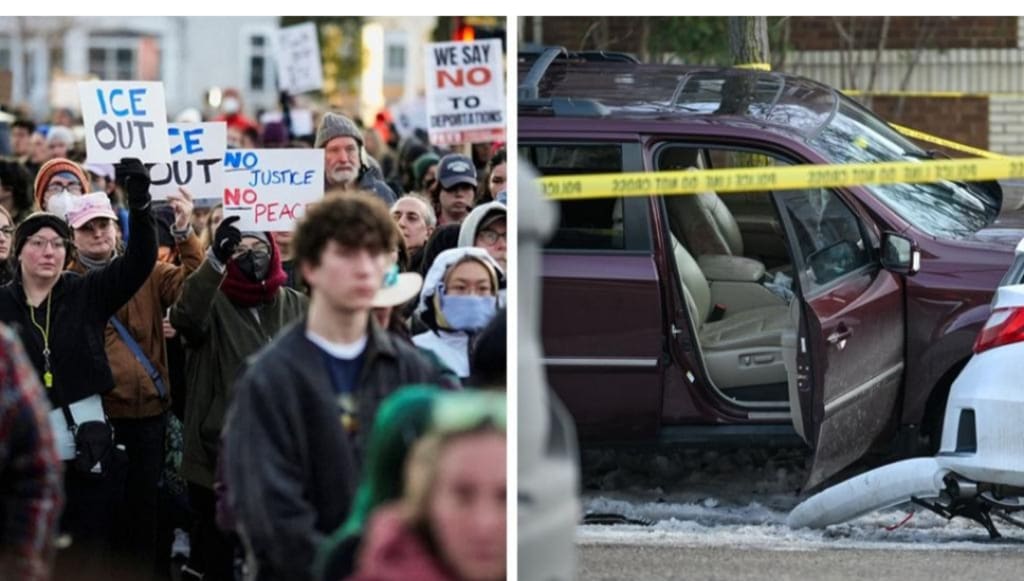
Protests erupted across Minneapolis after a woman was shot and killed during an encounter with a US immigration enforcement agent, sparking renewed national debate over the use of force, accountability, and immigration policing. Demonstrators gathered near the site of the shooting and outside government buildings, demanding answers, justice, and systemic reform.
The incident has reignited painful memories in a city already shaped by past confrontations between law enforcement and the public, turning Minneapolis once again into a focal point of national attention.
What We Know About the Shooting
According to preliminary statements from federal authorities, the woman was shot during an immigration enforcement operation. Officials claim the agent perceived a threat, though details remain limited as the investigation continues.
Witnesses and community advocates have called for transparency, questioning why lethal force was used and whether alternative measures were available. The victim’s identity has not been fully released pending family notification, but local organizers describe her as a community member with deep ties to the neighborhood.
The Department of Homeland Security has confirmed that the agent involved has been placed on administrative leave while an internal and external investigation proceeds.
Protests Grow as Questions Mount
Within hours of the shooting, hundreds of protesters took to the streets, holding signs reading “Justice for Her,” “No More Killings,” and “Immigration Is Not a Crime.” Demonstrations were largely peaceful, though tensions ran high as grief and anger blended into chants calling for accountability.
Community leaders urged calm while emphasizing the importance of protest as a tool for change. “We are here because someone lost her life,” said one organizer. “This isn’t just about one incident—it’s about a system that keeps failing people.”
Law enforcement maintained a visible presence but largely avoided confrontation, a response many saw as an effort to prevent escalation.
Immigration Enforcement Under Scrutiny
The shooting has intensified scrutiny of US immigration enforcement practices, particularly the role of armed agents in civilian communities. Critics argue that immigration enforcement should prioritize civil procedures rather than tactics resembling criminal policing.
Advocacy groups say the presence of armed agents increases the risk of deadly encounters, especially in communities already wary of law enforcement. They are calling for clearer rules of engagement, de-escalation training, and limits on when force can be used.
Supporters of current enforcement policies argue that agents face unpredictable and dangerous situations and must be able to protect themselves. However, even some moderate voices say the use of lethal force must meet a high standard of necessity.
Minneapolis and Its History With Police Violence
Minneapolis occupies a unique place in America’s reckoning with policing. Past incidents have left deep scars, making residents particularly sensitive to any loss of life involving law enforcement.
For many protesters, the latest shooting feels like a continuation of unresolved issues. “We were promised reform,” said a local resident at a vigil. “Yet here we are again.”
City officials acknowledged the pain felt by residents and pledged cooperation with federal investigators. The mayor’s office emphasized the importance of transparency and community trust in the days ahead.
Calls for Federal Accountability
Elected officials at the local and national level have weighed in, with some calling for an independent federal review and others demanding congressional oversight of immigration enforcement agencies.
Civil rights organizations are urging the Department of Justice to open a civil rights investigation, arguing that internal reviews are insufficient to restore public confidence.
The shooting has also reignited calls to separate local policing from federal immigration enforcement, a policy debate that has divided cities across the country.
The Human Cost at the Center
Amid political debate, protesters and advocates emphasize the human cost. Vigils held in Minneapolis featured candles, flowers, and moments of silence for the woman who lost her life.
Friends and neighbors described her as hardworking and caring, pushing back against narratives that reduce victims to enforcement encounters. “She was more than a case file,” one speaker said. “She mattered.”
Mental health counselors and community organizations have mobilized to support those affected, particularly in immigrant communities now feeling heightened fear.
National Reaction and Broader Implications
The incident has drawn national attention, with activists in other cities organizing solidarity protests. For many, the shooting symbolizes broader concerns about how immigration policy is enforced on the ground.
Experts warn that such incidents can deepen mistrust, discouraging immigrant communities from reporting crimes or cooperating with authorities—ultimately undermining public safety.
As immigration remains a politically charged issue ahead of national elections, the Minneapolis shooting is likely to influence debates around enforcement, reform, and accountability.
What Comes Next
Investigations into the shooting are ongoing, and results may take weeks or months. Protesters say they will continue to demonstrate until clear answers are provided and those responsible are held accountable if wrongdoing is found.
Community leaders are also calling for policy changes, not just case-specific outcomes, arguing that systemic reform is the only way to prevent future tragedies.
Conclusion: A Community Demands Answers
The protests in Minneapolis reflect more than anger—they reflect grief, fear, and a demand for dignity. As a woman’s death becomes the latest flashpoint in America’s struggle with law enforcement and immigration policy, the city once again stands at the center of a national conversation.
Whether this moment leads to meaningful change will depend on transparency, accountability, and the willingness of leaders to listen to the communities most affected. For now, Minneapolis mourns—and waits.
About the Creator
Keep reading
More stories from Aarif Lashari and writers in The Swamp and other communities.
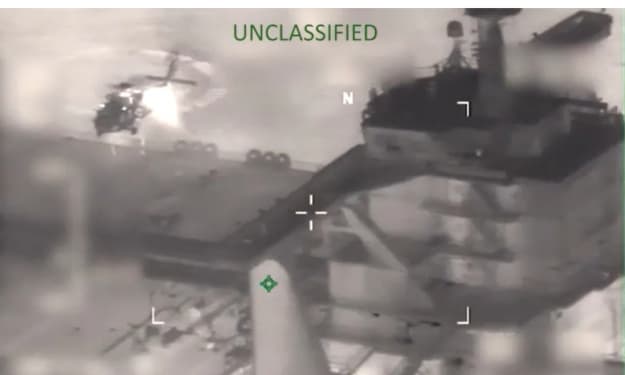
How US Forces Seized Two Ghost Fleet Tankers on Opposite Sides of the Atlantic
In a dramatic display of maritime enforcement, US forces seized two so-called “ghost fleet” oil tankers on opposite sides of the Atlantic, underscoring Washington’s increasingly aggressive efforts to crack down on sanctions evasion. The coordinated actions, carried out thousands of miles apart, reveal how the United States is expanding its reach to disrupt shadow shipping networks that have quietly kept sanctioned oil flowing across global markets.
By Aarif Lashari2 months ago in The Swamp
The Forsyth House Fire
Since 1851, Forsyth House has stood on the corner of Union Street and Gordon Street in the heart of Glasgow. Its iconic, or was... because on Sunday 8th of March, 2026, a fire broke out in a small, seemingly un-named shop in the building and tore all that history down. As I write, the rubble is still unsettled and the street is still blocked off. Central Station is quiet on the upper level, and around 30 small businesses have quite literally gone up in smoke.
By S. A. Crawford3 days ago in The Swamp
US Military Prepares Explosive Ordnance at UK Air Base
The presence of United States military forces at key allied installations has long been a cornerstone of Western defense cooperation. Recently, attention has focused on preparations taking place at the Royal Air Force base at RAF Fairford, where American personnel were seen preparing explosive ordnance as part of heightened military activity. The developments highlight the strategic importance of the base and the growing tension surrounding ongoing conflicts in the Middle East. Witnesses and media reports observed U.S. military ground crews and technical specialists handling and positioning explosive ordnance at the air base in Gloucestershire. The preparations reportedly involved loading munitions and readying aircraft for potential missions. These activities took place shortly after senior U.S. defense officials signaled that upcoming operations could represent one of the most intense phases of ongoing military actions in the region. The activity at RAF Fairford coincides with the deployment of several heavy American bombers to the United Kingdom. Among the aircraft spotted at the base were B-1 Lancer and B-52 strategic bombers, both capable of carrying large payloads of conventional weapons. These aircraft are often used for long-range strike missions and deterrence operations due to their extended range and advanced targeting systems. Their presence indicates a significant buildup of operational capability at the base. RAF Fairford has a long history as a strategic site used by the United States Air Force during joint operations with NATO allies. The base’s runway—one of the longest in the United Kingdom—makes it particularly suitable for operating large bomber aircraft that require extensive takeoff and landing distances. Over the years, it has hosted numerous American deployments during international crises and major military exercises. The latest developments come after the British government granted permission for U.S. forces to use certain UK bases for what officials described as “limited defensive purposes.” The decision followed growing concerns about missile threats in the Middle East and the need to strengthen defensive measures against potential attacks. According to government statements, the goal of the authorization is to help prevent missile launches and protect allied countries in the region. At the same time, the move has sparked political debate within the United Kingdom. Some lawmakers and analysts have expressed concern that allowing American military operations from British territory could draw the country deeper into international conflicts. Others argue that cooperation with the United States is essential for maintaining collective security and supporting NATO commitments. Military experts say the preparation of explosive ordnance at RAF Fairford does not necessarily indicate an immediate strike but rather demonstrates operational readiness. Preparing weapons systems and aircraft is a standard procedure whenever forces are placed on heightened alert. Ground crews typically conduct extensive checks on munitions, aircraft systems, and support equipment before any mission is authorized. The presence of heavy bombers and munitions has also attracted public interest from local communities near the base. Residents have reported increased aircraft activity, including takeoffs and landings by large military planes. While such movements are not unusual for a facility that regularly hosts international forces, the scale of recent operations has been noticeably higher. Defense analysts note that RAF Fairford remains one of the few bases in Europe capable of supporting strategic bombers on short notice. This capability makes it a critical asset for the United States and its allies when rapid deployment is required. The base has previously supported missions in the Middle East, Eastern Europe, and other regions where NATO forces have been involved in security operations. As geopolitical tensions continue to evolve, the activity at RAF Fairford illustrates the close military cooperation between the United States and the United Kingdom. Whether used for deterrence, defensive operations, or broader strategic planning, the base remains a key hub in the network of allied defense infrastructure. While officials have not disclosed the precise missions connected to the ordnance preparations, the developments signal a period of heightened readiness among Western forces. In an era of rapidly shifting global security challenges, installations like RAF Fairford continue to play a central role in projecting power and supporting allied military coordination.
By Fiaz Ahmed 5 days ago in The Swamp


Comments
There are no comments for this story
Be the first to respond and start the conversation.