
Prosecutors Seek Death Penalty for Ex-South Korean President Yoon
Prosecutors Seek Maximum Punishment: South Korea Faces Political Turmoil as Former President Yoon Faces Death Penalty Charges

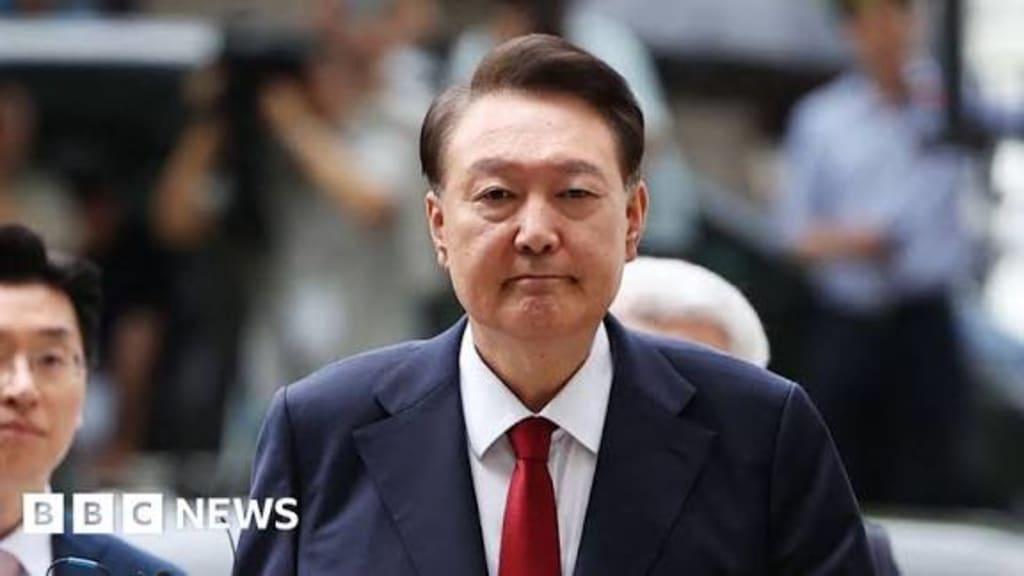
Severe Charges Against a Former Leader Spark National Debate
South Korea finds itself at the center of a political and legal storm as prosecutors have formally sought the death penalty for former President Yoon, a move that has sent shockwaves across the nation. The decision to pursue the harshest possible sentence comes amid a high-profile trial in which Yoon faces charges related to corruption, abuse of power, and actions deemed to have gravely undermined public trust. The unprecedented nature of this legal pursuit has sparked intense discussion on the balance between justice, political accountability, and the role of the judiciary in a modern democracy.
The Allegations Against Yoon
The case against Yoon includes multiple counts of corruption, bribery, and misuse of presidential authority. Prosecutors argue that during his tenure, he accepted substantial illicit payments from corporations and individuals seeking favorable government treatment. Additionally, evidence presented alleges that Yoon leveraged his position to suppress opposition voices and manipulate key political outcomes, further eroding democratic norms.
While South Korea has a history of holding leaders accountable — with former presidents Park Geun-hye and Lee Myung-bak having faced imprisonment for corruption — the pursuit of the death penalty marks a striking escalation. Analysts suggest that prosecutors aim to signal a zero-tolerance stance toward systemic corruption at the highest levels of government, reinforcing public faith in legal institutions.
Public and Political Reactions
News of the death penalty recommendation has sparked a wave of reactions across South Korean society. Citizens who have long demanded greater accountability from political elites have expressed cautious support, framing the move as a necessary step to curb entrenched corruption. However, there are also widespread concerns about the precedent this may set, particularly regarding the politicization of legal proceedings.
Political parties have sharply divided over the matter. Opposition leaders have condemned the move as “judicial overreach,” arguing that such extreme measures could polarize society and undermine democratic principles. Supporters of the prosecutors’ stance, on the other hand, assert that no individual — regardless of political stature — should be above the law.
International Attention
The case has drawn attention beyond South Korea, as international observers monitor how the nation navigates this high-profile trial. Democracy watchdogs and human rights groups have highlighted the need for transparent and fair judicial procedures, emphasizing that the pursuit of the death penalty requires rigorous evidence and impartial consideration.
Analysts note that how South Korea handles the trial may influence global perceptions of its legal and political systems. The nation, often seen as a beacon of stable democracy in East Asia, is under scrutiny to demonstrate that its institutions can deliver justice without succumbing to political pressure.
Implications for South Korea’s Political Landscape
The trial and potential sentencing of a former president carry profound implications for South Korea’s political future. If the death penalty is imposed, it would represent a historic turning point, signaling to both political elites and the public that accountability is absolute. At the same time, it risks deepening divisions among citizens and political factions, particularly if perceptions arise that the trial is motivated by partisan considerations.
Legal scholars note that the case could prompt debates over constitutional reforms, including clarifying limits on executive power and the proper mechanisms for holding leaders accountable. Such discussions may shape the next generation of political leadership and governance norms in South Korea.
Balancing Justice and Democracy
Ultimately, the case against former President Yoon reflects the ongoing tension between justice, accountability, and the preservation of democratic principles. While prosecuting corruption is essential for the health of any democracy, the pursuit of capital punishment for a political figure introduces complex ethical and legal questions. How South Korea reconciles these competing priorities will likely define both its domestic political climate and its reputation on the world stage.
As the trial progresses, citizens, political leaders, and international observers will continue to scrutinize each development closely. The outcome could either reinforce faith in the rule of law or provoke renewed debate about the role of punishment in democratic societies. What remains clear is that South Korea is facing one of its most consequential legal and political tests in recent memory — a moment that will resonate far beyond the courtroom walls.
Conclusion
The recommendation of the death penalty for former President Yoon marks a dramatic chapter in South Korea’s history, intertwining questions of legality, morality, and political accountability. As the nation watches, it confronts the difficult challenge of balancing the demand for justice with the need to protect democratic norms. How this unprecedented case unfolds will undoubtedly shape South Korea’s political and judicial landscape for years to come.
About the Creator
Fiaz Ahmed Brohi
I am a passionate writer with a love for exploring and creating content on trending topics. Always curious, always sharing stories that engage and inspire.
Keep reading
More stories from Fiaz Ahmed Brohi and writers in The Swamp and other communities.
Mark Ruffalo’s Howl of Frustration Was the Golden Globes’ Finest Hour
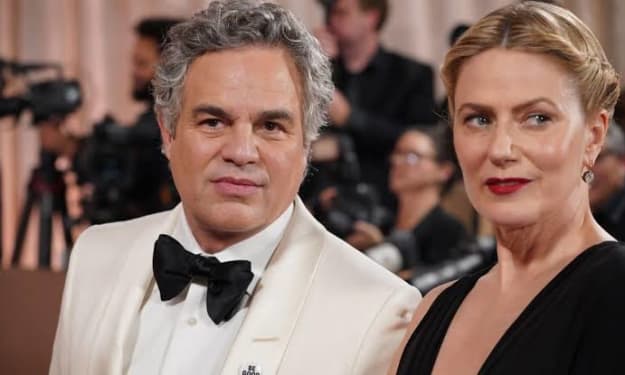
The Golden Globes 2026 may be remembered for its glitz, glamour, and star-studded appearances, but for many viewers, the true highlight of the evening wasn’t a meticulously choreographed acceptance speech or a red-carpet gown—it was Mark Ruffalo’s raw, unfiltered moment of frustration. The veteran actor, known as much for his activism as his role as the Hulk in the Marvel Cinematic Universe, gave the awards ceremony a humanizing jolt that cut through the predictable spectacle, reminding audiences why we still care about live television moments. Ruffalo’s howl, spontaneous and sincere, erupted in the midst of the Golden Globes’ proceedings when a controversial snub left him visibly perturbed. Unlike the carefully curated smiles and rehearsed thank-yous, his reaction was immediate, genuine, and relatable. In a room dominated by optics and etiquette, this brief lapse into authenticity stood out—an unguarded expression of disappointment that was as entertaining as it was telling. The context of Ruffalo’s outburst is critical. The Golden Globes, despite their longstanding prestige, have faced increased scrutiny over the years. Criticism has centered around perceived biases, questions over nominations, and the influence of Hollywood’s inner politics. Many fans have voiced frustration over films and performances that seemingly go unnoticed by the Hollywood Foreign Press Association, the body responsible for the awards. Ruffalo’s moment of honesty, therefore, resonated widely: it was not just about a single snub but about the broader sense of exasperation felt by artists and audiences alike. Social media immediately seized upon the moment. Clips of Ruffalo’s exasperated exclamation spread like wildfire on platforms such as Twitter, Instagram, and TikTok, sparking commentary, memes, and debates. Fans praised him for speaking truth to the unspoken pressures of awards season, while critics reminded viewers of the line between public frustration and professionalism. Regardless of perspective, the consensus was clear: this was a memorable instance that reinvigorated discussion around the Golden Globes in a year when ceremony fatigue is a real concern. Ruffalo’s reaction also highlighted a key shift in celebrity culture. Audiences are increasingly drawn to vulnerability and candor. In an era dominated by perfectly filtered Instagram posts and scripted interviews, raw, emotional honesty resonates powerfully. Ruffalo’s howl wasn’t just a response to being overlooked—it was an emblem of authenticity, a reminder that behind the glamour and bright lights, artists are human, passionate, and deeply invested in their craft. For a few seconds, viewers were allowed to glimpse the man beyond the roles he plays, connecting him with fans in a way no carefully curated appearance could achieve. Moreover, this moment provided a stark contrast to the expected formalities of the evening. The Golden Globes, like many awards ceremonies, have become synonymous with politeness and PR-friendly statements. Acceptance speeches are meticulously timed, jokes are rehearsed, and expressions of emotion are filtered through layers of etiquette. Ruffalo disrupted this rhythm, delivering a genuine reaction that injected a much-needed sense of unpredictability into the event. In doing so, he reminded audiences that live television’s greatest power lies in its ability to capture unplanned, unscripted moments that transcend entertainment and spark conversation. The lasting impact of Ruffalo’s outburst extends beyond the ceremony itself. In interviews following the event, the actor explained that his frustration stemmed not from personal grievances but from a desire to see deserving artists recognized. His statement emphasized solidarity and advocacy within the industry, reflecting broader conversations about equity, visibility, and acknowledgment in Hollywood. By voicing his dissent so publicly, Ruffalo encouraged other artists to embrace authenticity, even in spaces traditionally governed by propriety. Ultimately, Mark Ruffalo’s howl at the Golden Globes will likely be remembered as one of the defining moments of 2026’s awards season. It was a fleeting instance, yet its resonance was amplified by its honesty. It reminded viewers that the human element—the joy, the disappointment, the genuine emotion—is what makes these events compelling. For a night that often celebrates image over substance, Ruffalo offered a reminder of what truly matters: the people behind the work, and the emotions that make art worth celebrating. In a ceremony often critiqued for its predictability, Ruffalo’s exclamation was the Golden Globes’ finest hour. It was spontaneous, relatable, and undeniably human—a rare moment that cut through the veneer of Hollywood perfection and left audiences laughing, empathizing, and talking long after the lights dimmed.
By Fiaz Ahmed Brohi6 days ago in The Swamp
Global Submersible Pumps Market Poised for Steady Growth as Water, Energy, and Infrastructure Demands Rise
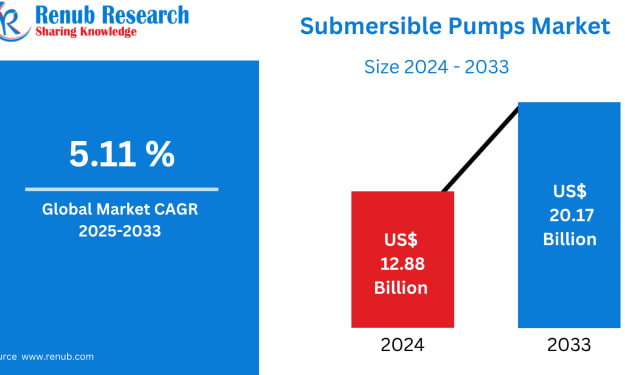
Global Submersible Pumps Market Outlook The Global Submersible Pumps Market is entering a decade of sustained growth, supported by rising global demand for water management, agricultural irrigation, and industrial dewatering solutions. According to Renub Research, the market is projected to grow from US$ 12.88 billion in 2024 to US$ 20.17 billion by 2033, expanding at a CAGR of 5.11% during 2025–2033.
By Aaina Oberoiabout 12 hours ago in The Swamp


Comments
There are no comments for this story
Be the first to respond and start the conversation.