
Pressure Mounts on UK Prime Minister Starmer as Scottish Labour Leader Urges Him to Quit
Political turmoil deepens as internal party divisions grow and Westminster scandals cast a shadow over Starmer’s leadership
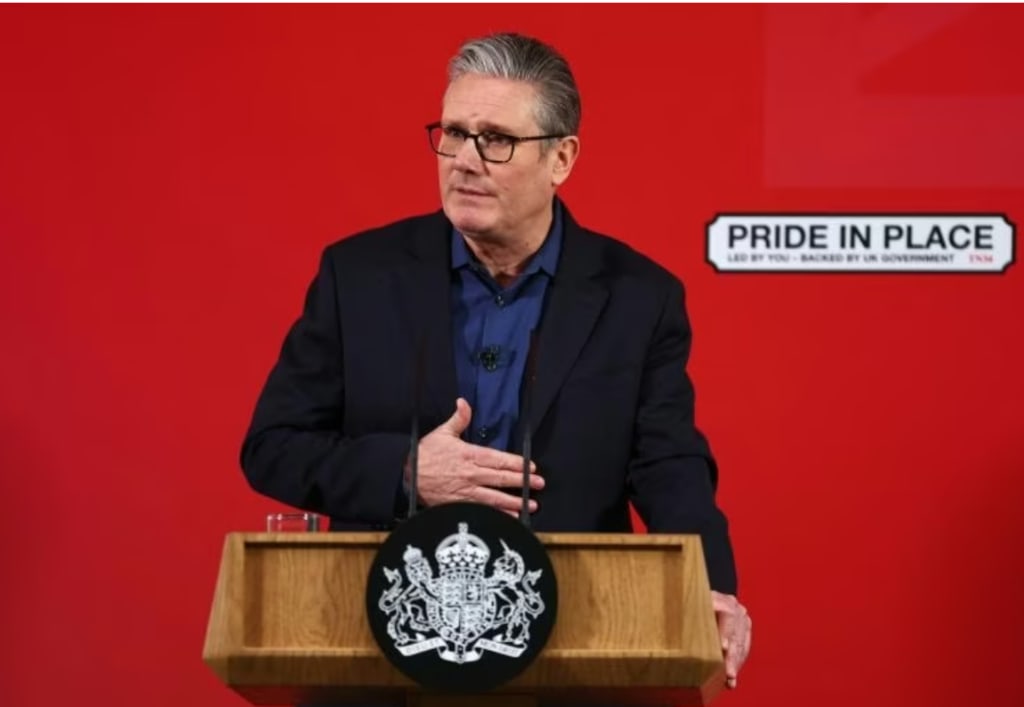
The political heat is rising in Westminster. British Prime Minister Sir Keir Starmer is facing perhaps the most serious challenge to his leadership since taking office, following a bold call from Scottish Labour leader Anas Sarwar for him to resign. This public break is sending shockwaves through the Labour Party, raising questions about the stability of Starmer’s government and Labour’s prospects ahead of the crucial Scottish Parliament elections in May.
A Stunning Break From Party Unity
In a press conference in Glasgow on February 9, Sarwar — who has long been a key ally of Starmer — did something few expected: he publicly called for the Prime Minister to step down. Sarwar said that Starmer’s leadership had become “a distraction” and that it was time for change to protect both Scotland’s interests and Labour’s future.
“It causes personal pain to make this call, but my first loyalty must be to Scotland,” Sarwar said. His concern is that ongoing turmoil in Westminster is overshadowing Labour’s positive work, making it harder for the party to communicate its message effectively.
The intervention comes just months before Scottish voters head to the polls, with Labour hoping to challenge the dominance of the Scottish National Party (SNP). Sarwar’s move signals that, at least in his view, Starmer’s leadership is now a liability rather than an asset.
The Epstein–Mandelson Controversy
The spark for this crisis is the fallout from the controversial appointment of Lord Peter Mandelson as the UK’s ambassador to Washington. Questions have emerged about Mandelson’s historical ties to convicted sex offender Jeffrey Epstein, and critics argue that the decision reflects poor judgment at the very top of government.
The controversy has already led to the resignations of two senior aides: Chief of Staff Morgan McSweeney and Director of Communications Tim Allan. Their departures underscore the seriousness of the political storm enveloping Downing Street and have intensified scrutiny of Starmer’s decision-making.
For many within and outside Labour, the Mandelson affair is more than just a diplomatic misstep — it’s emblematic of a leadership struggling to balance political ambition with accountability.
Starmer’s Response: Standing Firm
Despite the growing pressure, Starmer is refusing to step aside. He has told colleagues he is “not prepared to walk away”, emphasizing his commitment to continue delivering his government’s agenda. Starmer also framed his leadership as a moral and political responsibility, insisting that politics “can be a force for good” when focused on meaningful reform.
Downing Street officials echoed this stance, stressing that Starmer intends to remain in office and that the party must focus on its long-term priorities, rather than short-term controversies.
Labour Divided: Supporters and Critics
Sarwar’s call has opened a rift within Labour. Some senior figures, including Deputy Prime Minister David Lammy and Chancellor Rachel Reeves, have publicly reaffirmed their support for Starmer, urging unity and continuity. Angela Rayner, the party’s former deputy leader, has also voiced backing, calling for colleagues to rally around Starmer in these difficult times.
Yet the dissent has energized Starmer’s critics. Conservative leader Kemi Badenoch described his position as “untenable” and suggested that new leadership or even a general election might be necessary. Smaller nationalist and regional parties have echoed Sarwar’s concerns, portraying Starmer’s leadership as weakened and morally compromised.
Implications for Labour and the UK
This internal turmoil comes at a critical moment for Labour. With the Scottish Parliament elections just months away, the party must project stability if it hopes to challenge the SNP’s dominance. The Westminster crisis complicates this task, and some analysts see Sarwar’s intervention as symptomatic of wider dissatisfaction within the party about Starmer’s direction, judgment, and ability to communicate Labour’s achievements.
Beyond Scotland, the controversy has rippled into public opinion and financial markets. Investors are wary of political uncertainty, even as some sectors saw gains amid the shifting political landscape. Meanwhile, voters appear split — some frustrated by the scandal and calls for resignation, others supporting Starmer’s decision to stay the course.
What Happens Next?
As the Labour Party navigates this fracture, all eyes are on parliamentary sessions and internal party strategy. Leadership challenges, cabinet reshuffles, or policy recalibrations are all possible if criticism grows. For now, Starmer seems determined to weather the storm, emphasizing his commitment to stability, reform, and his vision for the country.
Whether he can restore confidence within Labour — and among voters — remains the central political question in early 2026. The next few months will be crucial, not just for Starmer, but for the future of the Labour Party and the broader UK political landscape.
Conclusion
The call for Sir Keir Starmer to resign by Scottish Labour leader Anas Sarwar marks a dramatic moment in UK politics. It highlights the fragility of political alliances, the consequences of controversial appointments, and the challenges of maintaining unity within a major party. As the dust settles, Labour faces a delicate balancing act: holding the party together while preparing for elections that could reshape the political map in Scotland and beyond.
For political observers and voters alike, the message is clear: Starmer’s leadership is under the microscope, and the next steps he takes could define not only his tenure but the trajectory of the Labour Party for years to come.
About the Creator
Keep reading
More stories from Aqib Hussain and writers in The Swamp and other communities.
“Sham” Anti-Zionist Ad Opposing Herzog’s Australia Visit Sparks Outrage
Earlier this February, a full-page newspaper advertisement opposing Israeli President Isaac Herzog’s state visit to Australia ignited a firestorm of criticism. Why? Because the ad included a bizarre and offensive mix of names — some belonging to Nazi kapos, others outright fabricated, and even one translating to “a**e licker” in Hebrew.
By Aqib Hussain5 days ago in The Swamp
Why Black History Matters in America?
The United States of America is celebrating their 250th anniversary in 2026. I'm proud to be an American and as someone who was born here, I wouldn't imagine myself living anywhere else. This is a country where opportunities are possible. Where anyone can be successful in anything they desire to do. Equality, community, and togetherness are the backbones of what America is and should be about. However, we have an administration who wants to erase and disregard those who have made positive, meaningful impacts in our country, specifically Black figures, such as Martin Luther King, Jr., Rosa Parks, and Maya Angelou. President Trump and his administration have been constantly complaining and fighting against what they call the "Woke agenda". They use this excuse as a distraction from other issues they refuse to address, such as the high cost of living, climate change, and inflation. That equality is dividing America, when in reality, it's bringing us together. Being woke is not tied to a specific political party. No matter where you stand on the political spectrum, you can still care about other people and their plights. Compassion and empathy for others isn't tied to a political party, either. We were taught as children to treat others the way we want to be treated and not judge others because they're different from us. Caring about others isn't a personal attack on your beliefs. It doesn't make you any less of a person. People who are easily offended over African American figures, past or present, or anything related to it, are grasping at straws. Current and future generations need to know who people like Harriet Tubman and Shirley Chisholm were, especially in the classroom. Black History is part of American History. It should be recognized, not hidden or forgotten. Besides, you can't shield children from everything, just because your feelings are easily hurt.
By Mark Wesley Pritchard 13 days ago in The Swamp
Fresh Snow and Ice Warnings Issued for Weekend as Arctic Air Hits the UK
Britain is bracing for a sharp return to winter conditions after forecasters issued fresh snow and ice warnings for the weekend, with Arctic air sweeping south across the country. Temperatures are expected to plunge well below seasonal averages, raising concerns about travel disruption, hazardous roads, and pressure on health services. The UK Met Office has warned that a band of cold air moving in from the north will bring freezing temperatures overnight and snowfall in several regions, particularly across Scotland, northern England, and higher ground in Wales. “This is a significant shift from the milder weather seen earlier in the month,” a spokesperson said. “People should be prepared for icy conditions, reduced visibility, and difficult journeys.” Arctic Blast Sweeps South Meteorologists say the cold spell is being driven by Arctic air descending from Scandinavia and the North Atlantic, replacing recent Atlantic systems that brought heavy rain and flooding to parts of the country. Daytime temperatures are expected to struggle above 2°C in northern regions, while overnight lows could drop to -6°C in rural areas. Snow showers are forecast for upland regions, with some lower-lying towns also at risk of temporary accumulations. The cold front is predicted to arrive late Friday, intensifying through Saturday and into Sunday. “It’s not unusual for February, but the contrast with recent wet and windy weather will feel dramatic,” said one forecaster. Travel Disruption Likely Transport authorities have urged motorists and rail passengers to check conditions before travelling. Ice forming on untreated roads could make driving dangerous, particularly early in the morning and late at night. Airports in Scotland and northern England are also preparing for possible delays if snowfall intensifies. Airlines have warned passengers to allow extra time for journeys and monitor flight updates closely. Network Rail confirmed that engineers will be on standby throughout the weekend to respond to frozen points and snow-covered tracks. “Even light snowfall can cause problems when temperatures drop quickly,” a rail official said. Health Warnings for Vulnerable Groups Health officials are advising older people and those with existing medical conditions to take extra precautions. Cold temperatures increase the risk of hypothermia, respiratory illness, and heart problems. GP practices and hospitals are preparing for a potential rise in weather-related admissions, particularly among elderly patients and those with chronic conditions. Local councils have also opened emergency shelters for people experiencing homelessness, as overnight temperatures fall below freezing. “We’re working with charities and community groups to ensure no one is left outside in these conditions,” a council spokesperson said. Impact on Schools and Services Some schools in rural and hilly areas have warned of possible closures if snow accumulates or roads become unsafe. Parents are being advised to check school websites and local authority announcements before setting out. Bin collections and other council services may also be disrupted if vehicles cannot safely access residential streets. Farmers have expressed concern about livestock, particularly newborn animals, as freezing winds and snowfall increase the risk of exposure. Contrast with Flooding Concerns The cold snap follows weeks of heavy rain that caused flooding in several parts of the Midlands and the north of England. While the drier Arctic air will reduce rainfall, melting snow later next week could add to pressure on already saturated ground. Environmental agencies are monitoring river levels closely, warning that rapid thawing could still trigger localized flooding. “People should not assume that the risk has passed simply because the weather turns cold,” one official said. Public Advised to Prepare Authorities are urging households to take simple steps to stay safe, including: Keeping warm with adequate heating and clothing Checking on elderly neighbors and relatives Stocking up on essential supplies Ensuring cars have antifreeze, fuel, and emergency kits Pet owners are also being advised to bring animals indoors where possible and protect outdoor water sources from freezing. When Will It End? Forecasters say the Arctic conditions are likely to persist for several days, with a gradual return to milder weather expected early next week. However, further cold spells cannot be ruled out as weather patterns remain unsettled across Europe. “There is still uncertainty about how long the cold air will hold,” the Met Office said. “People should keep checking forecasts and warnings as conditions may change quickly.” A Reminder of Winter’s Grip The sudden return of snow and ice serves as a reminder that winter is far from over. While many had hoped for an early taste of spring after recent storms, the Arctic blast is expected to bring renewed challenges for communities already dealing with the effects of extreme weather. Emergency services say preparation and caution will be key in the days ahead. “This weekend is about staying safe,” said a police spokesperson. “If you don’t need to travel, consider staying at home until conditions improve.” As Britain prepares for freezing winds, icy roads, and falling snow, residents are being urged to take weather warnings seriously and look out for one another during the coldest weekend of the season.
By Fiaz Ahmed 2 days ago in The Swamp



Comments
There are no comments for this story
Be the first to respond and start the conversation.