
President Trump and the Government Shutdown
What the shutdown means, who it hits, and what could end it

-Introduction
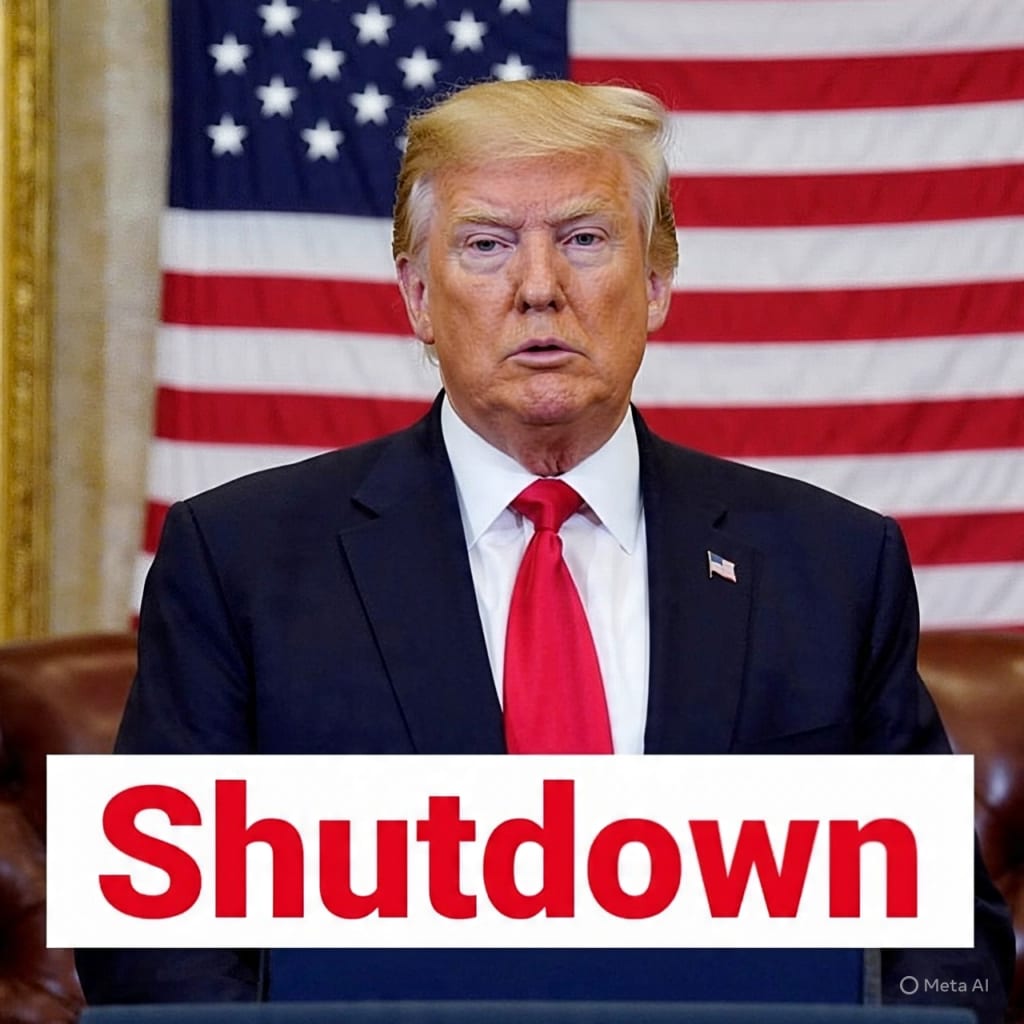
On October 21, 2025, the United States federal government entered a partial shutdown after Congress and President Trump did not agree on funding bills before a deadline. The shutdown closed or reduced services at many federal agencies and led to furloughs for large numbers of federal workers.
How a Government Shutdown Happens
A government shutdown happens when Congress does not pass, or the president does not sign, the bills that fund federal agencies. Without approved funding, many agencies must stop non-essential activities. Some workers are sent home without pay, while other workers continue to work because their jobs are considered essential. This response follows laws about appropriations and limits on spending without a budget.
The Dispute Behind the Shutdown
The shutdown grew out of a fight over spending levels and policy priorities. Supporters of the president said the funding terms were needed for national priorities. Opponents said the standoff would hurt ordinary people and force workers to pay for a political fight. Early polling suggested mixed views among voters and that the political impact could vary by region.
Impact on Workers and Services
Many people felt the effects right away. Some federal offices closed to the public and national parks ran with limited services. Contractors who work with the government faced delayed payments. Federal employees in affected agencies were told to stay home or to keep working without pay, depending on their status. Local businesses near federal sites saw fewer customers when workers were furloughed.
A Look Back at Past Shutdowns
This is not the first long shutdown the country has seen. The longest recent shutdown lasted 35 days from late December 2018 through January 2019. That shutdown happened over a disagreement about border funding and affected about 800,000 federal workers. Estimates put the economic cost in the billions, and the memory of that event shaped public concern when the new shutdown began.
Paths Toward Ending the Standoff
Ending a shutdown requires Congress to pass funding bills and the president to sign them. In practice, leaders often seek short term stopgap bills to reopen the government while they work on longer deals. Some presidents have also tried to use emergency powers or shift funds, but those moves risk legal challenges and political backlash. The common route remains compromise in Congress.
Economic and Personal Effects
For workers who live paycheck to paycheck, the impact is immediate and deep. Pay delays hurt budgets for rent, food, and bills. Contractors and small firms that depend on federal work face cash flow problems. While past laws and decisions have restored pay for furloughed federal employees after a shutdown ended, contractors and local businesses do not always receive the same help. Economic research shows shutdowns slow growth and can leave lasting costs.
Calls for a Quick Resolution
Many voices called for a quick deal. Unions representing federal workers urged Congress and the president to reach an agreement. Voters and local leaders asked for clear plans to restore services and payments. Others used the moment to argue for long term fixes, such as clearer budget rules or different funding schedules to avoid stops in service. The debate also raised questions about how much power a president should have to act without new laws.
What Comes Next
In the days after the shutdown began, leaders considered short term measures and longer negotiations. A stopgap bill can reopen many services quickly, but it does not resolve the deeper disputes. The path forward depends on whether lawmakers can accept limited compromises or whether the standoff will continue. The choice will affect how soon workers are paid and how quickly public services return to normal.
If you are affected by the shutdown, check official agency notices and trusted news outlets for accurate information about pay, work status, and services. Community groups and local services may offer help to people who need support while funding is paused. The end of the shutdown will bring back pay for many federal workers, but rebuilding the full economic and personal losses may take longer. For now, people wait as talks move forward and leaders work to reopen government operations.
Findin During the Shutdown
Check your local union or human resources office for details on back pay and timelines. Nonprofits and local charities sometimes set up funds to help affected families during long shutdowns. Many experts say the best long term fix is clearer budget rules so short term gaps do not close services. Lawmakers can design plans that avoid sudden stops while still debating policy. The public can press leaders to find fair and fast solutions.
About the Creator
Saad
I’m Saad. I’m a passionate writer who loves exploring trending news topics, sharing insights, and keeping readers updated on what’s happening around the world.
The Forsyth House Fire
Since 1851, Forsyth House has stood on the corner of Union Street and Gordon Street in the heart of Glasgow. Its iconic, or was... because on Sunday 8th of March, 2026, a fire broke out in a small, seemingly un-named shop in the building and tore all that history down. As I write, the rubble is still unsettled and the street is still blocked off. Central Station is quiet on the upper level, and around 30 small businesses have quite literally gone up in smoke.
By S. A. Crawford2 days ago in The Swamp




Comments
There are no comments for this story
Be the first to respond and start the conversation.