
World Cities Day: Building Sustainable and Inclusive Cities
As urban populations grow, October 31 reminds us that cities must be planned, managed, and developed to ensure sustainability, equality, and resilience for all residents.

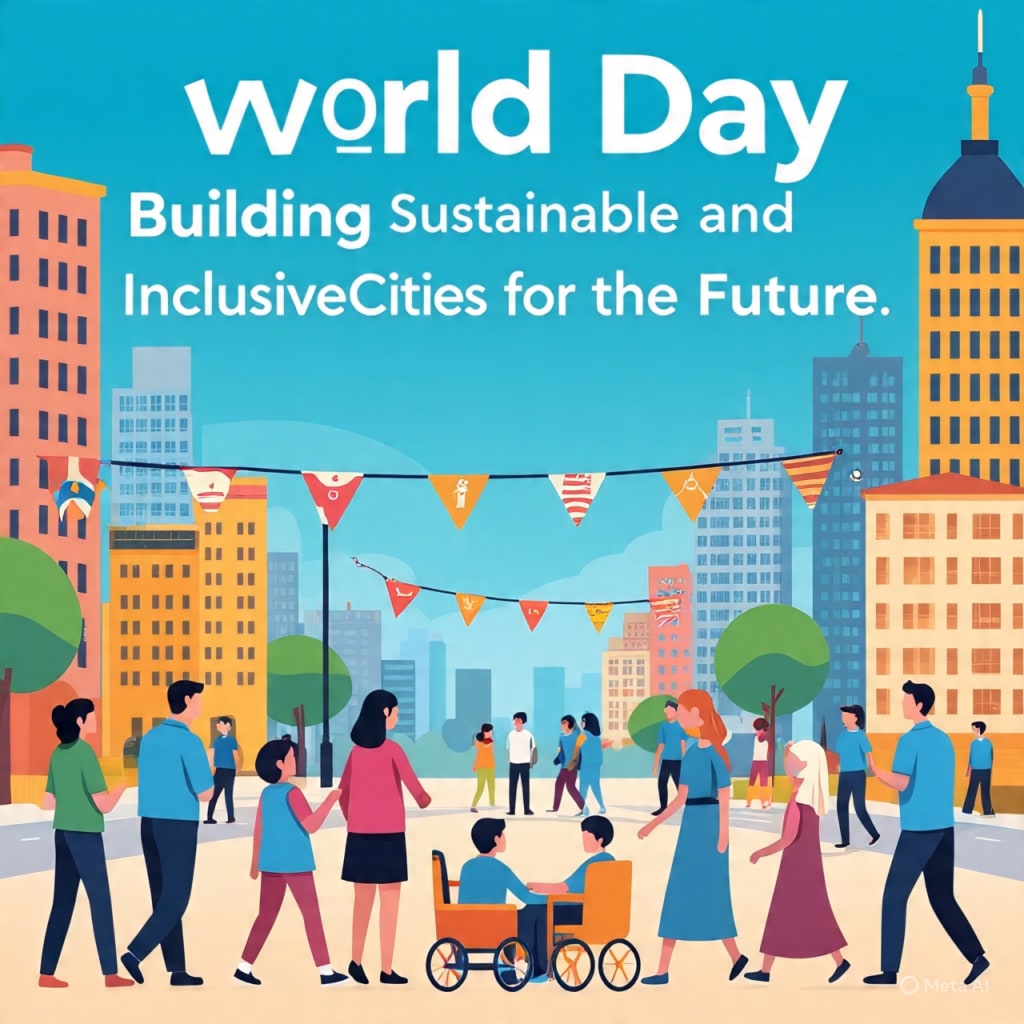
What is World Cities Day?
World Cities Day is observed every **October 31**. The United Nations started it in **2014**. The day highlights the importance of cities as centers of culture, economy, and innovation.
Today, more than half the world’s population lives in cities. By 2050, two-thirds of people will live in urban areas. This rapid growth brings opportunities but also challenges. World Cities Day encourages sustainable, inclusive, and resilient city development.
Why Cities Are Important
Cities are places where people work, study, and connect. They bring together education, healthcare, business, and culture.
Well-planned cities can:
* Reduce pollution and traffic with better transport
* Give access to schools and hospitals
* Create jobs and support businesses
* Promote cultural diversity
Poor planning can cause slums, pollution, and inequality. World Cities Day emphasizes balance between growth and sustainability.
Sustainability and Urban Development
Challenges Cities Face
Urban growth can create problems:
* **Overcrowding:** More people than services can support
* **Pollution:** Air, water, and waste management issues
* **Inequality:** Some communities lack access to jobs, schools, and healthcare
* **Infrastructure gaps:** Roads, electricity, and transport may not keep up
World Cities Day encourages governments and citizens to solve these problems together.
How Smart Cities Help
Technology can make cities work better. **Smart cities** use data and digital tools to improve life.
Examples include:
* Apps for real-time traffic updates
* Smart energy systems for efficiency
* Online platforms for public services
* Planning tools to prepare for disasters
Smart solutions help cities be more efficient, fair, and sustainable.
Community Participation is Key
Citizens play an important role in city development. Participation ensures decisions reflect community needs.
People can help by:
* Attending town halls
* Supporting parks and public spaces
* Volunteering for clean-ups and planting trees
* Promoting local businesses
When residents are involved, cities grow in a way that benefits everyone.
Global Examples of City Success
Some cities show what works:
* **Copenhagen, Denmark:** Biking infrastructure reduces traffic and pollution
* **Singapore:** Green buildings and gardens improve environment
* **Curitiba, Brazil:** Affordable bus systems help mobility
* **Seoul, South Korea:** Digital platforms improve public services
These examples show that planning and innovation can make cities better for everyone.
Environmental Responsibility
Cities produce much of the world’s pollution. Sustainable practices help fight climate change:
* Use renewable energy
* Reduce car use with public transport and walking paths
* Manage waste and water efficiently
* Create parks to improve air quality
World Cities Day highlights that environmentally responsible cities are healthier and more livable.
Economic Growth and Opportunities
Cities drive economies. They create jobs, attract investment, and foster innovation.
Policies that help include:
* Supporting small businesses
* Investing in education and training
* Promoting technology and creative industries
Balanced growth gives equal opportunities to all city residents.
A Call to Action
World Cities Day reminds everyone — governments, organizations, and citizens — to take part in making cities inclusive and sustainable.
Simple actions matter: planting trees, using public transport, volunteering, and participating in governance. Cities can also adopt eco-friendly buildings, parks, and clean energy programs. Education and awareness campaigns encourage residents to adopt sustainable habits.
Partnerships between governments, private companies, NGOs, and universities can fund innovations, improve technology, and support research. Citizens can advocate for fair policies and safe communities. Inclusive cities ensure that everyone has access to healthcare, education, and housing.
By working together, we can create cities that are resilient, vibrant, and equitable. World Cities Day is a reminder that sustainable urban growth benefits not just residents but the planet as a whole.
About the Creator
Saad
I’m Saad. I’m a passionate writer who loves exploring trending news topics, sharing insights, and keeping readers updated on what’s happening around the world.
The Forsyth House Fire
Since 1851, Forsyth House has stood on the corner of Union Street and Gordon Street in the heart of Glasgow. Its iconic, or was... because on Sunday 8th of March, 2026, a fire broke out in a small, seemingly un-named shop in the building and tore all that history down. As I write, the rubble is still unsettled and the street is still blocked off. Central Station is quiet on the upper level, and around 30 small businesses have quite literally gone up in smoke.
By S. A. Crawford2 days ago in The Swamp
Russian Strike on Kyiv Region Kills 4 People and Wounds 15 as Peace Talks Stall
A Russian military strike in the Kyiv region has left at least four civilians dead and 15 others injured, further heightening fears over escalating violence even as stalled peace negotiations underscore the difficulty of ending the conflict. Ukrainian authorities confirmed the casualties, while local emergency services rushed to provide medical care and assess the damage to residential areas. The strike, part of a series of attacks over the past several weeks, targeted both infrastructure and population centers. Explosions destroyed multiple buildings, leaving several residents trapped under debris. Emergency responders and volunteers worked through the night to evacuate survivors and provide urgent assistance to those injured. Civilian Impact and Humanitarian Concerns The human toll of the attack underscores the ongoing vulnerability of civilians in conflict zones. Families living in suburban and rural areas near Kyiv have faced repeated bombardment, which not only causes immediate casualties but also disrupts daily life, schooling, and access to essential services. Medical personnel report that hospitals in the region are operating under significant strain, treating injuries ranging from shrapnel wounds to burns. Local authorities warned that repeated attacks increase both physical and psychological trauma for residents, especially children. International humanitarian organizations have expressed alarm over the rising number of civilian casualties in Ukraine, emphasizing the need for adherence to international law and the protection of noncombatants. Escalation Amid Stalled Peace Talks The strike comes at a time when formal peace discussions remain stalled. Negotiations between Ukrainian officials and Russian representatives, mediated by international actors, have made little progress in recent months. Analysts warn that ongoing attacks, including strikes on urban centers like Kyiv, may further complicate any diplomatic efforts. Officials in Kyiv have stressed that military pressure continues to be a key tactic for Russia, even as international actors push for negotiations. The continuation of strikes raises concerns about both the stability of the truce mechanisms and the broader prospects for a ceasefire. Strategic and Political Implications Beyond the immediate humanitarian impact, attacks on the Kyiv region carry significant political and strategic implications. The Ukrainian government has accused Russia of deliberately targeting populated areas to exert pressure, while Moscow maintains that military operations are aimed at neutralizing Ukrainian military capabilities. The international community remains closely monitoring these developments. Countries supporting Ukraine have condemned attacks on civilian areas, highlighting violations of international humanitarian law, and continue to provide military, financial, and logistical support to Kyiv. Conversely, the continuation of strikes complicates diplomatic engagement by signaling persistent Russian resolve. Regional Security and Infrastructure Damage Infrastructure in the Kyiv region has also suffered extensive damage. Utilities, transportation networks, and residential buildings were affected, creating immediate challenges for recovery and reconstruction. Local authorities are prioritizing the repair of essential services, but the repeated bombardments slow restoration efforts and leave communities exposed to further risk. Energy and water supply systems were reported to be intermittently disrupted, forcing residents to rely on emergency measures. Schools and healthcare facilities have had to adjust operations to accommodate safety concerns, and the local economy continues to be affected by interruptions in daily life. International Reactions The international response to the strike has been swift. The United Nations called for restraint and urged all parties to comply with international law protecting civilians. Western nations, including members of the European Union and United States, issued statements condemning the attacks and reaffirmed support for Ukraine’s sovereignty. Aid organizations are coordinating with local authorities to deliver emergency supplies, medical care, and psychosocial support to affected families. However, the ongoing security situation complicates the logistics of delivering relief in some areas. Civilian Resilience and Community Response Despite the danger, local communities have shown remarkable resilience. Volunteers and neighborhood organizations mobilize quickly to provide shelter, food, and first aid to those affected by strikes. These efforts, combined with government and international assistance, help mitigate the immediate humanitarian consequences. Nevertheless, the repeated attacks erode a sense of security and heighten anxiety among residents, particularly children and the elderly, creating long-term psychological challenges. Outlook and Continuing Tensions The strike in the Kyiv region illustrates the persistent volatility in Ukraine, where civilians remain caught between ongoing military operations and stalled diplomatic efforts. Analysts warn that without renewed negotiations and adherence to humanitarian protections, civilian casualties are likely to increase, further complicating prospects for peace. For now, Ukrainian authorities continue to reinforce emergency response systems and seek international support, while the people of Kyiv brace for further uncertainty. The situation remains a stark reminder of the human cost of conflict and the urgent need for renewed diplomatic engagement to prevent further loss of life.
By Fiaz Ahmed Brohiabout 18 hours ago in The Swamp



Comments
There are no comments for this story
Be the first to respond and start the conversation.