
Mark Keenan: Ireland’s Property Bubble Really Burst 20 Years Ago in 2006 – While Those ‘In the Know’ Played a Double Game
A retrospective look at warning signs, insider advantage, and the legacy of Ireland’s housing crash
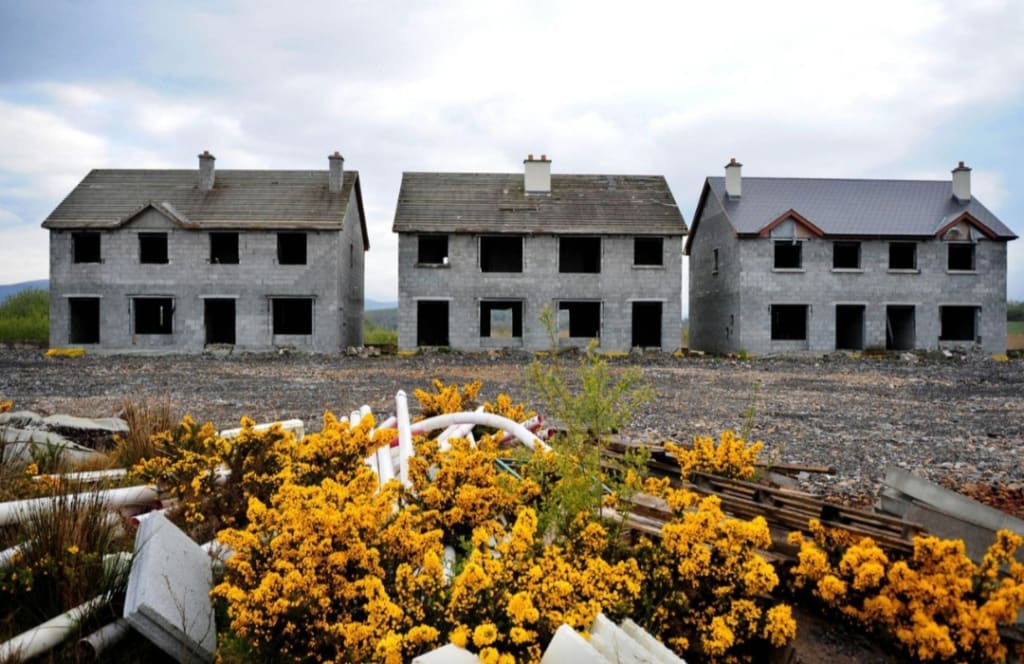
Two decades after the first cracks appeared in Ireland’s once-booming property market, debate continues over when the bubble truly burst — and who saw it coming. Property commentator Mark Keenan argues that Ireland’s housing bubble effectively began collapsing in 2006, well before the global financial crisis of 2008 brought the economy to its knees.
According to this view, the warning signs were flashing red long before the dramatic bank failures and IMF bailout. Yet, while ordinary buyers continued purchasing at inflated prices, some market insiders were allegedly adjusting their strategies — quietly reducing exposure while publicly maintaining confidence.
The result was one of the most severe property collapses in modern European history.
The Boom Before the Fall
In the early 2000s, Ireland experienced unprecedented economic growth during the Celtic Tiger era. Rising incomes, easy credit, and aggressive lending fueled a construction surge.
Developments spread across Dublin and into regional towns. Apartments sold off-plan within days. Buy-to-let investors entered the market in large numbers, encouraged by tax incentives and optimistic forecasts.
Between the mid-1990s and 2006, property prices more than tripled in many areas.
Banks offered increasingly generous mortgage terms, including 100% loans and extended repayment periods. Speculative buying became commonplace.
At its peak, construction accounted for an outsized share of Ireland’s GDP and employment.
The 2006 Turning Point
Mark Keenan and other analysts suggest that by 2006, the market had reached unsustainable levels. Supply began exceeding genuine demand, particularly in rural developments.
International signals also pointed toward tightening credit conditions. In the United States, subprime mortgage issues were beginning to surface.
In Ireland, however, public optimism remained high.
While official commentary often emphasized continued growth, transaction volumes were quietly slowing. Some investors reportedly began selling properties or halting new acquisitions.
The shift was subtle — but significant.
A “Double Game”?
The allegation that some insiders “played a double game” refers to claims that certain developers, bankers, or advisors publicly maintained confidence while privately preparing for downturn.
Critics argue that optimistic public messaging encouraged continued borrowing and investment, even as underlying fundamentals weakened.
This alleged divergence between public narrative and private strategy has remained a contentious topic in Ireland’s post-crash analysis.
However, it is important to note that definitive evidence of coordinated deception remains debated. Financial bubbles often involve collective optimism rather than deliberate manipulation.
The Crash That Followed
By 2008, Ireland’s property market had entered freefall. Prices collapsed by more than 50% in some areas.
Construction activity halted. Ghost estates — partially completed housing developments — became symbols of excess.
The banking sector, heavily exposed to property loans, faced massive losses. In 2010, Ireland accepted a €67.5 billion bailout from the European Union and the International Monetary Fund.
Unemployment surged. Thousands emigrated.
What began as a property correction evolved into a full-scale financial crisis.
Regulatory Lessons
The crash exposed weaknesses in Ireland’s financial regulation. Lending standards had loosened significantly during the boom years.
Following the crisis, authorities implemented stricter mortgage rules, including:
Loan-to-value limits
Loan-to-income caps
Enhanced stress testing
Greater oversight of banking practices
These reforms aimed to prevent a repeat of unchecked speculative growth.
Impact on a Generation
For many Irish households, the crash reshaped financial security.
Negative equity became widespread. Homeowners found themselves owing more than their properties were worth.
Buyers who entered the market near the peak often faced years of financial strain.
The psychological impact was profound. Trust in financial institutions and property investment as a “safe bet” was shaken.
Has the Market Fully Recovered?
Today, Ireland faces a different housing challenge: undersupply and affordability pressures.
While prices have rebounded significantly in urban centers, particularly Dublin, the market dynamics differ from the mid-2000s bubble.
Stricter lending rules and improved bank capital requirements provide safeguards.
However, affordability concerns persist, especially for first-time buyers.
The memory of 2006–2008 remains a cautionary tale.
The Debate Over Timing
Was 2006 truly the moment the bubble burst?
Some economists argue that 2007 or 2008 marked the genuine turning point, when price declines became visible and bank losses materialized.
Others support the idea that markets often peak before broader recognition occurs.
Financial bubbles rarely collapse overnight. Instead, they deflate gradually before triggering more dramatic consequences.
In that sense, identifying 2006 as the start of the end reflects a focus on underlying structural weakness rather than headline price drops.
Transparency and Accountability
The suggestion that insiders adjusted strategies ahead of the public raises broader questions about transparency.
Financial markets depend on accurate information. When messaging diverges from private positioning, trust can erode.
Post-crisis inquiries examined bank practices, regulatory oversight, and developer financing structures.
While reforms were implemented, debate continues about accountability and lessons learned.
Looking Back 20 Years On
Two decades later, Ireland’s property crash remains a defining economic event.
It reshaped fiscal policy, regulatory frameworks, and public attitudes toward risk.
For commentators like Mark Keenan, revisiting 2006 is not merely historical reflection — it is a reminder of how easily optimism can obscure warning signs.
Understanding the early indicators of imbalance may help policymakers and investors recognize future risks.
Conclusion
The claim that Ireland’s property bubble truly burst in 2006 — before the global financial crisis fully unfolded — invites renewed examination of one of the country’s most turbulent economic periods.
While debate continues over timing and responsibility, the legacy of the crash is undeniable.
Ireland’s housing market today operates under stricter safeguards, yet the lessons of excessive lending, speculative enthusiasm, and delayed recognition remain relevant.
Whether characterized as a sudden collapse or a slow unraveling, the events of the mid-2000s serve as a powerful reminder that markets rarely move in straight lines — and that vigilance is essential when optimism runs high.
About the Creator
Keep reading
More stories from Aarif Lashari and writers in The Swamp and other communities.
Reeves Adviser Claims: ‘We Don’t Need Any More Restaurants’
A reported comment from an adviser to Chancellor Rachel Reeves — “We don’t need any more restaurants” — has sparked a lively debate across Britain’s business community. The remark, interpreted by some as dismissive of the hospitality sector, has triggered criticism from restaurant owners, trade bodies, and opposition politicians who argue that the industry plays a vital role in the UK economy.
By Aarif Lashariabout 13 hours ago in The Swamp
A Gathering of Evil Bosses
“I’m the queen of chin jutting while I smooth my hair, attacking, insulting, and deflecting to protect my appointer.” “Oh, please, Blondi, my hair is curled, highlighted, and longer than yours. I feature television commercials telling immigrants that we will give them a free plane ride home, and if they voluntarily turn themselves in, they will be allowed to legally apply for re-entry. It runs everywhere, and I look good in it! You can’t compete because of your blond hair. Mine is nicer, and my lips are prettier than yours.”
By Andrea Corwin 10 days ago in The Swamp



Comments
There are no comments for this story
Be the first to respond and start the conversation.