
Physical AI: Robotics Are Poised to Revolutionize Business
“Combining AI with robotics, Physical AI is set to transform productivity, efficiency, and workplace safety across industries”
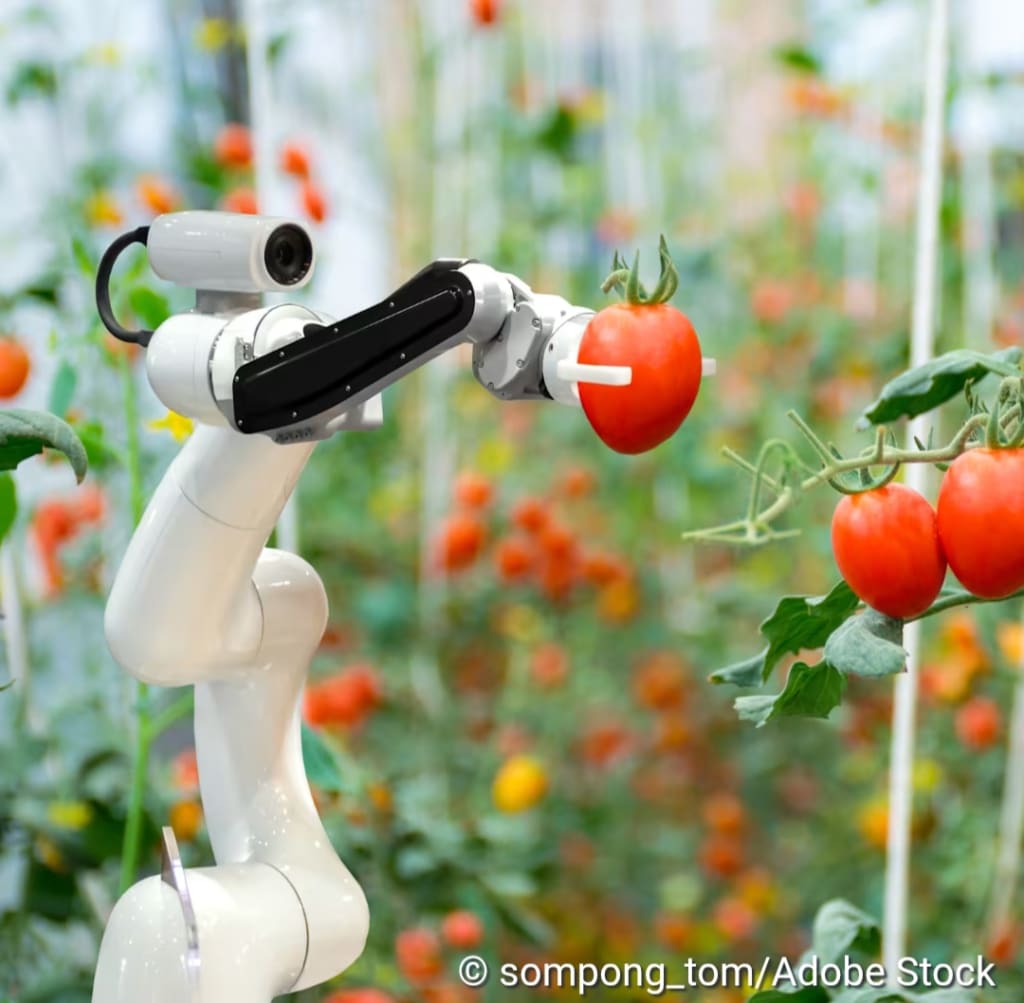
The convergence of artificial intelligence (AI) and robotics is ushering in a new era of “Physical AI,” promising to transform the way businesses operate across industries. Unlike traditional software AI, Physical AI combines machine learning with autonomous machines capable of interacting with the physical world—robots that can perceive, learn, adapt, and execute tasks without human intervention.
From warehouses to healthcare facilities, companies are increasingly exploring how Physical AI can improve efficiency, reduce costs, and unlock new opportunities for growth.
What Is Physical AI?
Physical AI refers to intelligent machines equipped with sensors, actuators, and learning algorithms that allow them to navigate and manipulate their environment autonomously. While conventional AI focuses on digital tasks like data analysis or recommendation engines, Physical AI brings intelligence into the real world, enabling robots to perform physical tasks alongside or even in place of humans.
Examples include:
Autonomous warehouse robots that move inventory without human guidance
Surgical robots that adapt to patient anatomy in real time
Service robots in hotels, restaurants, and hospitals
Manufacturing robots capable of handling complex assembly or inspection tasks
Physical AI doesn’t just replicate human movements—it learns from its environment, continuously improving performance while maintaining precision and safety.
Why Businesses Are Adopting Physical AI
The adoption of Physical AI is being driven by several converging factors:
Labor Shortages: Many industries face rising labor costs and talent shortages, particularly in logistics, manufacturing, and healthcare. Robots capable of working 24/7 help bridge the gap.
Operational Efficiency: Physical AI robots can reduce errors, optimize workflows, and execute repetitive tasks faster than humans, increasing productivity.
Cost Savings: Although initial investments may be high, the long-term reduction in labor, errors, and downtime can lead to significant savings.
Safety and Risk Mitigation: Robots can take on dangerous tasks in hazardous environments, from chemical plants to disaster zones, protecting human workers.
According to industry analysts, companies that adopt Physical AI solutions early may gain a significant competitive edge, both in cost efficiency and service quality.
Applications Across Industries
Physical AI is finding applications across multiple sectors:
1. Warehousing and Logistics
Autonomous robots are now capable of picking, packing, and moving goods in fulfillment centers. Amazon, DHL, and other logistics giants use robots to streamline operations, reduce delays, and improve inventory management. Physical AI allows these robots to adapt to new layouts or unexpected obstacles, enhancing flexibility in operations.
2. Manufacturing
Smart robots equipped with sensors and machine learning algorithms are revolutionizing assembly lines. Unlike traditional industrial robots, Physical AI robots can learn new tasks on the fly, handle complex assembly, and adjust to variations in materials, improving production quality and speed.
3. Healthcare
In hospitals, Physical AI is being deployed in surgery, rehabilitation, and elder care. Surgical robots, for example, can assist in delicate procedures, reducing human error. In elder care, assistive robots help with mobility, medication reminders, and monitoring, improving patient outcomes and reducing staff burden.
4. Hospitality and Retail
Service robots equipped with Physical AI can interact with customers, provide information, or deliver items. By learning from customer interactions, these robots improve service quality while freeing human staff to focus on more complex tasks.
5. Agriculture
Autonomous drones and ground robots can monitor crops, apply fertilizers, and harvest produce. Physical AI enables these machines to adapt to changing weather, soil conditions, and crop variations, increasing yields while reducing labor requirements.
The Technology Behind Physical AI
Several technologies enable Physical AI:
Machine Learning & Computer Vision: Allow robots to recognize objects, interpret environments, and make decisions in real time.
Sensor Fusion: Combines data from cameras, LIDAR, tactile sensors, and GPS to give robots a detailed understanding of their surroundings.
Autonomous Navigation: Enables robots to move safely and efficiently, avoiding obstacles and adapting to changing environments.
Edge Computing: Allows robots to process data locally, reducing latency and increasing real-time responsiveness.
By integrating these technologies, robots not only execute tasks but learn and improve over time, creating adaptive systems that become more efficient with experience.
Challenges and Considerations
While the potential of Physical AI is immense, several challenges remain:
High Initial Costs: Developing and deploying Physical AI systems can be expensive, though costs are declining.
Workforce Adaptation: Businesses must retrain employees to work alongside robots and shift human roles to higher-value tasks.
Regulatory and Safety Concerns: Ensuring robots operate safely in complex environments requires robust standards and oversight.
Ethical Considerations: Autonomous machines raise questions about responsibility, privacy, and job displacement.
Companies must carefully plan deployment strategies and invest in training, maintenance, and ethical frameworks to maximize benefits.
The Future of Physical AI in Business
Experts predict that Physical AI will become increasingly pervasive in the next decade. As technology advances and costs decrease, more small and medium-sized enterprises will adopt intelligent robotics to compete with larger players. The fusion of AI and robotics promises smarter factories, autonomous logistics networks, and interactive service environments, fundamentally changing the way businesses operate.
Physical AI is not about replacing humans but augmenting human capabilities, allowing employees to focus on creativity, strategy, and problem-solving while robots handle repetitive, dangerous, or highly precise tasks.
Conclusion
Physical AI represents a paradigm shift in business operations. By combining machine learning, robotics, and real-world autonomy, companies can achieve higher efficiency, better service quality, and safer workplaces. Industries from logistics to healthcare, manufacturing, and agriculture are already experiencing the transformative potential of these intelligent machines.
Businesses that embrace Physical AI early will gain a strategic advantage, while those that delay may struggle to remain competitive. As technology evolves, the line between digital intelligence and physical capability will blur, ushering in a new era of intelligent automation that could redefine the future of work and industry.
About the Creator
Keep reading
More stories from Aarif Lashari and writers in The Swamp and other communities.
Red Cross Announces Severe Emergency Blood Shortage, Calls on Americans to Donate
The American Red Cross has issued an urgent warning after announcing a severe nationwide blood shortage, calling on eligible Americans to donate as hospitals across the country face critically low supplies. Officials say the situation has reached emergency levels, putting patients at risk and straining the healthcare system at a time when demand for blood remains high.
By Aarif Lashari2 months ago in The Swamp
The Forsyth House Fire
Since 1851, Forsyth House has stood on the corner of Union Street and Gordon Street in the heart of Glasgow. Its iconic, or was... because on Sunday 8th of March, 2026, a fire broke out in a small, seemingly un-named shop in the building and tore all that history down. As I write, the rubble is still unsettled and the street is still blocked off. Central Station is quiet on the upper level, and around 30 small businesses have quite literally gone up in smoke.
By S. A. Crawforda day ago in The Swamp
A System That Isn’t Working Challenge Winners
Systems promise order. They organize behavior, distribute opportunity, and suggest that if everyone follows the rules, things will work. The entries in A System That Isn’t Working look closely at what happens when that promise begins to slip.
By Vocal Curation Team4 days ago in Resources




Comments
There are no comments for this story
Be the first to respond and start the conversation.