
Pentagon to Reduce Its Role in Deterrence of North Korea
“US shifts deterrence strategy toward regional allies amid changing security dynamics on the Korean Peninsula”
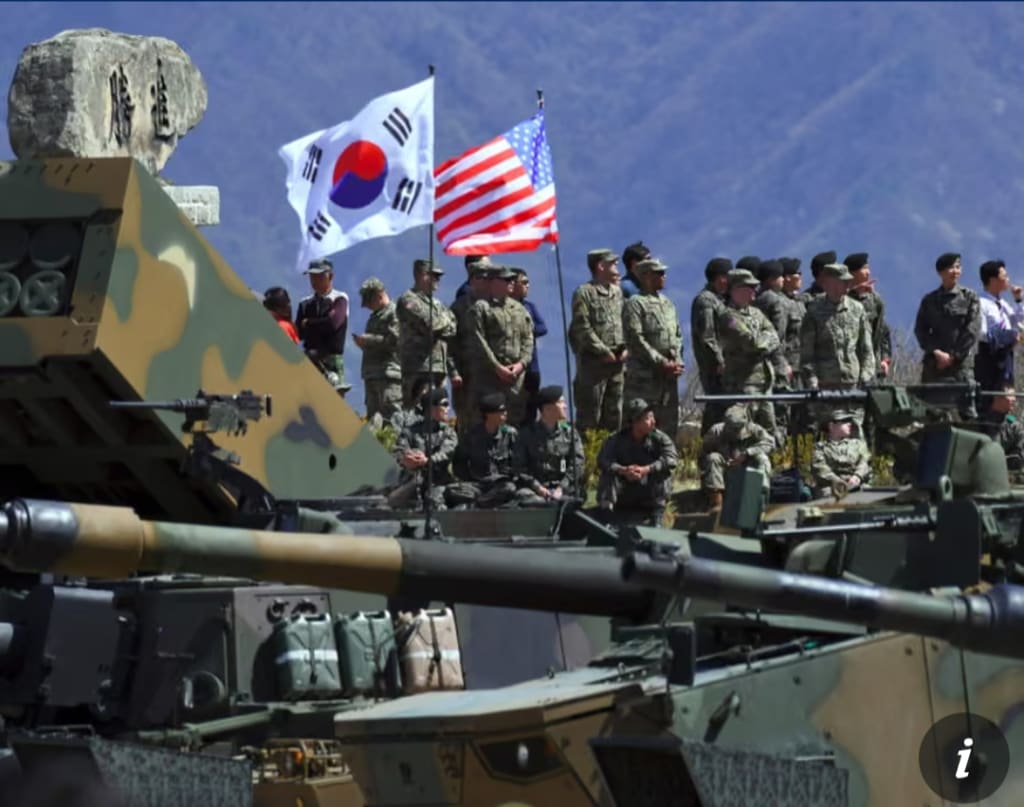
The United States Department of Defense has confirmed plans to reduce the Pentagon’s direct role in the deterrence strategy against North Korea, marking a notable shift in Washington’s approach to security on the Korean Peninsula. While US officials insist the move does not signal a weakening of commitment to allies, the announcement has prompted debate among analysts, regional partners, and lawmakers about the future balance of power in East Asia.
What the Pentagon’s Decision Means
The Pentagon’s decision involves scaling back certain direct deterrence responsibilities, with a greater emphasis on regional allies and multilateral coordination. Rather than withdrawing support, the US aims to recalibrate its role by empowering South Korea and Japan to take a more prominent position in regional defense planning.
Officials stressed that the United States will continue to:
Maintain troop deployments in the region
Uphold defense treaties with South Korea and Japan
Provide strategic assets when necessary
However, the day-to-day responsibility for deterrence messaging and regional readiness will increasingly rest with allied governments.
Why the Shift Is Happening Now
Several factors have contributed to the Pentagon’s decision.
First, North Korea’s military capabilities have evolved. Pyongyang now possesses a more advanced missile arsenal, including solid-fuel systems and intercontinental ballistic missiles, making traditional deterrence models more complex.
Second, the US military is facing global strategic pressure, particularly from China and Russia. Pentagon planners are increasingly focused on prioritizing resources across multiple theaters rather than concentrating heavily on a single flashpoint.
Third, Washington has pushed for greater burden-sharing among allies. Encouraging regional partners to take a leading role aligns with broader US defense strategy emphasizing coalition-based security.
Reassurance to Allies
US officials were quick to reassure allies that the policy shift does not represent abandonment. The Pentagon emphasized that the US nuclear umbrella remains intact and that joint military exercises will continue.
South Korea’s defense ministry responded cautiously, stating that it would:
Work closely with US counterparts
Strengthen its independent deterrence capabilities
Maintain readiness against potential provocations
Japan, meanwhile, reiterated its commitment to regional stability and highlighted recent increases in its own defense spending.
Concerns Over Miscalculation
Despite official reassurances, some analysts warn that reducing the Pentagon’s visible role could increase the risk of miscalculation by North Korea.
Deterrence relies heavily on clear signaling. Any perception that the US is stepping back—even symbolically—could embolden Pyongyang to test boundaries through missile launches or military demonstrations.
Critics argue that:
North Korea may interpret the move as reduced US resolve
Regional allies could feel pressured to escalate their own military postures
Diplomatic channels could become more strained
These concerns underscore the delicate balance between strategic adjustment and unintended consequences.
North Korea’s Likely Response
Historically, North Korea has reacted strongly to changes in US military posture. While Pyongyang has not yet issued an official response, experts expect state media to frame the shift as evidence of US weakness or retreat.
At the same time, some analysts suggest the move could open space for renewed diplomacy. A less prominent US military role might reduce tensions enough to allow dialogue on arms control or confidence-building measures—though expectations remain low.
A Broader Shift in US Defense Strategy
The Pentagon’s move reflects a wider transformation in US defense thinking. Rather than acting as the primary deterrent everywhere, Washington is increasingly positioning itself as:
A strategic backstop
A coordinator of allied capabilities
A provider of advanced intelligence and technology
This approach mirrors US strategy in Europe and the Indo-Pacific, where allies are being encouraged to invest more heavily in their own defense.
Domestic Political Reaction
In the United States, reaction to the announcement has been divided. Some lawmakers welcomed the move as a realistic reassessment of military commitments, arguing that allies must take greater responsibility for their own security.
Others warned that any perceived reduction in deterrence could undermine decades of stability on the Korean Peninsula. Critics called for greater transparency and congressional oversight to ensure that the shift does not weaken US influence.
What Comes Next
The success of this strategy will depend on several factors:
How effectively South Korea and Japan expand their deterrence capabilities
Whether North Korea responds with restraint or provocation
How clearly the US communicates its continued commitment
The Pentagon has indicated that the policy will be reviewed regularly and adjusted if regional conditions change.
Conclusion
The Pentagon’s decision to reduce its direct role in deterring North Korea marks a significant evolution in US defense policy. While officials insist the move is about strategic efficiency and alliance empowerment, it carries risks that must be carefully managed.
As tensions on the Korean Peninsula remain high, the challenge for Washington will be ensuring that reduced visibility does not translate into reduced credibility. In an environment shaped by rapid military advancements and fragile diplomacy, deterrence remains as much about perception as it is about power.
About the Creator
Keep reading
More stories from Aarif Lashari and writers in The Swamp and other communities.
ASUS Issues “Internal Review” After AMD Ryzen 7 9800X3D Failure Reports
PC hardware manufacturer ASUS has announced an internal review following reports of failures involving systems powered by AMD’s highly anticipated Ryzen 7 9800X3D processor. The development has raised concerns among PC enthusiasts, system builders, and gamers, particularly given the chip’s positioning as a flagship processor optimized for performance-intensive workloads and gaming.
By Aarif Lashariabout 20 hours ago in The Swamp
Indonesian Plane Goes Missing
On January 17, 2026, an ATR 42‑500 aircraft operated by Indonesia Air Transport (IAT) went missing while flying from Yogyakarta to Makassar. The small plane, which was on a mission for Indonesia’s Ministry of Marine Affairs and Fisheries, lost contact with air traffic controllers about 13:17–13:30 local time, over Maros Regency, South Sulawesi. The disappearance immediately prompted a large-scale search operation, drawing attention from local authorities, national rescue teams, and international media. It also raised concerns about air travel safety in a country with thousands of flights connecting its many islands each day. The Flight and Its Passengers The plane carried 10 to 11 people, according to official reports. Among them were three employees from the Ministry of Marine Affairs and Fisheries, along with the flight crew. Their mission was routine: aerial surveillance to monitor fisheries activity. Indonesia’s geography, with its mix of mountains and dense forests, makes flights over certain areas particularly challenging. The plane’s route took it over hilly, limestone terrain, which posed difficulties for both navigation and potential search efforts. The Search Effort Once the plane went missing, the National Search and Rescue Agency (Basarnas) immediately launched an operation. Teams of rescuers, including military personnel, police, and local volunteers, scoured the area by land, air, and drone, combing through the remote and rugged terrain of Bantimurung–Bulusaraung National Park. Weather reports indicated partly cloudy skies at the time of the incident, suggesting that the disappearance was unlikely to be caused solely by poor visibility. However, the combination of mountainous terrain and limited radar coverage complicated the search. Initial Discoveries About 24 hours after the disappearance, rescuers reported finding wreckage on a hilltop in the Bulusaraung area, including fragments of the fuselage and other aircraft parts. One body was recovered from the site, while teams continued to search for additional remains or survivors. Authorities emphasized that while some debris had been located, the investigation into the exact cause of the crash was just beginning. Pieces of the aircraft were being carefully documented and collected to assist with the investigation. Investigating the Cause The exact reason for the plane going missing is still under investigation. Officials are focusing on several key factors: The plane’s flight path and any possible deviations during its final moments. Communication gaps between the aircraft and air traffic control, particularly over the hilly region. Analysis of flight data recorders and emergency locator transmitters. Potential impacts of local weather patterns, including winds and cloud formations in the mountainous areas. The aircraft manufacturer, ATR (a French-Italian company), has expressed full support for the investigation and is working closely with Indonesian authorities to determine what went wrong. The Human Impact Beyond the technical and logistical details, the incident has a very real human dimension. Families of passengers and crew members have been waiting anxiously for news. Local and national officials have expressed condolences and support, emphasizing transparency and regular updates. Public reaction has been marked by both concern and solidarity. Communities across Indonesia are following developments closely, while media outlets continue to report verified information as it becomes available. Looking Ahead The discovery of wreckage and the recovery of one body is only the beginning. Rescue teams continue to navigate difficult terrain, hoping to recover any other victims and gather evidence to fully understand the incident. For Indonesia, a nation reliant on air travel across its thousands of islands, this tragedy underscores the ongoing challenges of aviation safety in remote areas. It also highlights the dedication of rescue personnel who risk their own safety to search for missing planes and their passengers. Authorities have stressed that the investigation will take time, and that the priority is both the recovery of victims and understanding the factors that contributed to this incident. Conclusion The disappearance of the Indonesian plane is a stark reminder of the risks inherent in aviation, particularly over complex and remote terrain. While one body has been recovered and debris located, questions remain. Families, officials, and the wider public are hoping for answers, as rescue teams continue their careful and difficult work. In situations like this, patience, transparency, and dedication to safety are essential. The story of this missing plane is still unfolding, and authorities have pledged to provide updates as the investigation progresses.
By Saboor Brohi 7 days ago in The Swamp
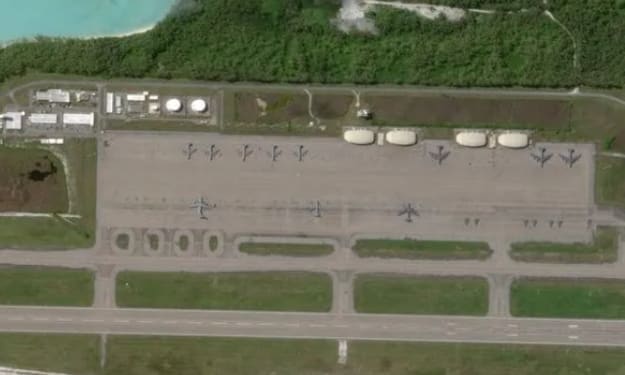
Satellite Images of the Secretive US Military Base at the Center of a New Trump Controversy
In a world where satellites can capture images from thousands of miles above Earth, secrecy is harder to maintain than ever. Recently, satellite images of a highly secretive U.S. military base have reignited global debate—this time placing former U.S. President Donald Trump at the center of a new political and geopolitical controversy.
By Aqib Hussain3 days ago in The Swamp



Comments
There are no comments for this story
Be the first to respond and start the conversation.