
Pakistan to Enter 2026 as Fifth-Most Populous Country
Demographic growth and its implications for economy, society, and global influence

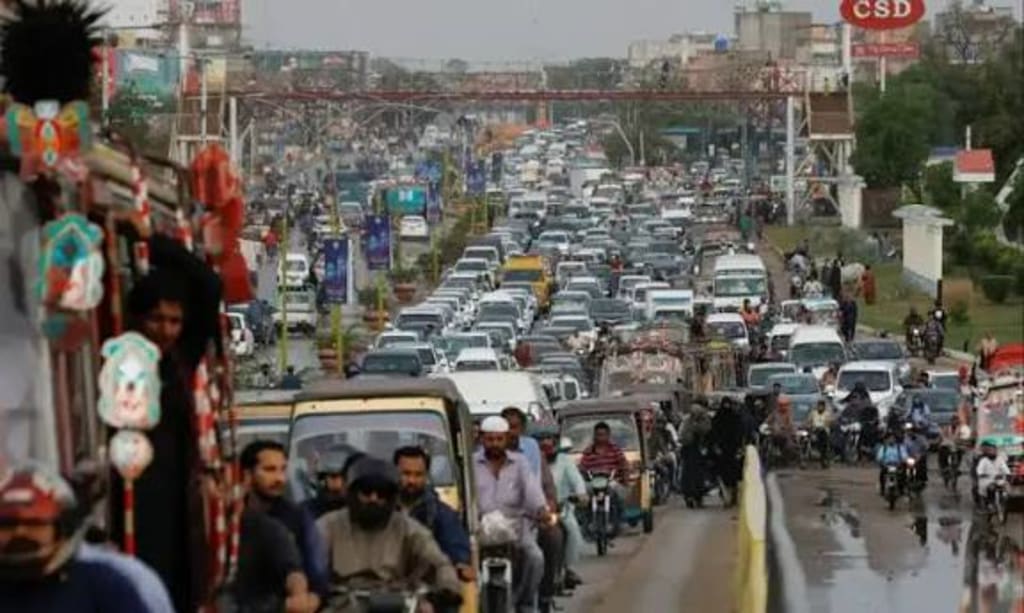
Pakistan is set to enter 2026 as the world’s fifth-most populous country, according to recent demographic projections. With a population surpassing 250 million, Pakistan’s growing populace is shaping its economic potential, societal challenges, and geopolitical significance. Experts say this demographic milestone carries both opportunities and responsibilities for the nation.
Population Growth Trends
Pakistan has experienced rapid population growth over the past few decades. From just under 60 million in 1960, the country’s population has surged exponentially due to high fertility rates, declining mortality, and improvements in healthcare. Current projections suggest that Pakistan will surpass Brazil to claim the fifth spot in global population rankings, behind China, India, the United States, and Indonesia.
Experts attribute this growth to a combination of factors: a youthful population, cultural and societal norms favoring larger families, and gradual improvements in maternal and child healthcare. Pakistan’s median age remains in the mid-20s, indicating a significant proportion of its population is of working age, which could serve as a potential demographic dividend if managed effectively.
Economic Implications
A burgeoning population presents Pakistan with both opportunities and challenges. On the positive side, a large workforce can drive economic growth, increase domestic consumption, and attract foreign investment. Industries such as technology, manufacturing, and services could benefit from an expanding labor pool, providing the country leverages education and skill development.
However, the flip side is a pressing need for infrastructure, employment, and social services. Rapid population growth can strain healthcare systems, education, housing, and transportation networks. Economists warn that without targeted policy interventions, Pakistan risks high unemployment, underemployment, and social disparities, which could hinder long-term economic stability.
Urbanization and Social Change
Population growth is closely tied to urbanization. Cities like Karachi, Lahore, and Islamabad are witnessing rapid expansion, driven by rural-to-urban migration and natural population growth. While urbanization can stimulate economic activity and innovation, it also places immense pressure on urban infrastructure, housing, sanitation, and public services.
Socially, a youthful and growing population is reshaping Pakistan’s cultural landscape. Trends in education, technology adoption, and civic participation are evolving rapidly. However, challenges remain in addressing gender disparities, youth unemployment, and regional inequalities, which are critical for sustainable development.
Global Significance
Pakistan’s demographic milestone also carries geopolitical weight. As the fifth-most populous country, Pakistan will hold increasing influence in global forums, trade negotiations, and international policy discussions. Its strategic location, coupled with a large population, enhances its significance in regional dynamics, particularly in South Asia and the broader Muslim world.
Moreover, Pakistan’s population growth has implications for global migration, climate change adaptation, and international development aid. Policymakers and international organizations are increasingly focusing on strategies that balance population growth with sustainable development.
Education and Human Capital Development
A key determinant of whether Pakistan’s population growth translates into a demographic dividend is education. Investment in quality education, vocational training, and skill development is essential. Currently, Pakistan faces challenges with literacy rates and school enrollment, particularly in rural areas. Closing the education gap is critical to equipping the youth for meaningful employment and global competitiveness.
Health and nutrition also play vital roles. While healthcare access has improved in urban centers, rural and underserved areas still face high maternal and infant mortality rates. Addressing these disparities is crucial for ensuring that population growth is sustainable and contributes positively to national development.
Policy Challenges and Opportunities
Managing such rapid population growth requires comprehensive policy planning. Experts recommend a multi-pronged approach: expanding healthcare and family planning services, improving educational access and quality, creating employment opportunities, and strengthening urban infrastructure.
Additionally, Pakistan must focus on harnessing its youth potential. Entrepreneurship, digital innovation, and industrial diversification can absorb the growing workforce and prevent socio-economic stagnation. Policies encouraging women’s participation in the workforce are particularly critical for equitable development.
Conclusion: Demography as a Double-Edged Sword
Entering 2026 as the world’s fifth-most populous country is both a milestone and a challenge for Pakistan. While the growing population offers the potential for economic dynamism and global influence, it also demands careful planning and strategic interventions.
How Pakistan manages its human capital, invests in infrastructure, and addresses social inequalities will determine whether population growth becomes a blessing or a burden. For policymakers, business leaders, and citizens alike, the focus must remain on sustainable growth, inclusive development, and building a resilient society that can harness the full potential of its people.
As Pakistan approaches this demographic milestone, the world is watching. The decisions made today will shape not only the country’s socio-economic future but also its role on the global stage in the decades to come.
About the Creator
Fiaz Ahmed Brohi
I am a passionate writer with a love for exploring and creating content on trending topics. Always curious, always sharing stories that engage and inspire.
Keep reading
More stories from Fiaz Ahmed Brohi and writers in The Swamp and other communities.
Leaked Calls Reveal Plot by al-Assad Regime Officers to Destabilize Syria
Newly leaked recordings have sent shockwaves through the Middle East, revealing a clandestine plot by high-ranking officers of the al-Assad regime to destabilize Syria. The recordings, verified by multiple independent sources, offer an unprecedented glimpse into internal communications, highlighting deliberate strategies aimed at consolidating power while suppressing dissent. The Nature of the Leaked Calls The recordings, spanning months of internal discussions, expose regime officers discussing methods to manipulate public opinion, destabilize opposition-held areas, and coordinate covert operations in regions still affected by conflict. Analysts suggest these communications were intended to reinforce the Assad regime’s control, particularly in areas where political allegiance is fragile or where foreign influence is strong. According to experts, the leaks demonstrate a pattern of calculated interference in both civilian governance and military operations. Officers reportedly debated strategies to create chaos in opposition territories, limit humanitarian access, and exploit social divisions to weaken resistance groups. These tactics mirror long-standing patterns of authoritarian control, where destabilization serves as a tool for maintaining dominance. Implications for Syrian Stability Syria, already decades into a brutal conflict, faces mounting challenges in rebuilding its social and political fabric. The leaked calls indicate that even as international attention has shifted toward reconstruction and diplomatic engagement, elements within the regime continue to engage in destabilizing activities. For ordinary Syrians, these revelations are deeply troubling. Communities attempting to rebuild infrastructure, restore schools, and reopen markets now face the risk of renewed disruption. Humanitarian organizations may encounter heightened obstacles, as the regime’s covert maneuvers could restrict aid or manipulate relief efforts for strategic advantage. International Response and Concerns Global actors, including the United Nations and several human rights organizations, have expressed alarm over the leaked calls. Officials have emphasized the need for continued monitoring of Syria’s internal dynamics and the importance of pressuring the Assad regime to adhere to international norms. The leaks also raise questions about the complicity or negligence of external actors who have maintained alliances with the regime. Analysts argue that while some countries have prioritized strategic interests in Syria, they may now face increased scrutiny regarding the consequences of these partnerships. The Role of Intelligence and Whistleblowers The source of the leaks remains anonymous, though experts believe they stem from internal whistleblowers or intercepted communications. This underscores the critical role of intelligence gathering and investigative journalism in uncovering hidden strategies of authoritarian regimes. By bringing such plots to light, the leaks not only inform global audiences but also provide crucial documentation for potential future accountability measures. Historical Context of Regime Tactics The Assad regime has long relied on a combination of military force, political manipulation, and covert operations to maintain power. Past conflicts, including the initial uprisings in 2011 and subsequent military campaigns, demonstrated a willingness to employ extreme measures to suppress dissent. The leaked calls, therefore, represent a continuation of this approach, adapted to contemporary challenges and international scrutiny. Observers note that these tactics are not unique to Syria; authoritarian regimes worldwide often rely on similar strategies to consolidate power. What makes the current revelations significant is the level of detail they provide, offering concrete evidence of internal plotting that was previously only speculated upon. Potential Outcomes and Future Prospects The exposure of these calls could have several consequences. Domestically, it may embolden opposition groups and civil society organizations to demand accountability and transparency. Internationally, the leaks could influence diplomatic negotiations, shaping how foreign governments engage with the Assad regime. However, analysts caution that while the leaks are significant, they are unlikely to immediately disrupt the regime’s control. Syria’s complex power structures, alliances, and security apparatus mean that implementing meaningful change will require sustained pressure from both internal actors and the global community. Conclusion: A Window into Hidden Strategies The leaked calls reveal the lengths to which the Assad regime will go to maintain authority, even as the world watches and engages in reconstruction efforts. For Syrians, the recordings are a stark reminder that stability remains fragile and that internal machinations continue to threaten peace and security. For the international community, the leaks provide crucial insight into the regime’s mindset, highlighting the importance of vigilance, transparency, and accountability. As Syria navigates a tenuous path toward recovery, understanding these covert operations is essential to preventing further destabilization and supporting long-term peace. The revelations underscore a broader truth: even in conflicts that seem distant, internal strategies and clandestine plots can have profound consequences for both local populations and global security. For now, the leaked calls serve as a critical reminder that in Syria, the struggle for stability is far from over.
By Fiaz Ahmed Brohi20 days ago in The Swamp
Akshaye Khanna is 10/10, Ranveer Singh is 100/10, Legendary: Inside Bollywood’s Biggest Praise for Dhurandhar
Bollywood often celebrates its stars with superlatives, but every once in a while, a compliment lands with unusual weight. That moment arrived when veteran actor Suniel Shetty described Akshaye Khanna as “10 out of 10” and Ranveer Singh as “100 out of 10, legendary” for their performances in Dhurandhar. His words quickly went viral, not just because of the numbers attached, but because they captured what audiences and critics have been feeling since the film’s release.
By Aarif Lashari2 days ago in The Swamp



Comments
There are no comments for this story
Be the first to respond and start the conversation.