
Leaked Calls Reveal Plot by al-Assad Regime Officers to Destabilize Syria
Secret recordings expose internal schemes as Syria’s fragile stability faces renewed threats

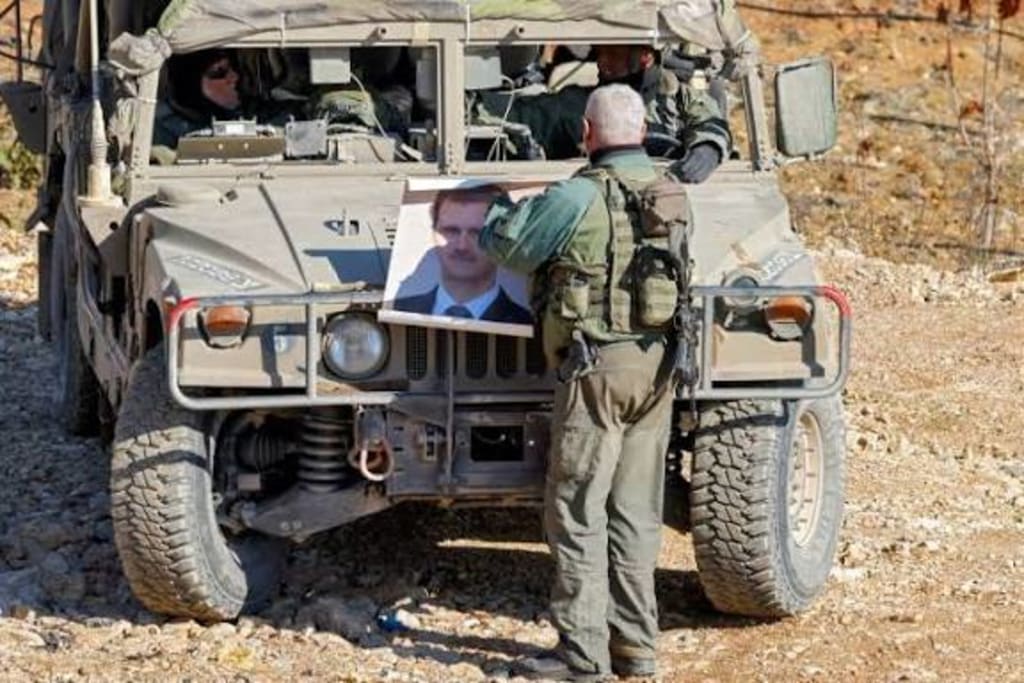
Newly leaked recordings have sent shockwaves through the Middle East, revealing a clandestine plot by high-ranking officers of the al-Assad regime to destabilize Syria. The recordings, verified by multiple independent sources, offer an unprecedented glimpse into internal communications, highlighting deliberate strategies aimed at consolidating power while suppressing dissent.
The Nature of the Leaked Calls
The recordings, spanning months of internal discussions, expose regime officers discussing methods to manipulate public opinion, destabilize opposition-held areas, and coordinate covert operations in regions still affected by conflict. Analysts suggest these communications were intended to reinforce the Assad regime’s control, particularly in areas where political allegiance is fragile or where foreign influence is strong.
According to experts, the leaks demonstrate a pattern of calculated interference in both civilian governance and military operations. Officers reportedly debated strategies to create chaos in opposition territories, limit humanitarian access, and exploit social divisions to weaken resistance groups. These tactics mirror long-standing patterns of authoritarian control, where destabilization serves as a tool for maintaining dominance.
Implications for Syrian Stability
Syria, already decades into a brutal conflict, faces mounting challenges in rebuilding its social and political fabric. The leaked calls indicate that even as international attention has shifted toward reconstruction and diplomatic engagement, elements within the regime continue to engage in destabilizing activities.
For ordinary Syrians, these revelations are deeply troubling. Communities attempting to rebuild infrastructure, restore schools, and reopen markets now face the risk of renewed disruption. Humanitarian organizations may encounter heightened obstacles, as the regime’s covert maneuvers could restrict aid or manipulate relief efforts for strategic advantage.
International Response and Concerns
Global actors, including the United Nations and several human rights organizations, have expressed alarm over the leaked calls. Officials have emphasized the need for continued monitoring of Syria’s internal dynamics and the importance of pressuring the Assad regime to adhere to international norms.
The leaks also raise questions about the complicity or negligence of external actors who have maintained alliances with the regime. Analysts argue that while some countries have prioritized strategic interests in Syria, they may now face increased scrutiny regarding the consequences of these partnerships.
The Role of Intelligence and Whistleblowers
The source of the leaks remains anonymous, though experts believe they stem from internal whistleblowers or intercepted communications. This underscores the critical role of intelligence gathering and investigative journalism in uncovering hidden strategies of authoritarian regimes. By bringing such plots to light, the leaks not only inform global audiences but also provide crucial documentation for potential future accountability measures.
Historical Context of Regime Tactics
The Assad regime has long relied on a combination of military force, political manipulation, and covert operations to maintain power. Past conflicts, including the initial uprisings in 2011 and subsequent military campaigns, demonstrated a willingness to employ extreme measures to suppress dissent. The leaked calls, therefore, represent a continuation of this approach, adapted to contemporary challenges and international scrutiny.
Observers note that these tactics are not unique to Syria; authoritarian regimes worldwide often rely on similar strategies to consolidate power. What makes the current revelations significant is the level of detail they provide, offering concrete evidence of internal plotting that was previously only speculated upon.
Potential Outcomes and Future Prospects
The exposure of these calls could have several consequences. Domestically, it may embolden opposition groups and civil society organizations to demand accountability and transparency. Internationally, the leaks could influence diplomatic negotiations, shaping how foreign governments engage with the Assad regime.
However, analysts caution that while the leaks are significant, they are unlikely to immediately disrupt the regime’s control. Syria’s complex power structures, alliances, and security apparatus mean that implementing meaningful change will require sustained pressure from both internal actors and the global community.
Conclusion: A Window into Hidden Strategies
The leaked calls reveal the lengths to which the Assad regime will go to maintain authority, even as the world watches and engages in reconstruction efforts. For Syrians, the recordings are a stark reminder that stability remains fragile and that internal machinations continue to threaten peace and security.
For the international community, the leaks provide crucial insight into the regime’s mindset, highlighting the importance of vigilance, transparency, and accountability. As Syria navigates a tenuous path toward recovery, understanding these covert operations is essential to preventing further destabilization and supporting long-term peace.
The revelations underscore a broader truth: even in conflicts that seem distant, internal strategies and clandestine plots can have profound consequences for both local populations and global security. For now, the leaked calls serve as a critical reminder that in Syria, the struggle for stability is far from over.
About the Creator
Fiaz Ahmed Brohi
I am a passionate writer with a love for exploring and creating content on trending topics. Always curious, always sharing stories that engage and inspire.
Keep reading
More stories from Fiaz Ahmed Brohi and writers in The Swamp and other communities.
Happy New Year 2026: Embracing Fresh Beginnings and New Possibilities
As the clock strikes midnight and fireworks light up the skies across the globe, people everywhere are welcoming 2026 with open hearts and renewed optimism. The New Year is a symbolic moment, representing not just the passage of time but the opportunity to reflect, reset, and embrace new possibilities. A Time for Reflection New Year’s Eve has long been a time to look back on the past 12 months, to celebrate achievements, and to learn from challenges. For many, 2025 was a year of personal growth, professional accomplishments, and unexpected hurdles. The dawn of 2026 offers a chance to pause, take stock, and chart a path forward with intention. Reflection is more than reminiscing; it is a tool for growth. Understanding successes and missteps allows individuals and communities to enter the new year with clarity and purpose. Global Celebrations and Traditions Across the world, New Year celebrations showcase the rich tapestry of cultural traditions. In Sydney, Australia, the iconic fireworks over the Harbour Bridge remain a highlight, attracting millions both in person and through broadcasts. In Tokyo, thousands gather at temples and shrines for “Hatsumode,” the first visit of the year, praying for health and prosperity. Meanwhile, in New York City, the famous Times Square ball drop draws crowds that epitomize collective excitement and hope. From the exchange of greetings to traditional meals and customs, the New Year is a moment that unites people across borders. Families gather, friends reconnect, and communities come together to celebrate the promise of a fresh start. Resolutions and Intentions For many, the New Year is synonymous with resolutions — commitments to improve health, relationships, finances, or personal development. While resolutions can sometimes be cliché, they serve an important purpose: setting goals and motivating change. Experts recommend focusing on achievable, meaningful objectives rather than superficial goals. In 2026, trends suggest a shift toward holistic resolutions, emphasizing mental well-being, sustainability, and deeper connections with others. Some choose intentions over resolutions, a practice that emphasizes the mindset and energy with which one approaches life. Intentions are less about rigid targets and more about cultivating habits and attitudes that lead to growth and fulfillment. A Year of Opportunities The arrival of 2026 carries with it not only personal hope but global anticipation. Economically, many countries are exploring innovative approaches to growth, technological advancements are creating new opportunities, and social movements continue to shape societies. This year presents the chance for collective action on issues such as climate change, education, and global health. For individuals, the New Year is a reminder that every day brings the potential for new experiences, learning, and achievement. It is an invitation to step out of comfort zones, embrace challenges, and pursue passions with renewed vigor. Embracing Positivity in a Complex World The past few years have reminded us that the world can be unpredictable and challenging. Yet, the spirit of the New Year is a testament to human resilience and optimism. Celebrating 2026 is not just about parties and fireworks; it is about cultivating hope, practicing gratitude, and strengthening relationships. By focusing on what can be controlled — attitude, effort, and choices — individuals can create a more meaningful and fulfilling year. Communities and leaders alike can harness this spirit by encouraging collaboration, empathy, and action. Whether it’s volunteering, supporting local businesses, or participating in civic initiatives, collective efforts amplify the promise of a brighter year. Conclusion As 2026 unfolds, it offers a blank canvas, waiting for stories of personal triumph, connection, and creativity. The New Year reminds us that while the past shapes us, the future is ours to shape. Celebrating with loved ones, reflecting on lessons learned, and setting meaningful intentions allows individuals to enter the year with purpose and hope. So, as fireworks illuminate the night sky and champagne glasses clink, take a moment to pause, breathe, and embrace the promise of 2026. It is a time for new beginnings, renewed energy, and the endless possibilities that each day holds. Happy New Year — may 2026 bring joy, health, and success to all.
By Fiaz Ahmed Brohi21 days ago in The Swamp
Live: Trump ‘Talked Out of Iran Strike at Last Minute’
In a dramatic turn of events, reports indicate that former US President Donald Trump was reportedly “talked out” of a potential strike against Iran at the last minute. The situation, which unfolded amid rising tensions in the Middle East, underscores the delicate nature of US-Iran relations and the influence of advisers in high-stakes decision-making.
By Aarif Lashari5 days ago in The Swamp
Assisted Reproductive Technology Market Size and Forecast 2025–2033
Introduction: A New Era in Family Building Assisted Reproductive Technology (ART) has transitioned from being a niche medical solution into a globally recognized pathway for family creation. What once addressed only select infertility challenges now encompasses a wide array of technologies designed to support diverse medical, social, and personal reproductive needs. From in vitro fertilization (IVF) and intracytoplasmic sperm injection (ICSI) to cryopreservation, genetic screening, and donor programs, ART has become central to modern reproductive healthcare.
By Marthan Sir7 days ago in The Swamp
Rachel Reviews: The Spiral Archive by Pieter Hendrik
It's difficult for me to know where to start with a review of this book as it was, for me, an entirely unique experience and one that I'll probably never have again. I don't want that to be interpreted as unenjoyable but it has left me scratching my head a little and ruminating on its content, its themes and its characters.
By Rachel Deeming3 days ago in BookClub



Comments
There are no comments for this story
Be the first to respond and start the conversation.