
Pakistan’s Demand for Grid Electricity Is Falling as Solar Net-Metering Surges 4×
Why more Pakistanis are ditching the national grid and turning their rooftops into power stations

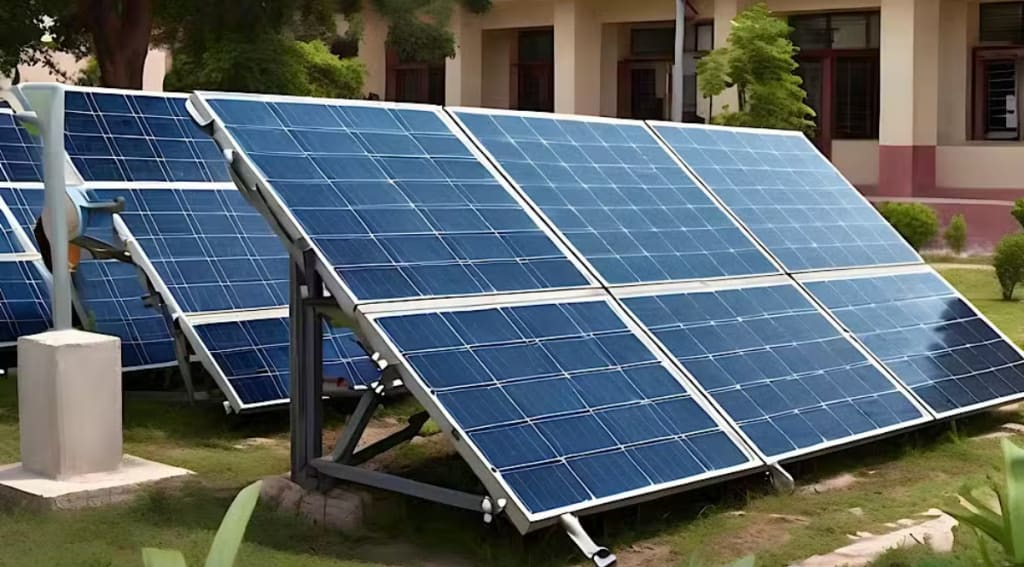
For decades, Pakistan’s electricity story has been one of shortages, rising bills, and unreliable supply. Load-shedding schedules became part of daily life, and households learned to plan their routines around power cuts. But quietly, without massive government campaigns or headline-grabbing megaprojects, a major shift is taking place.
Pakistan’s demand for grid electricity is falling — and at the same time, solar net-metering is growing nearly four times faster than before. Rooftops across cities and towns are filling with solar panels, fundamentally changing how energy is produced and consumed in the country.
This is not just an energy trend. It is a financial decision, a survival strategy, and for many, a path to independence from an increasingly expensive power system.
What Is Net-Metering, and Why Does It Matter?
Net-metering allows households and businesses to install solar panels and feed excess electricity back into the national grid. Instead of wasting unused power during the day, consumers earn credits that reduce their electricity bills at night or during low-sunlight hours.
In simple terms, the grid becomes a two-way system rather than a one-directional supply line. For Pakistan, where sunshine is abundant and electricity costs are high, this model is proving extremely attractive.
Over the past two years, net-metering connections have multiplied rapidly, turning private rooftops into a significant source of national power generation.
Why Grid Electricity Demand Is Falling
The decline in grid demand does not mean Pakistan suddenly needs less energy. Instead, it reflects a shift in where that energy is coming from.
1. Soaring Electricity Prices
Electricity tariffs in Pakistan have risen sharply due to fuel costs, capacity payments, and circular debt. For many households, monthly bills became unbearable. Solar offered a one-time investment with long-term relief.
Once installed, solar systems dramatically cut reliance on the grid, especially during daylight hours when consumption is highest.
2. Unreliable Supply
Even today, power outages remain common in many areas. Solar systems — especially those paired with batteries or hybrid inverters — provide stability that the grid often cannot.
For businesses, uninterrupted power means survival. For households, it means dignity and comfort.
3. Falling Solar Panel Prices
Global oversupply and local market competition have pushed solar panel prices down. What once seemed like a luxury is now within reach of middle-income families.
As costs dropped, adoption surged.
A People-Led Solar Boom
One of the most striking features of Pakistan’s solar growth is that it is not driven by large state projects. Instead, it is led by individuals, shop owners, factories, and housing societies.
Entire neighborhoods now feature rows of panels shimmering in the sun. Schools, mosques, offices, and even small workshops are generating their own electricity.
This bottom-up transition is changing Pakistan’s energy landscape faster than policy alone ever could.
How Net-Metering Is Growing 4× Faster
The four-fold rise in net-metering is fueled by a combination of urgency and opportunity.
Households see solar as protection against future tariff hikes
Businesses view it as a way to control operating costs
Investors see solar installations as a safer long-term asset than many financial instruments
Once early adopters demonstrated success, word spread quickly. Solar installers multiplied, financing options expanded, and social proof did the rest.
In many areas, installing solar is no longer a bold decision — it’s the obvious one.
The Impact on the Power Sector
While solar users benefit, the falling demand for grid electricity presents serious challenges for Pakistan’s power sector.
Revenue Pressure on Utilities
Power distribution companies still must pay fixed costs for power plants and infrastructure, even when less electricity is sold. As more consumers reduce grid usage, the burden shifts to those who cannot afford solar.
Rising Inequality
Low-income households without rooftop access may face higher tariffs as utilities try to recover losses. This creates a difficult policy dilemma: how to encourage clean energy without punishing the most vulnerable.
Grid Stability Concerns
Solar energy is intermittent. Without storage upgrades and smarter grids, managing supply and demand becomes more complex.
Environmental and Economic Benefits
Despite the challenges, the benefits of this shift are undeniable.
Reduced fuel imports save foreign exchange
Lower emissions improve air quality
Decentralised power increases national resilience
Household savings stimulate local economies
Solar energy is helping Pakistan move toward climate goals without waiting for international funding or massive reforms.
What Comes Next?
Pakistan is approaching a crossroads. The solar boom cannot be stopped — nor should it be. But it must be managed wisely.
Possible future steps include:
Smarter net-metering policies
Investment in battery storage
Time-of-use tariffs
Grid modernisation
The goal should not be to protect an outdated system, but to adapt it to a new reality where consumers are also producers.
Conclusion: A Quiet Energy Revolution
Pakistan’s falling grid electricity demand and explosive growth in solar net-metering signal a historic shift. Ordinary citizens, driven by necessity, are reshaping the nation’s energy future one rooftop at a time.
This quiet revolution shows that when systems fail to serve people, people find alternatives. Solar power has become more than an energy source — it is a statement of independence.
If supported with smart policies and fair reforms, Pakistan’s solar surge could become one of the most powerful success stories in the country’s modern history.
About the Creator
Muhammad Hassan
Muhammad Hassan | Content writer with 2 years of experience crafting engaging articles on world news, current affairs, and trending topics. I simplify complex stories to keep readers informed and connected.
Keep reading
More stories from Muhammad Hassan and writers in The Swamp and other communities.
Bond Yields Jump After Trump Hints Hassett Won’t Be Named Fed Chair as Wall Street Sees Hawkish Warsh Having Easier Path to Replace Powell
Financial markets are rarely patient when uncertainty enters the room — and this week, that impatience showed up clearly in the bond market. U.S. Treasury yields jumped after former President Donald Trump signaled that Kevin Hassett is unlikely to be his choice for the next Federal Reserve chair, while investors increasingly believe that Kevin Warsh, a known monetary hawk, has a clearer path to replacing Jerome Powell. The shift in expectations sent ripples across Wall Street, reigniting concerns about higher interest rates, tighter monetary policy, and the future direction of the U.S. economy. The reaction underscores a simple truth: who leads the Federal Reserve matters just as much as what the Fed does. Why Bond Yields Reacted So Quickly Bond yields move inversely to prices, and when investors expect interest rates to remain higher for longer, yields tend to rise. That is exactly what happened when Trump’s comments reshaped the perceived Fed leadership race. Kevin Hassett, a former Trump economic adviser, has generally been viewed by markets as more pragmatic and policy-flexible. While not dovish, he has supported growth-friendly economic frameworks and has not been closely associated with aggressive interest-rate tightening. Kevin Warsh, by contrast, carries a reputation as decidedly hawkish. A former Federal Reserve governor, Warsh has repeatedly criticized prolonged low-interest-rate policies and warned that inflation risks have been underestimated in recent years. As investors began to price in a higher probability of Warsh leading the Fed, Treasury yields climbed, particularly at the long end of the curve — a sign that markets expect tighter financial conditions over time. The Power of Fed Chair Expectations Even though Jerome Powell remains Fed chair for now, markets are forward-looking by nature. Expectations about future leadership influence current pricing, especially in interest-rate-sensitive assets like bonds, mortgages, and equities. A hawkish Fed chair typically implies: Greater willingness to raise rates Less tolerance for inflation overshoots Stronger focus on price stability over growth Tighter financial conditions for longer periods For bond investors, that means higher yields are needed to compensate for future rate risk. For stock markets, it raises questions about valuations, borrowing costs, and earnings growth. Trump’s comments didn’t name Warsh explicitly — but by signaling that Hassett is unlikely, the field narrowed, and markets filled in the blanks quickly. Why Kevin Warsh Alarms Wall Street Kevin Warsh is not an unknown quantity. He served at the Federal Reserve during the 2008 financial crisis and later became one of the most vocal critics of the Fed’s ultra-easy monetary policies. In recent years, Warsh has argued that: Inflation was fueled by excessive stimulus The Fed waited too long to tighten policy Central banks have become too politically entangled Credibility must be restored through discipline For inflation hawks, this makes him an attractive candidate. For markets accustomed to liquidity support and cautious tightening, it makes him unsettling. Bond traders, in particular, see Warsh as someone less likely to pivot quickly if economic growth slows — a stance that reinforces expectations of “higher for longer” rates. Trump, the Fed, and Political Signals Trump has long expressed frustration with Jerome Powell, frequently criticizing the Fed during his presidency for not cutting rates aggressively enough. However, inflation has changed the political calculus. With price pressures remaining sticky and voters sensitive to cost-of-living issues, a tougher stance on inflation may now carry political appeal. Signaling openness to a hawkish Fed chair allows Trump to position himself as serious about inflation control, even if it unsettles markets. Importantly, the Fed chair appointment is one of the most consequential economic decisions a president can make. Markets know that rhetoric today can translate into policy tomorrow — and they react accordingly. What Rising Bond Yields Mean for the Economy Higher Treasury yields ripple through the economy in multiple ways: Mortgage rates increase, putting pressure on housing Corporate borrowing becomes more expensive Government debt servicing costs rise Stock valuations face downward pressure Even modest yield increases can have outsized effects, especially after years of historically low rates. That’s why markets reacted so strongly — the issue isn’t just who runs the Fed, but what their philosophy implies for growth, jobs, and financial stability. Is Jerome Powell Really on the Way Out? Jerome Powell’s term still has time remaining, and no official decision has been made. However, speculation about his replacement has intensified as political campaigning accelerates. Powell has walked a difficult line: tightening aggressively to tame inflation while trying to avoid tipping the economy into recession. His approach has drawn criticism from both sides — too slow for hawks, too aggressive for doves. Markets now see a meaningful chance that the next Fed chair could represent a clean break from Powell’s balancing act, especially if inflation remains stubborn. Uncertainty Is the Real Market Driver It’s worth noting that markets aren’t reacting to an actual policy change — only to signals and probabilities. But uncertainty itself is a powerful force. When investors can’t clearly see: Who will lead the Fed How aggressively policy will be tightened How politics will influence monetary independence They demand higher returns for holding long-term assets. That demand shows up as higher yields. In that sense, the bond market isn’t making a judgment — it’s protecting itself. Final Thoughts The jump in bond yields following Trump’s comments highlights how sensitive markets are to Federal Reserve succession politics. By signaling that Kevin Hassett is unlikely and leaving room for a hawkish figure like Kevin Warsh, Trump shifted expectations toward tighter future monetary policy — and Wall Street reacted instantly. Whether Warsh ultimately becomes Fed chair remains uncertain. But the episode serves as a reminder that the Fed’s credibility, independence, and leadership shape markets long before any official decision is made. As inflation, politics, and economic growth collide, investors will continue watching every signal — spoken or unspoken — from those with the power to shape the next era of U.S. monetary policy.
By Muhammad Hassan2 months ago in The Swamp
The Forsyth House Fire
Since 1851, Forsyth House has stood on the corner of Union Street and Gordon Street in the heart of Glasgow. Its iconic, or was... because on Sunday 8th of March, 2026, a fire broke out in a small, seemingly un-named shop in the building and tore all that history down. As I write, the rubble is still unsettled and the street is still blocked off. Central Station is quiet on the upper level, and around 30 small businesses have quite literally gone up in smoke.
By S. A. Crawford2 days ago in The Swamp
Military Aircraft Bringing Back 211 S. Koreans, Foreigners From Saudi Arabia Amid Mideast Conflict
In the first military evacuation flight since the outbreak of war in the Middle East, South Korea has airlifted 211 people — including 204 South Korean nationals and several foreign family members — out of Saudi Arabia to bring them safely home, Seoul officials said Sunday. The evacuation effort comes as regional tensions escalate following intensive conflict between the United States, Israel, and Iran, which has disrupted commercial air travel, closed airspace over parts of the Middle East, and left thousands of foreign residents and visitors stranded. The Evacuation Operation South Korea’s Republic of Korea Air Force (ROKAF) deployed a military transport aircraft — specifically a KC‑330 “Cygnus” multi‑role tanker and transport plane — to Riyadh, Saudi Arabia to bring back stranded citizens and their families. The aircraft departed with 211 passengers on board, including: 204 South Korean citizens, Five foreign family members of those nationals, and Two Japanese nationals who were also evacuated as part of the diplomatic cooperation between Seoul and Tokyo. Officials described the flight as a critical first step in a broader repatriation effort that aims to help Koreans and others leave the conflict‑affected region. As commercial flights remain limited or canceled in many parts of the Middle East, government‑organized evacuations have become essential for those wishing to return home. Why the Evacuation Was Necessary The evacuation reflects growing concern among governments about the safety of their citizens in Saudi Arabia and surrounding countries, where regional tensions have heightened dramatically. The conflict, which erupted late last month, has featured missile and drone strikes, reciprocal military engagements, and tightening restrictions on civilian movement and airspace. For many South Koreans living or working in the Gulf — including students, expatriate workers and business professionals — uncertainty over flights and safety has made travel planning nearly impossible. Ordinary commercial routes to Seoul have been reduced or postponed because of ongoing security risks and the lack of open air corridors. Government evacuation flights have therefore become a primary option for departure. International Cooperation in Evacuations South Korea’s evacuation flight also underscores increasing international cooperation in crisis responses. The two Japanese nationals aboard the plane were evacuated thanks to a reciprocal agreement between Seoul and Tokyo on mutual assistance in emergency evacuations. In 2024, the two countries signed a memorandum to support one another’s citizens in the event of war or widespread instability, allowing such cooperation when commercial travel is disrupted. This sort of coordinated evacuation is not unprecedented; during past regional conflicts in the Middle East, several countries have deployed military transport planes or chartered flights to evacuate their nationals. However, given the scale and rapid evolution of the 2026 Iran war, official repatriation missions have become more urgent and complex. Evacuation Challenges and Logistics Organizing a large‑scale repatriation flight under stressful geopolitical conditions is a major logistical undertaking. Military transport aircraft like the KC‑330 Cygnus — typically used for aerial refueling and transport missions — must be reconfigured to carry passengers safely over long distances, while ensuring secure airspace entry and exit amidst conflict. South Korean authorities have worked closely with foreign governments, airport operators, and diplomatic missions in Riyadh to coordinate passenger manifest lists, boarding procedures, and safe departure windows. Officials warn that additional evacuations may be necessary as more nationals express a desire to return home and as conditions evolve in the region. Government Response and Citizen Support The South Korean government has repeatedly urged its citizens in the Middle East to remain vigilant and register with local embassies for emergency support. It has also stressed that those wishing to leave should consider available evacuation flights, as regular commercial services may not resume for weeks or longer depending on how the conflict unfolds. Foreign Minister Cho Hyun emphasised in a recent parliamentary session that the government is committed to assisting with further evacuation efforts and continues to explore all available options to bring people home safely. For many of those on the flight, the journey back to Seoul offers relief after days of uncertainty. Families reunited at Incheon Airport expressed gratitude to the military personnel and diplomats who helped make the evacuation possible, particularly given the unpredictable security environment in the Middle East.
By Fiaz Ahmed about 8 hours ago in The Swamp


Comments
There are no comments for this story
Be the first to respond and start the conversation.