
Bond Yields Jump After Trump Hints Hassett Won’t Be Named Fed Chair as Wall Street Sees Hawkish Warsh Having Easier Path to Replace Powell
Markets react sharply as Federal Reserve succession politics collide with inflation fears

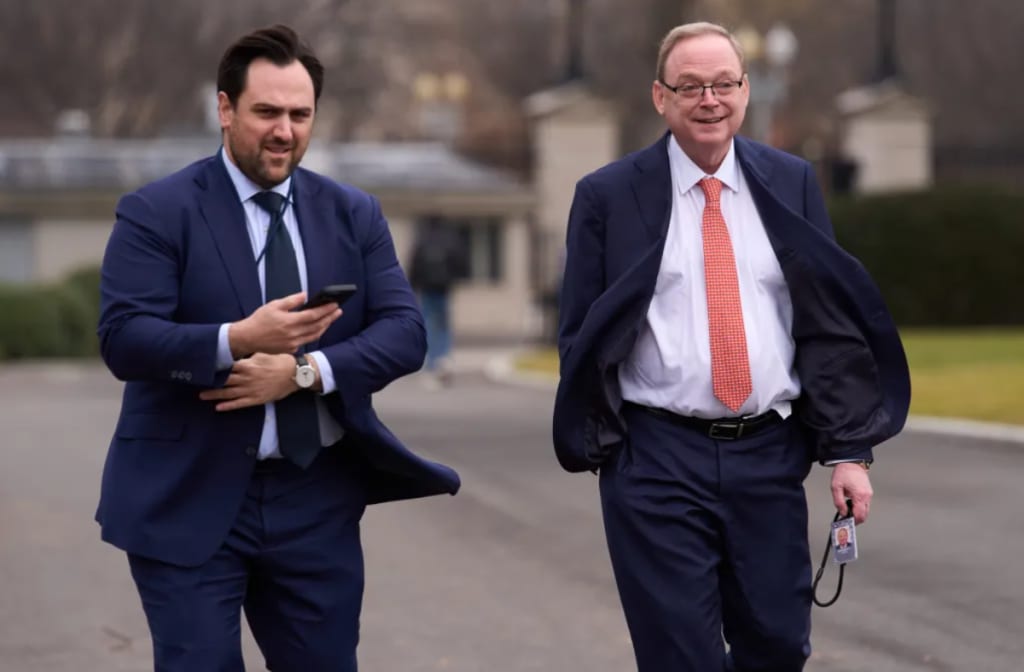
Financial markets are rarely patient when uncertainty enters the room — and this week, that impatience showed up clearly in the bond market.
U.S. Treasury yields jumped after former President Donald Trump signaled that Kevin Hassett is unlikely to be his choice for the next Federal Reserve chair, while investors increasingly believe that Kevin Warsh, a known monetary hawk, has a clearer path to replacing Jerome Powell. The shift in expectations sent ripples across Wall Street, reigniting concerns about higher interest rates, tighter monetary policy, and the future direction of the U.S. economy.
The reaction underscores a simple truth: who leads the Federal Reserve matters just as much as what the Fed does.
Why Bond Yields Reacted So Quickly
Bond yields move inversely to prices, and when investors expect interest rates to remain higher for longer, yields tend to rise. That is exactly what happened when Trump’s comments reshaped the perceived Fed leadership race.
Kevin Hassett, a former Trump economic adviser, has generally been viewed by markets as more pragmatic and policy-flexible. While not dovish, he has supported growth-friendly economic frameworks and has not been closely associated with aggressive interest-rate tightening.
Kevin Warsh, by contrast, carries a reputation as decidedly hawkish. A former Federal Reserve governor, Warsh has repeatedly criticized prolonged low-interest-rate policies and warned that inflation risks have been underestimated in recent years.
As investors began to price in a higher probability of Warsh leading the Fed, Treasury yields climbed, particularly at the long end of the curve — a sign that markets expect tighter financial conditions over time.
The Power of Fed Chair Expectations
Even though Jerome Powell remains Fed chair for now, markets are forward-looking by nature. Expectations about future leadership influence current pricing, especially in interest-rate-sensitive assets like bonds, mortgages, and equities.
A hawkish Fed chair typically implies:
Greater willingness to raise rates
Less tolerance for inflation overshoots
Stronger focus on price stability over growth
Tighter financial conditions for longer periods
For bond investors, that means higher yields are needed to compensate for future rate risk. For stock markets, it raises questions about valuations, borrowing costs, and earnings growth.
Trump’s comments didn’t name Warsh explicitly — but by signaling that Hassett is unlikely, the field narrowed, and markets filled in the blanks quickly.
Why Kevin Warsh Alarms Wall Street
Kevin Warsh is not an unknown quantity. He served at the Federal Reserve during the 2008 financial crisis and later became one of the most vocal critics of the Fed’s ultra-easy monetary policies.
In recent years, Warsh has argued that:
Inflation was fueled by excessive stimulus
The Fed waited too long to tighten policy
Central banks have become too politically entangled
Credibility must be restored through discipline
For inflation hawks, this makes him an attractive candidate. For markets accustomed to liquidity support and cautious tightening, it makes him unsettling.
Bond traders, in particular, see Warsh as someone less likely to pivot quickly if economic growth slows — a stance that reinforces expectations of “higher for longer” rates.
Trump, the Fed, and Political Signals
Trump has long expressed frustration with Jerome Powell, frequently criticizing the Fed during his presidency for not cutting rates aggressively enough. However, inflation has changed the political calculus.
With price pressures remaining sticky and voters sensitive to cost-of-living issues, a tougher stance on inflation may now carry political appeal. Signaling openness to a hawkish Fed chair allows Trump to position himself as serious about inflation control, even if it unsettles markets.
Importantly, the Fed chair appointment is one of the most consequential economic decisions a president can make. Markets know that rhetoric today can translate into policy tomorrow — and they react accordingly.
What Rising Bond Yields Mean for the Economy
Higher Treasury yields ripple through the economy in multiple ways:
Mortgage rates increase, putting pressure on housing
Corporate borrowing becomes more expensive
Government debt servicing costs rise
Stock valuations face downward pressure
Even modest yield increases can have outsized effects, especially after years of historically low rates. That’s why markets reacted so strongly — the issue isn’t just who runs the Fed, but what their philosophy implies for growth, jobs, and financial stability.
Is Jerome Powell Really on the Way Out?
Jerome Powell’s term still has time remaining, and no official decision has been made. However, speculation about his replacement has intensified as political campaigning accelerates.
Powell has walked a difficult line: tightening aggressively to tame inflation while trying to avoid tipping the economy into recession. His approach has drawn criticism from both sides — too slow for hawks, too aggressive for doves.
Markets now see a meaningful chance that the next Fed chair could represent a clean break from Powell’s balancing act, especially if inflation remains stubborn.
Uncertainty Is the Real Market Driver
It’s worth noting that markets aren’t reacting to an actual policy change — only to signals and probabilities. But uncertainty itself is a powerful force.
When investors can’t clearly see:
Who will lead the Fed
How aggressively policy will be tightened
How politics will influence monetary independence
They demand higher returns for holding long-term assets. That demand shows up as higher yields.
In that sense, the bond market isn’t making a judgment — it’s protecting itself.
Final Thoughts
The jump in bond yields following Trump’s comments highlights how sensitive markets are to Federal Reserve succession politics. By signaling that Kevin Hassett is unlikely and leaving room for a hawkish figure like Kevin Warsh, Trump shifted expectations toward tighter future monetary policy — and Wall Street reacted instantly.
Whether Warsh ultimately becomes Fed chair remains uncertain. But the episode serves as a reminder that the Fed’s credibility, independence, and leadership shape markets long before any official decision is made.
As inflation, politics, and economic growth collide, investors will continue watching every signal — spoken or unspoken — from those with the power to shape the next era of U.S. monetary policy.
About the Creator
Muhammad Hassan
Muhammad Hassan | Content writer with 2 years of experience crafting engaging articles on world news, current affairs, and trending topics. I simplify complex stories to keep readers informed and connected.
Keep reading
More stories from Muhammad Hassan and writers in The Swamp and other communities.
White House Weighs Executive Action to Cap Credit Card Rates
The White House is reportedly considering executive action to impose a cap on credit card interest rates, a move that could significantly impact millions of Americans grappling with rising debt. With household credit card balances climbing and interest rates at multi-decade highs, the potential policy has sparked debate among economists, consumer advocates, and the financial industry. The decision, if implemented, would be one of the most direct interventions by the federal government into consumer credit markets in decades. Rising Credit Card Debt in America Credit card debt has surged in the United States, fueled by post-pandemic spending, inflation, and rising interest rates. According to recent reports, U.S. consumers carry over $1 trillion in outstanding credit card balances, with average interest rates hovering around 20% or higher. For many households, high-interest debt has become a cycle that is increasingly difficult to escape. The White House’s contemplation of a federal cap on these rates reflects growing concern about consumer financial stress. Advocates argue that without intervention, millions of Americans may face long-term financial instability, risking defaults and broader economic consequences. What the Executive Action Might Entail While details are still emerging, an executive action could allow the federal government to directly limit the interest rates charged on credit cards without requiring new legislation from Congress. Historically, credit card interest rates have been regulated at the state level, with federal law largely leaving them to market forces. Potential provisions of such an executive action could include: Maximum APR (Annual Percentage Rate) Limits: A fixed ceiling on the interest rate credit card companies can charge. Protection for Vulnerable Consumers: Specific safeguards for households carrying high balances or at risk of default. Transparency Requirements: Ensuring credit card terms and fees are clearly disclosed to consumers. The action may be temporary or structured to last until Congress enacts more permanent legislation addressing consumer credit. Supporters’ Perspective Consumer advocacy groups and some Democratic lawmakers have welcomed the idea of a rate cap. They argue that excessive interest rates exacerbate inequality and disproportionately affect lower- and middle-income households. “Credit cards should not be traps that keep hardworking Americans in debt,” says Angela Martinez, director of a consumer rights nonprofit. “A rate cap can provide immediate relief, giving families breathing room to pay down balances and regain financial stability.” Supporters also contend that such an intervention could prevent predatory practices by certain lenders and protect the broader economy from potential debt crises caused by widespread defaults. Critics’ Concerns Financial institutions and some economists warn that capping rates could have unintended consequences. Banks may respond by: Reducing Credit Access: Higher-risk consumers might find it harder to obtain credit if lenders can’t price risk appropriately. Increasing Fees: Banks could compensate for lost interest income through higher fees or other charges. Impacting Lending Behavior: Credit card issuers may tighten credit limits, change terms, or reduce incentives like rewards programs. Economist Kevin Anderson notes, “While a rate cap helps existing cardholders, it could reduce access to credit for consumers who need it most. The challenge is finding a balance between affordability and maintaining a healthy credit market.” Historical Context Interest rate caps are not a new concept in the United States. During the 1980s and 1990s, several states imposed limits on credit card interest rates, but federal law eventually allowed national banks to preempt state caps, creating today’s largely market-driven system. Previous efforts at limiting rates at the federal level have been controversial, with debates centered on consumer protection versus market efficiency. The current economic environment—high inflation and rising consumer debt—has reignited discussions about the need for intervention. Potential Economic Impact Implementing a federal rate cap could have wide-ranging effects: Immediate Consumer Relief: For households carrying high-interest debt, even a small reduction in rates could free up monthly cash flow for other expenses or debt repayment. Market Adjustments: Banks may revise lending practices, potentially affecting the broader credit market and interest rates on other loan products. Behavioral Changes: Consumers may adjust borrowing habits, potentially reducing reliance on credit cards and seeking alternative financing. Financial analysts caution that the effectiveness of such a policy depends on the specific structure of the cap and accompanying measures to ensure continued access to credit. Political Implications The move to cap credit card rates reflects a broader political focus on economic fairness and consumer protection. For the administration, it signals a commitment to addressing everyday financial challenges faced by Americans, particularly in the context of rising inflation and living costs. However, any executive action is likely to face legal challenges from financial institutions and industry groups arguing that such a cap exceeds presidential authority or conflicts with federal banking laws. The outcome could shape debates on executive power and the limits of regulatory intervention in financial markets. What Consumers Should Know For consumers, the news of a potential rate cap offers hope but also underscores the importance of personal financial management. Experts advise: Pay Down High-Interest Debt: Reducing balances remains the most effective way to limit interest costs. Shop for Lower-Rate Cards: Comparing credit card offers can help minimize interest payments. Budget Carefully: Managing monthly expenses and avoiding new high-interest debt remains critical, regardless of policy changes. Even with a federal cap, personal financial decisions will continue to determine long-term stability. Conclusion The White House’s consideration of an executive action to cap credit card interest rates highlights the ongoing struggle between consumer protection and market dynamics. For millions of Americans carrying high-interest debt, the proposal could offer much-needed relief. At the same time, the move introduces uncertainty for banks, lenders, and the broader credit market. Legal, economic, and political factors will all play a role in shaping the final outcome. Ultimately, whether the policy is enacted or challenged, the discussion underscores a central issue: ensuring that credit is both accessible and affordable for all Americans. As the administration weighs its options, households, financial institutions, and lawmakers will watch closely, knowing that the decisions made today could have lasting effects on consumer finances for years to come.
By Muhammad Hassan2 days ago in The Swamp
Fighting Ends After Syrian and Kurdish Forces Agree on Ceasefire
After weeks of escalating clashes that threatened to further destabilize northern Syria, Syrian government forces and Kurdish-led groups have agreed to a ceasefire, bringing a fragile calm to areas that had seen intense fighting. The agreement, brokered through regional mediation and quiet international diplomacy, marks a significant moment in a conflict that has repeatedly shifted alliances and front lines over more than a decade. The ceasefire follows violent confrontations between Syrian Arab Army units and Kurdish forces, primarily affiliated with the Syrian Democratic Forces (SDF), in strategically sensitive مناطق near key roads, oil fields, and population centers. The clashes had raised fears of a wider conflict that could draw in external actors already deeply entangled in Syria’s complex war. Why the Fighting Broke Out Tensions between Damascus and Kurdish authorities have simmered for years. While both sides have occasionally cooperated against common threats such as extremist groups, their long-term political goals remain sharply divided. Kurdish groups seek greater autonomy and recognition of their self-administered regions, while the Syrian government insists on full territorial control and centralized authority. Recent fighting was reportedly triggered by disputes over security control, checkpoints, and access to resources, particularly oil and wheat. Local incidents quickly escalated as reinforcements were deployed and artillery exchanges followed, displacing civilians and disrupting already fragile livelihoods. The Ceasefire Agreement According to sources familiar with the talks, the ceasefire includes an immediate halt to hostilities, the withdrawal of heavy weapons from flashpoint areas, and the reopening of key roads for civilian and commercial traffic. Joint coordination mechanisms are also expected to be established to prevent misunderstandings and accidental clashes. Importantly, the agreement reportedly includes provisions for dialogue on local governance and security arrangements, signaling that both sides recognize military escalation as costly and unsustainable. While details remain limited, mediators emphasized that the ceasefire is intended as a first step rather than a comprehensive political settlement. Impact on Civilians For civilians caught in the crossfire, the ceasefire brings cautious relief. Thousands were forced to flee their homes as fighting intensified, seeking shelter with relatives or in makeshift camps. Schools closed, medical services were interrupted, and essential supplies became scarce. Humanitarian organizations have welcomed the truce but warn that conditions remain dire. Many areas affected by the clashes were already struggling with economic hardship, fuel shortages, and the aftermath of years of war. A sustained ceasefire could allow aid access, repairs to infrastructure, and the gradual return of displaced families. Regional and International Dimensions The ceasefire also has broader regional implications. Northern Syria is a geopolitical chessboard involving multiple actors, including Russia, the United States, Turkey, and Iran. Kurdish-led forces have long been supported by the US in the fight against extremist groups, while the Syrian government is backed by Russia and Iran. Any escalation between Syrian and Kurdish forces risks upsetting this delicate balance. Observers note that external actors likely played a behind-the-scenes role in encouraging restraint, as renewed conflict could undermine counterterrorism efforts and complicate regional stability. Turkey, which views Kurdish armed groups near its border as a security threat, is also closely watching developments. A breakdown of the ceasefire could prompt new cross-border operations, further complicating the situation. Challenges Ahead Despite the ceasefire, deep mistrust remains. Previous truces in Syria have often collapsed due to accusations of violations, local power struggles, or shifting external priorities. Analysts caution that without a clear political framework addressing Kurdish autonomy, resource sharing, and integration of armed forces, the current calm may prove temporary. Economic pressures add another layer of risk. Control over oil fields and agricultural land is not only a political issue but also an economic lifeline in a country devastated by sanctions, inflation, and unemployment. Disagreements over revenue sharing could easily reignite tensions. A Fragile Opportunity Still, the ceasefire offers a rare opportunity for de-escalation at a time when Syria can ill afford another front of conflict. If maintained, it could open space for confidence-building measures, local reconciliation efforts, and renewed discussions about Syria’s future governance. For now, residents in affected areas are cautiously hopeful, listening for the sounds of normal life returning instead of gunfire. Whether this ceasefire becomes a stepping stone toward lasting stability or merely a pause in a long-running struggle will depend on the willingness of all sides to prioritize dialogue over force. In a conflict marked by broken agreements and shifting loyalties, even a fragile calm is meaningful. The coming weeks will reveal whether this ceasefire can hold—and whether it can lay the groundwork for a more durable peace in northern Syria.
By Fiaz Ahmed Brohiabout 13 hours ago in The Swamp



Comments
There are no comments for this story
Be the first to respond and start the conversation.