
Pakistan’s Army Has Always Been Influential — Now Its Chief Has New Powers
A deeper look at how Pakistan’s political landscape is shifting as the military leadership gains expanded constitutional authority.

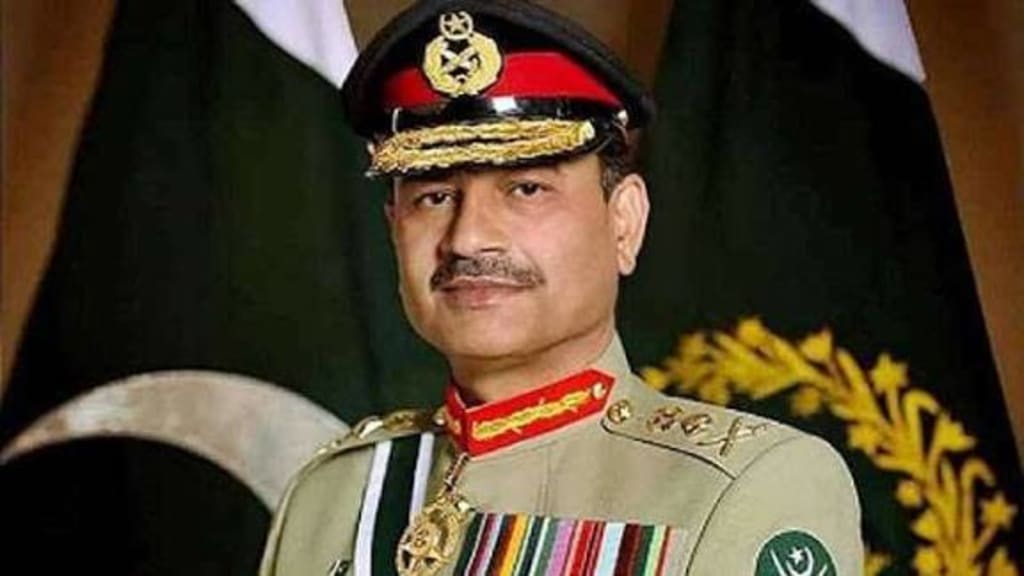
For decades, Pakistan’s army has played an important role in shaping the country’s politics, security policies, and power structures. Even during periods of democratic rule, military leaders have held influence in key decisions—from foreign affairs to internal stability. But today, the position of Pakistan’s army chief has expanded even further, gaining new authority that is changing the balance between elected leadership and military command.
The evolution of these powers is not sudden. Instead, it reflects Pakistan’s long history of military involvement in governance and the growing challenges the country faces. As political divisions deepen and economic issues pressure the state, the army chief’s strengthened role has become a defining topic in Pakistan’s current political landscape.
A Long History of Military Influence
Pakistan’s army has been influential since the country’s early years. Military rule has occurred several times, and even during civilian governments, the army has shaped national direction behind the scenes. Security concerns, border tensions, and internal conflicts have kept the military on the front lines, building a reputation for discipline and national defense.
Because of this, many citizens see the army as a stabilizing force. However, critics argue that continuous military involvement in governance prevents democracy from fully maturing. This ongoing debate sets the backdrop for the new powers that have recently been granted to the army chief.
What Has Changed? The Army Chief’s Expanded Role
In recent years, the authority of Pakistan’s military leadership has grown through legal, administrative, and political decisions. The army chief now has greater control over internal security matters, policy consultations, and coordination between government institutions. Several new responsibilities have reportedly been added, including:
Stronger oversight of counterterrorism strategy
A larger advisory role in economic and administrative decisions
More influence in crisis management and civil-military coordination
Expanded involvement in discussions with international partners
These developments reflect the state’s belief that Pakistan needs tighter security management and more unified leadership during uncertain times. But they also raise questions about how much power should remain in military hands.
Why These Powers Were Granted
Understanding why the army chief’s authority has increased requires looking at Pakistan’s current challenges. The country faces:
Political polarization
Economic instability
Rising security concerns
Regional diplomatic tensions
During turbulent periods, the military often becomes more involved as governments look for stability and expertise. Supporters argue that the army’s organizational strength and experience make it better equipped to manage crises. They say the expanded powers are a practical response to current national needs.
However, critics warn that such changes can weaken democratic institutions by overshadowing civilian leadership. They argue that long-term stability can only be achieved when elected leaders fully hold decision-making power.
Impact on Civil-Military Relations
Pakistan’s civil-military relationship has always been sensitive. The army’s new powers have added another layer to the dynamic between political leaders and military officials.
Some analysts believe this could create smoother coordination, reducing delays in policy implementation. Others worry it may blur the boundaries between civilian authority and military oversight.
The key question is: Can both sides work together without undermining constitutional roles? The answer will shape Pakistan’s political environment in the years to come.
Public Reactions and Concerns
Public opinion is divided. Many citizens trust the military more than elected politicians, seeing the new powers as a step toward stability. They believe the army can fill gaps left by political conflicts and inconsistent governance.
On the other hand, democracy advocates express concern. They fear the changes may weaken parliament, reduce transparency, and limit accountability. The debate continues across media, social platforms, and political circles.
What This Means for Pakistan’s Future
Pakistan stands at an important point in its political journey. The expanded powers of the army chief highlight how deeply the military remains connected to state affairs. Whether this leads to greater stability .
About the Creator
Fiaz Ahmed
I am Fiaz Ahmed. I am a passionate writer. I love covering trending topics and breaking news. With a sharp eye for what’s happening around the world, and crafts timely and engaging stories that keep readers informed and updated.
Keep reading
More stories from Fiaz Ahmed and writers in The Swamp and other communities.
By Delaying a Decision on Using Russia’s Frozen Assets for Ukraine, Europe Is Quietly Hedging Its Bets
Why EU Hesitation Reveals a Complicated Mix of Strategy, Risk, and Geopolitical Uncertainty Europe’s leaders are facing one of the most consequential questions of the Ukraine war: Should the EU use Russia’s frozen assets—worth more than $300 billion—to fund Ukraine’s defense and reconstruction? On paper, the idea sounds simple. Russia invaded Ukraine, causing a level of destruction the region has not seen in decades. Ukraine needs weapons, infrastructure repair, and economic support. The frozen Russian assets sitting in Europe could theoretically fill that gap.
By Fiaz Ahmed 2 months ago in The Swamp
What Is the Old Name of Turkey? A Journey Through History, Empires, and Identity
When people hear the name Turkey, they often think of a modern nation bridging Europe and Asia, rich with culture, cuisine, and history. But Turkey’s land has carried many names long before it became the Republic of Türkiye in the 20th century. Understanding the old names of Turkey is more than a geography lesson—it is a journey through ancient civilizations, powerful empires, and shifting identities that shaped the world. Anatolia: The Earliest Known Name The oldest and most widely used historical name for much of modern-day Turkey is Anatolia. Derived from the Greek word Anatolē, meaning “the east” or “sunrise,” Anatolia referred to the lands east of mainland Greece. For ancient Greeks, this region was literally where the sun rose. Anatolia was not a single kingdom but a vast region that hosted some of the world’s earliest civilizations, including the Hittites, Phrygians, Lydians, and Urartians. Archaeological discoveries show that Anatolia was a cradle of early human settlement, agriculture, and trade, making it one of the most historically dense regions on Earth. Even today, historians and scholars frequently use “Anatolia” to describe Turkey’s Asian portion, which makes up about 97% of the country. Asia Minor: A Roman and Byzantine Label Another well-known old name for Turkey is Asia Minor. This term was popularized during the Roman and Byzantine Empires to distinguish the region from the larger continent of Asia. “Asia Minor” literally means “Lesser Asia,” emphasizing its role as a western extension of the Asian landmass. Under Roman and later Byzantine rule, Asia Minor became a hub of administration, commerce, and Christianity. Many early Christian communities, councils, and churches—mentioned in biblical texts—were located in this region. Cities like Ephesus, Smyrna, and Nicaea were central to religious and political life for centuries. Constantinople and the Byzantine Identity While the land itself had regional names, the capital city—Constantinople—often symbolized the entire territory. Founded by Roman Emperor Constantine the Great in 330 AD, Constantinople became the heart of the Byzantine Empire. For over a thousand years, the Byzantine Empire ruled much of what is now Turkey, blending Roman governance, Greek culture, and Christian theology. During this period, the region was not called Turkey at all, as the term “Turk” had not yet become dominant in Anatolia. The Arrival of the Turks and the Name “Turkey” The name Turkey comes from the word “Turk”, referring to the Turkic peoples who migrated from Central Asia. After the Battle of Manzikert in 1071, Seljuk Turks defeated the Byzantine army, opening Anatolia to Turkish settlement. Over time, European sources began referring to the region as “Turcia” or “Turkey,” meaning “the land of the Turks.” This marked a major shift in identity—from a Greco-Roman-Christian region to a predominantly Turkic and Muslim one. The Ottoman Empire: A Global Power Without the Name “Turkey” Interestingly, during the height of Turkish power, the state was not officially called Turkey. Instead, it was known as the Ottoman Empire, named after its founder Osman I. From the late 13th century until the early 20th century, the Ottoman Empire controlled vast territories across Europe, Asia, and Africa. Ottoman rulers referred to their realm as the Devlet-i Aliyye-i Osmaniye (The Sublime Ottoman State). However, European diplomats and writers still casually referred to the empire’s core lands as Turkey, reinforcing the name internationally. From Ottoman Empire to the Republic of Turkey After World War I and the collapse of the Ottoman Empire, Mustafa Kemal Atatürk led a successful independence movement. In 1923, the modern Republic of Turkey was officially established. This marked the first time “Turkey” became the formal name of the state, symbolizing a break from imperial rule and the beginning of a secular, nation-based identity. In recent years, the country has also emphasized the spelling “Türkiye” internationally to reflect its native pronunciation and cultural identity. Why These Old Names Still Matter The old names of Turkey—Anatolia, Asia Minor, Byzantine lands, and Ottoman domains—tell a story of continuity and transformation. They reveal how geography, culture, religion, and power shape national identity over time. Turkey is not just a modern nation-state; it is a living archive of human civilization. Each old name represents a chapter in its long and complex story, making Turkey one of the most historically layered countries in the world. Final Thoughts So, what is the old name of Turkey? The answer depends on the era. From Anatolia and Asia Minor to Byzantine territories and the Ottoman Empire, Turkey has worn many names—each reflecting the people and powers of its time. Understanding these names helps us appreciate Turkey not just as a country, but as a crossroads of civilizations that continues to influence global history today.
By Fiaz Ahmed Brohi3 days ago in The Swamp
Center Stage with Paul Stewart
*** I'm keen to republish the interviews I did for my series with Vocal creators. It's been a few years and I thought it might be nice to revisit these wonderful conversations. I'll be releasing them one at a time for a few weeks/months.
By Heather Hubler3 days ago in Interview



Comments
There are no comments for this story
Be the first to respond and start the conversation.