
Pakistan’s Arms Deals Position It Squarely Within Growing Saudi-UAE Rift
Strategic weapons partnerships are reshaping Islamabad’s Gulf relations as Riyadh and Abu Dhabi pursue diverging regional ambitions

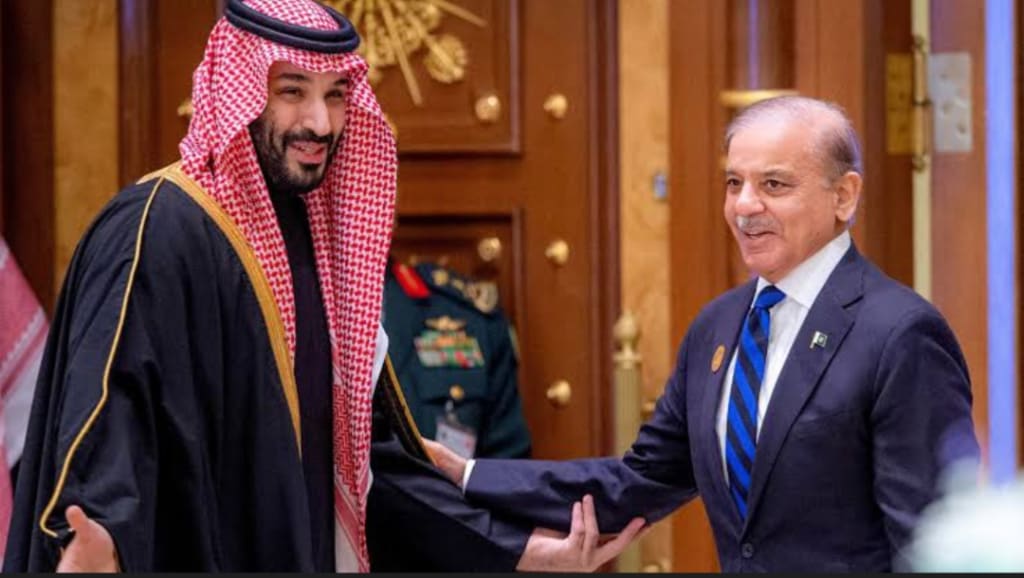
Pakistan’s expanding arms deals in the Middle East are increasingly drawing attention—not just for their economic value, but for their geopolitical implications. As Saudi Arabia and the United Arab Emirates (UAE) pursue increasingly divergent security and foreign-policy paths, Islamabad’s defense partnerships are beginning to place it uncomfortably within a quiet but growing rift between the two Gulf heavyweights. What was once a carefully balanced triangle of relations is now evolving into a far more complex strategic equation.
---
A Shifting Gulf Power Dynamic
For years, Saudi Arabia and the UAE were viewed as near-inseparable allies, coordinating closely on regional security, economic policy, and military interventions. Recently, however, differences have emerged over regional leadership, threat perceptions, and long-term strategic priorities.
Saudi Arabia remains focused on consolidating its traditional role as the political and religious leader of the Muslim world, while pursuing cautious reforms under Vision 2030. The UAE, by contrast, has adopted a more assertive, independent foreign policy—investing heavily in advanced military capabilities, forging new security partnerships, and positioning itself as a regional technology and defense hub.
This divergence has created space—and risk—for countries like Pakistan that have historically maintained close defense ties with both capitals.
---
Pakistan’s Defense Industry Enters the Gulf Spotlight
Pakistan’s growing defense exports, including combat aircraft, drones, armored vehicles, and precision munitions, have become a key pillar of its military-industrial strategy. Facing persistent economic pressure at home, Islamabad has prioritized arms sales as a source of foreign exchange, industrial growth, and diplomatic leverage.
Saudi Arabia has long been one of Pakistan’s closest defense partners, relying on Pakistani military training, advisory support, and weapons systems. The UAE, meanwhile, has emerged as a sophisticated buyer with interest in joint ventures, technology transfers, and next-generation platforms—areas where Pakistan is eager to expand.
As Pakistan signs or explores new arms agreements with both states, the optics matter. Each deal is interpreted not merely as commerce, but as alignment.
---
Why Arms Deals Are Politically Sensitive
In the Gulf context, arms procurement is rarely neutral. Defense partnerships often signal trust, strategic preference, and future cooperation in intelligence or regional contingencies.
Saudi Arabia values Pakistan as a reliable Sunni military partner, especially in missile technology, ground forces training, and deterrence support.
The UAE, meanwhile, seeks diversified suppliers and partners who can complement Western systems while offering flexibility and fewer political constraints.
As Riyadh and Abu Dhabi quietly compete for influence—from Yemen to the Horn of Africa—Pakistan’s willingness to engage both sides through arms sales risks being viewed as hedging rather than neutrality.
---
Balancing Act or Strategic Drift?
Islamabad officially maintains that its arms exports are commercial, defensive, and non-aligned. Yet critics argue that this position is becoming harder to sustain. Arms sales create long-term dependencies through training, maintenance, and upgrades—binding Pakistan into the strategic ecosystems of its clients.
If Pakistan deepens defense cooperation with the UAE in advanced systems or joint production, Saudi Arabia may perceive this as dilution of its privileged military relationship. Conversely, continued prioritization of Saudi defense needs could raise concerns in Abu Dhabi about unequal treatment or political bias.
This tension places Pakistan in a familiar but increasingly fragile position: attempting to balance competing partners without alienating either.
---
Economic Pressures Drive Strategic Choices
Pakistan’s motivation is not purely geopolitical. Arms exports offer tangible economic benefits:
Support for domestic defense manufacturing
Job creation and technological upgrading
Critical inflows of foreign currency
With limited alternatives for large-scale exports, Islamabad sees defense sales as one of the few sectors where it can compete internationally. Gulf markets—wealthy, security-focused, and politically connected—are therefore highly attractive.
However, economic necessity can sometimes push countries into strategic gray zones, where commercial gains collide with diplomatic costs.
---
Regional Implications Beyond the Gulf
Pakistan’s positioning within the Saudi-UAE rift has implications beyond the Arabian Peninsula. Other regional actors—including Iran, Turkey, and China—are closely watching how Islamabad navigates these waters.
Iran remains wary of Pakistan’s deep military ties with Gulf states, especially Saudi Arabia.
Turkey, itself competing for defense export markets, may view Pakistan’s Gulf engagements as both competition and potential collaboration.
China, Pakistan’s closest strategic partner, prefers stability among its Middle Eastern economic partners and may quietly encourage Islamabad to avoid entanglement.
Thus, Pakistan’s arms deals are not isolated transactions—they ripple across a wider regional chessboard.
---
Military Neutrality Under Strain
Historically, Pakistan has emphasized military neutrality in intra-Muslim disputes, avoiding direct involvement in conflicts like the Yemen war despite pressure from allies. Arms exports, however, blur that neutrality.
Weapons supplied today can shape battlefields tomorrow. Even if contracts include end-use assurances, perceptions matter. In a polarized Gulf environment, neutrality is judged not only by actions, but by who benefits most from strategic cooperation.
---
What Lies Ahead for Islamabad
Looking forward, Pakistan faces several strategic choices:
1. Formalize neutrality by ensuring balanced defense engagement and transparency with both Riyadh and Abu Dhabi.
2. Prioritize one partner, risking economic or diplomatic fallout with the other.
3. Diversify arms markets beyond the Gulf to reduce geopolitical exposure.
Each option carries costs. What is clear is that the status quo—quietly signing deals while avoiding political signaling—is becoming harder to maintain as Saudi-UAE competition intensifies.
---
Conclusion
Pakistan’s arms deals have moved beyond simple defense exports; they now sit at the intersection of Gulf rivalry, economic survival, and strategic identity. As Saudi Arabia and the UAE chart increasingly independent paths, Islamabad’s efforts to engage both are placing it squarely within a subtle but consequential rift.
Whether Pakistan can continue to walk this tightrope will depend on diplomatic finesse, economic diversification, and a clear articulation of its long-term regional strategy. In a Middle East defined by shifting alliances, even neutrality requires careful positioning—and arms deals, more than ever, speak louder than words.
About the Creator
Keep reading
More stories from Salaar Jamali and writers in The Swamp and other communities.
Gold Dips from Record Peak Amid Profit-Taking: Market Sees Sharp Pullback
Gold — the world’s most traded safe-haven asset — recently pulled back sharply from historic highs as investors engaged in heavy profit-taking, unwinding positions after an extended and intense rally. The recent correction reflects shifting risk sentiment, stronger dollar dynamics, and evolving macroeconomic expectations that have triggered volatility across commodities markets.
By Salaar Jamaliabout 21 hours ago in The Swamp
"UK Introduces Major Police Reform: 'British FBI' to Oversee Terrorism and Fraud Investigations"
Introduction The United Kingdom has recently announced a sweeping overhaul of its law enforcement structure, with a bold initiative aimed at tackling terrorism and fraud more effectively. As part of the reforms, a new national agency—often referred to as the ‘British FBI’—will take on the responsibility of leading investigations into these complex and high-stakes crimes. This move marks a significant shift in how the UK addresses national security threats, organized crime, and financial fraud.
By Ayesha Lashari7 days ago in The Swamp




Comments
There are no comments for this story
Be the first to respond and start the conversation.