
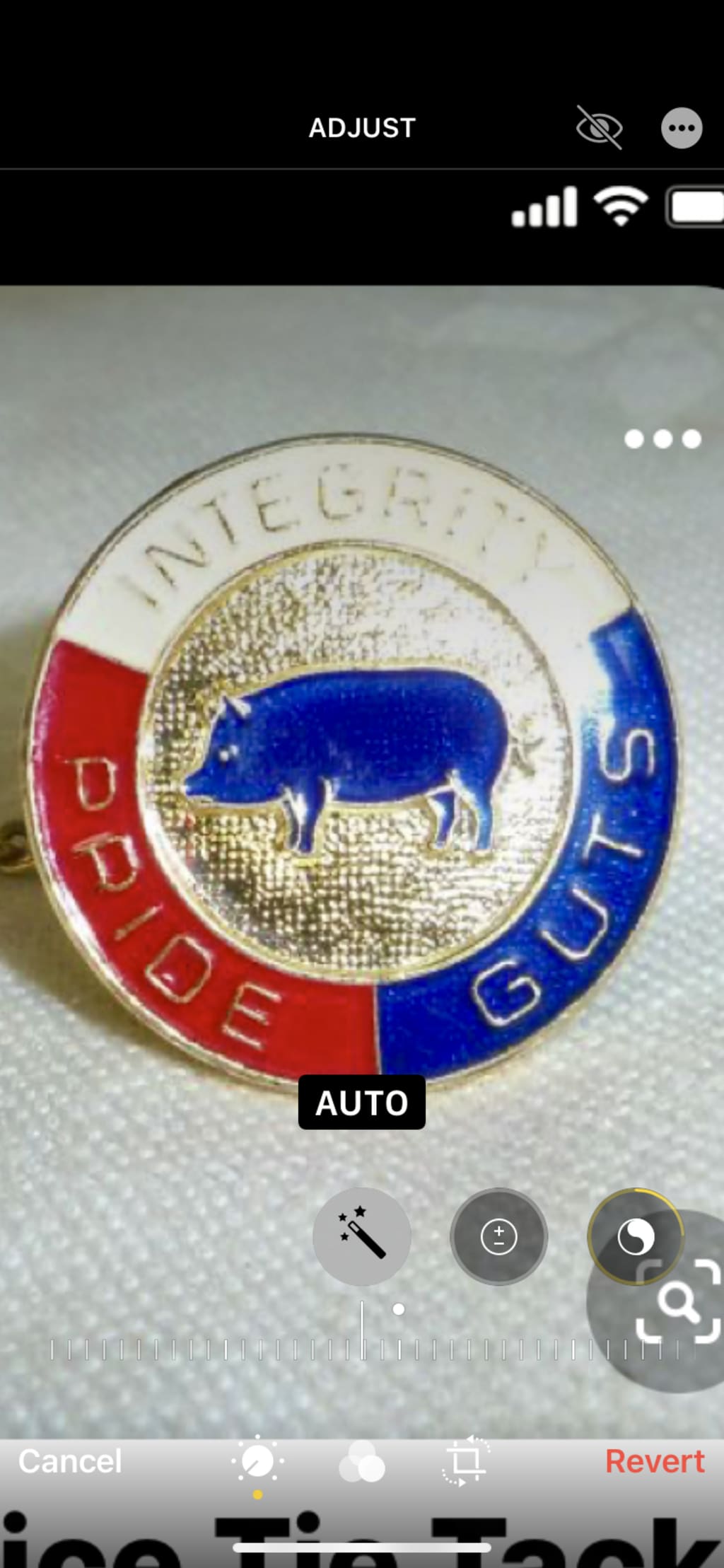
My uncle was a K9 Police Officer for 25 years starting in the late 60’s. He was a good man and an excellent officer and I thought he could walk on water, until I became a teenager and then he was “the man” and I was a “flower child” and a gigantic pain in the butt I fear.
I tried my hardest to be a radical, but I just didn’t have the heart for it and he knew it. He never laughed at me, and always was willing to discuss my views and unbeknownst to me at the time, use it as a teaching moment. He taught me to drive, then took my radio knobs for three months with the promise I could have them back as long as I didn’t kill anyone or end up driving thru the store front of the Lucky’s. (I’d almost killed him a couple of times while learning). He taught me that just because he was my uncle, I would still receive a speeding ticket, and have to pay it on my own if I thought I was a hot shot and a car was a toy to speed around in and was exempt from the rules because he was a cop. He also taught me what a face looks like when you disappoint and disrespect someone who loves you. $35.00, was a lot back then, I paid that ticket, scared he would tell my mom on me. I got one pass, he never told or talked about it again. The look, well it haunted me for along time.
He also taught me about police brutality. His views on what was going on during that period of our history (Patty Hearst, Kent State, Black Panthers, Angela Davis) were pretty standard views of a cop, until it came to police brutality and The Thin Blue Line.
The following is from the memory of a 16 year old wanna be radical who just didn’t have the heart to raise her voice, but had the good sense to listen. His words have been swirling around in my head for some time now and are just as relevant today as they were then.
The first time I called him a PIG, I didn’t get the reaction I was looking for. He said “thank you”. He smiled and said, but in the future, if you are going to insult someone, you should know what your insult means first. P.I.G stands for Pride, Integrity, and Guts. Is there any part of who I am, body and soul, that you can say that I do not represent that label? I did not.
He always felt that a Police Officer should hold himself and his fellow officers to a higher standard. The day you accepted your badge, that was what you were agreeing to. To Serve, and Protect.
Your weapon was a tool meant to enable you to do your job and protect yourself and others. Your weapon and badge was not a symbol of power or privilege. Any idiot could buy a gun.
He agreed that things as far as police brutality had to be addressed and things needed to change, but felt that there had to be a better way to bring it to the forefront than the violent protests. He felt that the place to start was with the cops and that the cops themselves were the only ones who could turn the tide of brutality. He felt until those in charge focused on changing the mentality of what The Thin Blue Line represented in the minds of the officers themselves, there wasn’t a chance in hell of curbing the brutality and racism on the streets. He was also worried about curbing the attacks on officers. He told me he believed that how he conducted himself in any interaction with a citizen determined how that person reacted to the next officer they encounter. If use of force is necessary, by all means use your training, do your job, but if you are all about knocking heads or power plays just for the fun of it, it won’t likely be you who reaps the repercussions of your actions. It will be someone else’s loved one who is attacked for nothing more than a traffic stop.
He told me that stepping over that imaginary line was a privilege where you earned respect, pride in a job well done, not a place you used to hide behind. It meant that you were willing to hold yourself to that higher standard, as well as willing to put it all on the line in service to your community. The minute, as an officer, you decide you are above the law you swore to enforce, you become a criminal. There was no middle ground. Officers who operated under that mindset and made there own rules and needed to make others believe in the “it’s us against them” mentality are a danger to the public and other officers. They feel they have the right of being judge and jury and at times executioner. The more officers that were willing to turn a blind eye were just feeding the beast. Whether it was because they also believed in the tactics of brutality or racism or didn’t want to have to deal with the reprisals of speaking up, in that moment they too became above the law and a criminal. They also became comprised. And at that point, you can never go back. Reprisals from fellow officers were harsh and at times could be deadly. They were overlooked by the brass and allowed to continue.
When you are allowing this type of environment to operate, there is very little security in thinking your fellow officers have your back. Who is the officer behind you that has a weapon? Is he a stand up guy, has he been compromised, will he decide right or wrong based on what’s best for him.
To my 16 year old mind, the bad cops were the problem, so how could a cop fix it. I thought you had to meet brutality with force.
I can see changes happening in baby steps, and no longer believe in force but have to disagree with my uncle just as I did back then as far as how the light needs to be shined on the officers that are hiding criminal behavior behind their badges. Protest and rallies need to happen. Peaceful loud voices. Not talking looting, or damage to buildings. Speaking up, sharing experiences, in your face pictures and descriptions of the damage done to another living soul and the family that loved them. However, he was right about the officers that are on the streets, or the brass that hides behind deniability, so they don’t ask. District attorneys that want a win, jail personnel.
Officers need to be reassured that their knowledge or observations will be taken seriously without blowback for reporting another officer’s behavior. Unions need to stop rescuing an officer that clearly does not deserve to be a police officer. Brass needs to stop encouraging outright lying regarding how a situation transpired. I know being a police officer is a thankless job. I know the damage it does to your soul. I’ve watched as 3 good men, friends, co-workers killed in the line of duty were buried. My uncle wasn’t cop bashing. Neither am I. I want the bad, the rot removed. Not bandaged, not excused, not sheltered.
Officers are human and make mistakes but the ones I have been seeing lately made choices. Not mistakes. Not slow reaction time. Not lack of training. They are decisions made based on the belief that they have the right to do what they feel like doing, “I got your back” from fellow officers means looking the other way and you, the public have to accept my behavior because I have a badge.
What I’m trying to say, is officers deserve our support, there are more good than bad. The good, honest officers also deserve our promise to help shine a light on the bad. It’s in everyone’s best interest to help root out those who put citizens and fellow officers well being at risk. Speaking up isn’t easy. You risk your job, your well being. Support isn’t just about money. It’s can come from understanding their stress, sacrifices and I firmly believe that the more we support shining that light on the bad, the better and easier it will be for those who want to turn the tide on the brutality and racism to do so.
My uncle was not perfect. There are 4 wife’s out there who will attest to that. He made mistakes like us all and was completely wrong about Patty Hearst, but he really did try to be a good man.
It may have taken a few years to understand that why and how officers themselves have the best chance to turn the tide of racism and brutality but at least I was listening.
About the Creator
Keep reading
More stories from writers in The Swamp and other communities.
The Finest in the World: Why the US is Buying Icebreakers from Finland
In a world increasingly defined by shifting geopolitical landscapes and extreme climates, the United States is turning to Finland for a fleet of icebreakers, widely regarded as the finest in the world. This strategic move underscores both the rising importance of the Arctic region and the growing need for advanced maritime technology capable of navigating the icy waters at the top of the globe. Finland’s Icebreaking Legacy Finland has long been a global leader in icebreaker technology. With harsh winters and a northern coastline that stretches into the Arctic Circle, the country has mastered the art of building vessels that can navigate through thick sea ice efficiently and safely. Finnish icebreakers are renowned not just for their raw power, but also for their precision, durability, and technological sophistication. They can cut through ice up to several meters thick, maintain stability in freezing conditions, and even support supply missions in the most remote and hostile environments. This expertise has made Finnish icebreakers a gold standard, sought after by nations that require reliable access to icy waters. While the United States has historically relied on a small fleet of icebreakers, many of these vessels are aging, and the current fleet cannot meet the increasing demands of Arctic operations. By partnering with Finland, the US is gaining access to vessels designed with decades of experience, cutting-edge engineering, and proven operational performance. Strategic Importance of the Arctic The Arctic has emerged as a region of growing strategic importance. Climate change has led to melting ice, opening new maritime routes that were previously impassable for most of the year. This has not only created opportunities for trade but also heightened the need for territorial defense, environmental monitoring, and search-and-rescue operations. The US sees its icebreaker fleet as a key asset in maintaining influence in this rapidly changing region. Having Finnish-built icebreakers allows the United States to expand its operational capabilities. These vessels can escort commercial ships through icy waters, conduct scientific research, and respond to emergencies in the Arctic. The decision to procure icebreakers from Finland is therefore as much about strategic positioning as it is about maritime capability. Technological Edge Finnish icebreakers are equipped with some of the most advanced maritime technology in the world. From hull designs that minimize ice resistance to propulsion systems that combine efficiency with immense power, these vessels are built to perform in conditions that would ground most ships. Many of them also include sophisticated navigation and communication systems, enabling crews to operate safely in regions where conventional navigation is challenging due to ice coverage and limited satellite connectivity. The US will benefit from these technologies, particularly as Arctic operations require not only strength but also precision. Whether escorting supply ships, conducting military exercises, or supporting scientific missions, Finnish icebreakers offer reliability that aging US vessels cannot match. Economic and Diplomatic Considerations Beyond technical superiority, the procurement of icebreakers from Finland also reflects broader economic and diplomatic considerations. By engaging Finnish shipbuilders, the US strengthens its ties with a country that is strategically positioned between the North Atlantic and the Arctic. This cooperation could pave the way for future partnerships in maritime technology, Arctic research, and regional security initiatives. Moreover, the deal highlights the United States’ willingness to invest in specialized, high-quality vessels rather than attempting to build everything domestically. While domestic shipbuilding has its merits, Finland’s decades of expertise provide a shortcut to operational readiness, ensuring that the US maintains a competitive edge in Arctic waters without the delays and costs associated with developing such vessels from scratch. Looking Ahead As the Arctic continues to transform, the importance of icebreakers will only increase. With Finland’s cutting-edge technology at their disposal, the United States is positioning itself to navigate both the literal and geopolitical ice of the north. These vessels are more than ships; they are symbols of preparedness, technological prowess, and strategic foresight. In a region where every meter of ice matters and every decision has global ramifications, having the finest icebreakers in the world is no longer a luxury—it is a necessity. By looking to Finland, the US is ensuring that it remains capable, competitive, and ready for the challenges and opportunities of the Arctic.
By Fiaz Ahmed Brohi4 days ago in The Swamp
The Climax of Fire
Fire has always been a symbol of transformation. From the first controlled flames used by early humans to modern industrial furnaces and raging wildfires, fire represents creation and destruction, warmth and devastation, survival and loss. “The Climax of Fire” refers to that pivotal moment when flames reach their peak—when energy, intensity, and consequence converge.
By Aarif Lashari7 days ago in The Swamp


Comments
There are no comments for this story
Be the first to respond and start the conversation.