
Owners Plan to Close a Colorado Coal Plant — But Federal Officials Push Back
A proposed coal plant shutdown in Colorado sparks a clash between utility economics and federal efforts to preserve grid reliability amid America’s energy transition.
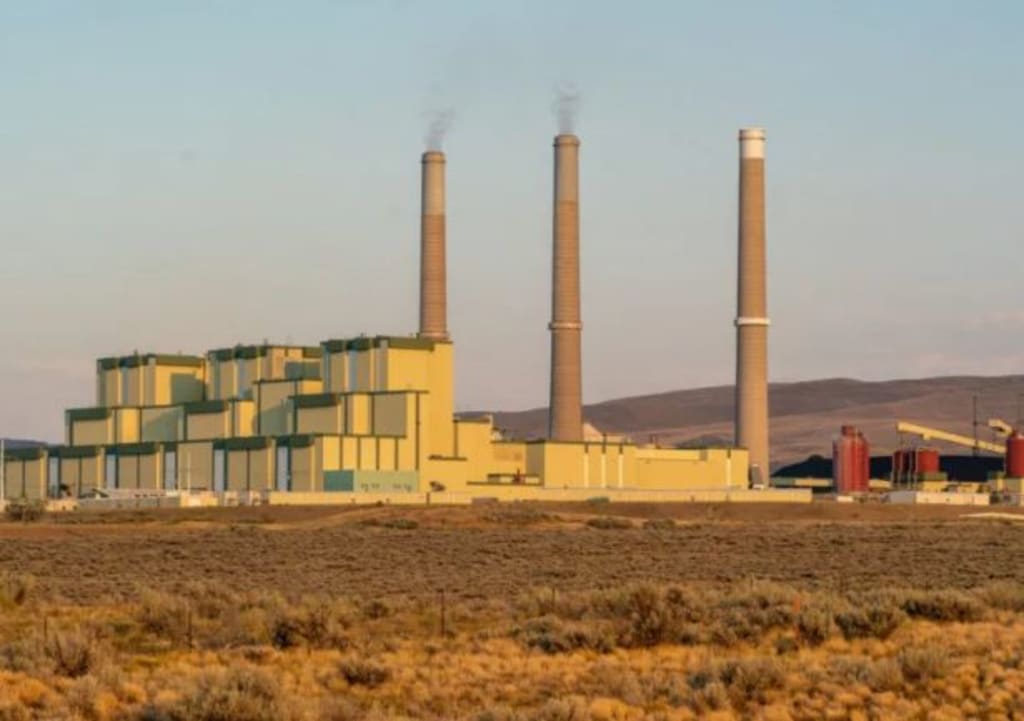
A major conflict over the future of coal energy is unfolding in the western United States as the owners of a coal-fired power plant in Colorado move toward shutting it down — only to face resistance from federal officials. The dispute underscores the complicated intersection of economics, environmental policy, and political priorities shaping America’s energy transition.
Plant operators argue that declining demand, rising maintenance costs, and the shift toward cleaner energy sources make closure the most practical path. However, federal authorities under Donald Trump’s administration signaled that preserving certain coal facilities could be necessary for grid reliability and energy security.
The standoff illustrates how the fate of a single power plant can reflect broader national debates about the future of fossil fuels.
Why Owners Want the Plant Closed
Across the United States, many coal plants face economic pressure. Renewable energy costs have dropped dramatically, natural gas remains competitive, and aging infrastructure requires expensive upgrades.
Operators of the Colorado facility say continuing operations would require significant investment without clear long-term profitability. Utilities are increasingly accountable to customers and regulators to keep energy affordable while reducing emissions.
For many companies, retirement of older coal plants has become a financial decision rather than a purely environmental one. Investors also play a role, with growing emphasis on sustainability influencing corporate strategies.
Closing the plant would align with a wider trend: utilities replacing coal generation with wind, solar, battery storage, and flexible gas capacity.
Federal Pushback and Reliability Concerns
Federal officials opposing the shutdown argue that coal still provides reliable “baseload” power — electricity that can run continuously regardless of weather conditions. Supporters of keeping the plant open say sudden retirements could strain regional grids, particularly during extreme weather or peak demand.
Agencies such as the U.S. Department of Energy have at times explored policies aimed at supporting traditional power sources, including coal and nuclear, citing resilience concerns.
The argument centers on whether market forces alone should determine plant closures or whether government intervention is justified to maintain a diverse energy mix. Advocates of intervention warn that overreliance on intermittent renewables could create vulnerabilities if backup systems are insufficient.
The Environmental Debate
Environmental groups strongly favor retiring coal plants, pointing to their contribution to greenhouse gas emissions and air pollution. Coal remains one of the most carbon-intensive energy sources, and phasing it out is widely seen as essential to meeting climate goals.
Regulatory oversight from agencies like the Environmental Protection Agency has tightened emission standards over time, increasing compliance costs for older facilities.
Supporters of closure argue that keeping aging coal plants online delays progress toward cleaner energy and exposes communities to continued pollution. Many states, including Colorado, have adopted policies encouraging utilities to accelerate the transition.
However, opponents caution that rapid change without adequate planning could lead to higher electricity prices or reliability challenges.
Local Economic Impact
Beyond national politics, the decision carries real consequences for local communities. Coal plants often provide stable jobs, tax revenue, and economic activity in rural areas.
Workers face uncertainty when facilities close, prompting calls for “just transition” programs that support retraining, economic diversification, and infrastructure investment. Local leaders frequently find themselves balancing environmental priorities with employment concerns.
Some regions have successfully redeveloped former coal sites into renewable energy hubs or industrial parks. Others struggle with long-term economic adjustment, highlighting the uneven effects of the energy transition.
The Colorado dispute reflects these realities: policy decisions made at national levels ripple through towns that depend on energy infrastructure.
Market Forces vs. Political Strategy
At the heart of the conflict is a fundamental question: who should decide when a power plant closes — the market, regulators, or political leaders?
Utilities argue that economic viability should drive decisions. If a plant is too expensive to operate compared with alternatives, customers ultimately bear the cost.
Political leaders, meanwhile, may view energy infrastructure through a strategic lens that includes national security, regional resilience, and industrial policy. Coal has historically played a central role in U.S. power generation, making its decline politically sensitive.
This tension has shaped energy debates for years and is likely to persist as the country navigates competing priorities.
The Broader Energy Transition
The dispute in Colorado is part of a nationwide shift away from coal. Over the past decade, dozens of coal plants have retired as cleaner technologies gained momentum. Renewable energy now accounts for a growing share of new power capacity.
Yet the transition is not uniform. Some regions move quickly, while others maintain coal due to economic structure, grid needs, or political support.
Energy experts emphasize that transitions of this scale take time. Infrastructure planning, transmission upgrades, and storage development all influence how quickly coal can be replaced without disruption.
The Colorado case highlights how each closure decision becomes a test of the broader transition strategy.
What Happens Next
The future of the plant may depend on regulatory rulings, negotiations between utilities and federal agencies, and regional grid assessments. Compromise solutions — such as phased retirement, reduced operating schedules, or conversion to alternative fuels — are sometimes used to balance competing goals.
Stakeholders including workers, environmental groups, policymakers, and customers will all play a role in shaping the outcome. Public hearings and regulatory reviews often determine whether closures proceed as planned.
Regardless of the final decision, the dispute demonstrates how energy policy increasingly operates at the intersection of economics, technology, and politics.
A Symbol of a Larger Debate
The battle over one Colorado coal plant reflects a national crossroads. The United States is moving toward cleaner energy, but questions remain about speed, fairness, and reliability.
Supporters of keeping coal facilities open see them as insurance against uncertainty. Advocates for closure view them as obstacles to progress. Both perspectives highlight legitimate concerns, making compromise difficult.
As energy systems evolve, conflicts like this will likely become more common. Each decision about a single plant contributes to defining the country’s long-term energy identity.
In that sense, the Colorado dispute is more than a local issue — it is a snapshot of how America is negotiating the balance between past infrastructure and future ambitions
About the Creator
A Gathering of Evil Bosses
“I’m the queen of chin jutting while I smooth my hair, attacking, insulting, and deflecting to protect my appointer.” “Oh, please, Blondi, my hair is curled, highlighted, and longer than yours. I feature television commercials telling immigrants that we will give them a free plane ride home, and if they voluntarily turn themselves in, they will be allowed to legally apply for re-entry. It runs everywhere, and I look good in it! You can’t compete because of your blond hair. Mine is nicer, and my lips are prettier than yours.”
By Andrea Corwin 5 days ago in The Swamp




Comments
There are no comments for this story
Be the first to respond and start the conversation.