
Oil Tanker Fleeing the Coast Guard Now Listed in Russian Ship Database
A Maritime Mystery Raises Questions About Sanctions, Ship Registries, and Global Security


In an era of heightened geopolitical tension, sanctions enforcement, and maritime surveillance, the world’s oceans have become a stage for complex power plays. One such episode that has recently drawn international attention involves an oil tanker that reportedly fled a coast guard operation and was later listed in a Russian ship database. This unusual sequence of events has sparked questions about maritime law, sanctions evasion, and the shadowy networks that operate across global shipping routes.
A Dramatic Encounter at Sea
According to reports, the oil tanker was initially spotted behaving suspiciously in waters monitored by a coast guard force. When authorities attempted to approach the vessel for inspection, the tanker allegedly altered its course and fled, triggering a pursuit. Such incidents are not entirely uncommon, especially in regions where sanctions enforcement, smuggling, or illegal oil transfers are suspected. However, what sets this case apart is what happened next.
After the tanker vanished from active pursuit, maritime analysts noticed that the vessel later appeared in a Russian ship database. This development immediately raised eyebrows among international observers, as ship registries are critical tools for identifying ownership, flag state, and legal responsibility under international maritime law.
Why Ship Databases Matter
Ship databases and registries play a vital role in global shipping. Every commercial vessel is typically registered under a flag state, which determines the laws it must follow and which country holds jurisdiction over it. Being listed in a database is not merely a clerical detail; it shapes how a ship is tracked, insured, inspected, and held accountable.
The appearance of the tanker in a Russian ship database has fueled speculation about whether the vessel changed its registration, ownership structure, or operational cover. In recent years, such changes have often been associated with efforts to bypass sanctions, obscure oil origins, or continue trade under restrictive international conditions.
Sanctions, Oil, and the “Shadow Fleet”
The global oil trade has become increasingly politicized, particularly following major conflicts and the imposition of sanctions on energy-exporting nations. To adapt, a so-called “shadow fleet” of tankers has emerged—ships that frequently change names, flags, and ownership to avoid detection and restrictions.
Analysts suggest that the tanker’s sudden appearance in a Russian database could indicate an attempt to integrate into this parallel system. These vessels often operate with limited transparency, turning off tracking systems, engaging in ship-to-ship transfers, and navigating legal grey zones. While not all such actions are illegal, they raise concerns about environmental risks, safety standards, and financial transparency.
Russia’s Role and Global Reactions
Russia remains a major player in global energy markets, despite sanctions and political pressure. The inclusion of the tanker in a Russian ship database does not automatically prove wrongdoing, but it does highlight how national registries can become part of broader geopolitical narratives.
Western governments and maritime watchdogs have increasingly focused on monitoring shipping data, satellite imagery, and registry changes to enforce sanctions effectively. Incidents like this one reinforce calls for stronger international cooperation, standardized reporting, and tighter oversight of ship registries worldwide.
Legal and Environmental Concerns
Beyond politics, there are practical risks involved. Tankers operating outside transparent regulatory frameworks may not adhere to strict safety or environmental standards. Oil spills, collisions, and mechanical failures at sea can have devastating consequences, especially if responsibility is difficult to establish due to unclear ownership or flag status.
International maritime law relies heavily on clarity—knowing who owns a ship, who insures it, and which country enforces rules. When vessels appear to “disappear” and re-emerge under different registries, that clarity erodes, increasing risks for coastal states and global trade alike.
A Sign of a Changing Maritime Landscape
This incident is emblematic of a broader shift in how global shipping operates under pressure. As sanctions regimes expand and enforcement tightens, more vessels may attempt to navigate alternative paths through regulatory systems. For governments, this presents a challenge: how to maintain open trade routes while preventing illicit activity and ensuring safety at sea.
For the public, stories like this offer a glimpse into the hidden mechanics of global commerce—where oil tankers, databases, and coast guards intersect with geopolitics and power.
Conclusion
The case of the oil tanker fleeing the coast guard and later appearing in a Russian ship database is more than a maritime curiosity. It reflects the growing complexity of global shipping in a divided world, where data, jurisdiction, and accountability are constantly in flux. As nations grapple with sanctions, security, and energy needs, the oceans remain a critical—and contested—space where these struggles quietly unfold.
About the Creator
Fiaz Ahmed Brohi
I am a passionate writer with a love for exploring and creating content on trending topics. Always curious, always sharing stories that engage and inspire.
Keep reading
More stories from Fiaz Ahmed Brohi and writers in The Swamp and other communities.
"Zelensky says peace deal is 90% ready in New Year address"
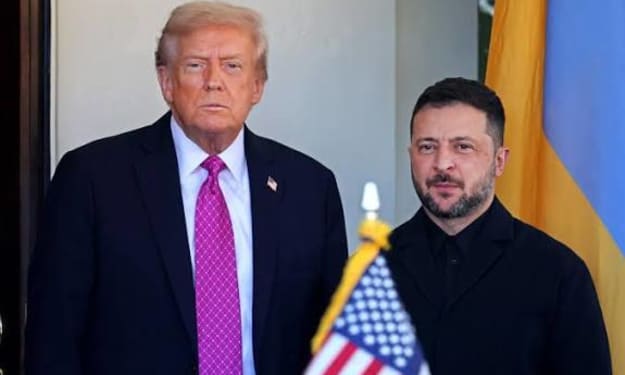
As the world stepped into a new year marked by uncertainty and ongoing conflicts, Ukrainian President Volodymyr Zelensky delivered an address that stood out for its cautious optimism. In his New Year speech, Zelensky claimed that a potential peace deal to end the war is “90% ready,” signaling what could be the most significant diplomatic development since the conflict began. His words immediately drew global attention, raising hopes while also prompting questions about what peace might realistically look like for Ukraine and the wider region. Zelensky’s statement comes after years of relentless fighting that has reshaped Ukraine’s cities, economy, and society. The war has caused immense human suffering, displaced millions, and destabilized global energy and food markets. Against this backdrop, even a hint of progress toward peace carries enormous weight. By declaring that negotiations are nearly complete, Zelensky appeared to send a message not only to Ukrainians but also to international partners who have supported the country militarily, financially, and diplomatically. In his address, Zelensky emphasized that peace would not mean surrender or forgetting the sacrifices made by Ukrainian soldiers and civilians. Instead, he framed the potential deal as one rooted in sovereignty, security, and long-term stability. According to him, Ukraine’s core red lines remain intact, including territorial integrity and guarantees that future aggression will be prevented. This framing suggests that while compromises may be part of diplomacy, Ukraine is determined to protect its fundamental national interests. The claim that a deal is “90% ready” also highlights how complex and fragile peace negotiations can be. The remaining 10%, though numerically small, often represents the most contentious issues—such as territorial control, security guarantees, reconstruction responsibilities, and accountability for war crimes. History shows that many peace efforts fail at the final stage, when trust is lowest and political pressure is highest. Zelensky’s words therefore balance hope with realism, acknowledging progress without declaring victory prematurely. International reactions to the statement have been mixed but attentive. Allies in Europe and beyond welcomed the hopeful tone, while stressing that any agreement must be just and sustainable. Many governments have reiterated that peace should not reward aggression or set a dangerous precedent for future conflicts. At the same time, there is growing fatigue among global audiences, who have watched the war drag on with no clear end in sight. Zelensky’s message may serve to renew diplomatic energy at a moment when momentum is badly needed. Domestically, the New Year address carried emotional significance. For Ukrainians who have lived through air raids, blackouts, and personal loss, the possibility of peace offers a rare moment of relief. Zelensky used his speech to honor fallen soldiers, thank frontline workers, and acknowledge the resilience of ordinary citizens. By tying the peace process to national unity and sacrifice, he sought to reassure the public that their struggles have not been in vain. However, skepticism remains. Critics argue that peace announcements can sometimes be strategic, aimed at boosting morale or influencing international opinion rather than reflecting concrete progress. Others warn that even if a deal is close, its implementation could be fraught with challenges. Ceasefire violations, political opposition, and shifting military realities could all derail the process. Zelensky himself hinted at these risks, noting that peace is not a single document but a long-term commitment requiring vigilance. The broader implications of a near-ready peace deal extend beyond Ukraine. A resolution could reshape European security, influence global alliances, and affect energy and economic stability worldwide. For many countries, the war has become a symbol of the struggle between international law and the use of force. How it ends will likely shape global politics for years to come. As the new year unfolds, Zelensky’s words stand as both a promise and a test. They offer hope to a war-weary nation and a watching world, while underscoring the hard work still required to turn diplomacy into lasting peace. Whether the final 10% can be resolved will determine if this New Year address is remembered as a turning point—or simply another moment of cautious optimism in a long and painful conflict.
By Fiaz Ahmed Brohi2 months ago in The Swamp
The Forsyth House Fire
Since 1851, Forsyth House has stood on the corner of Union Street and Gordon Street in the heart of Glasgow. Its iconic, or was... because on Sunday 8th of March, 2026, a fire broke out in a small, seemingly un-named shop in the building and tore all that history down. As I write, the rubble is still unsettled and the street is still blocked off. Central Station is quiet on the upper level, and around 30 small businesses have quite literally gone up in smoke.
By S. A. Crawford3 days ago in The Swamp
France Is Sending a Large Naval Force to the Middle East
France has announced the deployment of a large naval force to the Middle East, signaling a heightened commitment to security and stability in a region facing escalating conflicts and maritime challenges. The move comes amid rising tensions involving Iran, Israel, and other Gulf states, with global powers closely monitoring developments in the region. The French naval task force will include a combination of frigates, destroyers, supply vessels, and advanced submarines capable of extended operations. Officials emphasize that the deployment is designed to support maritime security, safeguard shipping lanes, and participate in joint exercises with allied forces. The presence of these vessels in the strategic waters of the Persian Gulf and the Gulf of Oman reflects France’s broader strategic interests in the region. Defense analysts note that this deployment marks one of the most significant French naval operations in the Middle East in recent years. France has maintained a steady maritime presence in international waters to protect global trade routes, particularly through the Strait of Hormuz, a critical chokepoint for oil and gas shipments. The new task force demonstrates Paris’ ability to project power and respond rapidly to crises in distant regions. French officials have framed the mission as a stabilizing measure rather than a provocative move. “Our objective is to ensure the safety of international waters and support our allies while avoiding escalation,” said Admiral Pierre Vandier, who oversees France’s maritime operations. “We remain committed to dialogue and cooperation, but we will protect freedom of navigation and the security of critical maritime routes.” The deployment is expected to include collaborative operations with the United States, the United Kingdom, and other NATO partners already operating in the region. Exercises will focus on surveillance, anti-piracy measures, and coordinated maritime security operations. Analysts highlight that such multinational coordination enhances situational awareness and reinforces deterrence against potential adversaries. The decision to deploy a large force comes amid increasing incidents of drone and missile attacks in the region. Recent months have seen repeated strikes on shipping vessels, oil facilities, and military infrastructure, raising concerns about the safety of commercial shipping and regional security. French officials cite these developments as part of the rationale for strengthening their naval presence. In addition to security operations, France intends to use the deployment to provide humanitarian assistance and logistical support where necessary. Naval vessels in the region are equipped to deliver emergency aid, medical assistance, and disaster relief, reflecting a multifaceted approach to crisis response. Such operations are particularly relevant in the Gulf, where conflict and environmental hazards can threaten both civilian populations and vital infrastructure. The deployment also carries symbolic weight, signaling France’s ongoing engagement in Middle Eastern affairs. French leaders have consistently emphasized the importance of balancing diplomatic efforts with credible defense capabilities. By sending a substantial naval force, Paris underscores its role as a global power willing to act independently while coordinating with allies. International reactions to the announcement have been mixed. Some regional actors view the deployment as reassurance that key maritime routes will remain secure, while others perceive it as a potential escalation of military presence in an already tense environment. Analysts caution that maintaining transparency, communication, and coordination with regional partners will be essential to prevent misunderstandings and inadvertent clashes. French naval officials have stressed that the force will operate under international law, respecting territorial waters while ensuring the protection of commercial and civilian vessels. They also indicate that missions will be flexible, allowing the task force to respond quickly to emerging threats or humanitarian needs. Observers note that France’s decision reflects a broader trend of European powers taking a more active role in global security. With rising tensions in the Middle East, European nations are increasingly deploying military assets to protect strategic interests, support allies, and demonstrate the capability to act independently of U.S. forces when necessary. As the French task force sails toward the Middle East, defense and diplomatic communities are closely monitoring its movements. The deployment represents a combination of deterrence, humanitarian readiness, and strategic signaling, emphasizing France’s commitment to regional security and its capability to project power in distant theaters of operation.
By Fiaz Ahmed 7 days ago in The Swamp


Comments
There are no comments for this story
Be the first to respond and start the conversation.