
Nvidia Suppliers Halt Work After China Blocks H200 Chip Shipments
How geopolitics, supply chain pressure, and the AI chip war forced Nvidia’s partners to pause production

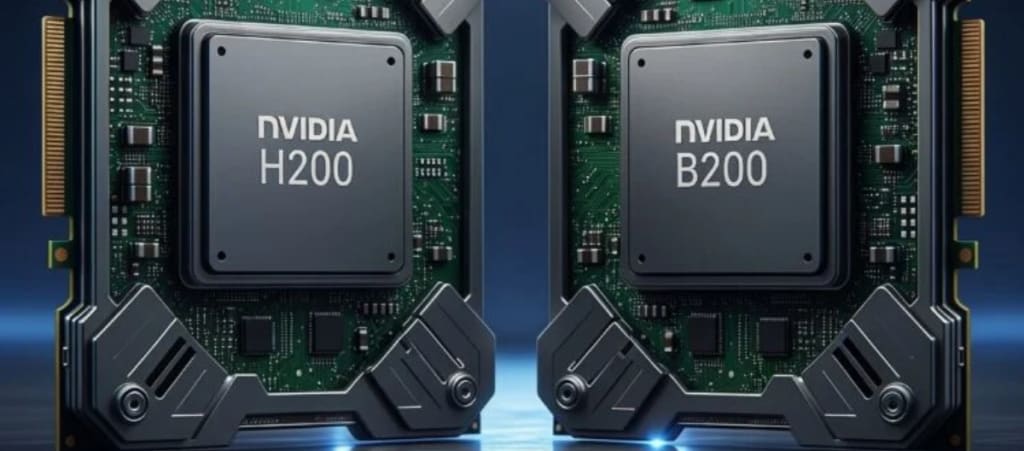
The global semiconductor industry is once again caught in the crossfire of geopolitics and technology. This time, the spotlight is on Nvidia’s H200 artificial intelligence chip, as reports confirm that several Nvidia suppliers have halted production after China blocked shipments of the high-performance processor at its borders.
What may seem like a routine customs issue is actually far more significant. The decision has disrupted supply chains, unsettled investors, and raised fresh concerns about the future of AI development amid escalating U.S.–China tech tensions.
So what exactly happened, and why does it matter so much?
What Triggered the Sudden Halt?
According to multiple reports, Chinese customs authorities recently informed logistics agents that Nvidia’s H200 chips would not be allowed into the country. This instruction came quietly, without a public policy announcement, but its effects were immediate.
Suppliers responsible for producing specialized components used exclusively in the H200 chip responded by pausing operations. These parts are highly customized and cannot easily be repurposed for other products, meaning continued production would risk piling up inventory that cannot be sold or shipped.
For suppliers already operating on tight margins, stopping work was the safest financial option—even though it came at a significant cost.
Why the Nvidia H200 Chip Is So Important
The H200 chip is one of Nvidia’s most advanced AI processors, designed specifically for heavy-duty workloads such as training large language models, data-center AI operations, and advanced cloud computing tasks.
It builds on Nvidia’s earlier AI chips and delivers improved memory performance and processing speed, making it especially attractive to companies working at the cutting edge of artificial intelligence.
China has been a major market for Nvidia’s AI hardware. Demand for the H200 reportedly surged among Chinese tech giants, research institutions, and cloud service providers eager to stay competitive in the global AI race. Some estimates suggest Chinese orders reached well over one million units, far exceeding initial supply expectations.
That demand is exactly why the shipment block has sent shockwaves through the industry.
The Role of U.S. Export Controls
To understand the bigger picture, it’s important to look at U.S. export restrictions on advanced semiconductors.
Earlier this year, U.S. authorities allowed Nvidia to sell the H200 to China under strict licensing conditions. These included safeguards to prevent military use, third-party verification requirements, and limits on shipment volumes. While the approval was narrower than Nvidia had hoped for, it still opened the door for legal exports.
However, China’s decision to block the chips suggests that U.S. approval alone is no longer enough. Beijing appears to be asserting its own strategic priorities, regardless of Washington’s licensing decisions.
Why China May Be Blocking the Chips
China has not issued an official explanation, but several motivations are widely discussed:
1. Reducing Dependence on Foreign AI Hardware
China has been investing heavily in domestic semiconductor development. Limiting access to advanced foreign chips could push companies to adopt homegrown alternatives faster.
2. Strategic Leverage
Advanced AI chips are now viewed as strategic assets. Controlling their flow gives governments leverage in broader trade and diplomatic negotiations.
3. National Security Concerns
Even with export safeguards in place, China may be wary of relying on U.S.-designed technology for critical infrastructure and AI systems.
Whatever the reason, the message is clear: AI hardware is no longer just a commercial product—it’s a political tool.
Impact on Nvidia’s Supply Chain
For Nvidia’s suppliers, the fallout has been immediate and painful.
Many of these companies manufacture chip packaging, substrates, and printed circuit boards specifically designed for the H200. These components have little value outside Nvidia’s AI ecosystem, making them difficult to sell elsewhere.
By halting production, suppliers are trying to avoid deeper losses—but the pause also highlights how vulnerable global supply chains have become to sudden regulatory decisions.
This is not the first time Nvidia has faced such disruption. In the past, China-specific chips designed to comply with export rules were also shelved after regulatory uncertainty made them commercially unviable.
Market Reactions and Investor Concerns
News of the production halt has unsettled investors, raising concerns about Nvidia’s revenue projections and long-term China strategy.
China represents a massive portion of global AI demand, and losing or delaying access to that market could force Nvidia to:
Redirect inventory to other regions
Adjust pricing strategies
Slow future capacity expansion
Reevaluate product designs to meet shifting regulations
While Nvidia remains dominant in AI chips globally, repeated disruptions could give competitors—both Western and Chinese—an opportunity to gain ground.
What This Means for China’s Tech Giants
For Chinese companies, the shipment block creates new challenges.
Major firms such as Alibaba, Tencent, and ByteDance rely heavily on advanced AI hardware to train models, power cloud services, and develop consumer applications. Without access to the H200, these companies may have to:
Rely on older Nvidia chips
Explore alternative suppliers
Accelerate development of domestic AI processors
In the short term, this could slow some AI projects. In the long term, it may strengthen China’s push for technological self-sufficiency.
A Bigger Signal in the Global AI Race
The Nvidia H200 situation is not an isolated incident—it’s a sign of where the world is headed.
Artificial intelligence has become a strategic priority, and the chips that power it are now treated like critical infrastructure. Governments are increasingly willing to intervene, restrict, or block access in pursuit of national goals.
As a result, companies operating in this space must now navigate not just market forces, but geopolitical risk at every stage of production and distribution.
What Happens Next?
At this stage, it’s unclear whether China’s block is temporary or the beginning of a longer-term policy shift. Much will depend on behind-the-scenes negotiations, future export rules, and how aggressively China pushes domestic alternatives.
One thing is certain: the pause in Nvidia’s H200 supply chain underscores a new reality—the future of AI will be shaped as much by politics as by innovation.
And for companies like Nvidia, adaptability may be just as important as technological leadership.
About the Creator
Muhammad Hassan
Muhammad Hassan | Content writer with 2 years of experience crafting engaging articles on world news, current affairs, and trending topics. I simplify complex stories to keep readers informed and connected.
Keep reading
More stories from Muhammad Hassan and writers in The Swamp and other communities.
“Gaza Is Our Show”: U.S. Pushes Its Plan Over Netanyahu's Objections
The long-standing conflict in Gaza has entered a new and tense chapter. Recent reports indicate that the United States is pushing its own plan for Gaza, despite objections from Israeli Prime Minister Benjamin Netanyahu. The development underscores the complex dynamics between the U.S. and Israel, two countries often seen as close allies, and highlights the challenges of diplomacy in a region marked by decades of conflict, political fragmentation, and humanitarian crises. The phrase “Gaza is our show,” reportedly used by senior U.S. officials, reflects Washington’s determination to assert leadership in shaping the future of Gaza, even when it means overriding the preferences of Netanyahu and his government. What the U.S. Plan Entails Details of the U.S. strategy remain somewhat opaque, but insiders suggest the plan focuses on stabilization, humanitarian aid, and a long-term political framework in Gaza. The goals appear to be: Containing Violence: Reducing rocket attacks, militant activity, and clashes along the Gaza-Israel border. Humanitarian Support: Expanding aid access to Gaza’s population, including food, medical care, and infrastructure rebuilding. Political Engagement: Encouraging a framework for governance that limits Hamas’s influence while supporting civil institutions. Regional Coordination: Working with Egypt, Qatar, and other stakeholders to implement policies on the ground. U.S. officials have emphasized that their approach is not aimed at undermining Israel’s security, but rather at creating conditions that reduce the risk of escalating conflict while promoting long-term stability. Netanyahu’s Objections Israeli Prime Minister Benjamin Netanyahu has reportedly pushed back against Washington’s plan, citing concerns over national security. Key points of objection include: Risk to Israeli Security: Netanyahu’s government argues that loosening restrictions or empowering certain factions in Gaza could embolden Hamas and other militant groups. Sovereignty Issues: There is a sense in Israel that foreign intervention in Gaza management could compromise Israel’s strategic control over its borders. Timing and Approach: Netanyahu believes that some elements of the U.S. plan may be premature or misaligned with Israel’s on-the-ground intelligence. These disagreements highlight the delicate balance between U.S. diplomatic ambitions and Israel’s security priorities, a tension that has existed for decades but is now playing out more publicly. Why Washington Is Asserting Its Role The U.S. push reflects a broader strategy in the Middle East: asserting diplomatic leadership while preventing regional instability from escalating into broader conflict. Several factors motivate this approach: Humanitarian Imperative: Gaza faces acute humanitarian challenges, including water scarcity, electricity shortages, and medical crises. U.S. policymakers argue that proactive engagement can prevent further suffering. Geopolitical Signaling: By asserting control over the plan, Washington demonstrates its influence in the region to allies and rivals alike. Preventing Escalation: With tensions in the Middle East already high, the U.S. aims to manage the situation to avoid broader conflicts that could draw in multiple nations. Senior U.S. officials reportedly view the situation as a “window of opportunity” to implement reforms and stabilization measures before violence spirals out of control. Regional and International Implications The U.S.-Israel tension over Gaza has ripple effects across the region. Several dynamics are worth noting: Egypt and Qatar: Both countries play critical roles in mediating between Israel and Hamas. U.S. involvement may bolster or complicate their efforts, depending on coordination. Palestinian Authority (PA): The PA, which governs parts of the West Bank, has limited influence in Gaza but remains a key stakeholder in U.S. and Israeli calculations. Other Regional Players: Countries like Iran, Turkey, and Saudi Arabia are closely monitoring developments, as shifts in Gaza governance could alter regional alliances and proxy dynamics. Internationally, Washington’s assertive stance signals to the global community that it seeks to shape Gaza’s future rather than leaving it entirely to local actors—a move that may attract both support and criticism. The Humanitarian Angle Beyond politics, the situation in Gaza has a profound human impact. The U.N. reports that the Gaza Strip faces significant challenges: Over 2 million residents live under extreme conditions. Access to clean water and electricity is intermittent. Health facilities are overstretched, particularly amid conflicts and blockades. The U.S. plan reportedly emphasizes increasing humanitarian aid and infrastructure support, signaling that Washington recognizes the urgency of addressing civilian needs alongside political objectives. Risks and Challenges Implementing the U.S. plan is not without obstacles. Key challenges include: Hamas Resistance: The governing faction in Gaza may resist measures perceived as undermining their authority. Israeli Security Concerns: Any perceived weakening of Israel’s control over Gaza could heighten tension and trigger clashes. Regional Skepticism: Neighboring countries may view U.S. intervention as self-serving or biased. Domestic Politics: In both the U.S. and Israel, political divisions may complicate policy implementation. These risks mean that the plan’s success hinges on careful diplomacy, clear communication, and the ability to balance security with humanitarian and political objectives. Why This Matters The U.S.-Israel tension over Gaza reflects broader patterns in Middle East policy: Shifting U.S. Influence: Washington is demonstrating that it still has a central role in mediating regional conflicts, even as local actors push back. Complex Diplomacy: The incident illustrates how humanitarian, security, and political concerns intersect in conflict zones. Future of Gaza: How this plan is implemented could influence Gaza’s governance, the balance of power among Palestinian factions, and long-term stability in the region. For observers, the unfolding situation is a reminder that even close allies like the U.S. and Israel can diverge sharply on strategy, and that civilian populations are often caught in the middle of these disputes. Final Thoughts The phrase “Gaza is our show” underscores the United States’ determination to take the lead in shaping Gaza’s future, even amid objections from Netanyahu. While the plan may aim to stabilize the region and improve humanitarian conditions, it also highlights the challenges of navigating security, politics, and diplomacy simultaneously. As the situation develops, all eyes will be on Washington and Jerusalem, watching how the U.S. asserts its influence, how Israel responds, and whether the plan can achieve its goals without escalating conflict. The stakes are high—not just for political leaders, but for the millions of civilians living under difficult and often dangerous conditions in Gaza.
By Muhammad Hassana day ago in The Swamp
Elon Musk’s xAI Datacenter Generating Extra Electricity Illegally, Regulator Rules
Elon Musk, known for pushing boundaries in technology—from electric cars to space exploration—is now facing scrutiny over one of his latest ventures. According to a recent ruling by a national energy regulator, xAI’s datacenter has been generating more electricity than authorized, a violation of regulations designed to ensure fair and safe power distribution. The announcement has sparked widespread debate, raising questions about corporate responsibility, regulatory oversight, and the environmental impact of large-scale artificial intelligence operations. The Regulator’s Findings Authorities revealed that xAI’s datacenter, a facility designed to support the company’s artificial intelligence research and operations, produced electricity beyond its permitted levels. While datacenters are already known for high energy consumption, regulators have strict rules to prevent overproduction or unreported energy usage, which can strain local grids, interfere with supply, and bypass reporting requirements. According to the official ruling, xAI had not properly disclosed the additional electricity generation, prompting concerns about transparency and compliance. The facility reportedly used advanced power systems to augment its energy needs, but the unapproved scale of this generation triggered the investigation. Why Datacenters Consume Massive Energy AI datacenters, particularly those supporting large-scale models, require enormous computational power. GPUs, specialized processors, and cooling systems all consume vast amounts of electricity. Estimates suggest that training cutting-edge AI models can consume millions of kilowatt-hours, rivaling the energy usage of small cities. This context helps explain why xAI’s datacenter may have sought to supplement its energy needs independently. By generating extra electricity on-site, the company may have aimed to ensure uninterrupted operations and maintain performance, but regulators view such actions as a violation when they exceed permitted levels or bypass official reporting channels. Musk’s Track Record With Energy Elon Musk’s ventures have long intersected with energy production. Tesla’s solar and battery projects, along with SpaceX’s energy-intensive launches, have consistently challenged conventional energy norms. Musk has promoted self-sufficient power systems, often emphasizing renewable energy and sustainability. However, past successes do not exempt new projects from compliance. The xAI ruling underscores that even high-profile innovators must adhere to regulations designed to maintain grid stability and protect communities. Implications for AI Development The incident highlights a broader tension between rapid technological advancement and regulatory frameworks. AI companies often operate on the cutting edge of computational demand, pushing systems beyond traditional limits. Yet this rapid growth can clash with established rules designed for safety and fairness. Experts note that energy-intensive AI models are increasingly under scrutiny for environmental and legal compliance. “We are entering an era where computational growth must balance innovation with responsibility,” says energy analyst Dr. Priya Menon. “Datacenters can no longer operate in isolation from their energy obligations.” Potential Consequences for xAI The regulator’s ruling could carry multiple consequences. These may include fines, mandatory operational adjustments, or stricter oversight, depending on the severity of the violation and the company’s response. There is also the possibility that local authorities could impose limits on future datacenter expansions. For Musk and xAI, the ruling presents both a legal and reputational challenge. Critics argue that even if the overproduction was intended to support AI research, ignoring regulatory limits sets a concerning precedent for corporate behavior in high-stakes technology sectors. The Public Reaction The news has sparked debate across social media and industry circles. Some defend Musk’s approach, citing the necessity of uninterrupted energy for AI research, while others criticize the move as another example of tech giants operating above the law. Environmental groups have also weighed in, noting that unauthorized energy generation can have broader implications for grid stability and carbon emissions, depending on the source of power. The discussion is amplifying scrutiny on energy practices within the fast-growing AI industry. Regulatory Oversight in the AI Era The xAI case exemplifies the growing role of regulatory bodies in overseeing high-tech energy use. As AI applications expand, so does the demand for power. Datacenters cannot simply scale energy consumption at will; regulators must ensure compliance with grid capacities, environmental standards, and reporting protocols. This situation may prompt new policies specifically targeting AI-specific energy consumption, potentially affecting not just xAI but other tech companies operating large-scale computational infrastructures. Musk Responds As of now, Elon Musk has not released a formal statement addressing the ruling. However, his companies’ history suggests that compliance adjustments are likely while maintaining operational priorities. Musk has previously framed regulatory challenges as opportunities to innovate around limits, and xAI may explore ways to align its energy generation practices with legal requirements while sustaining AI workloads. Broader Implications for the Tech Industry The xAI ruling is a cautionary tale for the tech world. It illustrates that even powerful innovators cannot ignore energy regulations, particularly when operations have systemic impacts on communities and the environment. For emerging AI companies, this incident underscores the need to integrate legal compliance, sustainability, and innovation. Failure to do so may result in penalties, public backlash, and operational disruption—issues that can undermine even the most ambitious technological goals. Conclusion The case of Elon Musk’s xAI datacenter generating electricity illegally is more than a regulatory headline—it is a snapshot of the complex relationship between technology, power, and oversight. As AI continues to grow in scale and influence, the balance between innovation and compliance will become ever more critical. For xAI, the immediate task is clear: adjust operations to meet regulatory standards. For the industry at large, the message is equally clear—responsible energy use is not optional in the era of AI. Musk’s next move will likely shape not only his company’s trajectory but also the broader conversation around sustainable, lawful energy practices in cutting-edge technology.
By Aarif Lashari3 days ago in The Swamp
Wild Card Weekend Recap: What Happens Now?
I think I figured out why I love Wild Card Weekend so much. It's because it's the first playoff anything of the calendar year. The NFL season starts in the fall, and once upon a time, the champion was crowned either on or slightly before New Year's. The evolution of the NFL schedule has resulted in the playoffs starting just into the New Year, and currently, the final week of the season falls on the first weekend of the New Year, with Wild Card Weekend coming a week after that. So yes, chronologically, the NFL's Wild Card Weekend serves as the first playoff anything of the calendar year.
By Clyde E. Dawkins7 days ago in Unbalanced



Comments
There are no comments for this story
Be the first to respond and start the conversation.