
Norway Could Join in Building Royal Navy Type 26 Frigates
Oslo explores industrial partnership on next-generation warships Type 26 program may expand as Norway seeks modern frigate fleet Joint shipbuilding could strengthen NATO’s northern naval power Kongsberg expected to play key role in potential deal Arctic tensions drive interest in British-designed frigates Lawmakers weigh costs and strategic benefits Naval cooperation reflects shifting European defense priorities Shared platform could boost interoperability in the North Atlantic

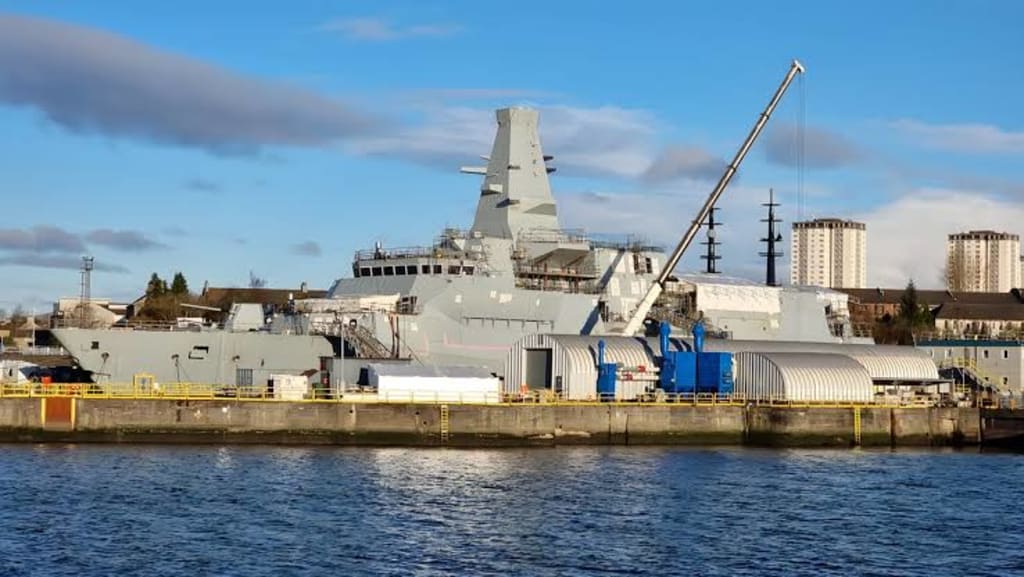
Norway is in advanced discussions with the United Kingdom over potential participation in the construction of the Royal Navy’s next-generation Type 26 frigates, a move that could deepen defense cooperation between the two NATO allies and reshape Europe’s naval industrial landscape.
Officials in Oslo and London have confirmed exploratory talks focused on industrial collaboration, technology sharing, and the possibility of Norwegian shipyards contributing directly to the production of future Type 26 vessels. While no formal agreement has yet been signed, defense analysts say the talks signal Norway’s growing interest in aligning its naval modernization program with British-led designs.
The Type 26 Global Combat Ship, developed by BAE Systems, is the Royal Navy’s primary anti-submarine warfare frigate and a cornerstone of Britain’s future surface fleet. The vessel is designed for high-end warfare in the North Atlantic and Arctic regions—areas of increasing strategic importance for Norway as tensions with Russia continue to rise.
Strategic Motivation
Norway’s navy currently operates a fleet of Fridtjof Nansen-class frigates, several of which are approaching mid-life upgrades. With rising threats in the High North and increased Russian submarine activity in the Barents Sea, Norwegian defense planners are seeking more capable platforms with advanced sonar, weapons systems, and interoperability with NATO partners.
The Type 26 has attracted interest from several allied nations due to its quiet propulsion system, modular mission bays, and adaptability for Arctic conditions. Canada and Australia have already adopted variants of the design for their own naval programs.
“Norway sees clear advantages in joining an existing platform rather than starting from scratch,” said a European defense industry official familiar with the talks. “It reduces development risk, speeds up delivery, and strengthens integration with allied fleets.”
Industrial Cooperation
Under the proposed framework, Norwegian shipbuilders could be involved in manufacturing major components such as hull sections, propulsion modules, or electronic systems. Final assembly could take place either in the UK or Norway, depending on cost and political considerations.
Kongsberg Defence & Aerospace, Norway’s largest defense company, is expected to play a central role if the deal moves forward. The company already supplies missile systems and maritime sensors to several NATO navies and could integrate its Naval Strike Missile and combat management systems into a Norwegian Type 26 variant.
British officials have emphasized that any partnership would preserve the Royal Navy’s construction timeline while expanding export opportunities for the Type 26 platform.
“This is about building a shared industrial base across allied countries,” a UK defense source said. “We’re looking at a model where partners contribute to production while benefiting from common training, logistics, and upgrades.”
Political and Economic Factors
For Norway, participation in the Type 26 program offers both military and economic incentives. Shipbuilding contracts could generate jobs in coastal regions and reinforce Norway’s maritime engineering sector. The government has also signaled that domestic industrial involvement is a key requirement in any major defense procurement.
At the same time, the project would likely require parliamentary approval and careful budget planning. Norway already faces rising defense costs linked to air force modernization, submarine acquisitions, and expanded NATO commitments.
Opposition lawmakers have raised concerns about long-term costs and dependency on foreign suppliers. Some argue Norway should prioritize domestic ship designs rather than joining multinational programs.
However, supporters say the benefits outweigh the risks.
“Interoperability is essential,” said Ingrid Halvorsen, a defense policy analyst in Oslo. “If Norwegian and British ships use the same systems, they can operate seamlessly in joint patrols, particularly in the North Atlantic and Arctic waters.”
Arctic Security and NATO Integration
The potential deal comes as NATO increases its focus on Arctic security. Melting sea ice has opened new maritime routes, and Russia has expanded its military infrastructure along its northern coastline. Norway, which shares a border with Russia, has become a frontline state in NATO’s northern strategy.
Type 26 frigates are optimized for submarine hunting and long-endurance patrols, making them well suited for monitoring underwater activity in the Arctic and North Sea. Joint production could also lead to shared training programs and maintenance facilities between the UK and Norway.
Military planners believe a combined fleet of Type 26 vessels across allied navies would enhance deterrence and simplify logistics during multinational operations.
Challenges Ahead
Despite the strategic appeal, several hurdles remain. Final cost estimates have not been released, and the timeline for production remains uncertain. Britain’s own Type 26 program has experienced delays in the past, raising questions about whether shipyards can accommodate additional orders without affecting Royal Navy delivery schedules.
There are also political sensitivities. Any agreement must balance national sovereignty with alliance cooperation, and negotiations will need to address intellectual property rights, export controls, and long-term support arrangements.
Defense unions in the UK have welcomed the prospect of expanded production but warn that domestic jobs must remain protected.
Looking Forward
If an agreement is reached, Norway could become the next nation to join the growing family of Type 26 operators, alongside the UK, Australia, and Canada. Such a move would mark one of the most significant defense-industrial partnerships between Oslo and London in decades.
Officials on both sides stress that discussions are still in the preliminary phase, but optimism is growing.
“This could be a blueprint for future European naval cooperation,” one NATO official said. “Shared platforms, shared threats, and shared responsibility.”
As security tensions rise across northern Europe, the prospect of Norway helping to build Britain’s most advanced frigates underscores a broader shift toward collective defense solutions—where shipyards, like navies, increasingly operate across borders in the face of common challenges.
About the Creator
Fiaz Ahmed
I am Fiaz Ahmed. I am a passionate writer. I love covering trending topics and breaking news. With a sharp eye for what’s happening around the world, and crafts timely and engaging stories that keep readers informed and updated.
Keep reading
More stories from Fiaz Ahmed and writers in The Swamp and other communities.
Washington Post Fires One-Third of Staff, Including All Its Middle East Journalists
The Washington Post has laid off roughly one-third of its newsroom staff in a sweeping round of job cuts that includes the dismissal of its entire Middle East reporting team, a move that has sent shockwaves through the global journalism community and raised serious concerns about the future of international coverage at one of America’s most influential newspapers. The layoffs, confirmed by company executives on Tuesday, come as part of a broader restructuring effort aimed at stabilizing the paper’s finances amid declining digital subscriptions, falling advertising revenue, and rising operational costs. While the Post described the cuts as “necessary for long-term sustainability,” critics argue the decision reflects a troubling retreat from in-depth foreign reporting at a time of heightened global conflict. Among those affected were veteran correspondents based in Jerusalem, Beirut, and Cairo, as well as editors and producers who supported coverage across the Middle East. Several journalists said they were informed with little notice and offered severance packages that varied by tenure. “This is devastating not only for the people who lost their jobs but for readers who depend on rigorous reporting from one of the world’s most complex regions,” said one former correspondent, who requested anonymity due to ongoing negotiations with the company. Financial Pressures and Strategic Shift In a memo to staff, Washington Post publisher Will Lewis cited financial challenges facing the newspaper industry and the need to “refocus resources on core priorities.” “Our responsibility is to ensure the Post remains a strong and viable institution for the future,” Lewis wrote. “These decisions were not made lightly, but they are necessary to adapt to changing audience habits and economic realities.” The Post has struggled in recent years to maintain the rapid subscriber growth it enjoyed during the Trump presidency, when political coverage drove record digital engagement. As interest in U.S. politics has cooled and competition from free online news sources has intensified, the paper’s revenue has reportedly declined significantly. Insiders say management has chosen to concentrate more heavily on domestic politics, investigations, and opinion content while relying increasingly on wire services and partnerships for international news. Media analysts warn that this strategy risks eroding the Post’s reputation as a global news leader. “Cutting an entire regional bureau is not just a cost-saving measure—it’s a statement about priorities,” said Margaret Collins, a professor of journalism at Columbia University. “The Middle East is central to U.S. foreign policy, global security, and humanitarian issues. Removing dedicated coverage weakens public understanding.” Impact on Middle East Coverage The elimination of the Middle East desk comes amid ongoing wars in Gaza and Ukraine, rising tensions between Iran and Israel, and continued instability in Syria, Yemen, and Lebanon. Journalists who specialized in the region say their work required years of cultural knowledge, language skills, and trusted local networks that cannot easily be replaced. “Parachute reporting doesn’t work in the Middle East,” said a former Post editor. “You need people on the ground who understand the politics, history, and communities. Without that, coverage becomes shallow and reactive.” Several international press organizations condemned the move, calling it a setback for accountability journalism. The Committee to Protect Journalists said in a statement that “reducing foreign correspondents at a time of global crisis undermines the public’s right to accurate and independent information.” Staff Reaction and Morale Within the newsroom, the layoffs have fueled anxiety and anger among remaining employees. Union representatives said the cuts disproportionately affected foreign correspondents and junior reporters while leaving management largely untouched. “The burden of financial mistakes is being placed squarely on journalists who do the work,” said a spokesperson for the Post’s union. “This will weaken coverage and harm trust with readers.” Employees also expressed concern about workload increases and burnout as fewer reporters are expected to produce more content across multiple beats. “This isn’t just about losing colleagues,” one staff writer said. “It’s about losing institutional knowledge. People who spent decades building sources and expertise are suddenly gone.” A Broader Industry Trend The Washington Post is not alone in shrinking its foreign bureaus. Major news organizations across the United States and Europe have scaled back international reporting over the past decade due to high costs and shrinking profit margins. Maintaining overseas offices requires security arrangements, translators, travel budgets, and legal support—expenses many outlets can no longer sustain. However, critics argue that the trend creates a dangerous information gap. “When major papers pull out of regions like the Middle East, coverage increasingly comes from social media or partisan sources,” said Collins. “That leaves audiences vulnerable to misinformation and propaganda.” The layoffs also raise questions about the role of billionaire ownership in shaping newsroom priorities. The Washington Post is owned by Amazon founder Jeff Bezos, who purchased the paper in 2013 and invested heavily in digital expansion during its early turnaround years. While Bezos has not commented publicly on the latest cuts, some staff members have questioned whether financial discipline has overtaken journalistic mission. What Comes Next Management says the newspaper will continue to cover the Middle East through freelance reporters and partnerships with international outlets. Yet former staff warn that this approach cannot replace a dedicated bureau with institutional continuity. Readers have already begun to voice concerns on social media, with many saying they subscribed specifically for the Post’s international reporting. “This was one of the last American papers with serious foreign coverage,” one subscriber wrote. “Now it feels like another retreat inward.” The layoffs mark a turning point for the Post, long regarded as a standard-bearer for investigative and global journalism. While executives insist the paper will remain committed to international news, the absence of a permanent Middle East team suggests a narrower vision of its future role. For journalists who lost their jobs, the decision represents more than a financial setback. “We believed in the mission of informing the public about a region that shapes world events,” said a former correspondent. “Now that mission feels compromised.” As newsrooms continue to struggle with economic realities, the question remains whether leading institutions can balance survival with their responsibility to provide deep, independent coverage of the world beyond their borders.
By Fiaz Ahmed 4 days ago in The Swamp
Why Black History Matters in America?
The United States of America is celebrating their 250th anniversary in 2026. I'm proud to be an American and as someone who was born here, I wouldn't imagine myself living anywhere else. This is a country where opportunities are possible. Where anyone can be successful in anything they desire to do. Equality, community, and togetherness are the backbones of what America is and should be about. However, we have an administration who wants to erase and disregard those who have made positive, meaningful impacts in our country, specifically Black figures, such as Martin Luther King, Jr., Rosa Parks, and Maya Angelou. President Trump and his administration have been constantly complaining and fighting against what they call the "Woke agenda". They use this excuse as a distraction from other issues they refuse to address, such as the high cost of living, climate change, and inflation. That equality is dividing America, when in reality, it's bringing us together. Being woke is not tied to a specific political party. No matter where you stand on the political spectrum, you can still care about other people and their plights. Compassion and empathy for others isn't tied to a political party, either. We were taught as children to treat others the way we want to be treated and not judge others because they're different from us. Caring about others isn't a personal attack on your beliefs. It doesn't make you any less of a person. People who are easily offended over African American figures, past or present, or anything related to it, are grasping at straws. Current and future generations need to know who people like Harriet Tubman and Shirley Chisholm were, especially in the classroom. Black History is part of American History. It should be recognized, not hidden or forgotten. Besides, you can't shield children from everything, just because your feelings are easily hurt.
By Mark Wesley Pritchard 7 days ago in The Swamp
Spanish Hornets Intercept Russian Navy Su-30SM With a Rare Weapon Loadout Over the Baltic
Spanish Air Force F/A-18 Hornet fighter jets reportedly intercepted a Russian Navy Su-30SM fighter aircraft flying over the Baltic region, drawing attention due to the Russian jet’s reportedly rare weapon configuration. The incident highlights the continued military monitoring activity over European airspace and reflects ongoing geopolitical tensions between NATO members and Russia.
By Aarif Lashari6 days ago in The Swamp
Book Review: Atmosphere by Taylor Jenkins Reid
I flipped the book over in my hands in the centre of the small airport book shop. Although I had heard promising reviews of Atmosphere by Taylor Jenkins Reid, I hesitated. The synopsis didn’t compel me - I wasn’t much of a space girly. In high school it made me cringe when my peers would talk about the stars.
By sleepy drafts5 days ago in BookClub



Comments
There are no comments for this story
Be the first to respond and start the conversation.