
North Korea Launches Ballistic Missiles Toward Sea Ahead of South Korean Leader’s Visit to China
The timing of the launch sends a pointed message amid rising regional tensions and delicate diplomatic talks
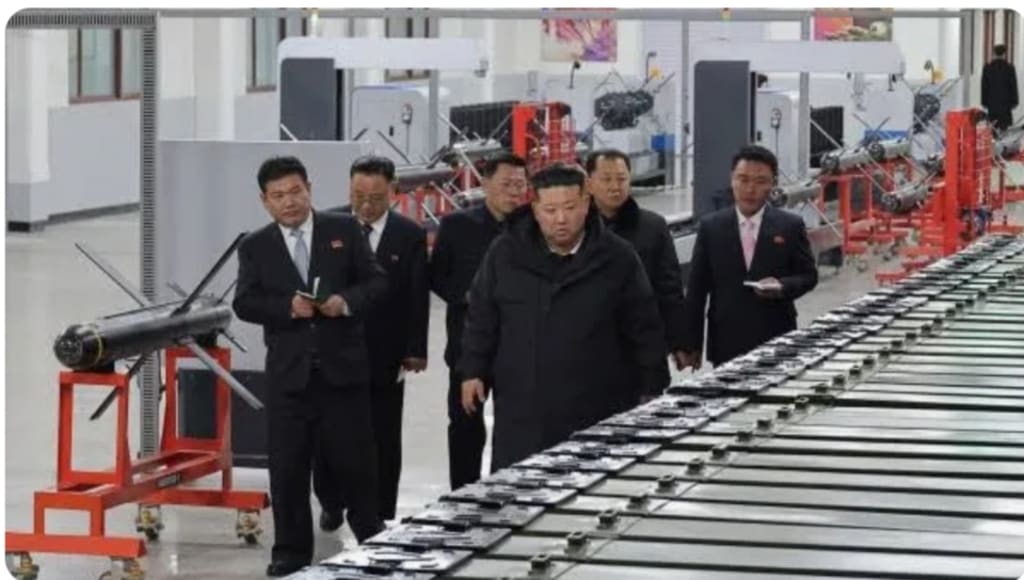
North Korea has launched multiple ballistic missiles toward the sea in a provocative show of force, just days before South Korean President Yoon Suk Yeol’s scheduled visit to China. The missile tests, confirmed by South Korea’s military, have intensified concerns over regional stability and highlighted the fragile security environment in Northeast Asia.
The launches come at a particularly sensitive moment, as Seoul seeks to balance its alliance with the United States while maintaining functional diplomatic relations with Beijing. Analysts say Pyongyang’s timing is unlikely to be coincidental and may be intended to influence regional diplomacy or assert its strategic relevance.
Details of the Missile Launch
South Korea’s Joint Chiefs of Staff reported that the missiles were fired from North Korea’s western region and landed in waters off the Korean Peninsula. While no immediate damage was reported, the tests violated multiple United Nations Security Council resolutions that prohibit North Korea from developing or testing ballistic missile technology.
Military officials described the launch as part of a pattern of frequent missile activity that has accelerated in recent years. The type and range of the missiles were still being analyzed, but experts believe they may have been short- to medium-range systems capable of targeting neighboring countries.
Japan also confirmed detecting the launches, issuing maritime warnings and condemning the tests as destabilizing and dangerous.
Strategic Timing Ahead of Diplomacy
The missile launch occurred shortly before South Korean President Yoon’s visit to China, where discussions are expected to focus on trade, regional security, and North Korea’s nuclear ambitions. Beijing remains Pyongyang’s most important diplomatic and economic partner, despite growing frustration over its weapons tests.
Analysts argue that North Korea often uses military demonstrations to signal displeasure or assert leverage when major diplomatic events involving its neighbors take place. By launching missiles ahead of the visit, Pyongyang may be seeking to remind both Seoul and Beijing that it cannot be sidelined in regional negotiations.
“This is a classic North Korean tactic,” said one regional security expert. “They use missile tests to demand attention and shape the diplomatic environment.”
South Korea’s Response
South Korea’s government strongly condemned the missile launch, calling it a “grave provocation” that threatens peace on the Korean Peninsula. President Yoon’s office emphasized that Seoul remains committed to deterrence while keeping diplomatic channels open.
Military officials confirmed that South Korea’s armed forces remain on high alert and are closely coordinating with the United States and Japan. Joint military exercises between Seoul and Washington have increased in recent months, a move North Korea has repeatedly criticized as hostile.
South Korean officials also stressed that the missile launch would not derail diplomatic efforts with China, though it would likely be raised during talks.
China’s Delicate Position
China has traditionally opposed North Korea’s missile tests but has also resisted harsher sanctions, arguing that pressure alone will not resolve the issue. Beijing has called for dialogue and stability, urging all parties to avoid actions that escalate tensions.
President Yoon’s visit places China in a delicate position. On one hand, Beijing wants to maintain influence over Pyongyang and prevent instability near its borders. On the other, it seeks to avoid appearing aligned with North Korea’s military provocations.
Diplomatic observers suggest China may privately urge restraint while publicly calling for calm and dialogue.
A Pattern of Escalation
North Korea’s missile launches are part of a broader escalation that includes the testing of intercontinental ballistic missiles (ICBMs), hypersonic weapons, and tactical nuclear systems. Leader Kim Jong Un has framed these developments as necessary for national defense, particularly in response to U.S.–South Korea military cooperation.
International experts warn that the frequency of launches increases the risk of miscalculation. Even tests aimed at the sea can trigger regional alarms and heighten the chance of unintended conflict.
The United Nations has repeatedly condemned North Korea’s actions, but enforcement of sanctions has weakened amid geopolitical divisions among major powers.
Regional and Global Implications
The latest missile launch underscores the growing complexity of security dynamics in East Asia. With tensions also rising in the Taiwan Strait and the South China Sea, the Korean Peninsula remains a potential flashpoint.
For South Korea, balancing diplomacy with deterrence is becoming increasingly difficult. For China, managing its relationship with North Korea while maintaining regional credibility is an ongoing challenge.
The United States has reiterated its commitment to defending South Korea and Japan, calling on North Korea to return to talks. However, negotiations have remained stalled for years.
What Comes Next
As President Yoon prepares to meet Chinese leaders, North Korea’s actions will loom large over discussions. Whether the missile launch will lead to renewed diplomatic pressure or further escalation remains uncertain.
Experts suggest that without meaningful dialogue, North Korea is likely to continue its weapons development, using missile tests as both a technical and political tool.
Conclusion
North Korea’s ballistic missile launch ahead of South Korea’s leader’s visit to China highlights the strategic calculations driving Pyongyang’s behavior. The timing sends a clear message that North Korea intends to remain central to regional security discussions—whether through diplomacy or defiance.
As regional leaders navigate an increasingly tense geopolitical landscape, the challenge will be preventing provocations from spiraling into confrontation while keeping the door open to dialogue in one of the world’s most volatile regions.
About the Creator
Keep reading
More stories from Ayesha Lashari and writers in The Swamp and other communities.
At Least Two People Killed and Scores Injured in Russian Strike on Ukraine's Kharkiv
A Russian missile strike on Ukraine’s second-largest city, Kharkiv, has left at least two people dead and dozens more injured, as the war in Ukraine continues to devastate civilian populations. The strike, which targeted a densely populated residential area, has drawn widespread international condemnation, marking yet another escalation in a conflict that has already taken a heavy toll on both military personnel and civilians.
By Ayesha Lashari8 days ago in The Swamp
United States Sodium-ion Battery Market Size & Forecast 2025–2033
Introduction The United States sodium-ion battery market is entering a critical phase of development as the country accelerates its transition toward sustainable and domestically secure energy solutions. According to Renub Research estimates, the market is projected to grow from US$ 55.32 million in 2024 to US$ 113.77 million by 2033, registering a Compound Annual Growth Rate (CAGR) of 8.34% during 2025–2033.
By jaiklin Fanandish4 days ago in The Swamp


Comments
There are no comments for this story
Be the first to respond and start the conversation.