
Non-Lethal Weapons Market Size and Forecast 2025–2033
How safer force technologies are reshaping law enforcement, military strategy, and public security worldwide


Introduction: The Changing Face of Modern Force
In an era defined by rapid urbanization, heightened civil activism, and growing scrutiny of law enforcement practices, the concept of force is undergoing a fundamental transformation. Governments, security agencies, and military organizations across the globe are increasingly seeking tools that can restore order, deter threats, and protect lives—without resorting to deadly measures. This shift has placed non-lethal weapons at the center of modern public safety strategies.
Non-lethal weapons, also referred to as less-lethal or compliance weapons, are engineered to incapacitate or deter individuals while minimizing the risk of permanent injury or death when used properly. From pepper spray and tasers to advanced acoustic devices and directed-energy systems, these technologies offer an alternative to conventional firearms in situations where lethal force is neither necessary nor appropriate.
According to Renub Research, the global Non-Lethal Weapons Market was valued at approximately USD 8.58 billion in 2024 and is projected to grow at a CAGR of 5.52% between 2025 and 2033, reaching an estimated USD 13.91 billion by 2033. This steady expansion reflects a rising demand for safer crowd-control tools, enhanced border security solutions, and responsible policing methods in both developed and emerging economies.
Non-lethal weapons are tactical tools designed to immobilize, control, or disperse individuals or groups without causing fatal outcomes. They are widely used in law enforcement, military peacekeeping missions, private security operations, and civilian self-defense.
Common examples include:
Chemical agents: Pepper spray, tear gas, irritant foggers
Electrical devices: Tasers, stun guns
Kinetic impact munitions: Rubber bullets, bean bag rounds
Acoustic and energy-based systems: Long-range acoustic devices (LRAD), microwave and laser deterrents
Mechanical and visual tools: Flashbang grenades, water cannons
These tools are essential in scenarios such as riot control, perimeter security, hostage situations, and border enforcement—where maintaining public order must be balanced with human rights and ethical responsibility.
Market Drivers: Why Demand Is Rising
1. Growing Civil Protests and Urban Unrest
Large-scale demonstrations, political movements, and social activism have become more frequent worldwide. Authorities increasingly prefer non-lethal solutions to manage crowds without escalating violence or triggering public backlash.
2. Focus on Human Rights and Responsible Policing
Public scrutiny of excessive force has intensified. Governments and police departments are under pressure to adopt equipment that minimizes casualties while maintaining operational effectiveness.
3. Border Security and Asymmetric Threats
With rising migration flows, smuggling networks, and cross-border conflicts, non-lethal weapons offer practical tools for deterrence and control in sensitive environments.
4. Technological Advancements
Innovations in sensor integration, smart targeting, and modular systems have made modern non-lethal weapons more precise, reliable, and adaptable to different operational contexts.
Key Manufacturers Shaping the Industry
The non-lethal weapons market features a mix of defense giants and specialized security technology firms. Some of the most influential players include:
Byrna Technologies Inc. (USA)
Founded in 2005, Byrna designs and manufactures non-lethal launchers, self-defense devices, and specialty projectiles. Its portfolio serves civilians, law enforcement agencies, and private security professionals across North America, Asia, and South Africa.
General Dynamics Corporation (USA)
A global defense powerhouse, General Dynamics contributes advanced systems, munitions, and integrated security technologies used by governments worldwide.
Moog Inc. (USA)
Known for precision motion control systems, Moog supplies aerospace and defense components that support modern weapon platforms and surveillance technologies.
RTX Corporation (formerly Raytheon Technologies)
RTX develops advanced aerospace and defense systems, including mission-critical technologies that integrate into non-lethal and tactical operations.
Rheinmetall AG (Germany)
With a strong footprint across Europe, Asia, and the Americas, Rheinmetall manufactures defense equipment, vehicles, and ammunition, including non-lethal crowd-control and tactical systems.
Together, these companies are advancing the capabilities, reliability, and ethical deployment of non-lethal weapons.
Product Launches and Industry Innovation
The pace of innovation in the sector continues to accelerate:
Textron Inc. (October 2025)
Textron Systems introduced the Damocles™ launched effect system, featuring a GEN2 Explosively Formed Penetrator with ISR and electronic warfare functionality. While primarily military-oriented, such advancements reflect how multi-role technologies are influencing next-generation security systems.
Detrex Corporation (April 2025)
At Milipol India, Detrex unveiled India’s first indigenous non-lethal tactical pistol. Designed for law enforcement and civilian self-defense, the weapon highlights the growing role of local innovation in emerging markets.
Competitive Strengths: SWOT Highlights
NonLethal Technologies Inc.
This company benefits from a highly specialized product portfolio aligned with law enforcement and military needs. Its tear gas munitions, smoke devices, and irritant delivery systems are trusted worldwide due to compliance with international safety standards. Strong relationships with police departments and defense agencies ensure recurring demand and long-term contracts.
Combined Systems Inc.
With an extensive international presence and a diverse range of offerings—flashbangs, OC spray systems, kinetic impact munitions—Combined Systems enjoys a leadership position in tactical non-lethal solutions. Its field-tested reliability and strong manufacturing capacity make it a preferred partner for security agencies globally.
Recent Developments in Public Safety Technology
Safariland Group (April 2025)
Safariland partnered with 3DLOOK to enhance its XpertFit solution for tactical armor sizing. The integration of AI-driven body scanning improves officer protection and equipment fit, reinforcing the company’s commitment to innovation in public safety.
Axon Enterprise, Inc. (September 2025)
Axon announced its acquisition of Prepared, an AI-powered emergency communications platform that converts 911 calls into actionable intelligence. By connecting call data with real-time situational awareness, Axon is strengthening non-lethal engagement strategies and response efficiency.
Sustainability and Ethical Security: A New Priority
As the defense and security sector faces increasing environmental and ethical scrutiny, sustainability is becoming a core competitive differentiator.
Advanced Integrated Security (AIS)
AIS emphasizes responsible manufacturing, recyclable components, and reduced chemical waste. Its non-lethal systems are designed to minimize collateral damage while supporting ethical deployment and human rights compliance. The company also promotes training programs that encourage responsible use and reduce dependency on more harmful alternatives.
FLIR Systems, Inc.
FLIR integrates energy-efficient product design, durable manufacturing, and upgradeable platforms into its thermal imaging and sensing systems. By enabling better situational awareness, FLIR’s technology helps reduce reliance on chemical or kinetic force, aligning environmental responsibility with operational effectiveness.
Market Segmentation: Understanding the Structure
The non-lethal weapons market can be segmented across several dimensions:
By Product Type
Chemical agents (pepper spray, tear gas)
Electrical weapons (tasers, stun guns)
Kinetic impact munitions
Directed-energy and acoustic weapons
Mechanical deterrents (water cannons, flash devices)
By End User
Law enforcement agencies
Military and defense forces
Border security and customs
Private security firms
Civilian self-defense markets
By Region
North America: Mature market driven by law enforcement modernization
Europe: Strong regulatory frameworks and human rights focus
Asia-Pacific: Rapid growth due to urbanization and security investments
Middle East & Africa: Rising demand for border security and internal stability
Latin America: Increasing adoption in crowd control and law enforcement
Historical Trends and Forecast Outlook
Historically, non-lethal weapons were niche tools used primarily for riot control. However, rising public scrutiny of excessive force and the increasing complexity of security threats have expanded their role across policing, border management, and military peacekeeping.
Renub Research estimates show:
2024 Market Size: USD 8.58 billion
Forecast CAGR (2025–2033): 5.52%
2033 Market Size: USD 13.91 billion
This growth reflects a structural shift toward safer security practices, supported by technological innovation and evolving regulatory expectations.
Market Share Analysis: Leading Corporate Strategies
Byrna Technologies Inc.
Byrna’s business model focuses on direct-to-consumer sales, dealer networks, and partnerships with law enforcement agencies. Its emphasis on user-friendly, legally compliant self-defense solutions has positioned the company as a leader in civilian non-lethal technology.
Strategic Pillars Across Major Players:
Mergers & Acquisitions: Expanding technological capabilities and geographic reach
Partnerships: Collaborations with AI, sensor, and materials science firms
Sustainability Initiatives: Energy-efficient manufacturing, recyclable components, and lifecycle management
Product Innovation: Modular systems, smart targeting, and precision delivery
Challenges Facing the Industry
Despite its growth, the non-lethal weapons market faces notable challenges:
Regulatory Restrictions: Different countries impose varying rules on non-lethal equipment usage and sales.
Misuse and Public Perception: Improper deployment can still cause harm, leading to legal and reputational risks.
Technological Complexity: Integrating AI, sensors, and energy-based systems requires significant R&D investment.
Addressing these challenges requires continuous training, transparent policies, and ongoing technological refinement.
Future Outlook: The Role of Non-Lethal Force in Global Security
The next decade will likely see non-lethal weapons become integral to layered security strategies. As AI, data analytics, and smart sensing technologies mature, these tools will offer greater precision, accountability, and situational awareness.
Governments will increasingly rely on non-lethal systems to balance national security with civil liberties. Meanwhile, private security and civilian self-defense markets are expected to expand as individuals seek safer personal protection options.
With global security threats becoming more complex and public expectations for ethical policing rising, non-lethal weapons are no longer optional—they are essential.
Final Thoughts
The Non-Lethal Weapons Market is entering a defining phase. With a projected rise from USD 8.58 billion in 2024 to USD 13.91 billion by 2033, the sector reflects a global commitment to safer, more responsible security practices. Driven by technological innovation, sustainability initiatives, and evolving human rights standards, non-lethal weapons are reshaping how societies manage conflict, enforce laws, and protect civilians.
In a world where force must be both effective and accountable, non-lethal technologies stand as a powerful symbol of progress—offering security without sacrificing humanity.
About the Creator
jaiklin Fanandish
Jaiklin Fanandish, a passionate storyteller with 10 years of experience, crafts engaging narratives that blend creativity, emotion, and imagination to inspire and connect with readers worldwide.
Keep reading
More stories from jaiklin Fanandish and writers in The Swamp and other communities.
Power Transformer Market Size and Forecast 2025–2033
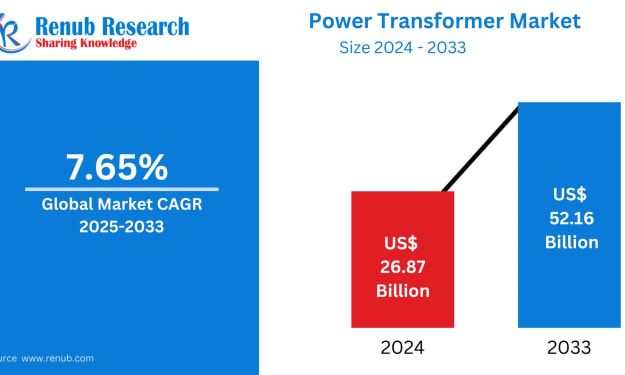
Introduction The power transformer market is entering a decisive growth phase as nations modernize electricity networks, integrate renewable energy, and respond to rising demand from urbanization and industrialization. According to Renub Research, the global power transformer market was valued at about USD 26.87 billion in 2024 and is projected to nearly double to approximately USD 52.16 billion by 2033, expanding at a robust CAGR of 7.65% from 2025 to 2033. This acceleration reflects more than cyclical infrastructure spending—it signals a structural shift in how power is generated, transmitted, and distributed across modern economies.
By jaiklin Fanandishabout 23 hours ago in The Swamp
Two Wounded in a Shooting with US Federal Agents in Portland, Oregon
A tense encounter between U.S. federal agents and civilians in Portland, Oregon, has left two people wounded, once again placing the city at the center of a national conversation about immigration enforcement, law enforcement accountability, and community trust.
By Aqib Hussain5 days ago in The Swamp



Comments
There are no comments for this story
Be the first to respond and start the conversation.