
Nobel Peace Prize Winner Machado Vows to End Maduro’s Rule in Venezuela
A Rising Symbol of Democratic Defiance Sparks New Hope for a Nation in Crisis

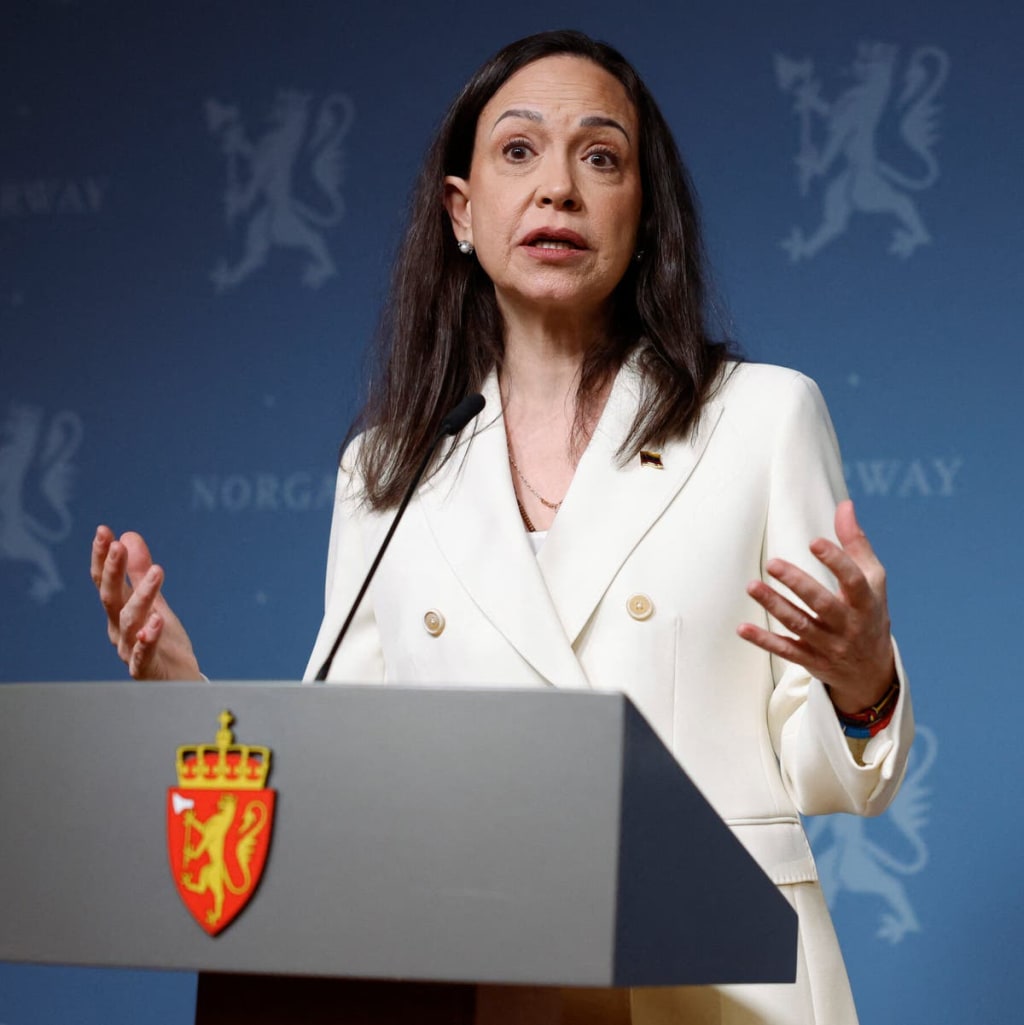
Venezuela, a country once buoyed by oil wealth and regional influence, has spent the past decade trapped under economic collapse, political turmoil, and deep social fragmentation. But today, a renewed wave of hope is emerging—centered around Nobel Peace Prize winner María Corina Machado, who has vowed to bring an end to Nicolás Maduro’s rule and restore democratic governance in the nation. Machado’s powerful message of resistance and her rising global recognition are rapidly shifting Venezuela’s political landscape.
A New Global Spotlight on Venezuela
Machado’s Nobel Peace Prize win surprised many, but it also sharpened the world’s attention on Venezuela’s democratic struggle. The award highlights her courage in advocating for free elections, her commitment to nonviolent resistance, and her persistent fight for human rights amid government oppression. In a nation where dissent has often been met with intimidation or imprisonment, her recognition stands as a symbolic victory for millions longing for change.
For years, activists within Venezuela have attempted to expose humanitarian issues—food shortages, hyperinflation, mass migration, and the erosion of civil liberties. Yet international awareness often faded in the face of global crises. Machado’s new status changes that dynamic. Her win thrusts Venezuela’s political conflict back onto the world stage, providing new momentum for diplomatic pressure, economic scrutiny, and international solidarity.
Machado’s Promise: “Maduro’s Rule Will End”
In her first public address following the award, Machado made a bold declaration: “Maduro’s rule will end, and Venezuela will rise again.” Her message was not just a rallying cry for supporters, but a strategic promise grounded in growing dissatisfaction within the country. With inflation devouring salaries, healthcare in disarray, and millions fleeing the country for basic survival, the struggle for change has become a national priority.
Machado’s call resonates particularly with young Venezuelans who have known little besides crisis. Born into instability, this generation has fueled much of the recent wave of activism, using social media and grassroots movements to challenge state narratives. Machado has embraced this youthful energy, positioning herself as a bridge between traditional opposition leaders and the new era of Venezuelan civil resistance.
Maduro’s Response and Rising Tensions
The Venezuelan government quickly moved to discredit Machado following her Nobel recognition. Maduro’s allies framed her win as an international conspiracy, claiming foreign powers were attempting to destabilize the country. State media intensified attacks, accusing her of being aligned with Western agendas.
Despite these tactics, Machado’s support appears to be expanding. Her ability to unify both local communities and the Venezuelan diaspora has become a key challenge for Maduro. Many analysts believe this growing unity could shift the balance of political pressure, especially as the international community reevaluates its stance on Venezuela.
Global Support Building Behind Democracy
Machado’s Nobel Prize has opened the door for new diplomatic efforts. Several nations have reaffirmed their support for free and fair elections in Venezuela, calling for greater monitoring and accountability. Human rights groups have renewed pressure on the government to release political prisoners and reinstate opposition figures barred from participating in elections.
In Latin America, where political alliances often shift, Machado’s achievement has also influenced regional opinions. Some neighboring nations have begun reevaluating their relationships with Caracas, urging peaceful dialogue and democratic restoration.
This growing global backing could become a critical factor in shaping Venezuela’s political transition in the months ahead.
Hope for a Nation Long in Crisis
While winning a Nobel Prize does not directly translate into political power, it gives Machado something equally potent: legitimacy and visibility. Her advocacy now carries greater weight, her message travels further, and her influence reaches beyond borders. For Venezuelans living through continued shortages and instability, her rise offers a rare sense of optimism.
Communities throughout the country have begun organizing local forums, protests, and solidarity programs calling for democratic renewal. Street murals of Machado have appeared in urban centers, symbolizing strength and perseverance. Many Venezuelans say they finally feel seen—not only by the world but by each other.
The Road Ahead: A Difficult but Possible Transformation
Despite the momentum, the path forward for Venezuela remains complex. The government maintains tight control over state institutions, security forces, and electoral bodies. Any push for democratic change faces significant resistance. Still, Machado’s leadership has injected new energy into the opposition movement.
As international support grows and domestic unrest deepens, Venezuela stands at a turning point. The question is no longer whether change is needed, but how quickly and peacefully it can happen.
Machado’s vow to end Maduro’s rule represents more than a political ambition—it reflects the collective desire of millions yearning for dignity, opportunity, and a return to democratic norms. Whether this movement succeeds will depend on unity, strategy, and the ability to sustain momentum.
For now, Venezuela watches closely as a Nobel Peace Prize winner leads the charge toward a future filled with renewed hope.
About the Creator
Asad Ali
I'm Asad Ali, a passionate blogger with 3 years of experience creating engaging and informative content across various niches. I specialize in crafting SEO-friendly articles that drive traffic and deliver value to readers.
Under Fire from the Sea, Families in Odesa Try to Escape Russian Barrage
As dawn breaks over the Black Sea, the port city of Odesa wakes not to the sound of waves, but to sirens. For months, Russian naval and missile attacks have turned Ukraine’s historic coastal hub into a frontline city, forcing families to make impossible choices: stay and endure, or flee under fire. The barrage from the sea has transformed everyday life into a test of survival, reshaping Odesa’s streets, homes, and hopes. Odesa has long been known for its cosmopolitan spirit, grand architecture, and strategic importance as Ukraine’s gateway to global trade. Today, that same geography makes it vulnerable. Russian warships positioned in the Black Sea have launched cruise missiles and drones toward the city, targeting ports, energy infrastructure, and residential neighborhoods. Unlike attacks from land, strikes from the sea arrive with little warning, amplifying fear among civilians who never know when the next explosion will come. For families, the danger is not abstract. It is measured in shattered windows, damaged schools, and nights spent in basements. Parents describe the constant challenge of keeping children calm as air raid sirens interrupt meals, homework, and sleep. “You learn to live with a bag packed,” one mother says, referring to emergency essentials kept by the door. “Documents, water, a few clothes — everything else can be replaced.” Escaping Odesa is no simple task. The city’s roads are congested with civilians trying to leave and military convoys heading toward defensive positions. Train stations, once symbols of travel and leisure, now serve as evacuation points. Families queue for hours, unsure whether trains will run on schedule or be delayed by security threats. Some choose to drive west toward Moldova or deeper into Ukraine, while others head north to stay with relatives in comparatively safer regions. The emotional toll of leaving is profound. Many residents have lived in Odesa for generations, their identities tied to the sea and the city’s unique culture. Abandoning homes, businesses, and memories feels like a second loss on top of the war itself. Elderly residents, in particular, struggle with the idea of starting over elsewhere. As a result, some families split up — women and children leave, while older relatives or men stay behind to guard property or contribute to local defense efforts. Those who remain face daily uncertainty. Coastal defenses and air defense systems intercept many incoming threats, but not all. Each successful interception is celebrated quietly, while each impact deepens anxiety. Schools operate intermittently, often shifting to online classes or shelter-based learning. Hospitals continue to function under strain, adapting emergency rooms to handle potential mass casualty events while dealing with routine medical needs. Humanitarian organizations have stepped in to provide support, offering temporary housing, psychological counseling, and basic supplies for displaced families. Local volunteers play a crucial role, organizing evacuation assistance and checking on vulnerable neighbors. In Odesa, community solidarity has become a lifeline. People share information through messaging apps, warn each other of incoming threats, and help strangers reach shelters during attacks. The Russian barrage has also affected Odesa’s economy. The port, vital for grain exports and trade, has faced repeated strikes, disrupting shipping and threatening global food supply chains. For families, this translates into lost jobs and rising prices. Shop owners close early or operate irregularly, while workers in tourism, shipping, and hospitality face prolonged uncertainty about their livelihoods. Yet even under fire, resilience defines Odesa. Murals appear on damaged walls, musicians perform in shelters, and small acts of normalcy persist. Parents try to preserve routines for their children — reading bedtime stories during blackouts or celebrating birthdays underground. These moments do not erase fear, but they assert humanity in the face of violence. Internationally, Odesa’s plight highlights the broader civilian cost of naval warfare. Attacks launched from the sea blur the line between military targets and civilian spaces, especially in port cities. For residents, the sea — once a source of beauty and economic opportunity — has become a direction of danger. The horizon itself feels threatening. As families continue to flee, return, or endure, Odesa stands as a symbol of civilian resilience amid modern conflict. The city’s future remains uncertain, shaped by diplomatic developments, military outcomes, and the will of its people. For now, every family that escapes safely is a small victory, and every night survived is an act of quiet defiance. Under fire from the sea, Odesa’s families are not just victims of war — they are witnesses to its human cost, carrying their stories with them wherever they find refuge.
By Fiaz Ahmed Brohi2 days ago in The Swamp


Comments
There are no comments for this story
Be the first to respond and start the conversation.