
No Taxes on Tips or Overtime? Trump’s Tax Bombshell Just Changed the Game
The “No Tax on Hard Work” Shift That Just Flipped the Script for Millions of Americans

If you’ve ever stayed late to finish your shift or depended on tips to keep the lights on, this one's for you.
Because as of this week, thanks to a massive new tax overhaul just pushed through by Donald Trump, tips and overtime pay may no longer be taxed at the federal level.
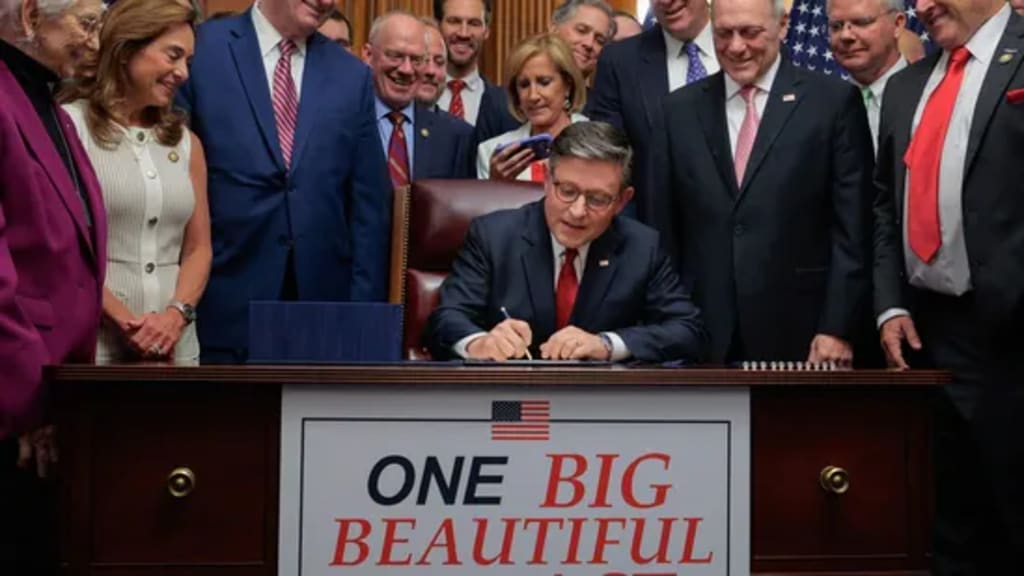
That’s not a rumour. It’s a real policy change, buried inside what Trump is calling the “Big, Beautiful Tax Bill”, which passed the House of Representatives on July 3, 2025, and is expected to be signed into law on Independence Day — a very Trump-esque move.

“Hardworking Americans should be rewarded, not punished. That’s why we’re ending the tax on tips, overtime, and hustle,” Trump declared at a rally in Georgia hours after the bill passed.
Let’s unpack what’s really inside this tax bombshell and what it means for your pay check, your job, and your future.
The Headline: Tips and Overtime Pay Now Tax-Free (Federally)💡
Under this new law:
- Tips you earn from customers? No federal income tax.
- Overtime pay from extra hours? No federal income tax.
- Loan interest deductions (like on car loans)? Expanded.
This change is set to begin in 2026, giving employers time to adapt their payroll systems and employees time to prepare for bigger paychecks.
But here’s the thing. It’s only at the federal level.
You may still pay state or local taxes depending on where you live.
Still, it’s a massive shift. For millions of service workers, delivery drivers, restaurant staff, hotel employees, and shift-based professionals, this could mean thousands of dollars back in your pocket every year.
🧮 Real-World Example
Let’s say you’re a restaurant server in Texas who:
- Earns $22,000/year in tips
- Works 8 overtime hours/week, paid at time-and-a-half
Under current law, your tips and OT add up to:
~$4,500–$6,000/year in federal taxes
With the new law:
You’d keep that money. No more federal withholding on those earnings.
That’s the equivalent of a 10–15% pay raise, without changing jobs.
🧠 Why This Move Is So Politically Strategic
Trump’s tax policy isn’t just about economics.
It’s about positioning, especially with an election year approaching.
Here’s what it signals:
- He’s doubling down on working-class voters
- He wants to be seen as the “champion of the forgotten paycheck”
- He’s targeting service industry workers, many of whom felt left behind during previous recoveries
This plays well in swing states where tipping-based jobs dominate:
Florida, Nevada, Arizona, Georgia, Pennsylvania — all states that could decide the 2026 political map.
But Is There a Catch?📉
Yes. Several.
To pay for this massive tax break, the bill includes:
- $900B in spending cuts, mostly to SNAP (food stamps), Medicaid, and student loan forgiveness programs
- A reduction in federal funds to state-level assistance programs
- Caps on certain housing and welfare grants
So, while the middle-working class benefits, those already struggling at the bottom could see less support from the federal government.
It’s classic trickle-down economics with a populist twist.
What the Experts Are Saying👀
Economists are divided.
Supporters argue:
- It encourages more work and higher productivity
- Stimulates consumer spending from middle- and lower-income earners
- Puts pressure on employers to maintain or increase hourly pay
Critics say:
- It creates imbalances between salaried and hourly workers
- Could destabilize federal revenues
- Disproportionately hurts states that rely on federal aid
“This is a tax break for some and a silent cut for others,” said Dr. Nina Patel, a policy analyst at the Urban Institute. “We’re trading short-term gain for long-term strain.”
Public Reaction: Cheers, Memes, and Caution
The internet exploded with reactions within minutes of the bill's passage:
- Service workers on TikTok cheered the decision
- Political commentators on X (formerly Twitter) debated fairness
- Facebook groups lit up with memes about finally getting a break
One trending meme?
🧾 “Me looking at my pay check with no tip tax for the first time 👀💸”
But others pointed out how single mothers, students, and low-income families could end up worse off if social safety nets shrink.
🔍 What to Expect Next
The “No Tax on Tips & Overtime” policy takes effect January 1, 2026.
Until then:
- Employers will receive new IRS guidance
- Payroll systems will be updated
- Advocacy groups will likely file challenges or push for state-level support
So don’t expect instant changes. But start planning now for:
- Bigger pay checks (in net)
- More money saved during tax season
- A likely shift in job structures (more part-time gigs, higher tip dependency, etc.)
🧭 Final Thoughts
This move is bold.
It’s financially impactful, politically savvy, and emotionally appealing, especially to the millions of Americans who feel overworked and overlooked.
Whether it’s good or bad in the long term is still up for debate.
But one thing’s for sure.
This just flipped the way America taxes hard work.
No matter where you stand politically, it’s worth watching, and maybe recalculating your budget plans.
Because come 2026, your tips and overtime might finally be yours to keep.
About the Creator
Keep reading
More stories from Bevy Osuos and writers in The Swamp and other communities.
Russia vs Ukraine: What’s Really Happening in 2025 (A Brutally Honest Breakdown)
I’ve been following this war since the day it began. Not as a soldier, not as a politician, not even as a journalist. Just as a human being who cares deeply about truth, suffering, and the ripple effect of violence. And as I write this in mid-2025, I’m painfully aware of how numb we’ve all become to the phrase Russia vs Ukraine. It’s been over three years. Thousands of headlines. Millions of lives changed. And yet, how many of us really know what’s happening right now?
By Bevy Osuos7 months ago in The Swamp
Russian Oil Company Refuses to Relinquish Control of Venezuela Exports
Venezuela’s oil saga just got even more intense. In early 2026, a dramatic confrontation between superpowers took center stage: a Russian oil company has refused to relinquish control of Venezuelan oil exports, directly challenging U.S. ambitions in the region. This isn’t just a business dispute; it’s a story of geopolitics, national sovereignty, and global influence that is reshaping energy markets and international diplomacy. For decades, Venezuela has been one of the world’s top oil producers, with reserves that rival those of Saudi Arabia. Control over these reserves doesn’t just mean profits — it signifies leverage, influence, and a critical role in global energy security. When Russia’s state-owned Roszarubezhneft declared it would maintain control over Venezuelan oil operations, it sent a clear message: Moscow isn’t backing down, no matter the pressure from Washington. Russia vs. U.S.: The Clash Over Venezuelan Oil In January 2026, following political upheaval in Venezuela — including the capture of its president by U.S. forces — the Trump administration announced plans to assert control over Venezuela’s oil exports. The aim was clear: integrate Venezuelan crude into U.S. markets, reduce the influence of adversarial powers, and stabilize energy flows favorable to U.S. interests. However, Russia’s Roszarubezhneft, a fully state-owned company, refused to comply. According to official statements, the Venezuelan oil assets are legally Russian, and the company will continue operations alongside Venezuela’s state-owned PDVSA (Petróleos de Venezuela SA). This refusal isn’t just about business — it’s a geopolitical power play, signaling Moscow’s intent to maintain influence in the Western Hemisphere. The standoff is more than a territorial or commercial dispute. It underscores a larger strategic battle over energy control, sovereignty, and the balance of power between the U.S. and Russia. Venezuela, with its vast reserves and strategic location, has become a key chess piece in this global game. Why Venezuela’s Oil Matters Venezuela holds some of the largest proven oil reserves on the planet, estimated at more than 300 billion barrels. Oil exports are the backbone of its economy, and control over these exports means influence over global energy markets. Yet, Venezuela’s oil sector has been plagued by decades of mismanagement, political instability, and international sanctions, leaving PDVSA struggling to maintain production levels. This created a window of opportunity for Russia. Over the past two decades, Moscow built deep energy ties with Caracas, stepping in when Western oil companies either pulled out or faced sanctions. Initially, Rosneft — Russia’s largest oil producer — managed these assets. However, after sanctions limited Rosneft’s ability to trade Venezuelan oil internationally, many of the assets were transferred to Roszarubezhneft, cementing full Russian state control. By maintaining this presence, Russia ensures it retains a strategic foothold in one of the richest oil basins in the world. A Geopolitical Statement, Not Just Business Roszarubezhneft’s refusal isn’t merely about oil production; it’s a bold geopolitical signal. By asserting control, Russia is challenging the idea that the U.S. can unilaterally dictate outcomes in the Americas. It’s also a demonstration of Moscow’s broader foreign policy approach: energy is as much about politics and influence as it is about commerce. For Washington, this represents a challenge. The U.S. strategy aimed to curtail adversarial influence near its borders while potentially opening the door for U.S.-aligned oil companies to enter the Venezuelan market. But Moscow’s defiance complicates that plan, raising tensions and increasing the likelihood of sanctions, economic maneuvers, and diplomatic clashes. Global Implications The repercussions of this standoff extend far beyond Venezuela: Russian Presence in the Americas: Traditionally, the U.S. has dominated Latin America. Russia’s continued involvement in Venezuela challenges this influence, signaling a shift toward a more multipolar world where energy resources can dictate power dynamics. Rising U.S.–Russia Tensions: The dispute adds fuel to an already tense relationship between the two nations. Both sides could escalate economic or diplomatic measures, further complicating the global political landscape. Market Uncertainty: Oil markets thrive on predictability. When control over a key supply region like Venezuela is contested, traders face uncertainty. This can lead to volatility in global oil prices, affecting consumers and businesses worldwide. Questions of Sovereignty: Central to this debate is the question of who really controls Venezuela’s natural resources. With the country’s government fragmented and foreign powers vying for influence, the issue of sovereignty becomes murky, highlighting the intersection of domestic politics and international intervention. The Human and Economic Angle While international headlines focus on geopolitics, the Venezuelan people feel the real-world consequences. Economic instability, hyperinflation, and scarcity of essential goods have plagued the nation for years. The contest over oil exports has a direct impact on Venezuela’s recovery prospects. If the sector remains under contested control, it could slow investment, delay infrastructure projects, and limit the revenue needed for social programs and economic stabilization. Meanwhile, Russian involvement, while strategic for Moscow, brings limited immediate relief to Venezuelans, illustrating how global power struggles often unfold at the expense of ordinary citizens. What’s Next? The situation in Venezuela is still evolving. The standoff between Russia and the U.S. over oil exports could take many forms: diplomatic negotiations, economic sanctions, or shifts in domestic Venezuelan politics. Global energy markets, investors, and policymakers will be watching closely. One thing is certain: in the world of oil, nothing is just business anymore. Energy resources have become instruments of power, leverage, and influence, shaping alliances and rivalries alike. Russia’s refusal to relinquish control of Venezuelan oil is a clear reminder that oil isn’t just a commodity — it’s a geopolitical weapon. As the story develops, the stakes will only rise. Whether through market pressures, international diplomacy, or changes within Venezuela itself, this battle over oil control will continue to make headlines, influence global energy flows, and reshape international relations.
By Muhammad Hassan5 days ago in The Swamp



Comments
There are no comments for this story
Be the first to respond and start the conversation.