
No Tax on Overtime? Here’s What the New Bill Could Change
The House budget bill includes a no tax on overtime plan, but will it become law? Here’s what it means for workers, taxes, and the 2025 budget debate.

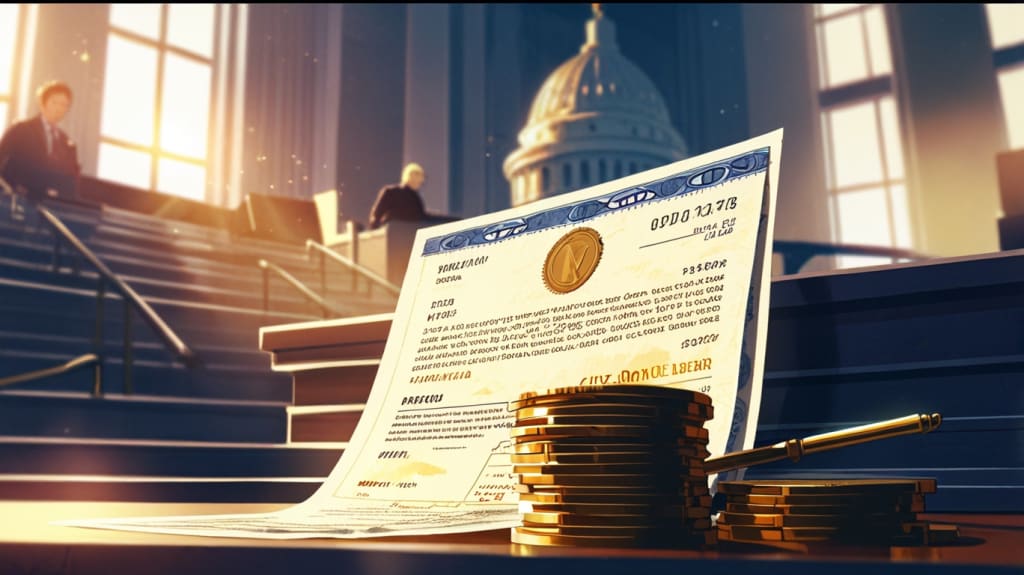
The U.S. House of Representatives recently passed a budget resolution that includes a significant tax reform proposal: eliminating federal income taxes on overtime pay. This move has sparked widespread discussion, particularly among workers who rely on extra hours to boost their income. But what does this mean, and how does it fit into the broader debate over tax cuts, spending, and the 2025 budget?
Did the No Tax on Overtime Bill Pass?
On February 25, 2025, the House of Representatives voted to approve a budget resolution that paves the way for President Donald Trump's proposed tax cuts. A key element of this resolution is the No Tax on Overtime bill, which seeks to remove federal income taxes from earnings made through overtime work.
What Else Is Included in the 2025 Budget Bill?
Beyond the overtime tax bill, the House budget bill 2025 includes several other controversial provisions. Some of the most debated elements are:
- No Tax on Tips Bill: Another significant proposal eliminates federal income taxes on tips, a move that has drawn support from workers in the service industry. The No Tax on Tips Bill Passed section of the budget resolution aims to ensure that tipped workers keep more of their earnings.
- Medicaid Cuts 2025: The budget includes reductions in Medicaid funding, a point of contention for Democrats and some moderate Republicans. These Medicaid cuts today have raised concerns about access to healthcare for low-income families.
- Spending Bill 2025: The resolution also addresses broader government spending, with Republicans pushing for reductions in various federal programs to balance the tax cuts.
Republicans Push for Tax Cuts and Fiscal Restraint
The House Republicans budget resolution reflects the GOP’s commitment to lower taxes and reduced government spending. House Speaker Mike Johnson has emphasized that tax relief measures, including the Trump tax cuts, will help American workers by increasing their take-home pay.
Thomas Massie, a known advocate for limited government, has been a vocal supporter of the Republican budget, arguing that reducing federal income tax on overtime and tips will stimulate economic growth. However, critics argue that these cuts, combined with Medicaid reductions and other spending rollbacks, could disproportionately impact lower-income Americans.
How Does This Fit Into Trump’s 2025 Tax Plan?
The Trump tax plan 2025 is central to the Republican push for tax reform. In addition to eliminating taxes on overtime and tips, Trump has proposed further tax cuts 2025 that would extend and expand his previous tax policies from his first term.
Trump has also expressed frustration with Congress, urging lawmakers to pass a single, comprehensive tax reform bill. His call for "ONE BIG BEAUTIFUL BILL" has resonated with his base but faces resistance in a divided Senate.
The House Vote on Budget: What’s Next?
The House passes budget resolution is only the beginning. Now, lawmakers must draft a detailed budget bill for 2025 that turns these proposals into law. Here’s what happens next:
- Senate Review: The spending bill passed by the House will now be examined in the Senate, where negotiations and amendments are expected.
- Final House Vote: If the Senate makes changes, the House will need to vote on the revised bill.
- Presidential Approval: Once both chambers pass the final version, the bill goes to President Trump for signing.
Given the partisan divide, the House spending bill for 2025 may face obstacles in the Senate, where Democrats are likely to push for modifications. The outcome of these negotiations will determine whether the overtime tax bill and other provisions become law.
How Will This Affect Workers?
If fully implemented, the No Tax on Overtime and No Tax on Tips Bill would directly benefit millions of American workers. Here’s how:
- More Take-Home Pay: Workers who rely on overtime or tips would keep more of their earnings instead of paying federal income tax on them.
- Potential Employer Adjustments: Some economists warn that employers may respond by reducing base wages or limiting overtime opportunities.
Economic Growth or Budget Deficit? Supporters argue that increased disposable income will boost spending and economic growth, while critics worry about revenue loss leading to higher deficits.
Conclusion
The House Budget Resolution 2025 has set the stage for significant tax reforms, with the No Tax on Overtime Bill and No Tax on Tips Bill at the forefront. While these tax cuts are popular among workers, the accompanying Medicaid cuts in 2025 and spending reductions have sparked intense debate.
As the budget vote today moves the legislation forward, all eyes are on the Senate to see if the Republican spending bill will be enacted as proposed or face revisions. Whether these policies succeed will depend on political negotiations in the coming months.
About the Creator
Matt Guides
I'm Just A Random Guy That Creates Content!
Keep reading
More stories from Matt Guides and writers in The Swamp and other communities.
Virgin Media Outage: What Happened & How to Stay Updated
If you've found yourself asking, "Is Virgin Media down?" recently, you're not alone. A significant Virgin Media outage on February 24, 2025, left thousands of customers across the UK without internet, TV, and landline services. With countless users reporting issues on platforms like DownDetector, the disruption quickly became a trending topic, causing frustration and confusion among Virgin Media subscribers.
By Matt Guides11 months ago in The Swamp
When Harry Reid Went Nuclear
In November 2013, a quiet but historic shift took place on the floor of the United States Senate. It did not involve explosions, foreign conflict, or dramatic speeches delivered to roaring crowds. Instead, it involved procedure—an often-overlooked but powerful force in American politics. Senate Majority Leader Harry Reid made a decision that would permanently change how the Senate operates. This moment came to be known as the day Harry Reid “went nuclear.” To understand why this mattered, it helps to first understand how the Senate traditionally worked. The Filibuster and Senate Tradition For decades, the U.S. Senate prided itself on being the chamber of extended debate. Unlike the House of Representatives, the Senate allowed unlimited discussion on most issues. This tradition gave rise to the filibuster, a tactic that allows a minority of senators to delay or block a vote by refusing to end debate. To stop a filibuster, the Senate needs to invoke cloture, which historically required 60 votes. This supermajority rule was meant to encourage compromise and protect minority voices. In theory, it slowed down extreme legislation. In practice, it increasingly became a tool for gridlock. By the early 2010s, the filibuster was no longer rare. It had become routine. A Senate Stuck in Neutral When Barack Obama entered his second term as president, Democrats controlled the Senate, but Republicans used the filibuster to block many of Obama’s nominees. These were not just cabinet-level officials. Judicial nominees, including those for federal appeals courts, were routinely stalled. Harry Reid, a seasoned senator from Nevada, watched as vacancies piled up. Courts were understaffed. Executive agencies struggled to function. Reid argued that this level of obstruction went beyond legitimate opposition and threatened the government’s ability to operate. Republicans countered that the filibuster was a vital check on majority power. To them, Democrats were simply frustrated that they could not push nominees through without resistance. The tension reached a breaking point in November 2013. The Nuclear Option Explained The “nuclear option” is not an official Senate rule. It is a procedural maneuver that allows the Senate to reinterpret its rules by a simple majority vote, bypassing the usual 60-vote requirement. On November 21, 2013, Harry Reid used this option to eliminate the filibuster for most presidential nominations. From that day forward, executive branch nominees and federal judicial nominees—except for Supreme Court justices—could be confirmed with a simple majority of 51 votes. It was a dramatic move. Many senators, including some Democrats, warned that it would weaken the Senate’s unique role. Reid himself had previously opposed the nuclear option. But in that moment, he argued that extraordinary obstruction required extraordinary action. Immediate Reactions and Fallout The reaction was swift and intense. Democrats praised the move as necessary and overdue. They argued that elections should have consequences and that a president deserved to staff his administration and the courts. To them, the Senate had become dysfunctional, and Reid’s decision restored basic governance. Republicans were furious. They accused Reid of breaking the Senate and destroying a tradition that had stood for over a century. Senate Minority Leader Mitch McConnell warned that Democrats would regret the decision when they were no longer in power. That warning would later prove prophetic. Long-Term Consequences At first, the impact seemed limited. President Obama was able to fill judicial vacancies, including seats on the powerful D.C. Circuit Court. The executive branch regained momentum. But the precedent had been set. In 2017, when Republicans gained control of the Senate and Donald Trump became president, they expanded the nuclear option. This time, it was applied to Supreme Court nominations, allowing Justice Neil Gorsuch to be confirmed with a simple majority. What began as a targeted procedural fix became a fundamental shift in how power is exercised in the Senate. Was It a Mistake or a Necessity? Whether Harry Reid’s decision was right or wrong depends largely on perspective. Supporters argue that the Senate was already broken. They point out that the filibuster was being used more than ever before, not to encourage debate but to block routine governance. From this view, Reid did not break the system—he exposed how fragile it had already become. Critics argue that Reid accelerated the Senate’s decline. By removing the incentive for compromise, they say, the nuclear option turned the Senate into a body that increasingly resembles the House, driven by narrow majorities and partisan swings. Both arguments carry weight, which is why the moment remains so controversial. A Defining Legacy Harry Reid retired from the Senate in 2017 and passed away in 2021. Among his many accomplishments, the nuclear option stands out as one of the most consequential. It reshaped judicial confirmations, altered the balance of power between parties, and changed how future majorities would govern. More importantly, it forced Americans to confront a difficult question: how much tradition should be preserved when it no longer serves its intended purpose?
By Saboor Brohi about 10 hours ago in The Swamp



Comments
There are no comments for this story
Be the first to respond and start the conversation.