
When Harry Reid Went Nuclear
A Turning Point in U.S. Senate History

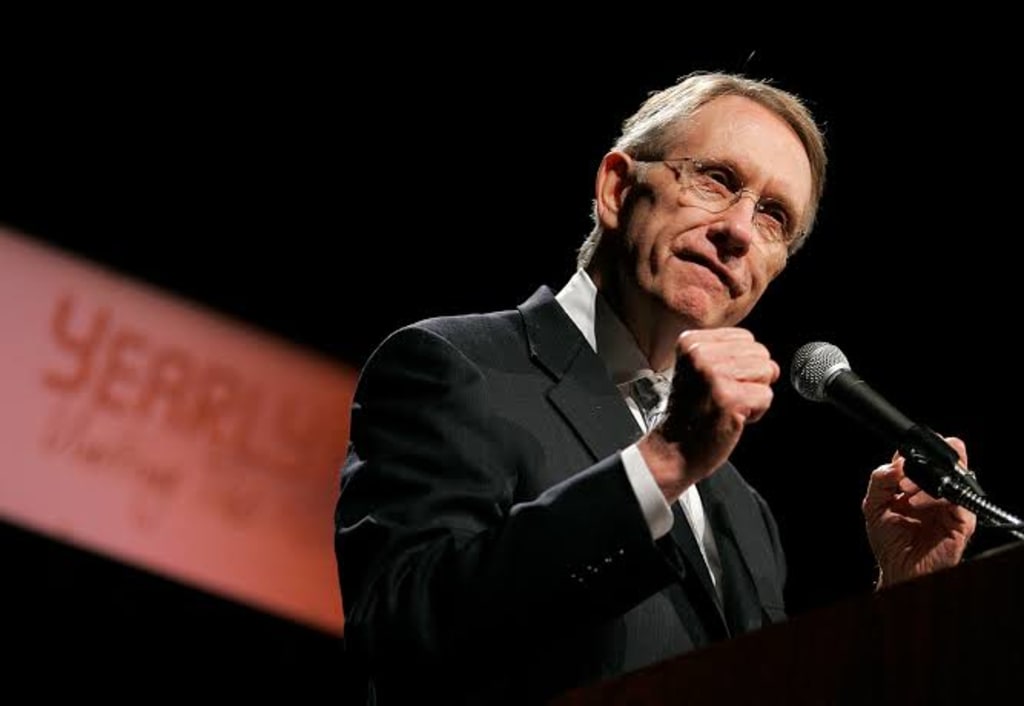
In November 2013, a quiet but historic shift took place on the floor of the United States Senate. It did not involve explosions, foreign conflict, or dramatic speeches delivered to roaring crowds. Instead, it involved procedure—an often-overlooked but powerful force in American politics. Senate Majority Leader Harry Reid made a decision that would permanently change how the Senate operates. This moment came to be known as the day Harry Reid “went nuclear.”
To understand why this mattered, it helps to first understand how the Senate traditionally worked.
The Filibuster and Senate Tradition
For decades, the U.S. Senate prided itself on being the chamber of extended debate. Unlike the House of Representatives, the Senate allowed unlimited discussion on most issues. This tradition gave rise to the filibuster, a tactic that allows a minority of senators to delay or block a vote by refusing to end debate.
To stop a filibuster, the Senate needs to invoke cloture, which historically required 60 votes. This supermajority rule was meant to encourage compromise and protect minority voices. In theory, it slowed down extreme legislation. In practice, it increasingly became a tool for gridlock.
By the early 2010s, the filibuster was no longer rare. It had become routine.
A Senate Stuck in Neutral
When Barack Obama entered his second term as president, Democrats controlled the Senate, but Republicans used the filibuster to block many of Obama’s nominees. These were not just cabinet-level officials. Judicial nominees, including those for federal appeals courts, were routinely stalled.
Harry Reid, a seasoned senator from Nevada, watched as vacancies piled up. Courts were understaffed. Executive agencies struggled to function. Reid argued that this level of obstruction went beyond legitimate opposition and threatened the government’s ability to operate.
Republicans countered that the filibuster was a vital check on majority power. To them, Democrats were simply frustrated that they could not push nominees through without resistance.
The tension reached a breaking point in November 2013.
The Nuclear Option Explained
The “nuclear option” is not an official Senate rule. It is a procedural maneuver that allows the Senate to reinterpret its rules by a simple majority vote, bypassing the usual 60-vote requirement.
On November 21, 2013, Harry Reid used this option to eliminate the filibuster for most presidential nominations. From that day forward, executive branch nominees and federal judicial nominees—except for Supreme Court justices—could be confirmed with a simple majority of 51 votes.
It was a dramatic move. Many senators, including some Democrats, warned that it would weaken the Senate’s unique role. Reid himself had previously opposed the nuclear option. But in that moment, he argued that extraordinary obstruction required extraordinary action.
Immediate Reactions and Fallout
The reaction was swift and intense.
Democrats praised the move as necessary and overdue. They argued that elections should have consequences and that a president deserved to staff his administration and the courts. To them, the Senate had become dysfunctional, and Reid’s decision restored basic governance.
Republicans were furious. They accused Reid of breaking the Senate and destroying a tradition that had stood for over a century. Senate Minority Leader Mitch McConnell warned that Democrats would regret the decision when they were no longer in power.
That warning would later prove prophetic.
Long-Term Consequences
At first, the impact seemed limited. President Obama was able to fill judicial vacancies, including seats on the powerful D.C. Circuit Court. The executive branch regained momentum.
But the precedent had been set.
In 2017, when Republicans gained control of the Senate and Donald Trump became president, they expanded the nuclear option. This time, it was applied to Supreme Court nominations, allowing Justice Neil Gorsuch to be confirmed with a simple majority.
What began as a targeted procedural fix became a fundamental shift in how power is exercised in the Senate.
Was It a Mistake or a Necessity?
Whether Harry Reid’s decision was right or wrong depends largely on perspective.
Supporters argue that the Senate was already broken. They point out that the filibuster was being used more than ever before, not to encourage debate but to block routine governance. From this view, Reid did not break the system—he exposed how fragile it had already become.
Critics argue that Reid accelerated the Senate’s decline. By removing the incentive for compromise, they say, the nuclear option turned the Senate into a body that increasingly resembles the House, driven by narrow majorities and partisan swings.
Both arguments carry weight, which is why the moment remains so controversial.
A Defining Legacy
Harry Reid retired from the Senate in 2017 and passed away in 2021. Among his many accomplishments, the nuclear option stands out as one of the most consequential. It reshaped judicial confirmations, altered the balance of power between parties, and changed how future majorities would govern.
More importantly, it forced Americans to confront a difficult question: how much tradition should be preserved when it no longer serves its intended purpose?
About the Creator
Saboor Brohi
I am a Web Contant writter, and Guest Posting providing in different sites like techbullion.com, londondaily.news, and Aijourn.com. I have Personal Author Sites did you need any site feel free to contact me on whatsapp:
+923463986212
Keep reading
More stories from Saboor Brohi and writers in The Swamp and other communities.
Kianna Underwood
In an entertainment industry that often defines young talent by a single platform or breakout moment, Kianna Underwood represents a refreshing shift. Rather than being boxed into one label, she is steadily shaping a multifaceted identity built on creativity, adaptability, and authenticity. While many audiences first associate Kianna Underwood with Nickelodeon, her journey reflects far more than a network credit—it highlights the evolving path of modern entertainers who balance visibility with personal growth. From early exposure to mainstream media to her expanding presence beyond traditional television, Kianna Underwood’s story mirrors the changing landscape of youth entertainment. Early Ambitions and Creative Foundations Like many performers drawn to acting and media at a young age, Kianna Underwood’s passion didn’t emerge overnight. Her early interest in storytelling, performance, and self-expression laid the groundwork for future opportunities. Rather than chasing fame, she focused on learning how to communicate emotion, connect with audiences, and adapt to different creative environments. These formative years helped her develop discipline—an often overlooked quality in young performers. Whether through acting, creative collaboration, or on-camera experience, Kianna learned that consistency and preparation matter just as much as natural talent. Kianna Underwood and Nickelodeon: A Defining Chapter For many viewers, Kianna Underwood Nickelodeon is the phrase that first brings recognition. Nickelodeon has long served as a launchpad for young performers, offering not only visibility but also structured environments where emerging talent can learn the mechanics of television production. Being associated with Nickelodeon places Kianna Underwood within a legacy network known for shaping cultural moments for younger audiences. The experience exposed her to fast-paced production schedules, collaborative storytelling, and the responsibility of creating content that resonates with families and children alike. However, what sets Kianna apart is her understanding that Nickelodeon is a chapter—not the entire book. Rather than relying solely on network recognition, she has used the experience as a stepping stone toward broader creative goals. Navigating Life After the Spotlight One of the biggest challenges young actors face is transitioning beyond early exposure. The entertainment industry moves quickly, and staying relevant requires adaptability. Kianna Underwood’s approach reflects maturity beyond her years—she recognizes the importance of growth, reinvention, and long-term vision. Instead of chasing immediate validation, she has shown interest in expanding her skills. This includes exploring creative avenues that allow more personal expression, whether through digital platforms, collaborative projects, or behind-the-scenes learning. In today’s media ecosystem, versatility is power, and Kianna seems aware of that reality. Her journey highlights an important truth: success is not always loud. Sometimes it unfolds quietly through deliberate choices and steady progress. Representation and Relatability Audiences today connect most strongly with individuals who feel genuine. Kianna Underwood’s appeal lies in her relatability—she doesn’t present herself as untouchable or overly curated. This authenticity is especially important for younger viewers who look to public figures as examples rather than idols. By staying grounded, Kianna contributes to a healthier representation of young talent in media. She demonstrates that it’s possible to participate in major platforms like Nickelodeon while still maintaining individuality and balance. This grounded presence helps her stand out in an industry that often prioritizes image over substance. The Influence of Nickelodeon on Career Development Working with Nickelodeon provides more than screen time—it offers mentorship, structure, and exposure to industry standards. For Kianna Underwood, this experience likely played a key role in shaping her professionalism and creative confidence. Nickelodeon alumni often speak about the importance of teamwork and discipline learned during their time with the network. These lessons tend to carry forward, influencing how performers approach future opportunities. Kianna Underwood’s association with Nickelodeon places her within that tradition of growth-focused development rather than short-term stardom. Looking Toward the Future As Kianna Underwood continues to evolve, her career path remains open-ended—and that’s a strength. In a world where entertainers are no longer limited to television alone, she has the opportunity to explore acting, digital media, advocacy, or creative entrepreneurship. What matters most is intention. Rather than being defined solely by “Kianna Underwood Nickelodeon,” she has the chance to redefine what success looks like on her own terms. Whether she chooses to remain in front of the camera or expand into other creative roles, her foundation positions her well for sustainable growth. A New Model for Young Talent Kianna Underwood represents a new generation of entertainers—one that values balance, authenticity, and purpose. Her journey reminds audiences that early recognition doesn’t have to dictate an entire career. With thoughtful choices and continued self-discovery, she exemplifies how young creatives can navigate fame without losing themselves in it. As the entertainment industry continues to change, stories like Kianna Underwood’s offer a hopeful perspective. They show that talent, when paired with self-awareness and patience, can lead to meaningful and lasting impact. In the end, Kianna Underwood is more than a name associated with Nickelodeon. She is a developing creative voice—one that reflects where youth entertainment is headed, and why authenticity matters more than ever
By Saboor Brohi a day ago in The Swamp
Yankee, Go Home’: Greenlanders Protest Trump’s Takeover Plans
In a wave of vocal opposition, thousands of Greenlanders have taken to the streets in protest, chanting “Yankee, go home” as news of former President Donald Trump’s reported interest in acquiring the Arctic island reverberates across the territory. The protests highlight the deep-seated concern among Greenlanders that foreign intervention could undermine their autonomy, culture, and control over strategic natural resources. The controversy began after reports surfaced that Trump had proposed purchasing Greenland, a vast autonomous territory of Denmark, rich in minerals, rare earth elements, and strategic Arctic real estate. Although the plan was officially dismissed by Danish officials, the mere suggestion ignited strong reactions across Greenland, where local residents and politicians see such a move as a threat to their self-governance and national identity. Protests and Public Sentiment In Nuuk, the capital of Greenland, demonstrators waved flags, carried banners, and voiced frustration at what they perceive as a historical pattern of foreign powers attempting to exert influence over their land. “We are not a commodity to be bought,” one protester told local media. Another held a sign reading, “Our home, our rules”, reflecting widespread sentiments that Greenlanders should have the final say in decisions affecting their territory. This public outcry is not just about land ownership—it is deeply tied to the preservation of Greenlandic culture and environmental stewardship. Many Greenlanders fear that foreign control could lead to exploitation of natural resources without consideration for local needs or environmental impact. Greenland, with its fragile Arctic ecosystem, is already facing the consequences of climate change, making sustainable governance a critical priority for its residents. Strategic Importance of Greenland Greenland’s geopolitical significance extends far beyond its ice-covered landscape. It sits atop rich deposits of rare earth minerals essential for modern electronics, renewable energy, and defense technology. Its location also gives strategic access to the Arctic Ocean, which is becoming increasingly navigable due to melting ice. These factors have drawn attention from major powers seeking a foothold in the Arctic, including the United States, China, and Russia. Trump’s interest, while unprecedented in modern times, underscores the island’s importance on the global stage. Analysts suggest that U.S. leaders view Greenland as critical for national security, satellite positioning, and Arctic military strategy. However, Greenlanders and Danish officials alike have made it clear that such considerations cannot override the rights and wishes of the people who call the island home. Danish Response and Autonomy Denmark, which governs Greenland under a framework of autonomous self-rule, swiftly rebuffed any talk of selling the territory. Danish Prime Minister stated that Greenland is “not for sale”, emphasizing that decisions about the island’s future must involve its residents and government. Greenlandic Premier echoed this sentiment, warning that foreign proposals, no matter how influential, would not bypass local authority. The protests, therefore, are not just directed at Trump personally, but at what is perceived as a disregard for Greenlandic sovereignty. Citizens demand that their voices be central in international discussions that impact their land, economy, and environment. Environmental Concerns Beyond political sovereignty, Greenlanders are acutely aware of the environmental implications of foreign intervention. Mining operations, military installations, and large-scale infrastructure projects could disrupt local ecosystems, wildlife habitats, and traditional ways of life, particularly for communities reliant on fishing and hunting. Many protesters argue that Greenland’s fragile Arctic environment must be prioritized over geopolitical and economic ambitions. Climate scientists have also weighed in, noting that Greenland’s ice sheet plays a critical role in regulating global sea levels. Any mismanaged exploitation of the island could have consequences that extend far beyond its borders, affecting coastal communities worldwide. Global Reactions The protests have drawn international attention, highlighting Greenland as a symbol of self-determination in a region increasingly contested for its resources. Observers from neighboring countries, as well as global media outlets, have noted that Greenlanders’ activism sends a clear message: foreign powers must respect local governance, culture, and environmental stewardship. Conclusion The slogan “Yankee, go home” captures the essence of the Greenlandic response—a firm assertion of autonomy in the face of external pressures. While Greenland remains under Danish governance, the island’s residents are clearly sending a message to the world: any discussion about their land, resources, or political future must include their voices. The protests serve as a reminder that even in the era of global geopolitics, the rights and perspectives of local communities cannot be ignored. As the Arctic continues to gain strategic and economic importance, Greenland’s stance may become a template for other regions seeking to protect sovereignty and environmental integrity in the face of international pressure. For now, Greenlanders remain united in their call: their home is their own, and no foreign power—no matter how influential—can override that right.
By Fiaz Ahmed Brohiabout 3 hours ago in The Swamp




Comments
There are no comments for this story
Be the first to respond and start the conversation.