
No Real Intent in Moscow to Engage in Peace Talks,’ Says Von der Leyen
Why Europe Says Moscow Isn’t Ready for Peace and What It Means for Ukraine’s Future

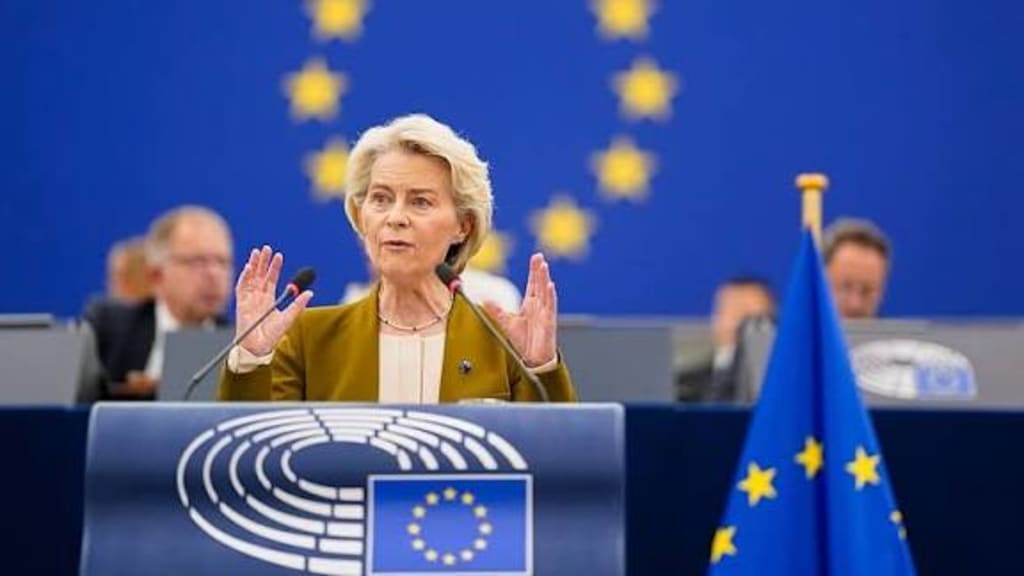
When European Commission President Ursula von der Leyen speaks about the war in Ukraine, the world listens. Recently, she made a powerful statement that left no room for doubt: “There is no real intent in Moscow to engage in peace talks.” Her words come at a time when the conflict has stretched beyond two and a half years, reshaping global politics and testing international unity.
This moment has reopened questions about whether peace is possible—and what the world can expect next.
A Message That Echoed Across Europe
Von der Leyen made her remarks during a high-level discussion on Europe’s security and foreign policy. She emphasized that, despite many diplomatic efforts, Russia has shown little desire to negotiate seriously. Instead of stepping toward peace, Moscow continues its military operations, missile attacks, and territorial ambitions.
Her statement reflects what many European leaders have been feeling privately:
Talks cannot happen if one side only uses diplomacy as a tactic to buy time.
Why Von der Leyen Believes Russia Is Not Serious About Peace
Several reasons support her view:
1. Continued Attacks on Ukrainian Cities
Russia has intensified missile strikes on civilian areas, hospitals, infrastructure, and energy plants.
A country preparing for peace does not escalate violence—especially not toward civilians.
2. No Clear Peace Proposal from Moscow
While Ukraine has presented various peace frameworks, including President Zelensky’s 10-point plan, Russia has offered no official roadmap, insisting instead on demands that involve Ukraine surrendering territory.
3. Statements from Russian Officials
Moscow insists that negotiations must accept “new realities,” referring to regions Russia claims to have annexed.
Europe and Ukraine reject this position entirely.
4. Mobilization and Military Build-Up
Rather than scaling down, Russia continues to recruit more soldiers, strengthen defenses, and prepare for long-term war.
For von der Leyen, these patterns show that Moscow’s words and actions do not match what peace negotiations require.
Europe’s Growing Concern
The European Union has been one of Ukraine’s strongest supporters, providing economic support, military training, humanitarian aid, and weapons. But the longer the war continues, the heavier the burden becomes.
Von der Leyen stressed that Europe cannot afford fatigue, especially when the cost of retreat would be far greater.
If Russia succeeds in Ukraine, many European leaders fear:
It could embolden Moscow to push further into Europe
Other authoritarian nations might follow similar strategies
Global security norms would permanently weaken
The EU wants peace—but only real peace, not a temporary pause that allows Russia to regroup.
Ukraine’s Stance: Dialogue Only After Russian Withdrawal
Ukraine has repeatedly said it is willing to discuss peace but not at the cost of its independence or territory.
President Zelensky has been clear:
No negotiations can take place while Russian troops occupy Ukrainian land.
Von der Leyen echoed this position, saying that any peace agreement must respect:
Ukraine’s sovereignty
Ukraine’s internationally recognized borders
The rights and safety of Ukrainian people
Accountability for war crimes
This is why Europe strongly backs Ukraine’s push for justice through international courts.
Pressure Builds Ahead of Future Peace Summits
As global leaders prepare for diplomatic gatherings, including future Ukraine-related peace summits, von der Leyen’s message serves as a warning: Europe must not assume Moscow is ready to compromise.
Her statement also signals that Europe will:
Keep reinforcing Ukraine militarily
Strengthen sanctions against Russia
Push for unity among EU and NATO members
Support long-term reconstruction plans for Ukraine
The EU wants negotiations one day—but believes the groundwork for peace must be created on the battlefield first, not through unequal compromises.
What This Means for the Future
Von der Leyen’s comments reflect a larger reality:
Peace in Ukraine will not come quickly, and it will not come easily.
The world now faces two possible paths:
1. A Long War
If Russia continues to reject meaningful talks, the conflict could stretch on for years, reshaping the global economy and international alliances.
2. A Negotiated Peace—But Only When Moscow Is Ready
Europe hopes for this outcome, but von der Leyen’s words suggest that the moment is not yet close.
For now, Ukraine’s allies believe the best strategy is clear:
Support Ukraine now to make peace possible later.
Conclusion
When Ursula von der Leyen said there is “no real intent in Moscow to engage in peace talks,” she was not just making a political comment—she was issuing a warning.
Her message is simple but powerful: true peace requires genuine willingness, honesty, and respect for sovereignty.
Until those conditions exist, Europe will continue standing firmly with Ukraine, believing that defending freedom today is the only way to secure peace tomorrow.
About the Creator
Fiaz Ahmed
I am Fiaz Ahmed. I am a passionate writer. I love covering trending topics and breaking news. With a sharp eye for what’s happening around the world, and crafts timely and engaging stories that keep readers informed and updated.
Keep reading
More stories from Fiaz Ahmed and writers in The Swamp and other communities.
Trump Moves to Designate Some Muslim Brotherhood Chapters as Terrorist Groups
For years, global governments have wrestled with how to deal with the Muslim Brotherhood, one of the most influential and controversial Islamic political movements in the world. Now, the debate has returned to center stage as former U.S. President Donald Trump pushes forward an effort to classify certain chapters of the Muslim Brotherhood as terrorist organizations. The move has sparked strong reactions, raised important questions about international security, and created new tensions in an already fragile geopolitical environment.
By Fiaz Ahmed 4 months ago in The Swamp
The Forsyth House Fire
Since 1851, Forsyth House has stood on the corner of Union Street and Gordon Street in the heart of Glasgow. Its iconic, or was... because on Sunday 8th of March, 2026, a fire broke out in a small, seemingly un-named shop in the building and tore all that history down. As I write, the rubble is still unsettled and the street is still blocked off. Central Station is quiet on the upper level, and around 30 small businesses have quite literally gone up in smoke.
By S. A. Crawford3 days ago in The Swamp


Comments
There are no comments for this story
Be the first to respond and start the conversation.