
New York City Mayoral Election 2025: Stakes and Players
An overview of the race for New York City’s mayor, key candidates, and why the outcome matters

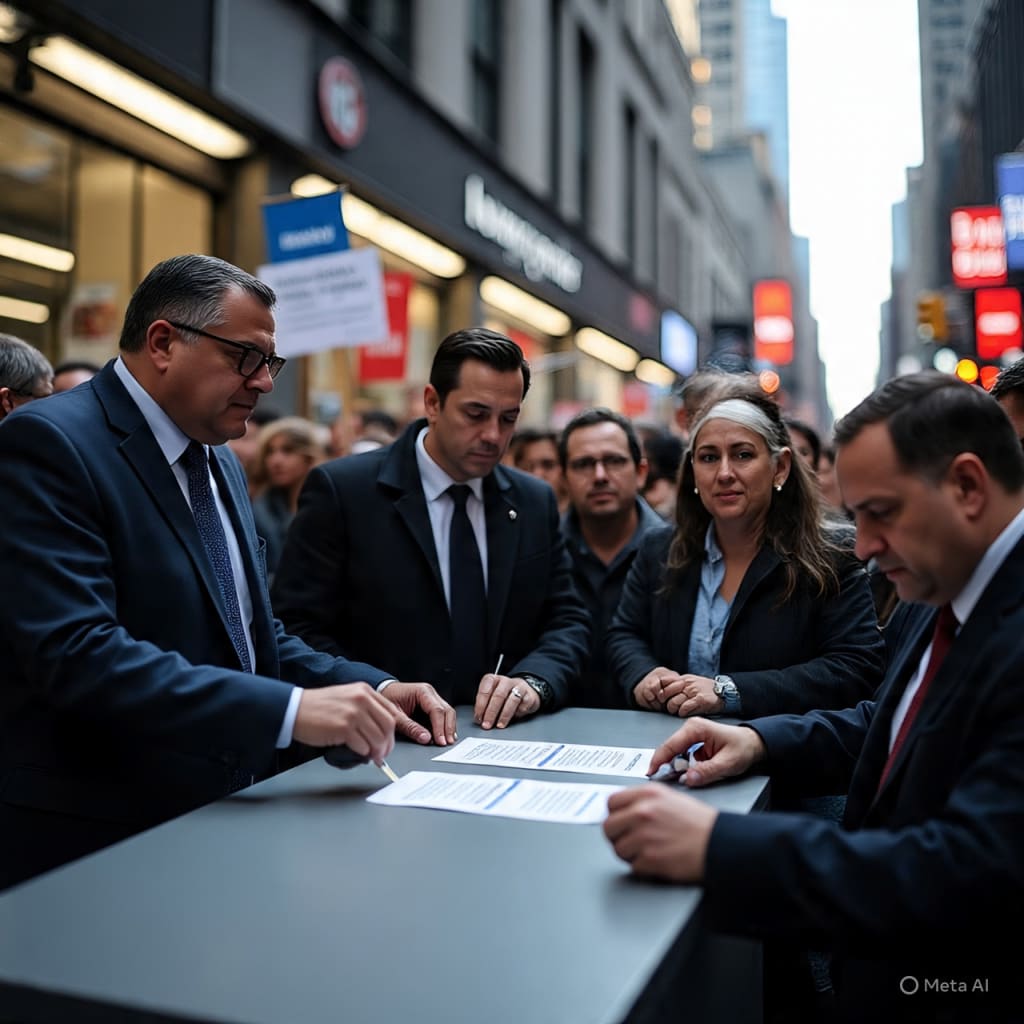
The upcoming mayoral election in New York City on November 4, 2025, is drawing attention for a number of reasons. This article reviews the context, main candidates, issues at stake and the broader significance of this local race.
Background
New York City holds its mayoral election every four years, and voters select the person who will lead the city government and its five boroughs. The vote follows a primary election process (for the major parties) and a general election where multiple candidates may appear, including independent and third-party contenders.
In 2025, the Democratic primary included major figures vying for the nomination. The city uses ranked-choice voting in its primaries.
Key Candidates
Zohran Mamdani (Democratic nominee) emerged from the primary as the Democratic Party’s choice for mayor. His campaign focused on affordability, housing, public transit and shifting priorities.
Andrew Cuomo, former governor of New York, ran in the Democratic primary but after losing, declared he would run as an independent in the general election.
Eric Adams, the incumbent mayor, announced that he would skip the Democratic primary and instead run for re-election as an independent.
Curtis Sliwa is the Republican nominee in the race.
These multiple candidates mean the general election could be competitive and fragmented.
Major Issues in the Race
Affordability and housing are central themes. Mamdani’s campaign emphasised rent-stabilised apartments, public transport costs and city-owned grocery stores. Crime and public safety also feature prominently, given New York City’s size and complexity. The mayor’s role in coordinating large municipal services gives the race extra weight.
Electoral reform and turnout are also relevant. Voter participation in city elections has been low; one analysis found only about 23% of registered voters cast ballots in the 2021 mayoral election. The use of ranked-choice voting in the primary adds another layer of strategy.
Significance
Why does this election matter? First, the mayor of New York City holds one of the most visible municipal offices in the United States. The role influences local policy, budget priorities, and often national debate.
Second, the fragmented field—including strong independent and third-party bids—means that the winner might claim office without a clear majority, which can affect governing strength and coalition-building. The fact that the city election could reflect broader trends in urban politics and party realignment adds to its importance.
Third, the race serves as a barometer for how political coalitions are shifting in urban settings—youth voters, minority communities, labour unions and other groups each play a part.
Recent Developments
Mamdani claimed the Democratic nomination after the ranked-choice count and the primary win over Cuomo. Polling data suggests that Mamdani holds a sizeable lead over his rivals in the general election.
Cuomo’s decision to remain on the ballot as an independent candidate adds complexity to the race. His presence may influence how votes split and which coalitions emerge.
Adams’ move to run independently rather than continuing via the Democratic primary also changes the strategic landscape.
Potential Scenarios
Given the field and issues, several outcomes are possible:
A strong win by Mamdani, consolidating Democratic support and leading to a clear mandate.
A divided result in which no candidate holds a clear majority, requiring coalition-building after the election.
Surprise gains by challengers if voters shift away from traditional party lines especially among independents and those concerned with specific issues like housing or public safety.
How the winner governs will depend on their ability to build alliances, manage the city’s budget, address key issues and retain voter trust.
Conclusion
The 2025 New York City mayoral election is more than a local contest—it reflects changing dynamics in urban politics, party identity, voter participation and the role of municipal leadership in large cities. With multiple strong candidates, key policy questions and a low-turnout backdrop, the outcome will shape the city’s direction for years.
Watching how this race unfolds will offer insight into how major cities engage their citizens, how leaders form and sustain coalitions and how policy priorities evolve when leadership changes.
About the Creator
Saad
I’m Saad. I’m a passionate writer who loves exploring trending news topics, sharing insights, and keeping readers updated on what’s happening around the world.
Ukraine War Briefing: Oreshnik Missile Sparks Anger at UN Security Council
The ongoing conflict in Ukraine has once again drawn the world’s attention after the recent deployment of the Oreshnik missile became a focal point of debate at the United Nations Security Council (UNSC). The missile, reportedly used in the latest skirmishes in eastern Ukraine, has intensified global concerns about the escalating conflict and the potential humanitarian consequences. Diplomats, analysts, and world leaders are closely monitoring the situation as discussions at the UNSC reveal deep divisions among member states over accountability, sanctions, and peace efforts. What Is the Oreshnik Missile? The Oreshnik missile is a newly highlighted weapon in the Ukraine war, drawing scrutiny for its advanced capabilities. Analysts describe it as a medium-range guided missile, designed for precision strikes against strategic military targets. Its use in the conflict has raised questions about proportionality, civilian safety, and adherence to international law. While military officials claim the missile provides tactical advantages, critics argue that its deployment near populated areas risks civilian lives and could violate humanitarian norms. The UN Security Council Reacts The UNSC convened an emergency session following reports of the missile strikes. Member states expressed sharply divided opinions on how to respond. Countries condemning the missile’s use stressed that such actions escalate the war and endanger civilians. They called for urgent investigations and reiterated demands for Russia to adhere to international humanitarian law. Conversely, some nations defended the deployment, framing it as a necessary act of national defense. This division highlights broader geopolitical tensions, reflecting competing interests and alliances that influence the Security Council’s ability to take unified action. Global Outrage and Public Response The news of the Oreshnik missile’s deployment has ignited widespread outrage beyond diplomatic circles. International media outlets and human rights organizations have amplified concerns about civilian casualties, particularly in areas with high population density. Social media has also become a platform for activists, journalists, and everyday citizens to voice their anger and call for immediate intervention. Protests and awareness campaigns in Europe, North America, and parts of Asia emphasize the humanitarian toll of the conflict. These global reactions put additional pressure on world leaders to respond with decisive measures, including sanctions, diplomatic interventions, and peacekeeping efforts. Strategic Implications for Ukraine Military analysts suggest that the Oreshnik missile represents a strategic escalation, signaling a shift in the tactics used in the ongoing war. Its precision targeting may give the deploying forces significant operational advantage, but it also risks triggering stronger international responses. Ukrainian officials have condemned the missile attacks, citing civilian harm and destruction of critical infrastructure. In practical terms, the missile’s use may influence the balance of power in contested regions, particularly in eastern Ukraine where fighting has been intense. Analysts warn that the weapon could intensify the conflict, complicating prospects for negotiations and prolonging human suffering. Diplomatic Challenges at the UNSC The Security Council faces significant challenges in addressing the Oreshnik missile controversy. The council’s permanent members, including the United States, Russia, China, the United Kingdom, and France, hold veto powers that make unanimous resolutions difficult. In this case, political alliances and opposing narratives have prevented a clear consensus on punitive measures or interventions. Experts argue that the deadlock at the UNSC underscores broader limitations in the international system when addressing conflicts involving advanced weaponry and state actors with competing agendas. Without coordinated action, the risk of escalation in Ukraine remains high. Humanitarian Concerns Humanitarian organizations have highlighted the immediate consequences of missile strikes, including displacement, injuries, and infrastructure destruction. Hospitals, schools, and residential areas in eastern Ukraine have reportedly suffered damage, exacerbating the ongoing humanitarian crisis. International agencies emphasize that protecting civilians must remain a priority, urging both sides to respect international law. They also call for increased funding and access for relief efforts, warning that continued military escalation could worsen the already dire situation for millions of Ukrainians. The Path Forward While the Oreshnik missile has intensified global attention on Ukraine, experts stress that long-term solutions require diplomacy and accountability. Negotiations at international forums, including the UN, must balance security concerns with humanitarian imperatives. Observers note that transparency in military actions, independent investigations, and adherence to international treaties are essential to prevent further escalation. Meanwhile, the global community faces the challenge of supporting Ukraine while avoiding policies that could exacerbate the conflict. Conclusion: A Critical Moment in Global Diplomacy The deployment of the Oreshnik missile and the ensuing debates at the UN Security Council mark a critical moment in the Ukraine conflict. It underscores the intersection of modern warfare, geopolitics, and humanitarian responsibility. As the world watches, the international community faces urgent questions: How can escalation be prevented? How can civilian lives be protected? And what role should global institutions play in mediating a conflict that continues to threaten regional and international stability? For Ukraine, the missile represents both a tactical and symbolic escalation, while for the UN and its member states, it highlights the challenges of enforcing international norms in a rapidly changing conflict landscape. The coming weeks may determine not only the trajectory of the war but also the credibility of global governancein upholding peace and security.
By Aarif Lashari6 days ago in The Swamp
So You Decided To Become a Nurse Practitioner:
So you decided to become an "Advanced Practice" nurse. Congratulations!... is what I would say if this was a good idea. Grad school? In this economy? What were you thinking? Likely it was something along the lines of either 1) “I've seen these other chucklefucks do it— Why can't I?” or even 2) “I've got a nice career, I should shake it up. I miss feeling like I have no clue what I'm doing.”
By Sandor Szabo3 days ago in Fiction


Comments
There are no comments for this story
Be the first to respond and start the conversation.