
New Arms Race Looms as Clock Ticks Down on Last Russia-US Nuclear Treaty
Subtitle: Experts warn that the potential collapse of the New START treaty could trigger renewed global nuclear tensions

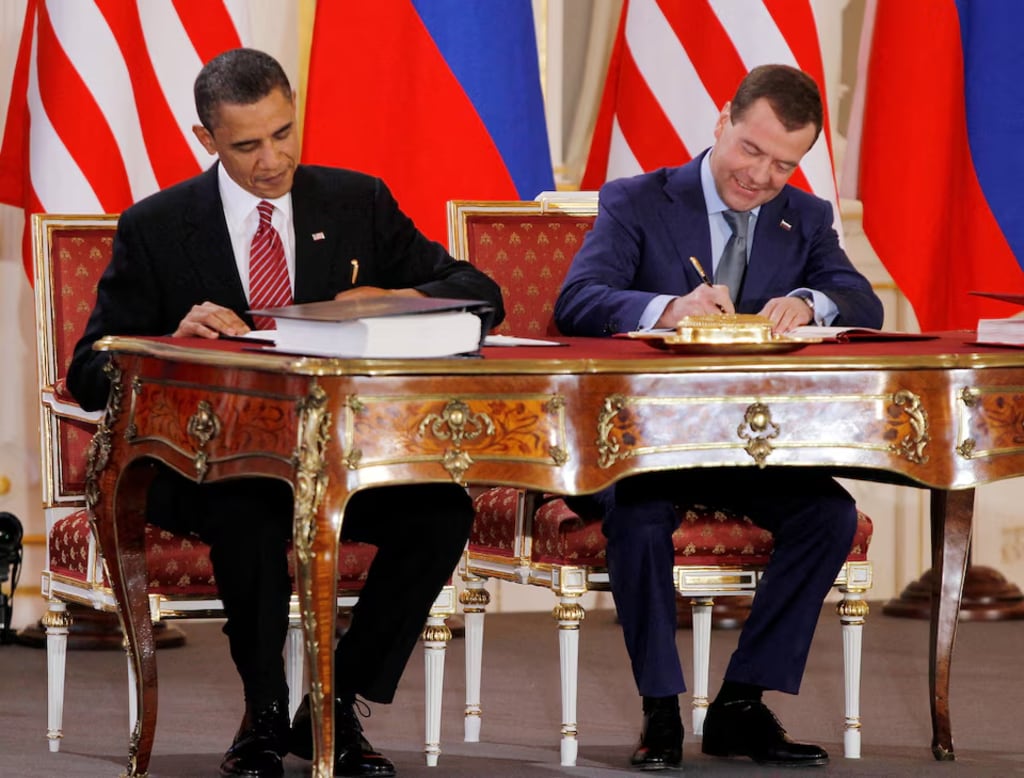
The world is facing a growing threat of a renewed nuclear arms race as the clock ticks down on the last remaining major nuclear treaty between the United States and Russia. The New Strategic Arms Reduction Treaty (New START), which limits the number of deployed nuclear warheads and delivery systems for both countries, is set to expire soon, raising alarms among diplomats, military experts, and international security analysts.
Signed in 2010 and extended in 2021 for five years, New START has long been viewed as a cornerstone of nuclear stability between the two largest nuclear powers. Its provisions allow for regular inspections, transparency measures, and caps on deployed warheads, providing a degree of predictability in an otherwise unpredictable global security environment.
The Stakes of Expiration
With the treaty’s expiration approaching, fears are mounting that a breakdown in arms control could spur both nations to accelerate nuclear weapons development. Analysts warn that without binding limits, the United States and Russia could enter a competitive cycle, rapidly expanding their arsenals and increasing the risk of miscalculations or accidental escalation.
The potential consequences extend far beyond the two countries. Allies in Europe, Asia, and beyond could face heightened security concerns, prompting them to reconsider their own defense postures. Experts caution that a new arms race could also divert resources away from pressing global issues such as climate change, economic development, and conventional military preparedness.
Drivers Behind the Tensions
Several factors have intensified the risk of a renewed arms race. Geopolitical tensions between Moscow and Washington remain high, exacerbated by conflicts in Eastern Europe, cyber confrontations, and differing strategic priorities. Both countries are investing in modernizing their nuclear arsenals, including hypersonic missiles, submarine-launched systems, and advanced intercontinental ballistic missiles.
These developments are compounded by the absence of new, comprehensive arms control frameworks. While New START has provided a temporary mechanism for stability, negotiations for successor agreements have stalled, leaving a vacuum in global nuclear governance.
International Reactions and Concerns
Global leaders and non-proliferation experts have voiced serious concerns about the treaty’s potential collapse. The United Nations and the International Atomic Energy Agency (IAEA) emphasize the importance of dialogue, urging both sides to extend or replace New START to maintain transparency and prevent escalation.
Public sentiment also reflects apprehension. Citizens around the world are increasingly aware of the catastrophic consequences of nuclear conflict, and experts warn that a breakdown in arms control could heighten anxiety, undermine trust between nations, and destabilize already fragile security environments.
Steps to Avoid a New Arms Race
Efforts to prevent the looming arms race focus on diplomacy, transparency, and innovative arms control frameworks. Experts advocate for early and sustained negotiations that address both strategic stability and emerging technologies, such as hypersonic weapons and cyber capabilities that intersect with nuclear command systems.
In addition, confidence-building measures—such as joint inspections, data exchanges, and communication channels—can reduce the risk of misunderstandings. These mechanisms have historically proven effective in managing nuclear competition and remain crucial in a world where tensions are high and mistrust is pervasive.
The Road Ahead
The ticking clock on New START underscores the fragility of global nuclear stability. While the expiration of the treaty does not automatically lead to a nuclear arms race, it significantly increases the risk if no replacement agreement is reached. Both the United States and Russia face a critical choice: continue negotiating, extend the treaty, or risk sliding into a renewed cycle of competition.
Ultimately, the world’s security depends on the ability of nations to engage in responsible diplomacy, prioritize de-escalation, and uphold transparency in their nuclear programs. As the countdown continues, the international community watches closely, hoping that reason and negotiation prevail over escalation and confrontation.
About the Creator
Saboor Brohi
I am a Web Contant writter, and Guest Posting providing in different sites like techbullion.com, londondaily.news, and Aijourn.com. I have Personal Author Sites did you need any site feel free to contact me on whatsapp:
+923463986212
Keep reading
More stories from Saboor Brohi and writers in The Swamp and other communities.
Ukraine and Russia Begin Second Round of US-Brokered Peace Talks in Abu Dhabi
Ukraine and Russia have embarked on a second round of peace negotiations in Abu Dhabi, under the auspices of the United States. The talks come as both nations face mounting pressure to explore a diplomatic solution after years of conflict that have caused widespread devastation and strained global security.
By Saboor Brohi 5 days ago in The Swamp
Why Black History Matters in America?
The United States of America is celebrating their 250th anniversary in 2026. I'm proud to be an American and as someone who was born here, I wouldn't imagine myself living anywhere else. This is a country where opportunities are possible. Where anyone can be successful in anything they desire to do. Equality, community, and togetherness are the backbones of what America is and should be about. However, we have an administration who wants to erase and disregard those who have made positive, meaningful impacts in our country, specifically Black figures, such as Martin Luther King, Jr., Rosa Parks, and Maya Angelou. President Trump and his administration have been constantly complaining and fighting against what they call the "Woke agenda". They use this excuse as a distraction from other issues they refuse to address, such as the high cost of living, climate change, and inflation. That equality is dividing America, when in reality, it's bringing us together. Being woke is not tied to a specific political party. No matter where you stand on the political spectrum, you can still care about other people and their plights. Compassion and empathy for others isn't tied to a political party, either. We were taught as children to treat others the way we want to be treated and not judge others because they're different from us. Caring about others isn't a personal attack on your beliefs. It doesn't make you any less of a person. People who are easily offended over African American figures, past or present, or anything related to it, are grasping at straws. Current and future generations need to know who people like Harriet Tubman and Shirley Chisholm were, especially in the classroom. Black History is part of American History. It should be recognized, not hidden or forgotten. Besides, you can't shield children from everything, just because your feelings are easily hurt.
By Mark Wesley Pritchard 7 days ago in The Swamp
Sarah Ferguson Emailed Epstein While He Was in Prison for Child Sex Offence, Documents Suggest
Recent reports suggesting that Sarah Ferguson, Duchess of York, emailed Jeffrey Epstein while he was serving a prison sentence for child sex offences have reignited public debate about historic associations, accountability, and the long shadow of one of the most high-profile criminal cases in recent history. While the full context of the alleged communications remains subject to public discussion and interpretation, the reports have triggered renewed scrutiny of figures who were previously linked to Epstein socially or financially.
By Aarif Lashari6 days ago in The Swamp
Writing About Writing: The Rainbow Trap
The good thing about living in modern times is that LGBTQ representation in media is increasing. Not just in niche and Independant media, either, but also in mainstream media. Books, movies, TV shows, comics... they're finally catching on that LGBTQ+ people form a significant part of their audience, and deserve to see themselves on screen and in fiction, not just as victims in documentaries and true crime shows.
By Natasja Rose5 days ago in Writers


Comments
There are no comments for this story
Be the first to respond and start the conversation.