
Netanyahu’s Reported Entry into Trump’s “Board of Peace”: A New Chapter in Middle East Diplomacy
The political symbolism, strategic calculations, and global implications of an unexpected alliance
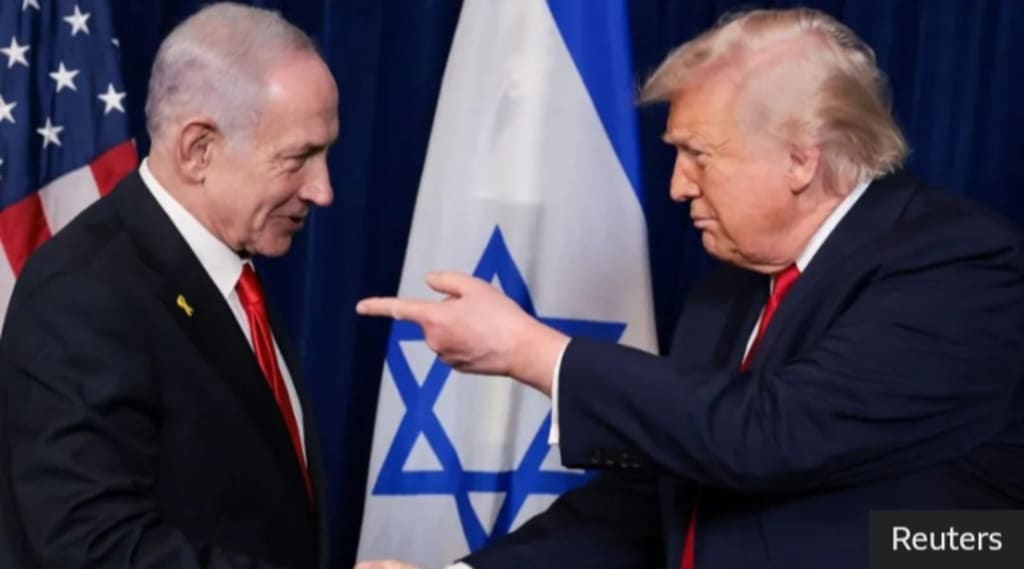
Reports suggesting that Israeli Prime Minister Benjamin Netanyahu has agreed to join former U.S. President Donald Trump’s proposed “Board of Peace” have sparked intense debate across diplomatic, political, and media circles. While details about the structure and authority of this board remain limited, the very idea of Netanyahu aligning himself with a Trump-led peace initiative carries deep symbolic and strategic significance—particularly for the Middle East, U.S. politics, and the broader international community.
Understanding the “Board of Peace”
Donald Trump has frequently positioned himself as a dealmaker capable of resolving long-standing global conflicts. During his presidency, he highlighted the Abraham Accords as one of his signature foreign policy achievements, normalizing relations between Israel and several Arab states. The concept of a “Board of Peace,” as described by Trump and his allies, appears to be an informal advisory or advocacy platform aimed at promoting negotiated settlements, regional stability, and what Trump often calls “strong peace through strength.”
Although not an official international body, such a board would likely function as a political and media-driven initiative, leveraging the reputations of influential leaders to shape narratives, encourage dialogue, and apply pressure on global actors. Netanyahu’s reported participation would instantly grant the board credibility in matters related to Israel and the Middle East.
Why Netanyahu?
Benjamin Netanyahu is one of the longest-serving and most internationally recognized leaders in Israeli history. His political career has been defined by a strong security-first doctrine, skepticism toward certain peace frameworks, and an emphasis on Israel’s right to self-defense. At the same time, Netanyahu has shown pragmatic flexibility when strategic opportunities arise—most notably in supporting the Abraham Accords under Trump’s administration.
Joining Trump’s “Board of Peace” would allow Netanyahu to reinforce his image as a statesman who can balance military strength with diplomatic outreach. It also provides him with an international platform at a time when Israel faces intense global scrutiny over security policies, regional conflicts, and internal political challenges.
Trump–Netanyahu Synergy
The political chemistry between Trump and Netanyahu is well documented. From the U.S. recognition of Jerusalem as Israel’s capital to the Abraham Accords, their partnership reshaped several long-standing diplomatic norms. Netanyahu’s reported agreement to join Trump’s initiative can be seen as a continuation of that relationship—one rooted in mutual political benefit.
For Trump, Netanyahu’s presence strengthens the board’s legitimacy and reinforces Trump’s claim that his leadership style produces tangible diplomatic results. For Netanyahu, aligning with Trump keeps him connected to a powerful political figure who may once again play a central role in U.S. foreign policy.
Regional and Global Implications
If the “Board of Peace” gains traction, it could influence discourse around the Israeli-Palestinian conflict, Iran’s regional role, and Arab-Israeli normalization. Supporters argue that such an initiative might bypass stalled traditional diplomacy and introduce fresh momentum through unconventional channels.
Critics, however, question whether a Trump-led board can genuinely promote peace or whether it primarily serves political branding. Palestinian leaders and some international observers may view Netanyahu’s involvement with skepticism, arguing that meaningful peace requires inclusive negotiations rather than elite-driven platforms.
Nevertheless, symbolism matters in diplomacy. Even an informal board can shape narratives, influence public opinion, and encourage backchannel discussions—especially when its members command global attention.
Media and Public Reaction
International media reactions have been mixed. Conservative outlets often frame the move as a bold step toward redefining peace efforts outside traditional institutions. Liberal and progressive voices tend to view it as controversial, warning that it may prioritize power politics over international law and multilateral consensus.
On social media and digital platforms—particularly vocal and opinion-driven media—this development has become a flashpoint for debate. Supporters praise Netanyahu and Trump as leaders unafraid to challenge the status quo, while critics argue that peace initiatives require broader representation and accountability.
Conclusion
Netanyahu’s reported decision to join Donald Trump’s “Board of Peace” reflects more than a personal or political alliance; it represents a broader shift in how peace initiatives are imagined and promoted in the 21st century. Whether this board becomes a meaningful diplomatic force or remains a symbolic gesture will depend on its actions, inclusivity, and ability to translate rhetoric into results.
For now, the move underscores a familiar reality of global politics: peace is not only negotiated at conference tables but also shaped by personalities, narratives, and strategic partnerships. In that sense, the Trump–Netanyahu alignment once again places both leaders at the center of a global conversation—one that the world will be watching closely.
About the Creator
Keep reading
More stories from Ayesha Lashari and writers in The Swamp and other communities.
Driving Test Cheating Soars as Candidates Turn to Bluetooth Headsets and Impersonators
The integrity of driving tests is facing a serious challenge as cheating cases surge across many countries. Authorities are reporting a sharp rise in the use of high-tech Bluetooth devices, hidden earpieces, and even professional impersonators to fraudulently pass driving theory and practical exams. What was once considered rare misconduct has now become an organized and alarming trend, raising concerns about public safety and the credibility of driver licensing systems.
By Ayesha Lashariabout 19 hours ago in The Swamp
Denmark Is ‘Irrelevant’, Says Scott Bessent: Controversial Remarks Spark Debate
In a statement that has drawn widespread attention, financier Scott Bessent described Denmark as “irrelevant” in the context of global economic and geopolitical discussions. The comment, made during a recent interview, has sparked a debate about the role of smaller nations in international affairs, and the way prominent figures discuss countries on the world stage.
By Aarif Lashariabout 20 hours ago in The Swamp
Australia Set to Pass Tougher Laws on Guns, Hate Crimes After Bondi Shooting
In the wake of one of Australia’s deadliest mass shootings in decades—the tragic Bondi Beach attack—Australian lawmakers are rushing to enact sweeping reforms to gun control and hate crime legislation. This tragedy has highlighted the urgent need to protect public safety, curb extremism, and strengthen community cohesion.
By Aqib Hussain2 days ago in The Swamp
Affection and Healing for Yourself
During the night of the last quarter moon, I gathered my ritual supplies. I carefully handled the chunk of black tourmaline that would protect me from your overall negative and narcissistic energy. I carefully walked the house with my stick of selenite in hand, asking the universe to cleanse our working space.
By Alisha Wilkins ✒️🦋🖋️2 days ago in Fiction



Comments
There are no comments for this story
Be the first to respond and start the conversation.