
“NATO Spending Pledge Is Trump’s Biggest Foreign Policy Success,” Rutte Tells BBC
Dutch Prime Minister Mark Rutte says pressure under Donald Trump reshaped NATO burden-sharing and pushed allies toward stronger defence commitments.

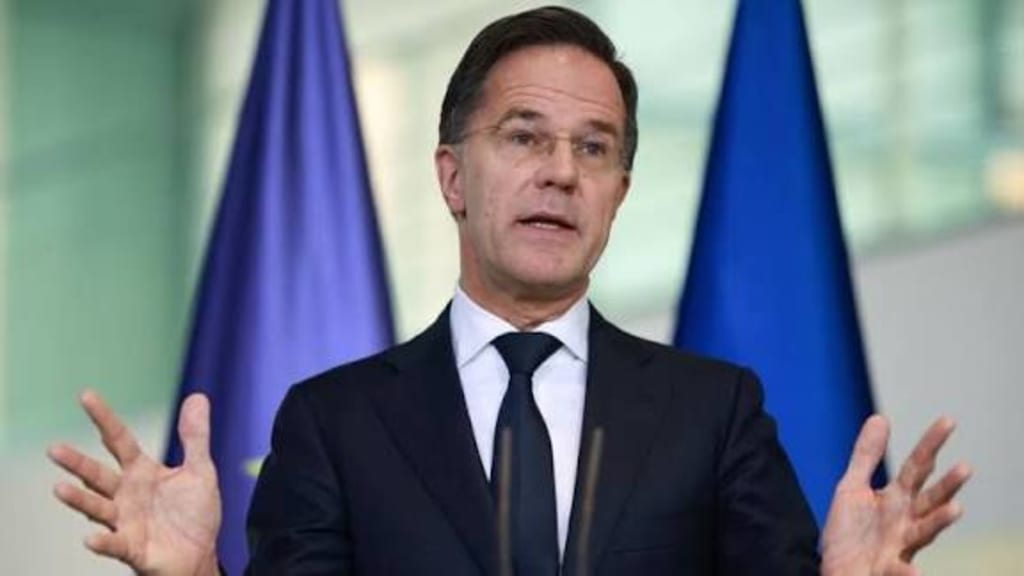
In a wide-ranging interview with the BBC, Dutch Prime Minister Mark Rutte described the NATO spending pledge—signed under former U.S. President Donald Trump—as one of the most significant foreign policy achievements in recent history. Rutte’s comments have reignited debates over Trump’s legacy in international relations, particularly within the North Atlantic Treaty Organization (NATO), where burden-sharing and collective defence commitments have long been contentious.
A Brief Background: NATO and Its Spending Target
NATO, founded in 1949 to deter aggression and ensure collective security among Western democracies, enshrined a spending target of 2% of gross domestic product (GDP) for defence in 2014. The goal was designed to ensure that member states contribute equitably to the alliance’s capabilities rather than leaving defence burdens disproportionately on a few, most notably the United States.
While many NATO members pledged to meet this target, progress was uneven. By the time Trump took office in 2017, only a handful of countries were consistently allocating 2% or more of GDP to defence.
Trump’s Influence on NATO Burden-Sharing
During his 2017–2021 presidency, Donald Trump repeatedly criticized NATO members for under-funding their defence obligations. He argued that U.S. taxpayers were carrying too much of the financial weight for European security. At NATO summits, Trump pressed allies to meet—or at least significantly increase—defence spending commitments, often in blunt and confrontational terms.
Critics initially viewed his approach as destabilizing, concerned that inflexible rhetoric might threaten alliance unity or embolden adversaries. However, the outcome has prompted even Trump’s detractors to acknowledge measurable impact: several NATO members not only increased defence budgets but did so consistently over multiple years.
Rutte’s Endorsement and Its Significance
Mark Rutte’s praise of the NATO spending pledge carries weight given the Netherlands’ own contributions to the alliance and its broader role in European politics. Speaking to the BBC, Rutte argued that the renewed emphasis on defence spending helped strengthen NATO’s deterrence posture—especially in the face of renewed Russian military assertiveness following the invasion of Ukraine.
Rutte’s perspective reflects a broader consensus among many European leaders: increased defence spending bolsters not only national security but the collective capacity of NATO to respond to threats ranging from territorial aggression to cyberattacks.
To Rutte, the fact that more members now consistently approach or exceed the 2% guideline represents a long-term strategic gain. In his view, the spending pledge is both a tangible outcome of pressure applied during Trump’s presidency and a lasting demonstration of burden-sharing that benefits NATO as a whole.
The Broader Impact on European Defence
From a defence analyst’s point of view, the shift toward higher military spending across NATO has ripple effects beyond simple budget numbers. Increased funding means modernized equipment, strengthened rapid response forces, and enhanced capabilities in areas like air defence, logistics, cyber operations, and joint training.
Former critics argue that even with higher spending, NATO still faces capability gaps; for example, interoperability challenges persist among forces with different equipment standards and logistical systems. Nevertheless, the consensus among many allies is that stronger defence budgets make the alliance more credible as a deterrent.
For smaller member states in particular, meeting the 2% target often required careful fiscal planning and political commitment—moves that were far from guaranteed before Trump’s vocal emphasis on the issue.
A Contested Legacy
Of course, Rutte’s view is far from universally accepted. Critics of Trump argue that his transactional approach risked undermining alliance cohesion. They point out that NATO’s strength historically stems from shared values and mutual political support as much as expenditure targets. They worry that emphasizing spending alone could reduce the alliance to a ledger of contributions rather than a community united in principle.
Some European commentators also suggest that Trump’s style strained diplomatic relationships in ways that required repair by subsequent administrations. They argue that sustaining increased defence spending should be framed as a European initiative, not a concession to U.S. pressure.
What Happens Next?
As geopolitical tensions persist—particularly with Russia’s invasion of Ukraine and rising concerns about Chinese military and economic influence—NATO’s relevance continues to be tested. Leaders on both sides of the Atlantic now face the challenge of ensuring that increased defence investment translates into cohesive strategic capability.
Donald Trump’s popularity within parts of the Republican Party, and his potential influence on future U.S. foreign policy, means that discussions about the alliance and burden-sharing are unlikely to fade. Whether future U.S. leaders adopt a similar posture of pressure or choose more traditional diplomatic engagement, the increase in NATO defence spending remains a key factor in the alliance’s current posture.
Conclusion: A Complex but Lasting Achievement
Mark Rutte’s assertion that the NATO spending pledge represents Trump’s biggest foreign policy success captures a nuanced truth: foreign policy impact is rarely clear-cut or universally agreed upon. But the measurable increase in defence investment across NATO nations, and the resulting strategic effects, cannot be ignored.
While debates over intent, style, and political motivation will continue, the tangible shift in alliance defence spending stands as a significant development in the transatlantic relationship. For allies facing real and evolving security threats, meeting defence targets may well be one of the most enduring legacies of this chapter in NATO’s history.
About the Creator
Fiaz Ahmed
I am Fiaz Ahmed. I am a passionate writer. I love covering trending topics and breaking news. With a sharp eye for what’s happening around the world, and crafts timely and engaging stories that keep readers informed and updated.
Keep reading
More stories from Fiaz Ahmed and writers in The Swamp and other communities.
Editorial: Bondi Tragedy Must Not Be Exploited to Fuel Islamophobic Narratives or Anti-Migrant Rhetoric
The Bondi tragedy has left Australia shaken. In moments of shock and grief, communities naturally search for answers—how did this happen, and how can such violence be prevented in the future? Yet history shows that in the aftermath of traumatic events, public discourse can quickly drift from facts toward fear. When that fear is directed at entire communities—particularly Muslims or migrants—the damage multiplies. It deepens social divides, distorts reality, and distracts from the real work of justice, healing, and prevention.
By Fiaz Ahmed 3 months ago in The Swamp
The Forsyth House Fire
Since 1851, Forsyth House has stood on the corner of Union Street and Gordon Street in the heart of Glasgow. Its iconic, or was... because on Sunday 8th of March, 2026, a fire broke out in a small, seemingly un-named shop in the building and tore all that history down. As I write, the rubble is still unsettled and the street is still blocked off. Central Station is quiet on the upper level, and around 30 small businesses have quite literally gone up in smoke.
By S. A. Crawford3 days ago in The Swamp
Eight Arab and Islamic Countries Condemn Israeli Closure of Al-Aqsa Mosque
The recent closure of the Al-Aqsa Mosque compound by Israeli authorities has triggered widespread condemnation across the Arab and Islamic world. Eight prominent Arab and Muslim-majority countries issued strong statements criticizing the move, describing it as a violation of religious freedom and a dangerous escalation in an already tense region. The incident has once again brought global attention to the sensitive status of Jerusalem’s holy sites and the longstanding tensions surrounding them.
By Jameel Jamali4 days ago in The Swamp


Comments
There are no comments for this story
Be the first to respond and start the conversation.