
Editorial: Bondi Tragedy Must Not Be Exploited to Fuel Islamophobic Narratives or Anti-Migrant Rhetoric
Why Responsible Discourse, Facts, and Unity Matter in the Aftermath of Tragedy

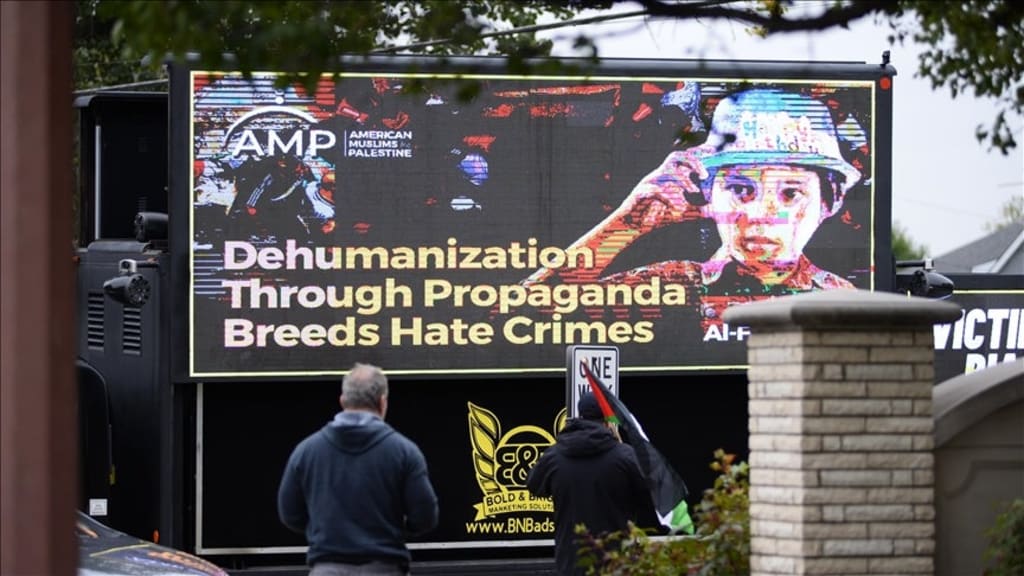
The Bondi tragedy has left Australia shaken. In moments of shock and grief, communities naturally search for answers—how did this happen, and how can such violence be prevented in the future? Yet history shows that in the aftermath of traumatic events, public discourse can quickly drift from facts toward fear. When that fear is directed at entire communities—particularly Muslims or migrants—the damage multiplies. It deepens social divides, distorts reality, and distracts from the real work of justice, healing, and prevention.
Tragedies demand compassion and clarity, not scapegoating.
Grief Should Unite, Not Divide
At its core, the Bondi tragedy is a human loss. Lives were taken, families shattered, and a sense of safety disrupted. These moments should bring societies together in empathy and shared mourning. Instead, such events are too often hijacked by voices seeking to push ideological agendas. Within hours of similar incidents around the world, social media fills with speculation, misinformation, and inflammatory claims that link violence to religion, ethnicity, or migration status—often without evidence.
This reflex harms innocent people who had nothing to do with the crime, while also undermining trust in public institutions and media. It transforms grief into suspicion and solidarity into hostility.
The Dangerous Pattern of Islamophobia
Islamophobia thrives in moments of uncertainty. When facts are still emerging, assumptions step in. Muslims, who already face heightened scrutiny in many Western societies, often become convenient targets. This pattern is not new. Time and again, isolated acts of violence have been used to paint an entire faith as suspect, despite overwhelming evidence that extremism exists across ideologies and identities.
Such narratives are not only inaccurate; they are unjust. They ignore the reality that Muslim communities are frequently among the strongest voices condemning violence and extremism. They also overlook the fact that Muslims, like any other group, are diverse—culturally, politically, and socially.
Reducing complex human beings to a single stereotype erodes the principles of fairness and equality that democratic societies claim to uphold.
Migrants Are Not the Problem
Alongside Islamophobia, anti-migrant rhetoric often surges after high-profile crimes. Migrants are portrayed as threats rather than contributors, despite the fact that migration has long been a cornerstone of Australia’s economic growth, cultural richness, and global identity.
Blaming migrants for acts of violence committed by individuals ignores data and reality. Crime is not imported through migration; it exists in every society and must be addressed through effective policy, mental health support, law enforcement, and social services—not prejudice.
When migrants are collectively blamed, the consequences are real: increased harassment, discrimination in employment and housing, and a climate of fear that discourages integration. This weakens social cohesion and ultimately makes communities less safe, not more.
Media Responsibility Matters
The media plays a critical role in shaping public perception after tragedies. Headlines, framing, and choice of language can either inform responsibly or inflame tensions. Sensationalism may drive clicks, but it also drives division.
Responsible journalism focuses on verified facts, avoids unnecessary emphasis on identity when it is irrelevant, and provides context rather than speculation. It also amplifies voices calling for calm, unity, and evidence-based discussion. Editorial choices matter, especially when emotions are raw.
Social media users, too, share this responsibility. Every repost, comment, or viral claim contributes to the wider narrative. In moments like these, restraint is not silence—it is wisdom.
Addressing the Real Issues
If societies truly want to honor victims and prevent future tragedies, attention must shift toward meaningful solutions. These include:
Improving mental health services and early intervention
Strengthening community-based prevention programs
Ensuring effective, accountable policing
Combating online radicalization across all ideologies
Promoting media literacy to reduce misinformation
None of these goals are served by targeting religious or migrant communities. In fact, many solutions require partnership with those very communities, whose trust and cooperation are essential.
Choosing Solidarity Over Fear
Moments of crisis test the values of a society. The response to the Bondi tragedy will be remembered not only for what happened, but for how Australians chose to react. Will fear be allowed to harden into prejudice, or will empathy guide the conversation?
Rejecting Islamophobia and anti-migrant rhetoric is not about ignoring crime or silencing debate. It is about insisting on fairness, accuracy, and humanity. It is about recognizing that collective punishment has no place in a just society.
In honoring the victims, the most powerful response is unity—standing against hatred in all its forms and committing to a future shaped by understanding rather than fear.
About the Creator
Fiaz Ahmed
I am Fiaz Ahmed. I am a passionate writer. I love covering trending topics and breaking news. With a sharp eye for what’s happening around the world, and crafts timely and engaging stories that keep readers informed and updated.
Keep reading
More stories from Fiaz Ahmed and writers in The Swamp and other communities.
Chinese Drone Parts Prices for Russia Soar Since Ukraine Invasion: A Deep Dive into the Emerging Supply Crunch
Since Russia’s invasion of Ukraine, the global drone market has witnessed unprecedented shifts, particularly regarding the supply and pricing of Chinese drone parts. Recent reports indicate that the cost of components critical for Russian unmanned aerial vehicles (UAVs) has skyrocketed, creating a ripple effect across military operations, defense logistics, and geopolitical strategy. This surge reflects both international sanctions and increased global demand, signaling a new phase in the technology-driven warfare landscape.
By Fiaz Ahmed 3 months ago in The Swamp
The Forsyth House Fire
Since 1851, Forsyth House has stood on the corner of Union Street and Gordon Street in the heart of Glasgow. Its iconic, or was... because on Sunday 8th of March, 2026, a fire broke out in a small, seemingly un-named shop in the building and tore all that history down. As I write, the rubble is still unsettled and the street is still blocked off. Central Station is quiet on the upper level, and around 30 small businesses have quite literally gone up in smoke.
By S. A. Crawford3 days ago in The Swamp



Comments
There are no comments for this story
Be the first to respond and start the conversation.