
Muslim Countries Condemn Israel’s Gaza Strikes, Allege ‘Repeated Violations’ of Ceasefire
OIC, regional leaders, and global powers urge restraint as Gaza faces renewed violence and humanitarian crisis
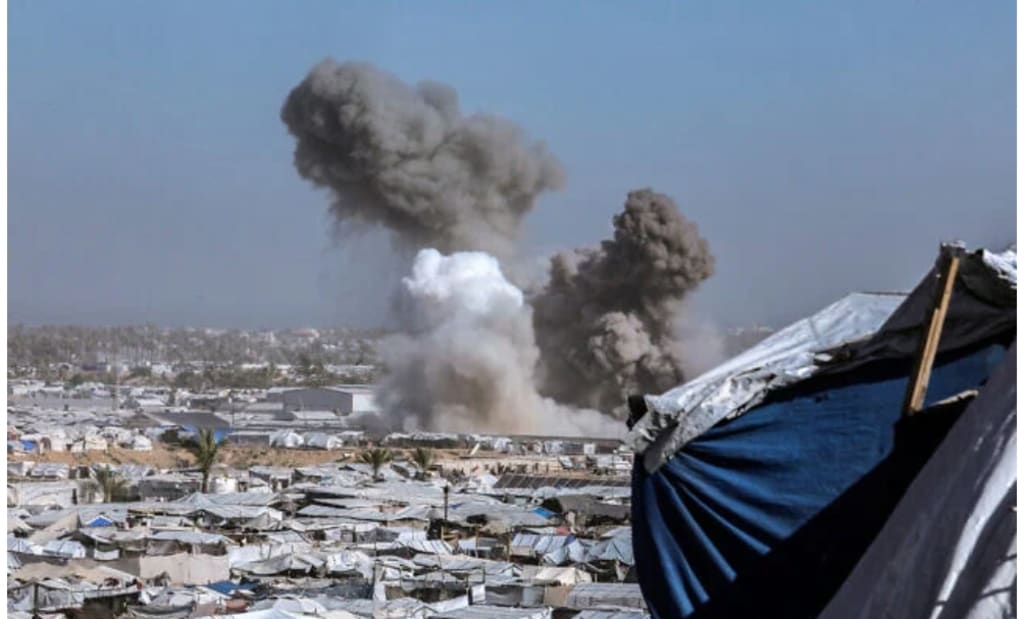
In a strong display of diplomatic unity, several Muslim-majority countries have condemned Israel’s latest military strikes on the Gaza Strip, accusing it of repeatedly violating ceasefire agreements and worsening an already fragile humanitarian situation. The renewed violence has sparked international concern, with regional and global leaders calling for restraint, dialogue, and the protection of civilians.
The recent airstrikes, which targeted multiple locations in Gaza, reportedly resulted in civilian casualties and significant damage to residential areas and infrastructure. Palestinian health authorities said that women and children were among the victims, while hundreds of families were forced to flee their homes. Israel, for its part, claimed the attacks were carried out in response to rocket fire from militant groups operating in Gaza, citing security concerns and the need to defend its citizens.
However, Muslim countries have rejected Israel’s justification, arguing that the strikes represent a continuation of aggressive policies that undermine peace efforts and violate international agreements.
Strong Reactions from Muslim Nations
Countries including Saudi Arabia, Turkey, Pakistan, Iran, Indonesia, Malaysia, and Qatar issued official statements condemning the attacks. Many described the strikes as “unprovoked” and “disproportionate,” accusing Israel of deliberately targeting civilian areas.
The Organization of Islamic Cooperation (OIC), which represents 57 Muslim-majority nations, held an emergency meeting to discuss the situation. In a joint communiqué, the OIC accused Israel of “repeated violations of ceasefire arrangements” and called on the international community to hold Israeli authorities accountable.
Saudi Arabia’s Foreign Ministry stated that the Kingdom “strongly condemns Israel’s continued military escalation against innocent civilians in Gaza” and emphasized the need for immediate international intervention. Turkey’s President also criticized the strikes, calling them “a clear attack on humanity” and urging world powers to take decisive action.
Pakistan’s Foreign Office echoed these sentiments, describing the attacks as “a grave violation of international humanitarian law” and reaffirming Islamabad’s support for the Palestinian people’s right to self-determination.
Allegations of Ceasefire Violations
At the heart of the controversy are allegations that Israel has repeatedly breached ceasefire agreements brokered by international mediators, including Egypt, Qatar, and the United Nations. These agreements were designed to reduce violence, allow humanitarian aid into Gaza, and create space for political negotiations.
According to Palestinian officials and regional mediators, recent strikes occurred during a period when both sides were expected to observe calm. They argue that Israel’s actions undermined trust and made future negotiations more difficult.
Qatar, which has played a key role in mediating between Israel and Hamas, expressed deep concern over the collapse of the ceasefire. Qatari officials warned that continued military action could derail months of diplomatic efforts aimed at stabilizing the region.
United Nations representatives also noted that violations from either side threaten fragile peace arrangements and place civilians at risk. However, Muslim countries insist that Israel, as the occupying power, bears primary responsibility for maintaining stability.
Humanitarian Crisis in Gaza
The latest escalation has worsened Gaza’s ongoing humanitarian crisis. The territory, home to more than two million people, has been under a blockade for over a decade, limiting access to food, medicine, fuel, and construction materials.
Hospitals in Gaza reported being overwhelmed by the influx of wounded patients. Power shortages and damaged infrastructure have further complicated rescue and medical operations. Aid agencies warned that continued violence could push the region closer to a full-scale humanitarian disaster.
The United Nations Relief and Works Agency (UNRWA) stated that many families are now living in overcrowded shelters, lacking clean water and basic supplies. Human rights organizations have called for immediate humanitarian corridors to allow aid deliveries and medical evacuations.
Muslim countries have pledged to increase humanitarian assistance to Gaza. Several governments announced emergency aid packages, including medical supplies, food, and financial support for reconstruction.
Israel’s Position and International Response
Israel maintains that its military actions are defensive and aimed at preventing attacks on its territory. Israeli officials argue that militant groups in Gaza regularly launch rockets and use civilian areas to store weapons, making military operations unavoidable.
The Israeli government also accused Hamas and other groups of violating ceasefire terms by continuing armed activities. It insists that responsibility for civilian harm lies with militant organizations that operate among residential populations.
Meanwhile, the international community remains divided. The United States reiterated Israel’s right to self-defense but urged restraint and protection of civilians. European Union leaders called for an immediate ceasefire and renewed peace talks.
Russia and China expressed concern over the escalation and supported calls for diplomatic solutions. Both countries urged the UN Security Council to take a more active role in preventing further violence.
Calls for Accountability and Peace
Muslim countries have renewed their demands for international investigations into alleged violations of international law. Several leaders called for the International Criminal Court (ICC) to examine recent events and hold those responsible accountable.
Iran described the strikes as “war crimes,” while Malaysia and Indonesia urged the UN to impose sanctions if violations continue. These countries argue that without meaningful consequences, cycles of violence will persist.
At the same time, many leaders stressed the importance of reviving peace negotiations based on a two-state solution, with East Jerusalem as the capital of a future Palestinian state. They emphasized that lasting peace can only be achieved through justice, dialogue, and respect for international law.
A Fragile Future
The latest Gaza strikes highlight the deep-rooted tensions and unresolved issues that continue to fuel the Israeli-Palestinian conflict. Repeated ceasefire breakdowns have eroded public trust and hardened political positions on both sides.
For the people of Gaza, each escalation brings renewed suffering and uncertainty. Families struggle to rebuild their lives amid destruction, while young generations grow up in an environment shaped by conflict and hardship.
As Muslim countries intensify diplomatic pressure and humanitarian support, the coming weeks will be critical in determining whether calm can be restored. Without sustained international engagement and genuine political will, observers warn that the region may face yet another cycle of violence.
The global community now faces a crucial test: whether it can move beyond statements of concern and take concrete steps toward protecting civilians, enforcing ceasefire agreements, and advancing a just and lasting peace in the Middle East.
About the Creator
A Better Greenland Deal: Redefining Arctic Diplomacy for the 21st Century
Greenland — that massive icy island up north — is suddenly back in the headlines. In early 2026, it became the center of an international stir, thanks to bold statements from U.S. leaders about its strategic value. What started as vague discussions about “total access” soon turned into diplomatic tension, protests in Copenhagen and Nuuk, and a worldwide debate about what a better Greenland deal should look like.
By Aqib Hussain5 days ago in The Swamp
~ Fired ~
— Ai Intrusion ~ Are you Next ~ Is Ai Evolution after your job? — Few workplaces haven't been affected. Ai is in supermarkets, at doctors' offices, and even monitoring farms. I just can't think of anything this machine is not getting into, can you? For instance: Education ~ Law and Tech jobs will one day have a major influence or be taken over by these inanimate machines, with accuracy and vigor. From mechanics' diagnoses to a wide variety of everyday jobs, including fast food workers, with this input having the ability to cut their unnecessary work hours. I'm certain all of us have been touched by this with our short stories and colorful headings, have you? Even comments are very questionable 'Non-Robot' insertions.
By Jay Kantor3 days ago in Journal




Comments
There are no comments for this story
Be the first to respond and start the conversation.