
Mortgage Rates Jump to Match Highest Levels in Nearly a Month
What the Sudden Rise Means for Homebuyers, Homeowners, and the Housing Market

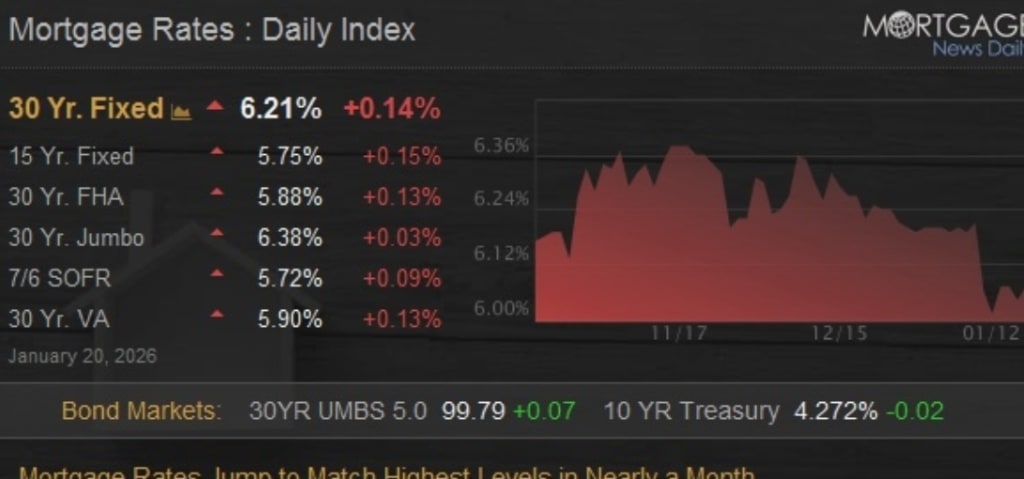
Mortgage rates have climbed again, reaching their highest levels in nearly a month and reigniting concerns across the housing market. For prospective homebuyers already grappling with high home prices, the renewed increase adds another layer of complexity to affordability. For current homeowners, it raises questions about refinancing plans and long-term financial strategies. While the jump may seem modest on paper, even small changes in mortgage rates can have an outsized impact on monthly payments and buyer sentiment.
In this blog-style breakdown, we explore why mortgage rates have risen, what’s driving the latest movement, and how different groups—from first-time buyers to sellers and policymakers—may be affected in the weeks ahead.
Why Mortgage Rates Are Rising Again
Mortgage rates do not move in isolation. They are closely tied to broader economic forces, particularly U.S. Treasury yields, inflation expectations, and signals from the Federal Reserve. The latest uptick comes as bond yields edge higher, reflecting renewed concerns that inflation may take longer to cool than previously hoped.
Recent economic data showing resilient consumer spending and steady job growth has also played a role. While strong economic indicators are generally positive, they can push interest rates higher because they reduce the urgency for the Federal Reserve to cut rates. Investors, anticipating that higher rates could stick around longer, demand higher yields on bonds—driving mortgage rates up in tandem.
Additionally, uncertainty surrounding global events and fiscal policy has kept financial markets cautious. When volatility increases, lenders often price in extra risk, which can translate into higher borrowing costs for consumers.
How Much of a Difference Does a Small Rate Increase Make?
At first glance, a rise of a few tenths of a percentage point may not seem dramatic. However, for a typical 30-year fixed mortgage, the impact is significant. A borrower taking out a $300,000 loan could see their monthly payment increase by tens or even hundreds of dollars over the life of the loan, depending on the rate shift.
Over 30 years, that difference adds up to thousands of dollars in additional interest. For buyers already stretching their budgets, this can mean the difference between qualifying for a loan or being priced out entirely. As a result, even short-term jumps in mortgage rates can quickly cool buyer enthusiasm.
What This Means for First-Time Homebuyers
First-time buyers are often the most sensitive to mortgage rate changes. Many rely heavily on financing and have limited flexibility when it comes to down payments or monthly budgets. With rates climbing to near-monthly highs, some may pause their home search, hoping for a pullback in borrowing costs.
Others may adjust expectations by targeting smaller homes, considering different neighborhoods, or exploring adjustable-rate mortgages. While these strategies can help in the short term, they also introduce trade-offs that buyers must carefully weigh.
The renewed rate increase also underscores the importance of preparation. Buyers who are pre-approved and financially ready are better positioned to act quickly if rates dip again—even briefly.
Impact on Current Homeowners and Refinancing
For existing homeowners, the rise in mortgage rates further diminishes the appeal of refinancing. Many homeowners locked in historically low rates in recent years, and today’s higher levels make refinancing unattractive unless there is a compelling reason, such as consolidating debt or switching loan terms.
As a result, fewer homeowners are expected to refinance, which can slow overall mortgage activity. This “rate lock-in” effect also discourages some homeowners from selling, since moving would likely mean taking on a higher mortgage rate for their next home.
What It Means for Sellers and the Housing Market
Higher mortgage rates tend to reduce buyer demand, which can affect sellers in subtle but important ways. While housing inventory remains tight in many areas, elevated borrowing costs can limit the pool of qualified buyers.
This doesn’t necessarily mean home prices will fall sharply, but it can slow price growth and lengthen the time homes spend on the market. Sellers may need to be more flexible on pricing or offer concessions, such as covering closing costs, to attract buyers who are wary of higher monthly payments.
In markets where supply is already increasing, the impact of higher rates could be more pronounced, leading to a shift toward a more balanced or buyer-friendly environment.
Are Rates Likely to Stay High?
The big question on everyone’s mind is whether mortgage rates will continue to rise or ease in the coming weeks. Much depends on upcoming inflation data, Federal Reserve commentary, and broader economic trends.
If inflation shows clear signs of cooling and economic growth moderates, rates could stabilize or even drift lower. However, if inflation remains sticky or economic data continues to surprise on the upside, mortgage rates may remain elevated or climb further.
For now, volatility appears to be the norm rather than the exception. Short-term fluctuations are likely, making timing the market especially challenging.
How Buyers Can Navigate the Current Environment
In a higher-rate environment, strategy matters more than ever. Buyers may benefit from:
Shopping around for lenders, as rates and fees can vary significantly.
Considering rate locks to protect against sudden increases during the buying process.
Exploring assistance programs for first-time buyers that can help offset costs.
Staying flexible, both in timing and expectations, as conditions evolve.
Patience and preparation can go a long way in mitigating the impact of rising rates.
Final Thoughts
Mortgage rates jumping to their highest levels in nearly a month serves as a reminder that the housing market remains closely tied to broader economic forces. While the increase adds pressure for buyers and slows some activity, it does not signal a complete halt to the market. Instead, it reinforces the need for informed decision-making and realistic expectations.
As economic data continues to shape interest rate trends, buyers and homeowners alike will need to stay alert. In an environment defined by uncertainty, understanding how mortgage rates work—and how they affect long-term finances—remains one of the most valuable tools in navigating today’s housing market.
About the Creator
Muhammad Hassan
Muhammad Hassan | Content writer with 2 years of experience crafting engaging articles on world news, current affairs, and trending topics. I simplify complex stories to keep readers informed and connected.
Keep reading
More stories from Muhammad Hassan and writers in The Swamp and other communities.
: US Lawmakers Move to Stop Trump’s Threatened Tariffs on European Allies
The United States is facing a potential trade storm as former President Donald Trump once again threatens tariffs—this time targeting European allies. In response, a growing number of US lawmakers are stepping up, seeking to block these threatened measures before they can disrupt international trade relationships and domestic markets. Trump, known for his aggressive trade policies during his presidency, has repeatedly criticized what he perceives as unfair trade practices by Europe. Now, his latest rhetoric suggests he may impose tariffs on European goods, raising alarms across Capitol Hill and the global trade community. For many members of Congress, this is not just about economics—it’s about diplomacy, alliances, and maintaining the stability of long-standing trade agreements. Bipartisan Concern Over Tariffs What’s notable about this pushback is the bipartisan nature of it. Lawmakers from both parties are expressing concerns about the potential impact of these tariffs. Republican senators, while traditionally aligned with Trump on issues of trade protectionism, are warning that broad tariffs could hurt American exporters and consumers. Democrats are emphasizing the diplomatic fallout and the risk of escalating trade tensions with Europe, which remains a key ally in both economic and security matters. Senator Susan Collins, a Republican from Maine, stated, “We need to protect American workers, but imposing sweeping tariffs on our European allies is not the way. It could backfire on the very industries we are trying to support.” Similarly, Democratic Representative Katherine Clark noted, “Tariffs should never be the first option. We must preserve our alliances while addressing legitimate trade concerns.” This bipartisan consensus signals the seriousness with which Congress is treating Trump’s threats. Unlike during his presidency, when Trump often faced a divided legislative branch, the current environment shows unified resistance to measures that could destabilize US-European trade relations. The Economic Risks Economists have long warned that tariffs, especially those imposed suddenly and broadly, can have ripple effects throughout the economy. Tariffs on European goods could raise prices for American consumers on everyday items ranging from wine and cheese to cars and industrial equipment. At the same time, European countries could retaliate with tariffs of their own, targeting American exports such as agricultural products, technology, and aerospace goods. Analysts also highlight the potential for long-term damage. Trade tensions can discourage investment, slow supply chains, and increase uncertainty for businesses that rely on global partnerships. For US companies already navigating post-pandemic recovery and supply chain disruptions, additional tariffs could be a significant burden. A report from the Peterson Institute for International Economics suggests that even targeted tariffs on a few European goods could reduce US GDP growth by up to 0.5% over the next year. While this may sound modest, in an already uncertain economic environment, such declines could affect jobs, wages, and consumer spending. Diplomatic Fallout Beyond the economic consequences, the diplomatic implications of these threatened tariffs are substantial. Europe has traditionally been a close ally of the United States in international affairs, from NATO cooperation to climate agreements. Imposing tariffs risks straining these relationships at a time when global cooperation is critical on issues such as security, energy, and economic stability. European leaders have already expressed concern. Officials in Brussels have warned that any unilateral tariffs could lead to retaliatory measures and may undermine ongoing trade negotiations. While Trump’s statements have been framed as protecting American interests, allies perceive them as a threat to the stability and fairness of international trade norms. Lawmakers’ Proposed Solutions In response, Congress is exploring several avenues to block or limit the impact of any new tariffs. Some lawmakers are drafting legislation that would require a congressional vote before the executive branch can impose such trade measures, effectively curbing unilateral authority. Others are pushing for closer oversight and transparency, ensuring that any proposed tariffs undergo thorough economic and diplomatic analysis. Representative Richard Neal, chairman of the House Ways and Means Committee, emphasized the need for checks and balances. “Congress has a role in protecting not just American jobs, but also the integrity of our alliances. We will not sit idle while threats of tariffs jeopardize our economic and diplomatic relationships.” These proposals reflect a growing recognition that trade policy cannot exist in a vacuum. Economic decisions are intertwined with international relations, and lawmakers appear determined to prevent impulsive actions that could have far-reaching consequences. Public Reaction Public reaction has been mixed, with some Americans supporting strong trade measures to protect domestic industries, while others worry about higher prices and disrupted supply chains. Business groups, particularly in sectors reliant on European imports or exports, have been vocal in opposing new tariffs. The US Chamber of Commerce issued a statement urging lawmakers to block any measures that could escalate trade tensions unnecessarily. “American businesses thrive on predictable trade relationships. Tariffs create uncertainty, hurt consumers, and may lead to retaliatory measures from our allies.” Consumer advocacy groups echo this concern, warning that tariffs are essentially a tax on everyday goods. For families already grappling with inflation, even modest tariff increases could hit household budgets hard. Looking Ahead While Trump’s threats have sparked immediate concern, the final outcome remains uncertain. Lawmakers are moving quickly to draft legislation and coordinate with European counterparts to prevent unilateral action. Analysts suggest that diplomatic engagement combined with congressional oversight could significantly reduce the likelihood of new tariffs being implemented. The episode underscores a broader lesson about US trade policy: cooperation and negotiation remain essential, even in an era of political polarization. Tariffs may be a powerful tool in theory, but in practice, they carry risks that can ripple across the economy, international relations, and domestic politics. As Congress continues to act, one thing is clear: any attempt to impose tariffs on European allies will not go uncontested. Lawmakers on both sides of the aisle appear ready to defend economic stability and diplomatic relationships, sending a message that the US is committed to protecting its interests without alienating long-standing partners. In a world where trade disputes can quickly become geopolitical flashpoints, the coming weeks will be crucial. How the US navigates these threats may set the tone for its economic and diplomatic relationships for years to come.
By Muhammad Hassan2 months ago in The Swamp
The Forsyth House Fire
Since 1851, Forsyth House has stood on the corner of Union Street and Gordon Street in the heart of Glasgow. Its iconic, or was... because on Sunday 8th of March, 2026, a fire broke out in a small, seemingly un-named shop in the building and tore all that history down. As I write, the rubble is still unsettled and the street is still blocked off. Central Station is quiet on the upper level, and around 30 small businesses have quite literally gone up in smoke.
By S. A. Crawford3 days ago in The Swamp
U.S. Navy to increase production of anti-submarine mines
Washington, D.C. — The United States Navy has confirmed plans to expand the production of advanced anti‑submarine mine systems as part of an intensified effort to bolster its undersea warfare capabilities amid growing global competition below the waves. Officials say the move reflects mounting concerns about the expanding submarine fleets of peer competitors and the need to strengthen maritime deterrence and denial strategies. According to a recent presolicitation notice issued by the Naval Sea Systems Command, the Navy intends to modify an existing contract with General Dynamics Mission Systems that increases the number of units of the Hammerhead anti‑submarine mine to be procured over the next several fiscal cycles. The contract adjustment is designed to rapidly accelerate deliveries while ensuring operational demands are met beginning in fiscal year 2027. Senior Navy officials said that expanding Hammerhead production is a priority because the system provides a mobile, autonomous capability to detect, classify and engage hostile submarines — a capability that is increasingly vital in contested littoral and open‑ocean environments. The mines are designed to be deployed from unmanned underwater vehicles, surface vessels or aircraft, and operate in waters where traditional anti‑submarine warfare (ASW) assets may be vulnerable or limited. “We are rapidly adjusting our undersea capabilities to address the realities of great‑power competition,” a senior defense official involved in the procurement process told reporters on condition of anonymity. “The expansion of anti‑submarine mine production — particularly systems like Hammerhead — provides us with a crucial asymmetric advantage in waters where adversary submarine activity is increasing.” Why Mines Again? Naval mines have a long history as cost‑effective tools of maritime control and denial. During the Cold War, systems such as the Mark 60 CAPTOR mine were designed to disrupt Soviet submarine operations in critical chokepoints and served as part of layered ASW strategies. These weapons combined a torpedo killer with a stationary mine casing to detect and destroy submarines autonomously. Despite periods of diminished emphasis in the post‑Cold War era, mine warfare has regained attention within U.S. naval strategy as peer competitors modernize their undersea forces. The marked growth of adversary submarine fleets — particularly the rapid expansion of the People’s Liberation Army Navy nuclear and diesel‑electric submarine fleets — has renewed emphasis on tools that can impose area denial or complicate hostile maneuvers in strategic waters. Mine systems like Hammerhead are seen as force multipliers: they can extend ASW reach into denied areas, channel adversary submarines into predictable paths, and serve as persistent sensors and shooters long after initial deployment. Their autonomy also reduces risk to manned ASW platforms, which are vulnerable to advanced anti‑access systems and modern torpedoes. Industrial and Strategic Challenges Increasing production of advanced mines presents both industrial and strategic challenges. In its notice, the Navy acknowledged that General Dynamics Mission Systems is currently the only vendor capable of meeting the accelerated timeline for additional Hammerhead units, which is why the contract modification will proceed without full and open competition. This approach, while expedient, highlights broader constraints in the defense industrial base for undersea systems, where capable producers are limited and highly specialized. Supporters of the expanded program argue that concentrating production with an experienced contractor will avoid delays and preserve continuity, but some defense analysts have raised concerns about dependence on single suppliers for niche yet critical capabilities. Diversifying the industrial base, they say, could hedge against supply chain disruptions and reduce bottlenecks for future undersea programs. The increased production mandate comes at a time when the Navy is simultaneously stretched across a wide range of modernization and recapitalization efforts, including submarine construction, unmanned undersea systems and expanded mine countermeasure capabilities. Last year’s push for expanded procurement reflected similar pressures on the submarine industrial base, where funding boosts are being applied to sustain construction rates and address workforce constraints. Operational Context The strategic rationale for accelerating anti‑submarine mine production stems from the evolving global maritime environment. Analysts note that Russia’s modernization of its submarine fleet — as well as China’s rapid deployment of new nuclear and conventionally powered submarines — has placed increased pressure on U.S. undersea dominance. Submarines are a central element of both offensive and deterrent naval operations, making investments in tools that can detect and counter them a priority for defense planners. Complicating matters further, developments in autonomous underwater vehicles (UUVs) and unmanned surface vehicles (USVs) have reshaped mine warfare. Modern mines can be integrated with these platforms to achieve quicker, more precise deployment in contested or denied waters while complicating an adversary’s ability to detect and neutralize them. These advances signal a renewed era of undersea competition where traditional concepts are being blended with emerging technologies. Looking Ahead As the Navy prepares to issue and implement the contract modification for expanded Hammerhead supplies, officials emphasize that the program is just one part of a broader, multi‑domain approach to undersea warfare. Investments in detection systems, advanced torpedoes, and layered ASW networks — including manned and unmanned platforms — are moving forward in parallel to ensure that U.S. forces maintain a competitive edge beneath the surface. In an era defined by competition with near‑peer naval powers, the resurgence of mine warfare — once considered a legacy capability — underscores the complexity and adaptability of modern maritime strategy. The expanded anti‑submarine mine production effort reflects not only tactical considerations, but the Navy’s long‑term commitment to securing undersea superiority across critical sea lanes and contested regions.
By Fiaz Ahmed 2 days ago in The Swamp




Comments
There are no comments for this story
Be the first to respond and start the conversation.