
Monster Winter Storm Threatens Half of US as at Least 16 States Declare Emergencies
“Heavy snow, ice, and extreme cold force emergency declarations as massive storm grips the United States”
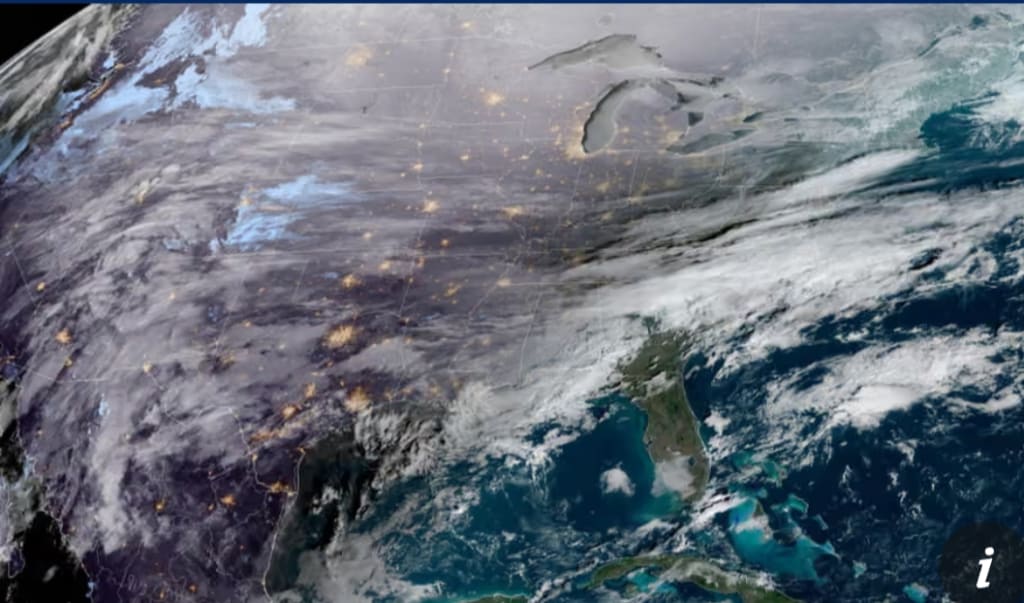
A monster winter storm sweeping across the United States is threatening nearly half the country, prompting at least 16 states to declare emergencies as authorities brace for heavy snow, ice, powerful winds, and life-threatening cold. Meteorologists warn that the sprawling system could become one of the most disruptive winter weather events of the season, affecting tens of millions of people from the Plains to the East Coast.
Officials are urging residents to prepare for dangerous travel conditions, widespread power outages, and prolonged disruptions to daily life.
A Storm of Unusual Size and Power
According to the National Weather Service, the storm’s scale is exceptional, stretching thousands of miles and impacting multiple climate zones simultaneously. While some regions are facing blizzard conditions with whiteout visibility, others are contending with freezing rain, ice accumulation, and plunging temperatures.
Meteorologists say the storm combines:
Arctic air pushing south
Moisture from the Gulf of Mexico
Strong jet stream dynamics
This combination has created a system capable of producing extreme weather over a wide area in a short time.
States of Emergency Declared
At least 16 states have declared emergencies to mobilize resources, deploy National Guard units, and accelerate response efforts. Governors cited concerns over:
Impassable roads
Strain on power grids
Risks to vulnerable populations
Emergency declarations allow states to access federal assistance and streamline coordination between agencies.
Residents are being advised to follow official guidance closely and avoid non-essential travel.
Snow, Ice, and Dangerous Travel
Heavy snowfall is expected in parts of the Midwest and Northeast, with some areas forecast to receive more than a foot of snow. In other regions, freezing rain is creating thick layers of ice, making roads and sidewalks extremely hazardous.
Transportation officials report:
Hundreds of flight cancellations and delays
Major highway closures
Numerous weather-related accidents
Authorities warn that conditions may worsen rapidly, especially overnight when temperatures drop further.
Power Outages and Infrastructure Strain
Ice accumulation and strong winds have already caused widespread power outages, with utility companies racing to restore service. Downed trees and power lines pose additional hazards, particularly in rural areas where access is limited.
Energy providers caution that:
Restoration efforts may take days in some regions
Cold temperatures increase the risk of hypothermia
Backup heating plans are essential
Residents are urged to conserve energy where possible and prepare emergency kits.
Impact on Schools and Businesses
The storm has forced widespread closures and delays. Thousands of schools have suspended in-person classes, while many businesses have closed or shifted to remote operations.
Retailers and supply chains are also feeling the impact, with delivery delays expected as trucks struggle to navigate icy roads.
Local governments are opening warming centers to support those without reliable heating.
Threat to Vulnerable Communities
Emergency officials are particularly concerned about:
Elderly residents
People experiencing homelessness
Those in medically fragile situations
Outreach teams are working to ensure access to shelter, food, and medical care. Health experts warn that prolonged exposure to extreme cold can be deadly.
Federal Response and Coordination
Federal agencies, including FEMA, are monitoring the situation closely. Emergency response teams are coordinating with state and local governments to ensure rapid deployment of resources if conditions worsen.
Officials stress that while emergency declarations are precautionary, they reflect the seriousness of the threat posed by the storm.
Climate Patterns and Extreme Weather
While winter storms are not unusual, scientists note that extreme events of this magnitude are becoming more frequent. Warmer oceans can increase atmospheric moisture, leading to heavier snowfall and more intense storms when cold air is present.
Climate experts caution that communities must adapt to increasingly volatile weather patterns.
What Residents Should Do
Authorities recommend several key precautions:
Avoid unnecessary travel
Keep emergency supplies, including food and water
Charge electronic devices
Check on neighbors and family members
People are also urged to stay informed through official weather alerts and local news updates.
When Will Conditions Improve?
Forecasters say the storm will gradually move eastward, but lingering impacts could last several days. Cleanup and recovery efforts are expected to continue well after snowfall ends, particularly in areas with heavy ice damage.
Officials warn that secondary hazards—such as refreezing and flooding from melting snow—may follow.
Conclusion
The monster winter storm threatening half of the United States has already proven to be a major test of emergency preparedness and resilience. With at least 16 states declaring emergencies, the scale of the event underscores the dangers posed by extreme winter weather.
As millions brace for snow, ice, and bitter cold, authorities stress that preparation and caution can save lives. The coming days will determine the full extent of the storm’s impact, but one thing is clear: this is a weather event that demands respect and vigilance.
About the Creator
Keep reading
More stories from Aarif Lashari and writers in The Swamp and other communities.
Boy, 12, Dies in Hospital After Shark Attack in Sydney
Australia has been left in shock and mourning after a 12-year-old boy died in hospital following a shark attack in Sydney, an incident that has deeply affected the local community and reignited debate about beach safety and shark management along the country’s coastline.
By Aarif Lashariabout 11 hours ago in The Swamp
Silver Sprints Ahead, Then Hits a Wall: Why the Metal’s Rally Lost Momentum
Silver has a reputation for drama. Often dubbed “the poor man’s gold,” the metal tends to lag its more famous cousin during the early stages of a rally, only to sprint ahead once momentum builds. That familiar pattern played out again recently as silver prices surged sharply, outperforming gold and igniting bullish enthusiasm across futures markets. Yet just as quickly, the rally stalled. Prices ran headlong into resistance, leaving traders asking a familiar question: why does silver so often sprint ahead, only to hit a wall?
By Salaar Jamali6 days ago in The Swamp
Emirates Cancels Dubai–US Flights Amid Heavy Snow and Severe Weather
Safety concerns force airline to halt transcontinental routes Emirates Airlines has announced the cancellation of several flights between Dubai and the United States due to heavy snow and severe winter weather affecting multiple US airports. The airline emphasized that passenger safety is the top priority, and the decision comes as a precautionary measure amid worsening conditions. The cancellations have impacted travelers on routes including New York, Chicago, and Boston, creating disruptions for business and leisure passengers alike. While Emirates works to reschedule flights and accommodate affected travelers, weather-related challenges continue to complicate transcontinental travel. Severe Weather Hits the US The United States is currently experiencing extreme winter weather, with heavy snowfall, strong winds, and icy conditions reported across the Northeast and Midwest. Airports are facing delays, cancellations, and operational difficulties as crews work to clear runways and ensure passenger safety. Meteorologists warn that the storm may continue for several days, with some regions expecting snowfall totals exceeding 20 inches (50 cm). Travel authorities advise passengers to check flight statuses, monitor weather alerts, and plan for delays. Emirates’ Response Emirates has issued an official statement noting that: Safety remains the highest priority for passengers and crew. Flights impacted by the storm have been temporarily canceled or rescheduled. Affected travelers will be offered alternate flights, refunds, or accommodations as needed. The airline continues to monitor weather developments closely to minimize disruption. The airline’s customer service teams are working around the clock to assist passengers with travel adjustments, while airport staff coordinate with air traffic authorities to manage arrivals and departures safely. Impact on Travelers For passengers, the cancellations present several challenges: Delayed Travel Plans – Business meetings, vacations, and personal schedules may be disrupted. Accommodation Needs – Some travelers may require hotels or temporary lodging while waiting for rescheduled flights. Financial Concerns – Unexpected cancellations can lead to additional costs for transportation, meals, and accommodation. Travel Anxiety – Uncertainty around flight schedules adds stress and emotional strain for passengers. Experts recommend that travelers affected by flight disruptions contact the airline directly, monitor official flight updates, and avoid traveling to airports during severe storms. Airline Safety Protocols Airlines like Emirates follow strict safety protocols during severe weather: Pre-flight Assessment – Pilots and operations teams evaluate conditions to determine if flights can depart safely. Weather Monitoring – Constant tracking of snow, wind, visibility, and runway conditions. Ground Crew Operations – Runways, taxiways, and aircraft are cleared of snow and ice to prevent accidents. Passenger Safety Measures – Instructions are provided for boarding, deboarding, and in-flight safety during turbulence or adverse weather. These measures ensure that passengers and crew remain protected, even if travel is delayed. The Broader Aviation Context Severe winter storms are a major challenge for international airlines, particularly for long-haul flights. Factors affecting operations include: Airport Closures – Heavy snow and ice can lead to temporary airport shutdowns. Air Traffic Congestion – Delayed flights create a domino effect, affecting arrivals and departures globally. Aircraft Safety Checks – Icy conditions require de-icing procedures that take extra time. Crew Scheduling – Staff availability may be limited due to delays and weather-related restrictions. Experts emphasize that preemptive flight cancellations are often safer than attempting to operate during extreme conditions, even if it causes inconvenience. Advice for Travelers Passengers planning to fly on Dubai–US routes during the storm should: Check Flight Status Frequently – Use Emirates’ official website, app, or customer service hotline. Allow Extra Travel Time – Airport check-ins and security lines may take longer than usual. Stay Informed About Local Conditions – Weather updates can indicate whether airports are operational. Prepare for Delays – Pack essentials, including snacks, medications, and warm clothing, in case of extended waits. Consider Travel Insurance – Provides financial protection in case of cancellations or extended delays. By taking proactive steps, travelers can reduce stress and adapt to changes while waiting for safe flights. Looking Ahead Meteorologists predict that the storm will gradually move eastward, allowing airports to resume normal operations over the next several days. Airlines, including Emirates, are closely coordinating with air traffic control and local authorities to restore service safely. While winter weather may temporarily disrupt transcontinental flights, the airline emphasizes that passenger safety always comes first, and operations will resume once conditions permit. Conclusion The cancellation of Dubai–US flights by Emirates amid heavy snow and severe weather underscores the importance of safety in air travel. While passengers face inconvenience and delays, the airline’s decision reflects responsible risk management in the face of extreme conditions. By prioritizing safety, following strict protocols, and keeping travelers informed, Emirates demonstrates how airlines navigate the challenges of winter storms while maintaining global connectivity. Passengers are advised to remain patient, monitor updates, and plan for delays as the weather gradually improves.
By Fiaz Ahmed about 4 hours ago in The Swamp
Rachel Reviews: The Spiral Archive by Pieter Hendrik
It's difficult for me to know where to start with a review of this book as it was, for me, an entirely unique experience and one that I'll probably never have again. I don't want that to be interpreted as unenjoyable but it has left me scratching my head a little and ruminating on its content, its themes and its characters.
By Rachel Deeming6 days ago in BookClub




Comments
There are no comments for this story
Be the first to respond and start the conversation.