
Mining: US, UK, EU, Australia and More to Meet to Discuss Critical Minerals Alliance
Global powers unite to secure supply chains amid rising demand for critical minerals
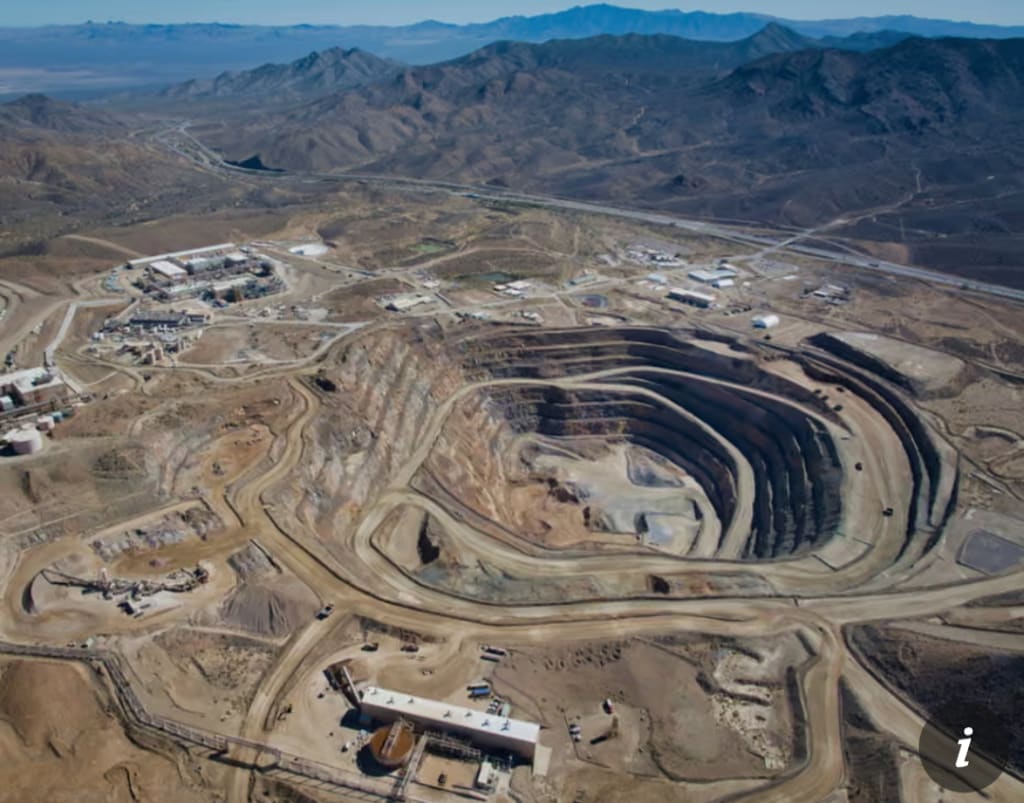
The United States, United Kingdom, European Union, Australia, and several other nations are set to hold a high-level meeting to discuss the formation of a Critical Minerals Alliance. The discussions come as the global demand for essential minerals—used in technologies ranging from electric vehicles to renewable energy systems—soars, and countries seek to secure resilient, sustainable supply chains.
This potential alliance is seen as a strategic move to reduce reliance on politically sensitive sources and ensure stable access to the minerals that are vital for technological advancement and energy transition.
Why Critical Minerals Matter
Critical minerals, sometimes called “strategic minerals,” include elements such as lithium, cobalt, nickel, rare earth elements, and graphite. They are essential for:
Batteries for electric vehicles (EVs)
Renewable energy storage solutions
Advanced electronics and semiconductors
Aerospace and defense applications
Global dependence on a limited number of mineral suppliers has raised concerns about supply chain vulnerabilities, price volatility, and geopolitical risks, particularly in regions with heavy concentration of resources.
The Scope of the Proposed Alliance
The proposed Critical Minerals Alliance aims to:
Coordinate mining and processing efforts across member countries.
Diversify sources to reduce reliance on single suppliers.
Share technology and innovation to improve extraction, recycling, and sustainability practices.
Develop common standards for ethical sourcing and environmental protection.
Officials have emphasized that the alliance will focus on creating a secure, transparent, and resilient global supply network, crucial for advancing clean energy goals and industrial competitiveness.
Participating Countries and Their Role
United States
As a major consumer and innovator, the US seeks to secure access to lithium, nickel, and rare earths critical for EV batteries and defense technologies.
United Kingdom
The UK is exploring partnerships to reduce dependence on foreign suppliers for its growing renewable energy and tech sectors.
European Union
The EU aims to support its Green Deal targets by ensuring stable mineral supplies for EV production and energy storage.
Australia
Australia is a leading producer of lithium and rare earth minerals, making it a key partner in mining, processing, and export initiatives.
Other countries under consideration include Canada, Japan, South Korea, and select nations in Africa and South America with significant mineral deposits.
Global Context: Supply Chain Challenges
The last few years have highlighted vulnerabilities in critical mineral supply chains:
Price spikes due to increased EV adoption and renewable energy expansion.
Geopolitical risks, particularly in regions dominated by China for rare earth elements.
Environmental concerns, as mining practices can have substantial ecological impacts.
Experts note that establishing a coordinated alliance could help mitigate these risks by pooling resources, knowledge, and strategic reserves.
Economic and Strategic Implications
A Critical Minerals Alliance could have significant economic and geopolitical effects:
Enhanced industrial competitiveness for member countries by ensuring reliable mineral access.
Reduced dependence on China, which currently dominates global rare earth markets.
Stability in global mineral prices, benefiting both producers and manufacturers.
Technological advancement, as secure supply enables innovation in EVs, renewables, and electronics.
Analysts suggest that this initiative may also influence investment flows into mining infrastructure and research on recycling technologies, further strengthening supply resilience.
Sustainability and Ethical Considerations
Mining critical minerals often raises environmental and social concerns. The proposed alliance may prioritize:
Reducing carbon emissions in mining operations
Promoting safe and ethical labor practices
Encouraging mineral recycling and circular economy approaches
Minimizing ecological impact in sensitive regions
By setting shared standards, the alliance could become a model for responsible global mineral sourcing, balancing industrial needs with environmental stewardship.
Technological Innovation and Research
Collaboration between member countries could accelerate technological innovations in mining and mineral processing. Key focus areas include:
Advanced extraction technologies to reduce waste and energy use
Battery material innovation to lower demand for rare earths
Recycling of electronic waste to recover critical minerals
Data-driven supply chain monitoring and risk management
Such innovations could lower costs, enhance efficiency, and reduce the environmental footprint of mineral extraction.
Timeline and Next Steps
Officials have not yet announced a formal date for the first alliance meeting, but discussions are expected to cover:
Establishing a framework for cooperation
Identifying priority minerals for coordinated action
Sharing geological and supply chain data
Drafting agreements for joint research, investment, and trade facilitation
Observers anticipate that tangible initiatives could emerge within the next 12–18 months, including strategic stockpiling, joint ventures, and investment in domestic processing facilities.
Challenges Ahead
Despite the promise of the alliance, several challenges remain:
Aligning the interests of multiple countries with different economic priorities
Managing competition in domestic mineral industries
Ensuring compliance with environmental and ethical standards
Addressing potential geopolitical pushback from non-member nations
Experts stress that the alliance’s success will depend on mutual trust, transparency, and long-term commitment.
Conclusion
The planned meeting between the US, UK, EU, Australia, and other nations marks a pivotal moment in global critical mineral policy. By coordinating strategies, sharing technology, and diversifying supply chains, the alliance aims to secure the minerals essential for energy transition, technological innovation, and industrial growth.
As the world increasingly relies on clean energy and advanced technology, ensuring stable and ethical access to critical minerals will be a defining factor for economic competitiveness, geopolitical influence, and environmental sustainability.
About the Creator
Keep reading
More stories from Aarif Lashari and writers in The Swamp and other communities.
Charted: The 35 Countries with the Highest Household Debt
Household debt has become a major economic indicator, reflecting not only the financial habits of citizens but also broader economic trends in each country. From mortgages and personal loans to credit cards and other forms of borrowing, household debt levels provide insight into consumer confidence, government policies, and potential financial vulnerabilities.
By Aarif Lashariabout 23 hours ago in The Swamp
You Can’t Have Guns”: What Is Donald Trump’s Real Stance on the Second Amendment
Donald Trump has long branded himself as one of the strongest defenders of the Second Amendment in modern American politics. On the campaign trail and at conservative gatherings, he has repeatedly warned supporters that Democrats want to “take away your guns” and positioned himself as the last line of defense against federal overreach. Yet moments when Trump has said things like “You can’t have guns” have fueled debate and confusion about where he truly stands on gun rights. An examination of his rhetoric, policy decisions, and political alliances shows a stance that is both firmly pro-gun in principle and surprisingly flexible in practice.
By Salaar Jamali4 days ago in The Swamp
When Hope and Horror Collide: Gaza Under Fire as a Ceasefire Inches Forward
A Ceasefire Shadowed by Bloodshed In Gaza, hope rarely arrives alone. It usually comes carrying grief. As international mediators speak in careful language about ceasefire progress, families in Gaza bury their dead. On a day when the world expected calm to grow stronger, Israeli airstrikes killed at least 30 Palestinians, including children. The timing was brutal, the symbolism unavoidable. While talks moved forward on paper, violence surged on the ground. For the people of Gaza, this contradiction is not new. Ceasefires have come and gone before, often collapsing under the weight of mistrust, retaliation, and unresolved injustice. Yet each announcement still sparks a fragile optimism — a belief that maybe this time, the bombs will stop. This time, they didn’t. A Deadly Day in Gaza The strikes hit multiple locations across the Gaza Strip. Residential buildings, a police station, and areas sheltering displaced families were among the targets. Hospitals quickly filled with the wounded, while doctors struggled with limited supplies, overcrowded wards, and exhausted staff. Among the dead were women and children — names added to a growing list that has become tragically long. For many families, there was no warning, no time to escape, and no safe place left to run. Parents searched hospital corridors for their children. Survivors described explosions that tore through sleeping neighborhoods. Tents meant for refuge became sites of mourning. Each casualty represented not just a number, but a life interrupted: a student who would never return to school, a child whose favorite toy lay buried under rubble, a parent whose role as protector ended in helplessness. The Ceasefire That Exists — and Doesn’t Officially, a ceasefire has been in place. Unofficially, Gaza has remained under constant threat. Ceasefires in this conflict are rarely absolute. They are fragile understandings, often broken by accusations from both sides. Israel claims it strikes in response to security threats. Palestinian groups accuse Israel of violating truces with disproportionate force. This creates a deadly loop: one side claims defense, the other calls it aggression, and civilians pay the price. For Gaza’s residents, the term “ceasefire” has lost much of its meaning. It does not guarantee safety. It does not ensure electricity, clean water, or medical access. And it certainly does not promise that children will sleep through the night without fear. Children Caught in a War They Did Not Choose Perhaps the most devastating aspect of this latest violence is the loss of young lives. Children in Gaza are born into siege, raised under drones, and educated amid ruins. Many have never experienced a day without the sound of aircraft overhead. Psychologists warn of widespread trauma, anxiety, and emotional numbness among Gaza’s youth. When children are killed during ceasefire talks, it sends a painful message: even moments of supposed peace are unsafe. For parents, the fear is constant. Do you send your child outside to play? Do you let them sleep near a window? Do you hope, or do you prepare for the worst? In Gaza, parenting has become an act of courage. Rafah Crossing: A Gate of Survival One of the most discussed elements of the ceasefire negotiations is the reopening of the Rafah border crossing with Egypt. For Gaza, Rafah is more than a checkpoint — it is a lifeline. Its reopening would allow: Medical evacuations for critically ill patients Entry of humanitarian aid Movement for families trapped inside the strip Yet even this hopeful step remains uncertain. Past openings have been limited, temporary, and heavily controlled. Each delay costs lives, especially for patients needing urgent treatment unavailable inside Gaza. The strikes came just as optimism around Rafah was growing, raising questions about whether political progress can truly protect civilians. The International Response: Words Without Weight Global reactions followed a familiar pattern. Statements of concern. Calls for restraint. Renewed emphasis on negotiations. But for Gazans, words without action feel hollow. Human rights organizations continue to warn that repeated civilian casualties may violate international humanitarian law. Aid groups stress that Gaza’s healthcare system is near collapse. Journalists document destruction, yet accountability remains elusive. The international community’s inability to enforce lasting peace has bred deep cynicism. Many in Gaza believe the world sees their suffering but lacks the will to stop it. Israel’s Perspective: Security Above All Israel maintains that its military actions are necessary to protect its citizens. Officials argue that militant groups exploit ceasefires to regroup and that strikes target threats, not civilians. From Israel’s viewpoint, security concerns are immediate and non-negotiable. Rocket fire, tunnels, and armed groups remain central to its justification for military operations. However, critics argue that overwhelming force in densely populated areas inevitably leads to civilian deaths — regardless of intent. The line between security and collective punishment remains heavily contested. Life in Gaza: Survival as Routine Beyond headlines and death tolls, life in Gaza continues — not because it is easy, but because stopping is not an option. People queue for bread. Families ration water. Children attend makeshift schools. Fishermen risk their lives at sea. Doctors perform surgeries by generator light. Resilience has become a necessity, not a choice. Yet resilience should not be mistaken for acceptance. Beneath daily survival lies exhaustion, anger, and grief. Many Gazans feel trapped in a cycle they did nothing to create and cannot escape. The Psychological Toll of Endless Conflict Wars do not end when bombs stop falling — especially when they never truly stop. Mental health professionals report soaring cases of post-traumatic stress disorder, depression, and anxiety in Gaza. Children reenact airstrikes in their games. Adults struggle with survivor’s guilt. Each broken ceasefire deepens psychological wounds. Each loss reinforces a sense of abandonment. Peace, when it comes, will need to heal minds as much as rebuild homes. A Future Held Hostage The tragedy of Gaza is not only what is happening now, but what it steals from the future. Education is disrupted. Economic development is impossible under blockade. Dreams shrink to basic survival. A generation grows up knowing checkpoints better than playgrounds and sirens better than lullabies. Every child killed is not just a life lost, but a future erased. Can Peace Ever Be More Than a Pause? History suggests that ceasefires without justice are temporary. Without addressing root causes — occupation, blockade, security fears, political division — violence returns. True peace requires more than silence in the sky. It demands accountability, dignity, and equal value for all human lives. Until then, ceasefires will remain fragile pauses in an ongoing tragedy. Conclusion: Between Diplomacy and Destruction The latest Israeli strikes in Gaza, killing dozens including children, expose the painful reality behind diplomatic language. Ceasefires may inch forward, but peace remains distant. For Gaza’s civilians, the question is no longer when peace will come, but whether it ever will. Until the world moves beyond statements and toward solutions, hope in Gaza will continue to arrive hand-in-hand with grief — fragile, fleeting, and heartbreakingly incomplete.
By Zahid Hussain2 days ago in The Swamp




Comments
There are no comments for this story
Be the first to respond and start the conversation.